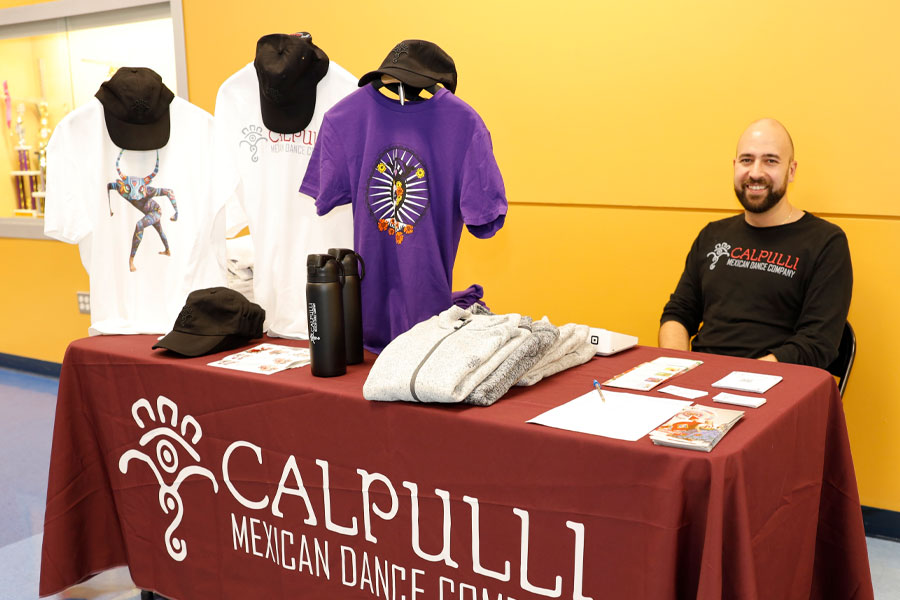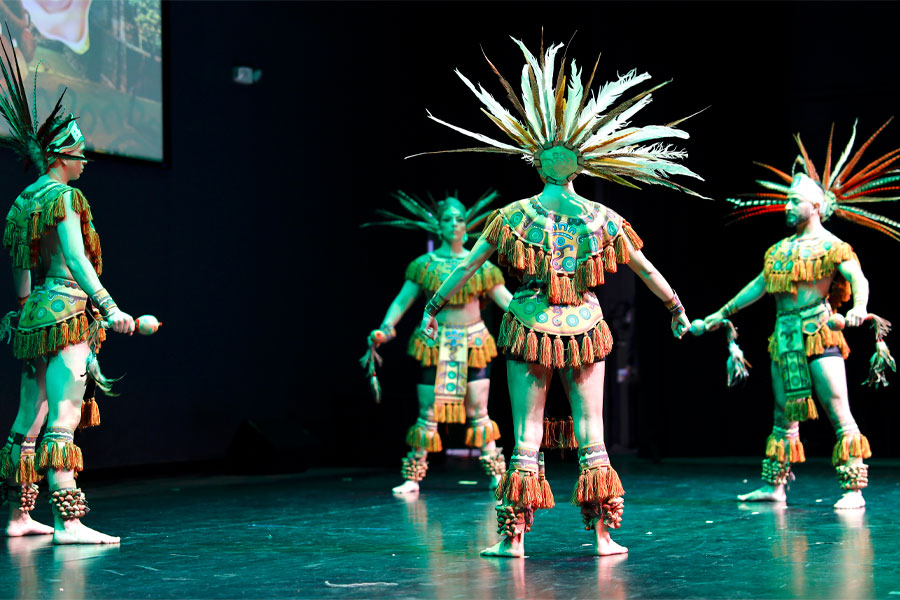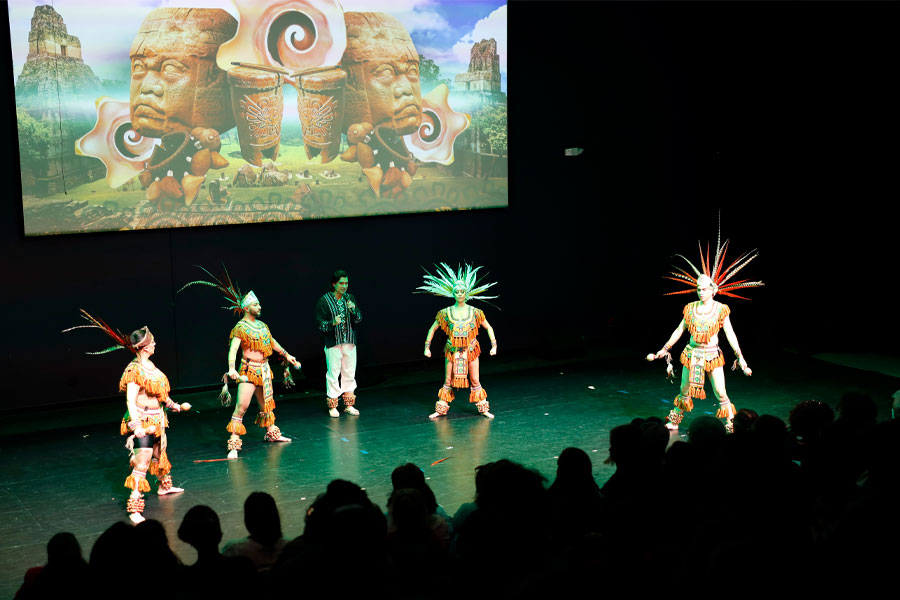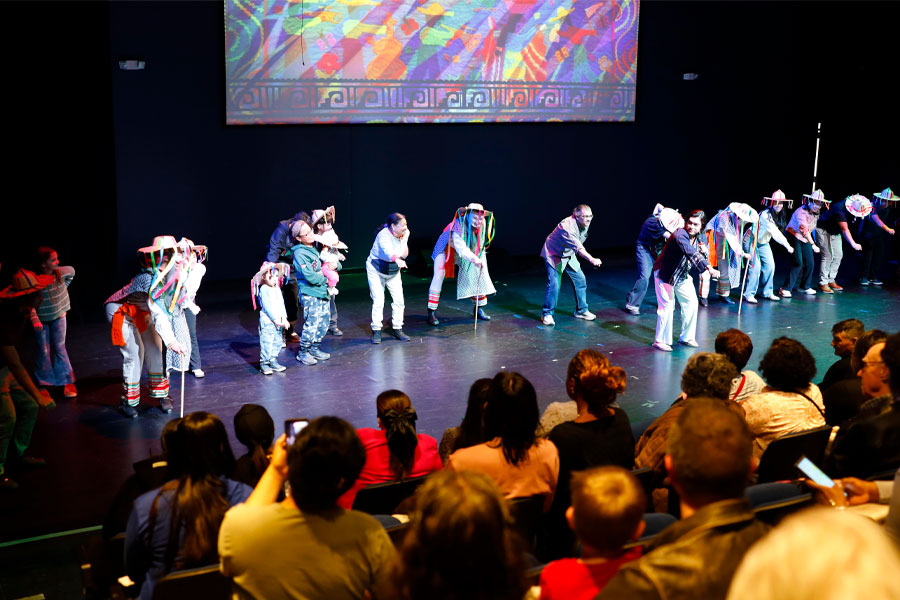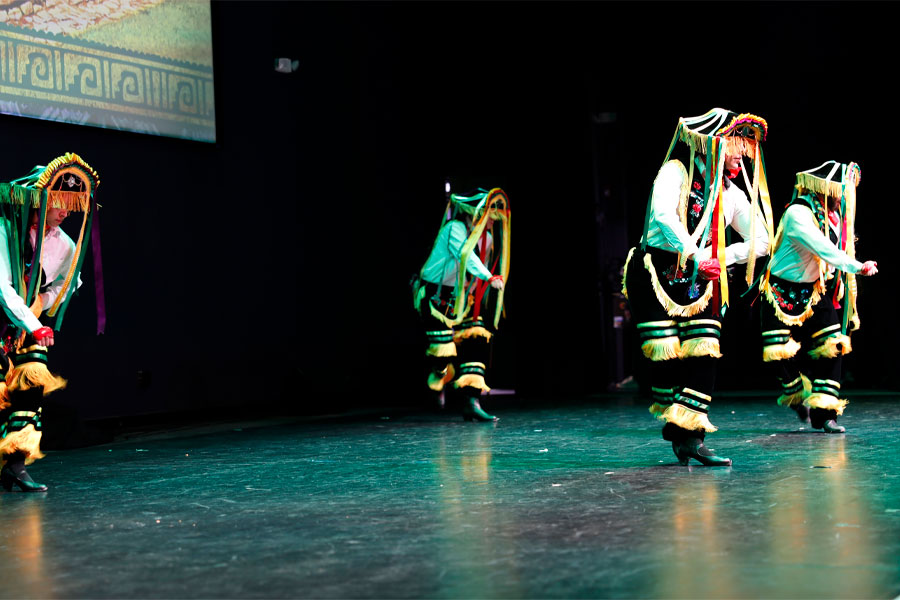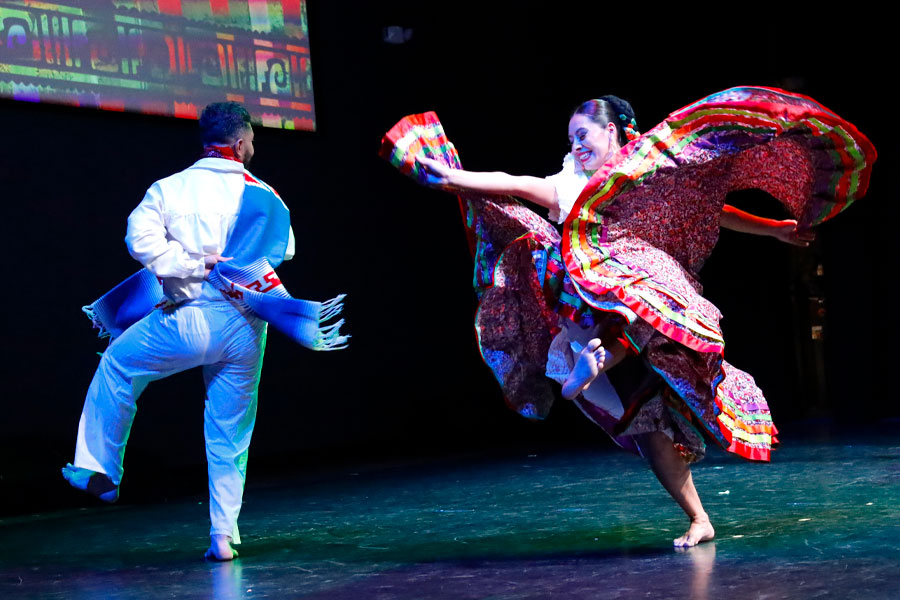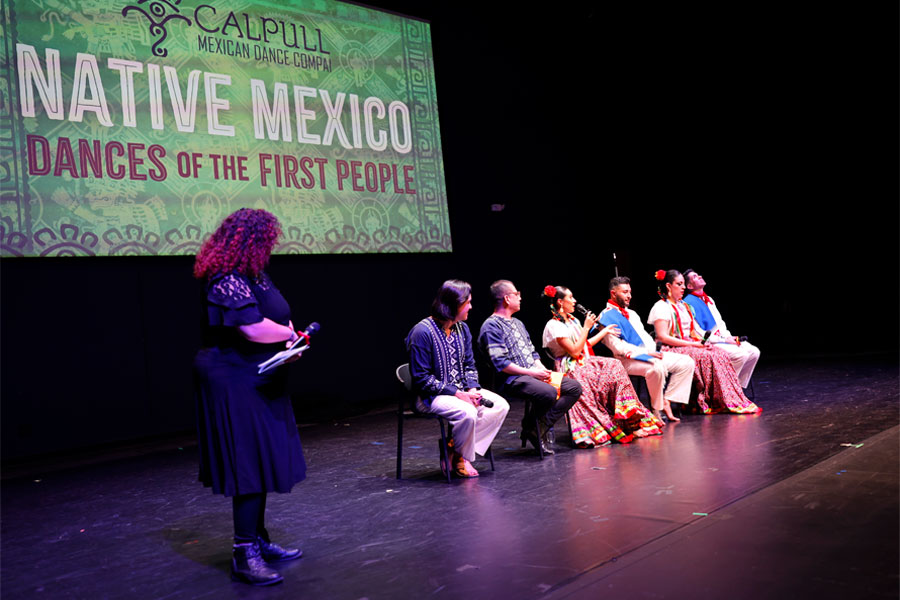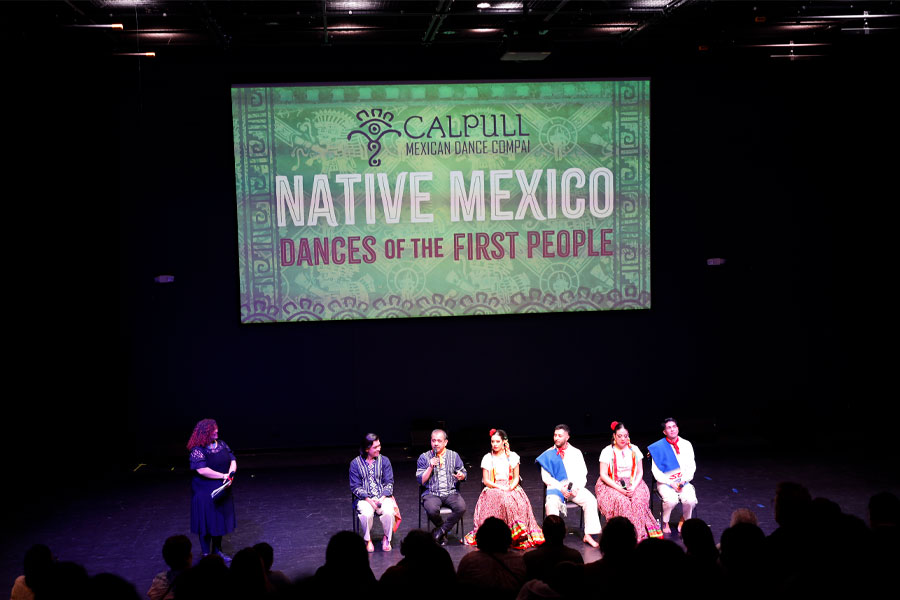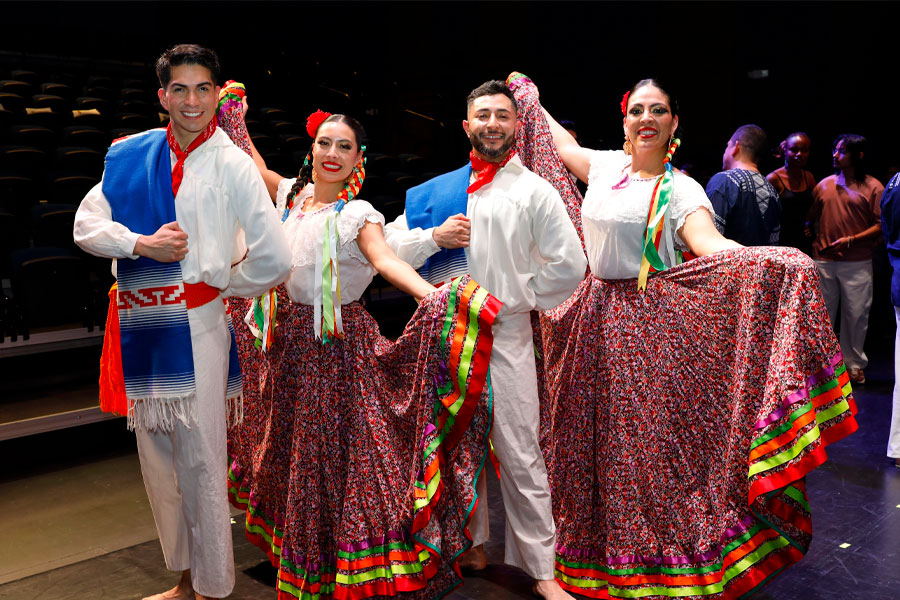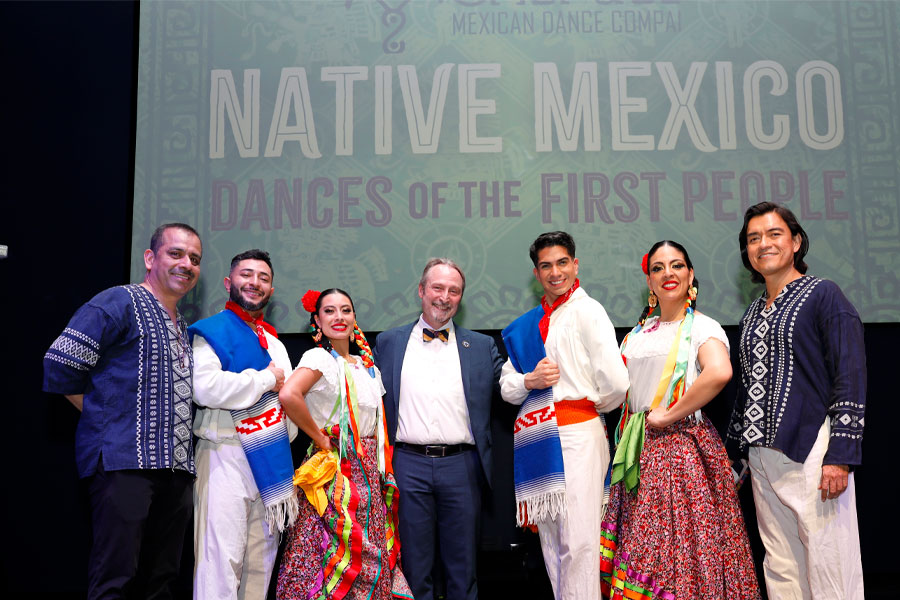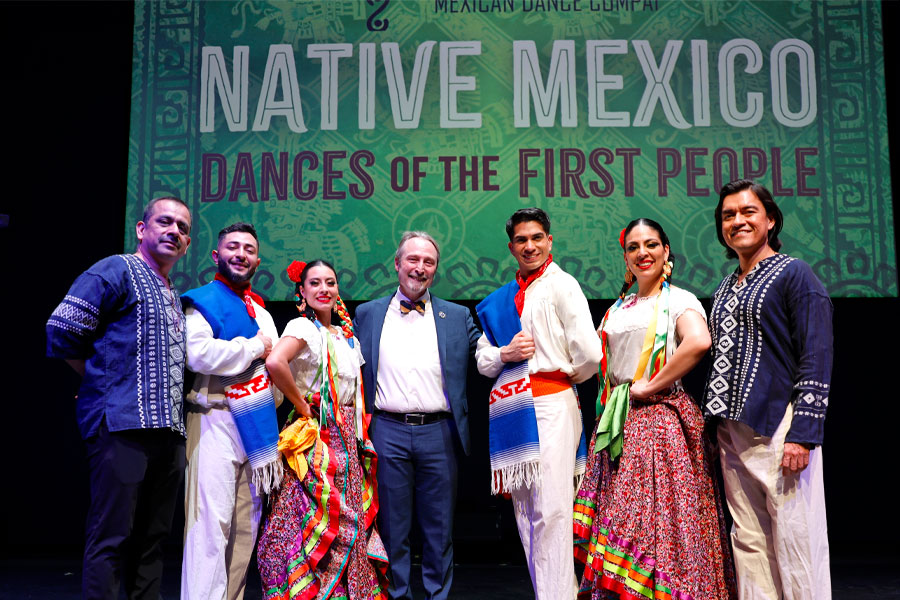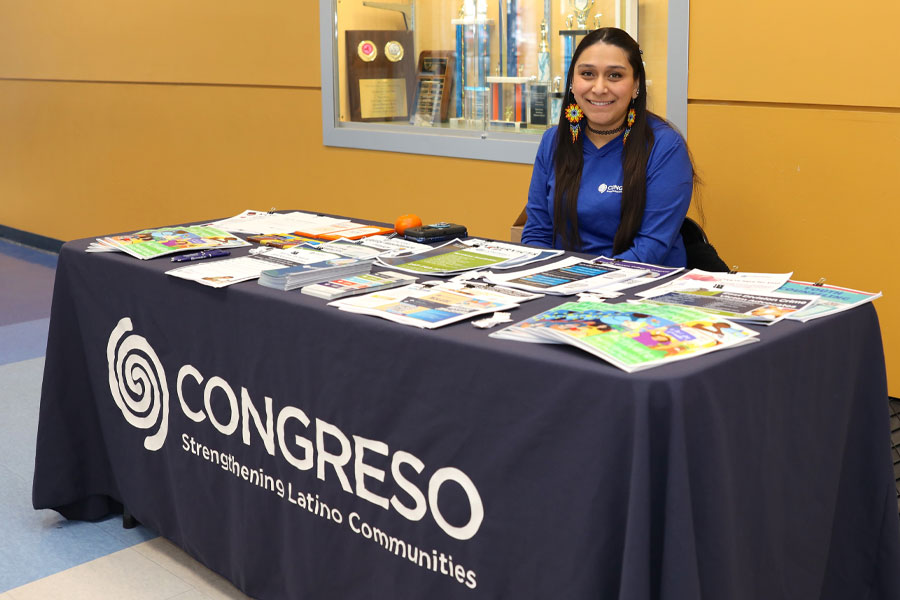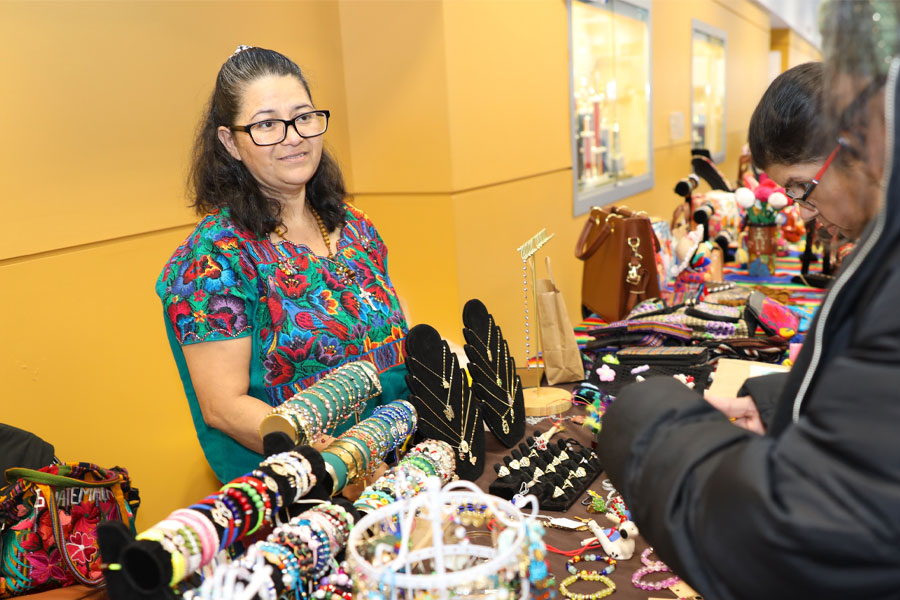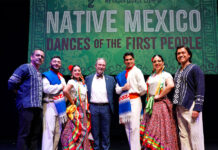


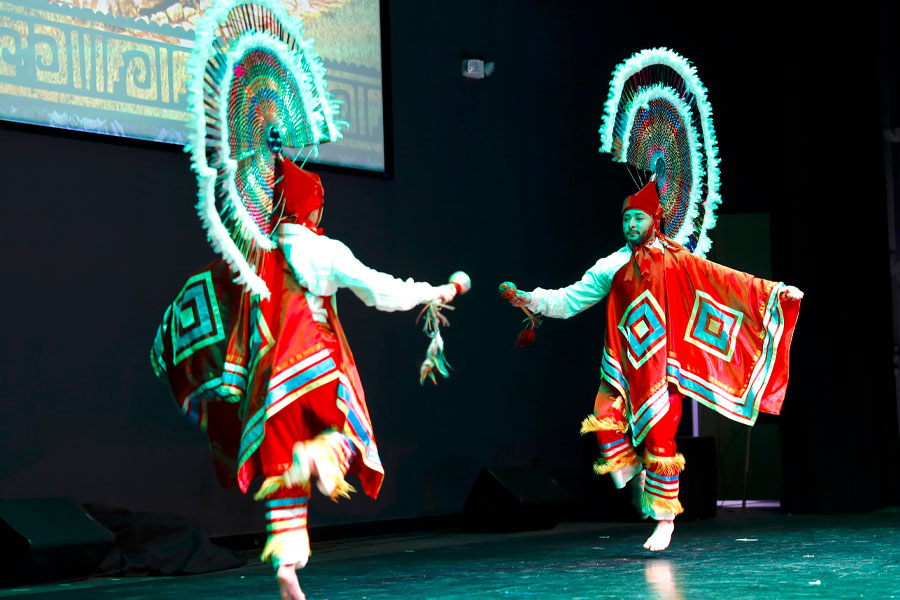
The interactive performance by the Mexican dance company Calpulli, “México Nativo: danzas de los primeros pueblos” paid tribute on February 21 at Teatro Esperanza to the pre‑Hispanic civilizations that preceded us and continue to inspire us today: Mexica, Purépecha, Zapotec, and Totonac. Calpulli also honored earlier civilizations in this roughly one‑hour production, including the Maya, Olmec, and Toltec peoples.
Through dance, costumes, and instruments rooted in pre‑Hispanic civilizations, the work—created by Calpulli co‑founder Alberto C. López Herrera—portrays rituals that honor the earth, the spirit, and community, connecting past and present. One of the highlights of the presentation was the demonstration of how traditions remain alive through movement and rhythm. The performance also featured a sample of folk dances, including “baile de los viejitos”, in which the audience was invited to participate.
The presentation celebrated cultural heritage, both past and present, serving as a reminder that traditions stay alive through movement and rhythm.
Calpulli invited the audience into a story that used the universal languages of dance, music, and the Mexican‑American spirit to connect with universal messages of love and hope.
To expand the artistic experience and strengthen the connection with the audience, the show included a narrator—Juan Castaño—who enriched the group’s presentation with explanations about Indigenous traditions, cultures, geography, art, music, dance, and languages, fostering intercultural appreciation.
The audience appreciated the Q&A session with co‑founders Castaño and López Herrera, as well as with the dancers who performed (Christopher Cortez, Cindy García, Criis Vega, and Isabella Vergara). Artistic direction was led by Grisel Pren, musical direction by George Sáenz, and associate musical direction by Yahir Montes. The beautiful costumes were designed by Alberto C. López.
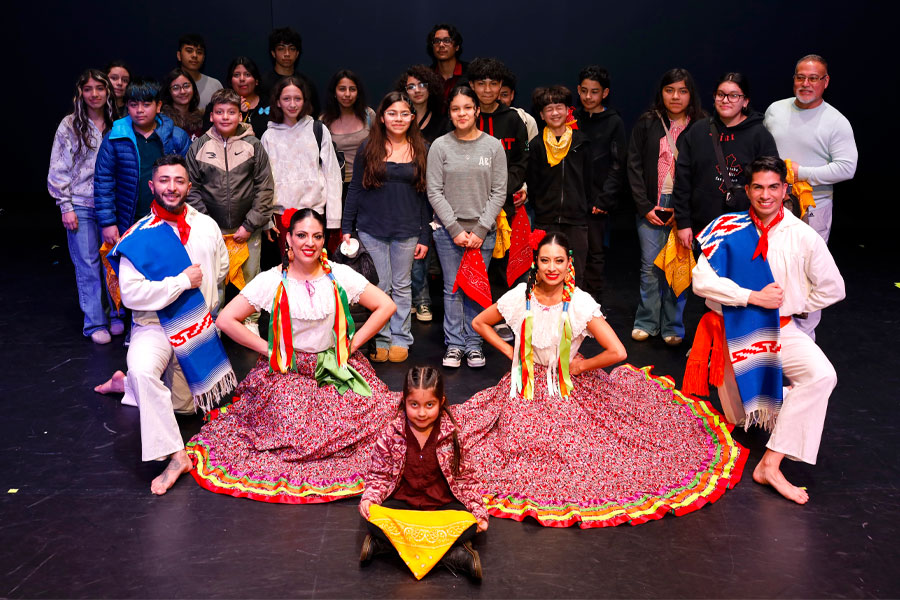
The event also included a strong educational component: an interactive workshop in which an enthusiastic audience took to the stage to learn and practice dance steps and movements taught by López Herrera, including powerful zapateado footwork and instruction on the use and meaning of the traditional handkerchief.
López Herrera—former artistic director of Calpulli and current art director for the “Arts in Education” program, who co‑founded the group alongside executive director Juan Castaño—reflected at the end of the workshop:
“I love sharing culture. As humanity, we need to focus more on sharing our culture, our own identity, and our connections with other cultures. That would help people be more human—sharing and seeing the opportunities we have; far more things unite us than divide us.”
Speaking about some of the pieces presented, he added:
“There are so many connections in Mexico… where each dance comes from, its origins, why we dance this way, and why some costumes resemble Spanish attire, why we perform zapateado the way we do. All those details enrich us rather than separate us.”
As the lights dimmed and the audience left the theater, Castaño recalled his first encounter with Esperanza as “a very special experience.” He was pleased with the performance, noting that their first connection with Esperanza happened during the pandemic, when the program was presented virtually. The group felt energized by that connection with Esperanza and its audience, “because it has a mission and shows an artistic trajectory that we are proud to be part of.” He also noted:
“Everything we thought and felt when speaking with Esperanza was reflected today in the audience—so lively, warm, and eager to participate.”
Calpulli’s executive director emphasized that they are eager to return to Teatro Esperanza:
“We hope to come back very soon. It was a pleasure to be here.”
Bill Rhoads, Senior Vice President of the Esperanza Arts Center, commented:
“It’s wonderful to see so many young people coming and participating in the show.”
Rhoads shared that the audience has been filling the theater at every performance this season, adding:
“But today’s performance, in particular, brought so many kids interested in traditions—not just listening, but getting on stage, which is fantastic.”
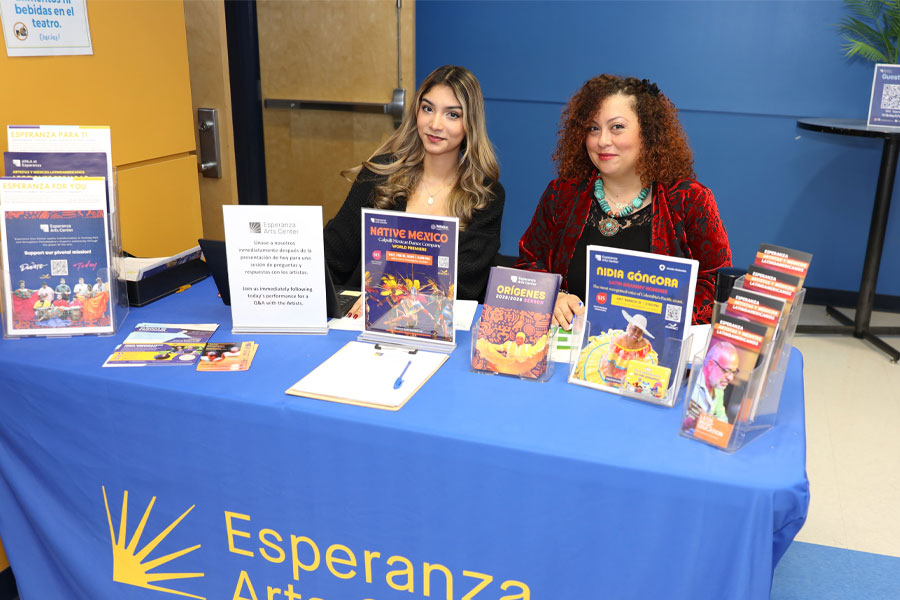
The show concluded with an invitation to the next performance on March 21, when Teatro Esperanza will present Grammy‑nominated Colombian Pacific Coast artist Nidia Góngora.
Tickets can be reserved at esperanzaartscenter.us.