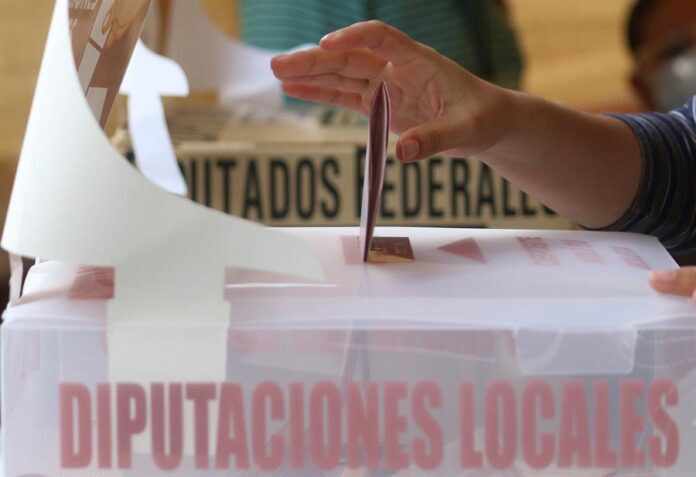
Fotografía de archivo que muestra una mujer emitiendo su voto en una casilla de la ciudad de Pachuca estado de Hidalgo (México). EFE/ Daniel Martínez Pelcastre
Ciudad de México, (EFE).- México permitirá por primera vez que casi 93.000 personas que están en prisión preventiva en 282 cárceles del país voten en las elecciones presidenciales de 2024, según decidió este viernes el Instituto Nacional Electoral (INE).
“Con los lineamientos para el derecho al voto de las personas en prisión preventiva, el @INEMexico (INE) maximiza el derecho a la participación de las y los ciudadanos en las #Elecciones2024MX”, anunció el organismo autónomo en la red social X.
Hasta ahora, esto solo era posible a nivel estatal y en 2021 los reclusos votaron en las elecciones a diputados federales.
“Con esta propuesta se contribuye a la promoción, respeto, protección y garantía de derecho al voto de las personas en prisión preventiva y en consecuencia se fortalece el ejercicio a sus derechos humanos”, dijo en la sesión el consejero Martín Faz, presidente de la Comisión de Capacitación y Organización Electoral.
Las personas que están privadas de la libertad podrán votar en las presidenciales, pero lo harán de forma anticipada, del 6 al 20 de mayo de 2024, y en aquellas entidades que tengan legislado dicho ejercicio podrán hacerlo también para cargos locales.
En el caso de la Ciudad de México podrán votar para la jefatura de Gobierno, diputaciones y alcaldías; en Chiapas por la gubernatura, diputaciones y ayuntamientos, mientras que en Hidalgo por gobiernos municipales.
El INE detalló que el escrutinio y cómputo de la votación se realizará en las mesas aprobadas por los consejos distritales, mientras que la incorporación de los resultados a los sistemas electorales lo realizarán el Instituto y los organismos públicos locales conforme a cada tipo de elección.
A los presos que quieran participar se les incluirá en la Lista Nominal, pero no se les entregará credencial físicamente y se considerará como domicilio el Centro Penitenciario en el que estén recluidos.
Desde 2019 las autoridades electorales organizaron una primera prueba piloto para garantizar este derecho a esta población.
Esto por la solicitud del Tribunal Electoral del Poder Judicial de la Federación (TEPJF), que en 2019 resolvió que las personas en prisión preventiva tienen derecho a votar como cualquier otro ciudadano, aunque pierden esta garantía por su condición jurídica, según las leyes mexicanas.
En este sentido, el INE realizó una prueba piloto en 2021 para garantizar dicha prerrogativa, lo que tuvo un resultado de participación superior al 94 % en cinco centros penitenciarios mexicanos.
Puesto 840 y su Unidad Auxiliar honran el Día de los Caídos. (Foto: Cortesía/Archivo)
Harrisburg, PA. – El representante estatal José Giral, Filadelfia, elogió la reciente aprobación de su legislación que honra a los Borinqueneers, quienes recibieron la Medalla de Oro del Congreso, y tendrán una placa de registro especial si se pasa en el Senado.
“Agradezco a la comunidad puertorriqueña por darme este honor de poder presentar esta importante pieza de legislación, una legislación que ha estado retrasada durante años. Y hasta ahora hemos dado el primer paso para hacer esto realidad, dándoles su propia placa”.
El Proyecto de Ley 826 de la Cámara de Representantes agrega una placa especial para automóviles de pasajeros o camiones disponible por $26 adicionales por encima de la tarifa de registro normal.
La Medalla de Oro del Congreso fue otorgada en 2016 al 65.º Regimiento de Infantería, una unidad puertorriqueña del Ejército de los Estados Unidos apodada “Los Borinqueneers”.
“El valor y la dedicación de los borinqueños a los Estados Unidos merecen reconocimiento y recuerdo. Me alegro de poder honrar su valentía”, dijo Giral.
“Una placa de registro tan única con los Borinqueneers puede servir como un recordatorio de los sacrificios hechos por estos veteranos puertorriqueños, así como un símbolo del vínculo duradero entre Puerto Rico y Estados Unidos”, agregó. «La placa de registro especial será una forma poderosa de conmemorar su servicio y garantizar que su legado perdure para las generaciones venideras».
“Soy muy privilegiado de poder representar a un distrito mayoritariamente puertorriqueño y envía un mensaje a todo el estado”.
El 65.º Regimiento de Infantería es la primera unidad hispana y la única unidad de la Guerra de Corea en recibir la Medalla de Oro del Congreso. Al regimiento también se le atribuye el último asalto con bayoneta del tamaño de un batallón en la historia del ejército de los EE. UU.
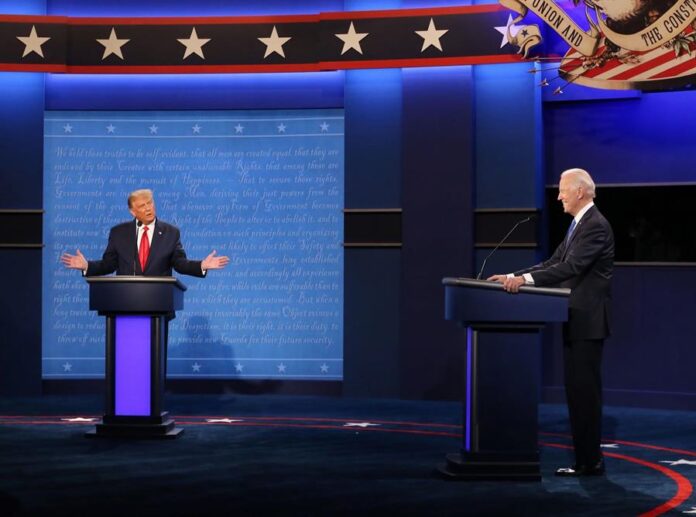
Fotografía de archivo del 22 de octubre de 2020 donde aparece el entonces presidente estadounidense Donald J. Trump (izq.) y el entonces candidato demócrata y actual presidente, Joe Biden, durante un debate en Nashville, Tennessee (EE. UU.). EFE/ Michael Reynolds
La cuenta atrás para uno de los procesos electorales más particulares en la historia de la democracia estadounidense comenzó este domingo, cuando faltará un año para que los ciudadanos elijan en las urnas a su presidente. Serán 52 semanas intensas en las que, entre otros episodios, republicanos y demócratas elegirán a sus candidatos.
¿Protagonizarán el presidente Joe Biden y el exmandatario Donald Trump un segundo asalto? Según las encuestas sí, pero este año se vivirán hechos insólitos que podrían cambiar el rumbo. Los más relevantes, los cuatro juicios penales a los que se someterá el republicano, favorito de su partido en las encuestas.
Del lado demócrata, Biden tiene casi asegurada la candidatura. Es la gran y casi única apuesta del Partido, que se aferra a una hipótesis contrastada: si pudo ganar a Trump una vez, podrá hacerlo dos.
Mientras que Trump, favorito de su partido, deberá vencer a figuras como Ron DeSantis, Nikki Haley, Vivek Ramaswamy o Chris Christie, quienes de momento no han logrado hacerle sombra ni se le acercan en las encuestas.
«Se perfila como una de las elecciones más inusuales que jamás hayamos tenido, con un candidato bajo juicio mientras se postula para la presidencia y un presidente en ejercicio tan mayor presentándose a la reelección», apunta a EFE Mark Caleb Smith, director del Centro de Estudios Políticos de la Universidad Cedarville.
El próximo 15 de enero los republicanos en Iowa y el 3 de febrero los demócratas en Carolina del Sur inician los procesos de primarias que sucederán en los 50 estados.
Supondrán el pistoletazo de salida para una serie de caucus y primarias con fechas clave como el 5 de marzo, el supermartes, hasta que el 15 de julio el Partido Republicano celebre su convención para oficializar al candidato. El 19 de agosto los demócratas harán lo propio.
¿Frenarán los juicios a Trump?
Aunque «no hay duda» de que Trump es el favorito, señala a EFE Christopher A. Cooper, director del Instituto de Políticas Públicas de la Universidad Western Carolina, todavía hay «cierto signo de interrogación».
«Si muchos candidatos salen del terreno de juego» y hay «un cara a cara entre Trump y otro», podría haber alguna sorpresa. Haley tiene hoy en día las mayores papeletas para lograrlo, según las encuestas.
Pero paralelamente a esta contienda interna, Trump se tendrá que enfrentar este año a cuatro juicios penales: por los pagos ilegales a la actriz Stormy Daniels; por el mal manejo de documentos clasificados; por intentar manipular los resultados de las elecciones de 2020 en Georgia y por su presunta injerencia para revertir el resultado electoral de 2020, caso que lo relaciona con el asalto al Capitolio.
Unos procesos que, por ahora, parecen no influirle negativamente, señala a EFE el profesor de Ciencias del Comportamiento de la Universidad de Ohio, Paul A. Beck: «Las acusaciones que han llegado no parecen haberle perjudicado en absoluto» sino que «sus comparecencias ante los tribunales son parte de su campaña», afirma.
Aunque en opinión del director del Centro de Liderazgo de la Universidad Mary Washington, Stephen J. Farnsworth, «el sistema legal en Estados Unidos no funciona según los estándares de las relaciones públicas».
«Donald Trump es muy bueno vendiéndose a sí mismo, pero los tribunales operan bajo las reglas de la ley y las pruebas; y sus fanfarronadas y sus apelaciones al victimismo no marcarán ninguna diferencia», afirma.
Aún así, en Estados Unidos no hay ninguna legislación que le impida concurrir a las elecciones, incluso si es declarado culpable. La ley no impide tampoco a Trump ser candidato presidencial desde la cárcel.
Biden, la única opción
Para Farnsworth, muchos demócratas están convencidos de que «la amenaza que representa Trump es tan grande» que había mucho riesgo en nominar a alguien que no sea Biden, «el único que ha vencido a Trump».
Algo que no comporte Smith: «No creo que eso sea cierto, pues creo que cualquier demócrata no radical habría derrotado a Trump en 2020 y lo volvería a hacer», dice el profesor de Cedarville, para quien los demócratas «han cometido un error de cálculo importante».
Y es que los sondeos no hablan bien del presidente. Según el termómetro de popularidad de FiveThirtyEight, el 54,1 % de los encuestados desaprueba a día de hoy las actuaciones de Biden.
Una encuesta publicada hace unas semanas por CBS News/YouGov afirmaba que solo el 16 % de los encuestados cree que el mandatario tiene salud física para servir como presidente y solo el 26 % cree que goza de salud cognitiva.
Otro problema que puede empeorar la imagen de Biden es la guerra de Israel. Según una encuesta del Instituto Árabe-Americano, el apoyo al presidente Biden entre los árabes estadounidenses, votantes cruciales en los estados electorales en disputa, ha caído a solo el 17%.
¿Quién ganaría un Biden vs Trump?
Otro de los puntos que hace insólita esta elección, en opinión de Smith, es que ni Biden ni Trump gozan de «un apoyo significativo de la mayoría del país».
Según Farnsworth, en este momento las encuestas muestran que el enfrentamiento «sería bastante reñido», aunque «las circunstancias actuales no son necesariamente las que serán dentro de un año».
Las condiciones económicas «pueden mejorar» este año y beneficiar a Biden y es posible «que Trump sea condenado», unas circunstancias que «son potencialmente más favorables para los demócratas».
Aún así, es muy probable que de nuevo sean los conocidos como «estados bisagra» los que acaben decidiendo la elección. Aquellos que no tienen claro su voto y son el punto de inflexión para la victoria.
Harrisburg, PA- State Rep. Jose Giral, D-Phila., praised the passage of his legislation that would honor the recipients of the Borinqueneers Congressional Gold Medal with a special registration plate.
House Bill 826 would add a special plate for passenger cars or trucks available for an additional $26 above the normal registration fee. The Congressional Gold Medal was awarded in 2016 to the 65th Infantry Regiment, a Puerto Rican unit of the U.S. Army nicknamed “The Borinqueneers.”
“The Borinquenner’s valor and dedication to the United States deserve recognition and remembrance. I am glad to be able to honor their courage,” Giral Said.
“Such a unique registration plate featuring the Borinqueneers can serve as a reminder of the sacrifices made by these Puerto Rican veterans, as well as a symbol of the enduring bond between Puerto Rico and the United States,” he added. “The special registration plate would be a powerful way to commemorate their service and ensure their legacy lives on for generations to come.”
The 65th Infantry Regiment is the first Hispanic unit and the sole unit from the Korean War to receive the Congressional Gold Medal. The regiment is also credited with the last battalion-sized bayonet assault in U.S. Army history.
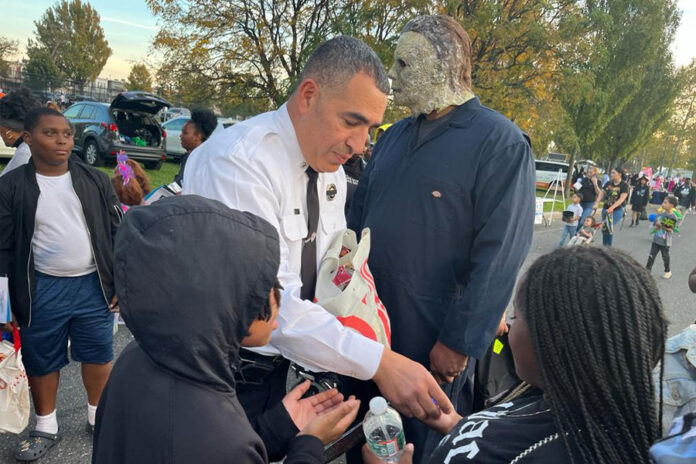
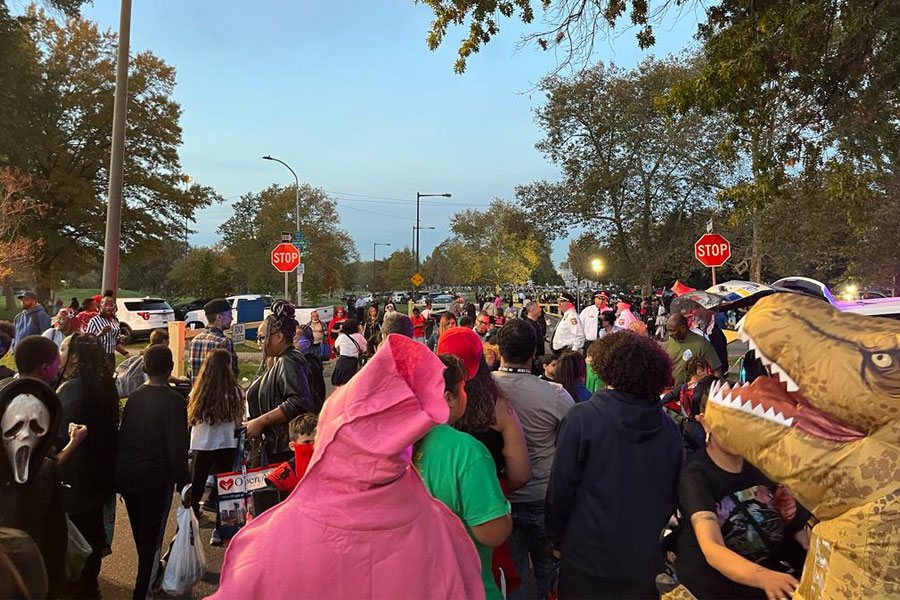
Javier Rodriguez-Irizarry, a former 25th police district captain and current inspector in the Philadelphia Police Department's training bureau, chatted with children, distributed candy, and connected with families. (Photo: by Lili Daliessio)
The 25th Police District in North Philadelphia hosted a Trunk & Treat Halloween party at Hunting Park on October 25, 2023. The event brought together people from various backgrounds and offered activities, candy, and resources from organizations like Esperanza, Concilio, State Representative Danilo Burgos’s staff, and Councilwoman Quetcy Lozada.
Leroy Fisher, Director of Community Services Outreach at the Philadelphia Sheriff’s Department, told Impacto, «Our 25th police district hosted this event to foster a great relationship with the community and provide a safe environment for kids to have fun, receive candy, and create lasting memories.»
Javier Rodriguez-Irizarry, a former 25th police district captain and current inspector in the Philadelphia Police Department’s training bureau, chatted with children, distributed candy, and connected with families while discussing the event’s origins. He explained, «This event began four years ago in the 19th police district. I envisioned bringing it to our community, and we’ve successfully done so. Today, we’re thrilled to see its growth, with more organizations participating in our trunk & treat Halloween party.»
Ivana Gonzalez, Community outreach coordinator at Esperanza, is giving treats and valuable resources. (Photo : by Lili Daliessio)
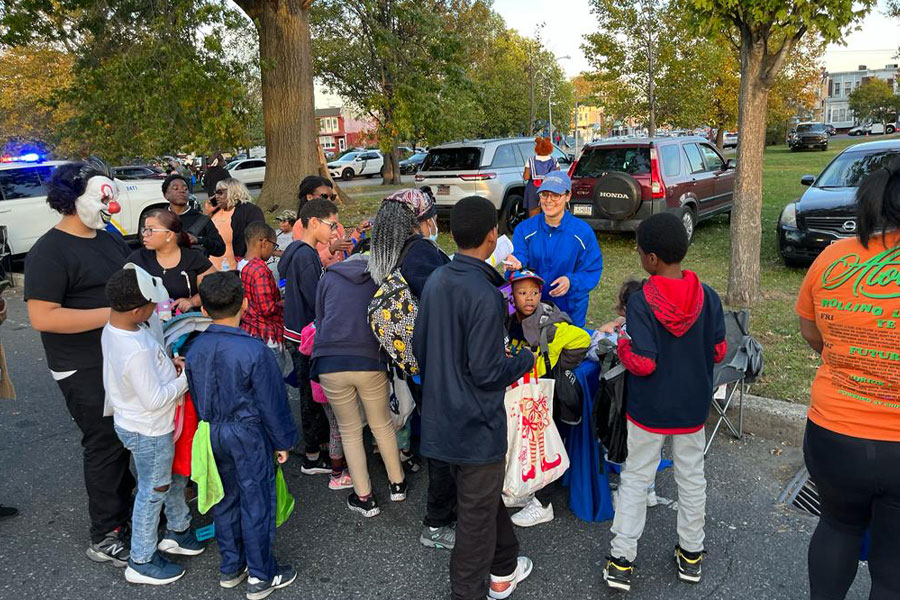
A highlight of the event was the trunk-or-treating activity, where police officers creatively decorated a patrol car for kids to collect candy safely. This unique twist on trick-or-treating brought joy to children, fostering trust and breaking barriers with officers. Nearly 50 families expressed happiness and gratitude for the event, vowing to return with their entire family every year. Captain Steven Wheeler of the 25th police district and Captain Christopher Bullick of the 24th Police District agreed that connecting with the community is vital; they appreciated providing a safe environment for the community where they can get some tricks, some hayrides, and the officers can give some candy, and the two districts can collaborate to reach a common goal.
The 25th Police District’s Trunk & Trick party shows that the police are not just enforcers of the law but also friends and allies in the community. The community had fun at the event. (Photo: by Lili Daliessio)
Esperanza joined the event. Ivana Gonzalez, Community outreach coordinator, ensured that the community benefited not only from treats but also from valuable resources. They distributed candy and shared information about the various programs and services they offer to residents in the area.
The Trunk & Treat Halloween party also featured a variety of games and activities suitable for all ages. Face painting, costume contests, and pumpkin decorating stations provided opportunities for creativity and fun. This festive atmosphere allowed families to connect with one another, reinforcing the sense of unity in North Philadelphia.
Local businesses and community members played an active role in the event’s success by volunteering their time and resources. It’s proof of the strength of a community when everyone comes together for a common cause.
By providing a safe and enjoyable environment, the 25th Police District’s Halloween party shows that the police are not just enforcers of the law but also friends and allies in the community. This positive interaction between the police and the residents helps break down stereotypes and build a stronger, safer neighborhood.
Hosting this event is a way to connect on a different level with the community they serve.
Lili Daliessio is the Community Information Manager at Esperanza Housing and Economic Development.

Una nube de humo negro se alza después de un ataque aéreo israelí a las afueras de Aita al-Shaab, una aldea cerca de la frontera sur de Líbano con Israel, sábado 4 de noviembre de 2023. (AP Foto/Hussein Malla)
MANIFESTANTES ISRAELÍES EXIGEN RENUNCIA DE NETANYAHU
Miles de israelíes se manifiestan frente a la residencia oficial del primer ministro Benjamin Netanyahu en el centro de Jerusalén, para exigir que renuncie tras el ataque sangriento de Hamas del 7 de octubre que provocó la actual guerra entre Israel y Hamas.
Hasta el momento Netanyahu se ha negado a asumir responsabilidad por el ataque del 7 de octubre, en el que varios miles de milicianos de Hamas irrumpieron en Israel y mataron a más de 1.400 personas y se llevaron secuestradas a unas 240 a Gaza. Agregó que funcionarios, incluido él mismo, tendrán que dar respuestas al público, pero sólo después de la guerra.
Durante semanas Israel ha lanzado ataques aéreos y ofensivas terrestres en Gaza. Durante la protesta nocturna del sábado, los manifestantes pidieron la renuncia de Netanyahu y que exigiera el regreso de los secuestrados. También guardaron un momento de silencio para las víctimas del ataque y los secuestrados.
“En dónde estabas en Kfar Azz”, coreaban los manifestantes en referencia a una de las poblaciones fronterizas israelíes que fueron invadida por Hamas.
“Vine aquí a rescatar al país”, dijo Nava Hefetz, un rabino y activista de derechos humanos que participó en la protesta.
Por su parte el secretario de Estado Antony Blinken se encuentra el sábado en Ammán, Jordania, luego de un viaje a Israel para mantener conversaciones sobre la guerra entre Israel y Hamas.
El secretario de Estado de Estados Unidos, Antony Blinken, dijo el sábado que tanto Washington como los estados árabes creen que el status quo de una Gaza controlada por Hamás no puede continuar y que ha discutido con sus homólogos árabes cómo trazar un mejor camino a seguir hacia una solución de dos Estados.
En una conferencia de prensa en Ammán, junto con sus homólogos egipcio y jordano, el máximo diplomático estadounidense también dijo que Washington estaba preocupado por la violencia de los colonos extremistas en Cisjordania.
Blinken reiteró que la visión de su gobierno es que un “cese el fuego dejaría a Hamás en un lugar para poder reagruparse y repetir lo que hizo el 7 de octubre”.
Sin embargo, tanto Sameh Shoukry de Egipto como Ayman Safadi de Jordania, hicieron llamados directos al cese el fuego. “No aceptamos que esto sea defensa propia”, dijo Safadi, en contraste a las declaraciones de Blinken, quien insistió en que “Israel tiene derecho y obligación a defenderse”.
“Nos reunimos hoy aquí compartiendo los mismos intereses y objetivos fundamentales de poner fin a este conflicto de una manera que garantice una paz y seguridad duraderas en la región. Es posible que tengamos diferentes puntos de vista y posiciones en ciertos pasos necesarios para lograr ese objetivo”, agregó Blinken al señalar que EE. UU. permanece firme en su creencia de la necesidad de una “pausa humanitaria” para llevar suministros a las víctimas civiles.
“Las desafortunadas matanzas en Gaza no pueden justificarse”, agregó Shoukry.
Un punto en el que acordaron los estados árabes y EE. UU., según Blinken, fue que el status quo de una Gaza controlada por Hamás no puede continuar y que han discutido cómo trazar un mejor camino hacia una solución de dos estados.
En Ammán, Blinken se reunió con funcionarios jordanos, junto con ministros de Asuntos Exteriores árabes de Arabia Saudita, Emiratos Árabes Unidos, Egipto y Qatar, así como con el secretario general del comité ejecutivo de la Organización de Liberación de Palestina.
Se han estado reuniendo para elaborar planes para poner fin a la crisis humanitaria de Gaza y a la guerra entre Israel y Hamás.
Blinken también se reunió el sábado con el primer ministro interino del Líbano, Najib Mikati.
Antes de la visita de Blinken, el ministro de Asuntos Exteriores jordano, Ayman Safadi, dijo en un comunicado que Israel debe poner fin a la guerra en Gaza, donde, según dijo, está cometiendo crímenes de guerra al bombardear a civiles e imponer un asedio.
EFE/EPA/SHAWN THEW
El viernes, Blinken dijo que prevenir la escalada y propagación del conflicto entre Israel y Hamas, que ya dura casi un mes, era la máxima prioridad después de reunirse con el primer ministro Benjamín Netanyahu y el gabinete de guerra de Israel en Tel Aviv.
Después de la reunión, Blinken describió a los periodistas los pasos que, según dijo, se deben tomar para garantizar que un ataque como el de Hamas el 7 de octubre nunca vuelva a ocurrir y para garantizar un «mañana mejor» para el pueblo de Israel y los palestinos.
«Hemos dejado claro que mientras Israel lleva a cabo su campaña para derrotar a Hamás, importa cómo lo haga. Importa porque es lo correcto y lícito. Importa porque no hacerlo favorece a Hamás y otros grupos terroristas. grupos», dijo Blinken.
«No habrá socios para la paz si están consumidos por una catástrofe humanitaria y alienados por cualquier percepción de indiferencia ante su difícil situación», afirmó.
Estados Unidos respalda el derecho «y la obligación» de Israel de defenderse, dijo Blinken, pero también pidió a Israel que detenga las operaciones militares y permita que entre más ayuda humanitaria a Gaza. Proteger a los civiles palestinos es la segunda prioridad de su viaje, dijo.
En respuesta, Netanyahu dijo: «Continuamos con todas nuestras fuerzas e Israel se niega a una tregua temporal que no incluya la liberación de nuestros rehenes». El grupo terrorista Hamás, designado por Estados Unidos, tomó al menos 230 rehenes y mató a más 1.400 personas en su ataque.
Cientos de miles de palestinos han quedado sin hogar debido a los ataques aéreos israelíes en respuesta al ataque terrorista de Hamas. El Ministerio de Salud dirigido por Hamas dijo el viernes que el número de muertos en el enclave superó los 9400, dijo Naciones Unidas.
Blinken dijo que 100 camiones al día entran ahora en la zona a través del paso fronterizo de Rafah desde Egipto, pero que todavía no es suficiente. La ayuda necesita aumentar «sustancial e inmediatamente» a Gaza, dijo, añadiendo que sacar a los ciudadanos estadounidenses y otros extranjeros de Gaza es su tercera prioridad. Dijo que Israel indicó que estaba comprometido a permitir una mayor ayuda a la zona.
Se le preguntó a Blinken sobre un discurso pronunciado el viernes por el líder de Hezbollah en el Líbano, Hassan Nasrallah.
Nasrallah negó cualquier participación en el ataque del 7 de octubre contra Israel y no anunció su intención de entrar en la guerra, diciendo que, en efecto, Hezbollah ya había entrado en la guerra con su intercambio de cohetes y fuego de artillería de una semana de duración con Israel.
«Con respecto al Líbano, con respecto a Hezbollah, con respecto a Irán», dijo Blinken, «hemos sido muy claros desde el principio en que estamos decididos a que no se abra un segundo o tercer frente en este conflicto». Blinken habló con periodistas en Israel y señaló que Estados Unidos ha desplegado dos grupos de batalla de portaaviones en la región como elemento disuasorio ante un conflicto cada vez mayor.
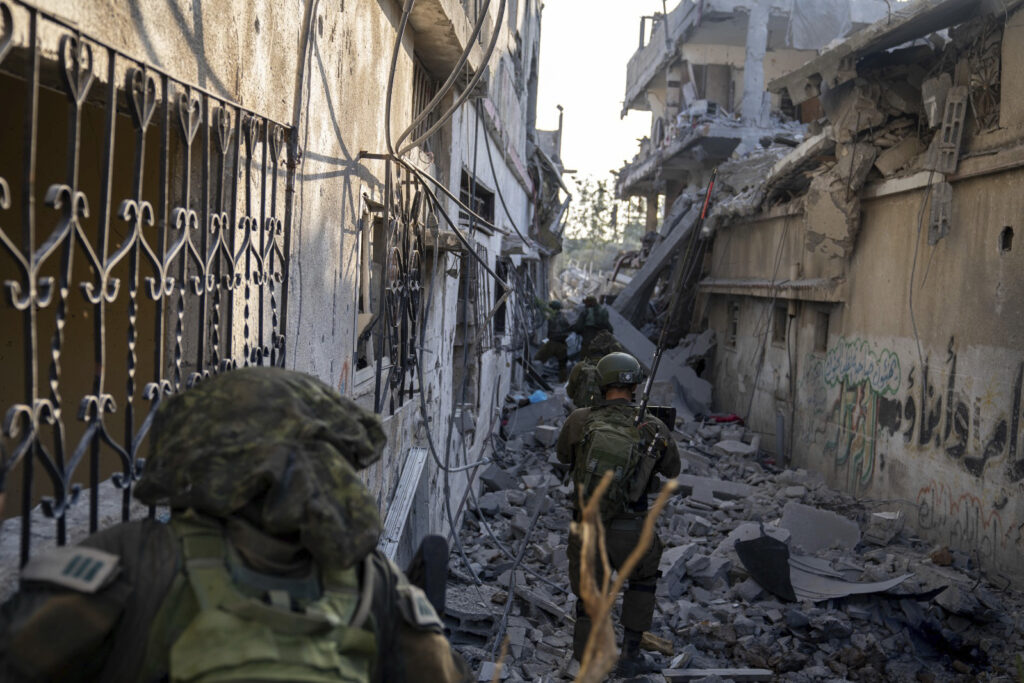
En esta imagen sin fecha, proporcionada por el ejército de Israel, soldados participan en su campaña terrestre en la Franja de Gaza. (Fuerzas de Defensa de Israel vía AP)
La visita de Blinken se produce cuando las tropas terrestres israelíes han rodeado la ciudad de Gaza en medio de esfuerzos diplomáticos más amplios para detener la guerra entre Israel y Hamas para que pueda ingresar a Gaza una mayor ayuda humanitaria.
Las Naciones Unidas y varias agencias de ayuda advierten de una catástrofe humanitaria en Gaza a menos que se permita la entrada de mayores cantidades de ayuda al territorio. Israel impuso un bloqueo total a Gaza poco después del ataque de Hamás. Eso y los incesantes ataques aéreos han provocado escasez de alimentos, agua potable y combustible en Gaza, hogar de unos 2,3 millones de personas.
Secretario de Defensa suspende apoyo military a viajes del Congreso a Israel
Mientras tanto, el secretario de Defensa de Estados Unidos, Lloyd Austin, emitió un memorando que suspende el apoyo militar a los viajes del Congreso a Israel y restringe las visitas de muchos altos líderes militares.
Un alto funcionario de defensa, hablando con la VOA bajo condición de anonimato, dijo que la decisión se tomó porque los viajes adicionales en un entorno de guerra peligroso supondrían «riesgos innecesarios y una carga indebida para nuestras fuerzas».
En otros acontecimientos del viernes, Israel comenzó a enviar de regreso a Gaza a miles de trabajadores palestinos que quedaron varados en Israel tras el ataque de Hamas.
Mientras tanto, se esperaba que más ciudadanos extranjeros que estaban atrapados en Gaza desde el comienzo de la guerra abandonaran el territorio a través del cruce fronterizo de Rafah hacia Egipto.
Cientos de extranjeros abandonaron Gaza a través de Rafah el miércoles y jueves, al igual que decenas de palestinos gravemente heridos.
La reapertura del cruce fronterizo de Rafah para permitir la salida de los titulares de pasaportes extranjeros fue parte de un acuerdo negociado por Qatar entre Israel, Egipto y Hamás.
[La corresponsal de la VOA en el Departamento de Estado, Cindy Saine, y la corresponsal de la VOA en la ONU, Margaret Besheer, contribuyeron a este informe. Alguna información también provino de The Associated Press, Reuters y Agence France-Presse]
Miles de personas se manifiestan en Washington para pedir un alto al fuego en Gaza
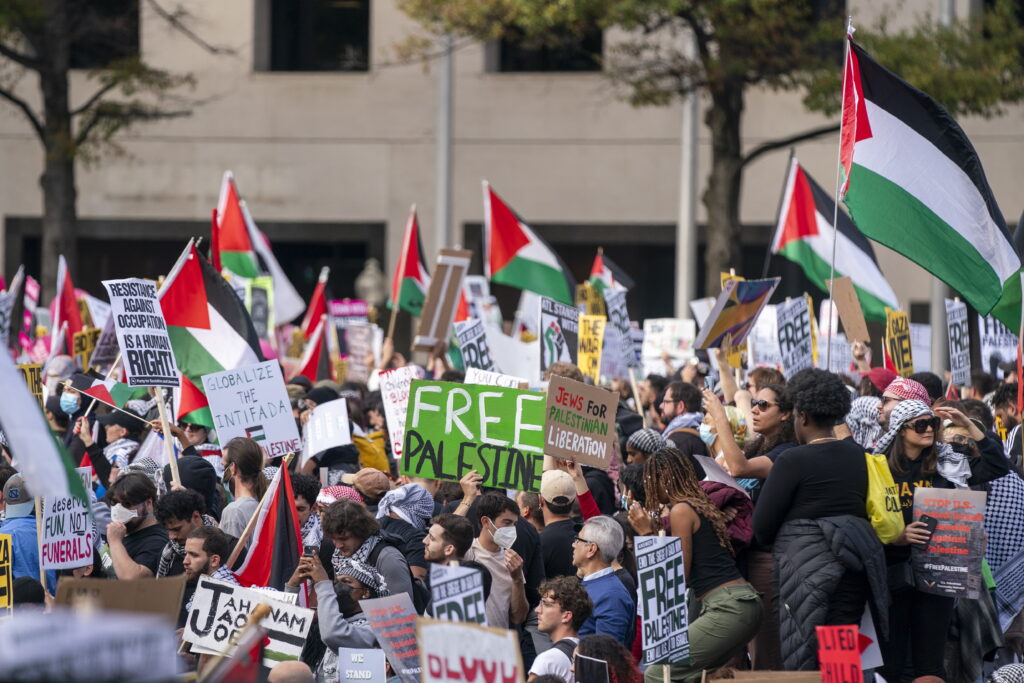
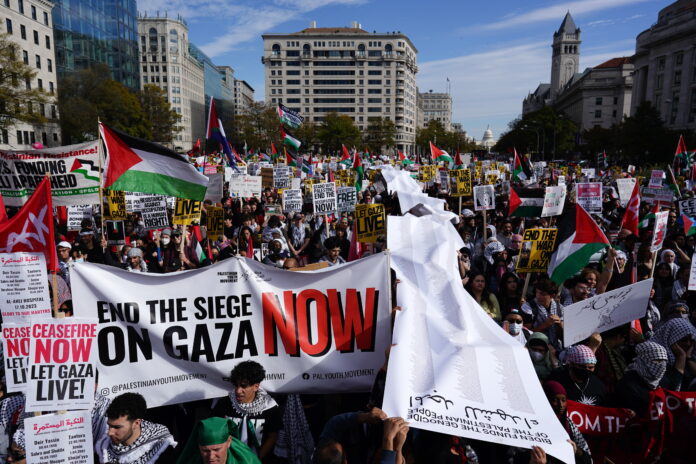
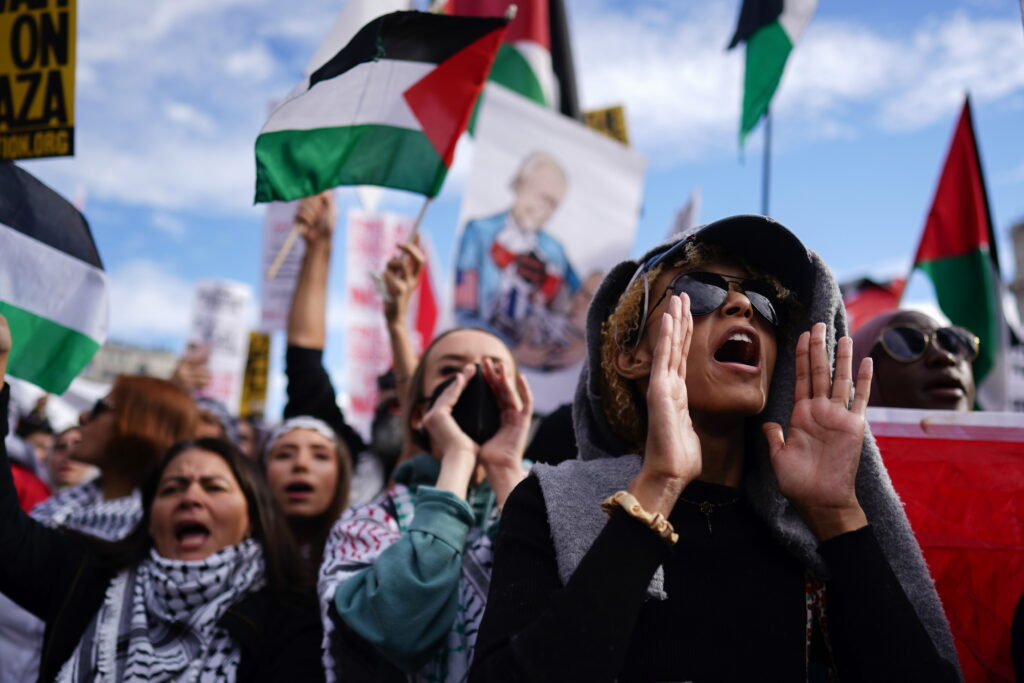
Envueltos en banderas palestinas y con gritos de rabia, miles de personas tomaron este sábado las calles de la capital de Estados Unidos para reclamar un alto al fuego en la Franja de Gaza, donde según las autoridades palestinas, la ofensiva israelí se ha cobrado casi 9.500 vidas, la mayoría de niños y mujeres.
El corazón de Washington se vio inundado durante horas por una multitud que se extendía hasta donde alcanzaba la vista. Los organizadores de la protesta, que incluyen tanto a grupos propalestinos como a entidades judías antisionistas, esperaban que esta manifestación se convirtiera en la mayor en apoyo a los palestinos en la historia de Estados Unidos.
Hasta 30.000 personas esperaban reunir los organizadores de la protesta bautizada “Marcha Nacional en Wahington: Por una Palestina libre”, según un permiso emitido por el Servicio de Parques Nacionales.
“Necesitamos un alto al fuego, ahora. Y gritaré para que se haga realidad, hasta el día que muera o hasta el final de los tiempos. Necesita ocurrir ya, ¡ahora!”, dijo a EFE Amir Mahtie, de 23 años y que había viajado desde Nueva Jersey a Washington con unas amigas para participar en la protesta.
Decepción de los árabe-estadounidenses con Biden
Mahtie, de origen egipcio y dominicano, se mostró especialmente crítica con la postura del presidente estadounidense, Joe Biden, quien ha solicitado una «pausa» en el conflicto entre Israel y el grupo islamista palestino Hamás, pero se ha mostrado contrario a un alto al fuego.
«Me siento profundamente decepcionada. Es una injusticia colosal que la persona por la que voté en 2020, en quien deposité mi confianza, ahora tenga la sangre de gente inocente en sus manos», manifestó Mahtie.
La joven afirmó que «100% seguro» no votará por Biden en las elecciones presidenciales de 2024, en las que el presidente buscará la reelección y podría volver a enfrentarse con Donald Trump, quien parte como favorito para ser el candidato del Partido Republicano.
Su amiga, Aliaa Essaf, de 21 años y origen marroquí, tenía la misma opinión. «Biden no va a tener mi voto y lo puedo decir con total seguridad. Creo que los árabe-estadounidenses en general están profundamente asqueados y desilusionados por el rumbo que ha tomado Biden, y definitivamente no lo apoyaré», subrayó Essaf.
La posición de estas jóvenes refleja la opinión de muchos estadounidenses, según una encuesta reciente publicada por el Instituto Árabe-Americano. Según ese sondeo, el respaldo a Biden entre los árabe-estadounidenses, un grupo de votantes crucial en estados disputados, ha disminuido considerablemente, pasando de un cómodo 59% en 2020 a tan solo el 17%.
La manifestación fue un clamor de hartazgo contra la posición que Estados Unidos ha mantenido durante décadas, habiéndose convertido en el principal proveedor de ayuda militar a Israel desde la Segunda Guerra Mundial.
Desde niños hasta abuelos, los participantes portaban kufiyas, el tradicional pañuelo palestino, y coreaban consignas como «¡Palestina libre, Palestina libre!» y «¡Alto al fuego ahora!».
EFE/EPA/WILL OLIVER
El clamor de negros, hispanos e indígenas
La protesta comenzó sobre las 14.00 hora local (18.00 GMT) en la Plaza de la Libertad en el centro de Washington y, después de aproximadamente tres horas de cánticos en esa ubicación, los manifestantes se dirigieron hacia la Casa Blanca, llenando las calles de banderas palestinas.
Entre los manifestantes había una presencia destacada de miembros de minorías raciales, como negros, hispanos e indígenas, además de cientos de árabe estadounidenses.
Tara Houska, una destacada defensora de los derechos de los nativos americanos, consideró en declaraciones a EFE que las autoridades estadounidenses están perpetuando de manera evidente en la Franja de Gaza el «legado de colonización» que pervive en los cimientos de Estados Unidos.
Por su parte, Alyssa Park, una joven afroamericana de 21 años, también destacó la conexión entre la lucha por la igualdad racial y lo que ocurre en Gaza.
Como miembro de una minoría que ha enfrentado opresión durante de décadas, Park dijo sentir una profunda empatía con el sufrimiento del pueblo palestino, afirmando: «Es fácil sentirse identificado porque sabemos cómo se están sintiendo».
Según una reciente encuesta realizada por la Universidad de Quinnipiac, las minorías raciales muestran un alto nivel de descontento con la gestión de Biden en el conflicto, con un 40% de votantes afroamericanos y un 50% de votantes hispanos expresando su insatisfacción.
La marcha fue convocada por la coalición ANSWER, creada tras los ataques del 11 de septiembre de 2001, y que reúne a organizaciones palestinas, judías antisionistas, defensoras de los derechos LGTBIQ+ y del medio ambiente.
En una demostración de fuerza, la coalición ANSWER organizó dos grandes protestas: una en Washington DC, a la que acudieron miles de personas desde diferentes puntos de la costa este en autobús, y otra en San Francisco, donde se concentraron los manifestantes de la costa oeste. También hubo protestas en otras ciudades como Nueva York.
El conflicto estalló el 7 de octubre tras un ataque masivo de Hamás, que dejó 1.400 fallecidos (la mayoría civiles), y al que Israel respondió con bombardeos constantes contra la Franja de Gaza y una incursión terrestre que comenzó hace una semana, resultando en casi 9.500 fallecidos en el lado palestino.
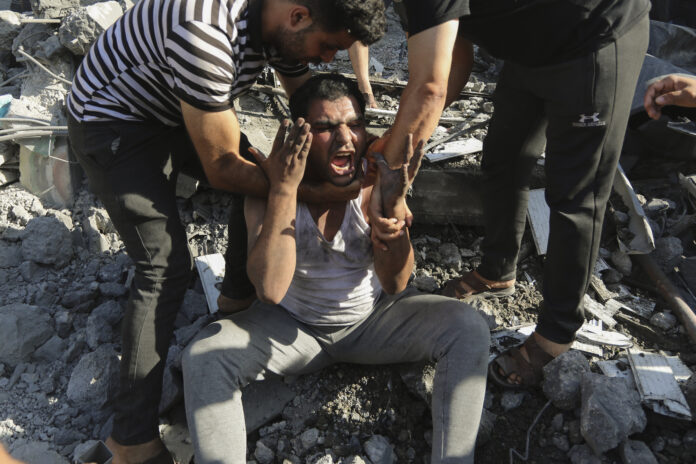
Palestinos consuelan a un hombre que llora después de perder a familiares por bombardeos de Israel en Ciudad de Gaza, el sábado 4 de noviembre de 2023. (AP Foto/Abed Khaled)
Jerusalén- La guerra entre Israel y Hamás rápidamente se ha convertido en la más mortal y destructiva de las cinco guerras que han librado desde que Hamás tomó el control de la Franja de Gaza en 2007.
La más reciente lucha estalló el 7 de octubre, cuando Hamás atacó de forma sorpresiva el sur de Israel. Desde entonces, Israel ha bombardeado la Franja de Gaza y ha provocado una destrucción sin precedentes y arrasado con barrios enteros.
A continuación, un vistazo a las cifras de los estragos de la guerra hasta el 4 de noviembre, obtenidas del Ministerio de Salud de Gaza y funcionarios israelíes, así como observadores internacionales y grupos de asistencia:9.227
El número de palestinos muertos en Gaza.144
El número de palestinos muertos en Cisjordania.1.400
El número de muertos en Israel.24
El número de soldados israelíes muertos desde el inicio de la ofensiva terrestre.23.516
El número de palestinos heridos en Gaza.2.200
El número de palestinos heridos en Cisjordania.5.400
El número de israelíes lesionados.250.000
El número de israelíes desplazados.Más de 1,4 millones
El número de palestinos desplazados en Gaza.Al menos 241
El número de rehenes en Gaza.5
El número de rehenes liberados o rescatados.421
El número de camiones de ayuda que entraron a Gaza.33.960
El número de unidades residenciales destruidas en Gaza.
Fuentes: Reportes de Associated Press, Ministerio de Salud de Gaza, ejército israelí, Oficina de Coordinación de Asuntos Humanitarios de la ONU, Media Luna Roja Palestina.
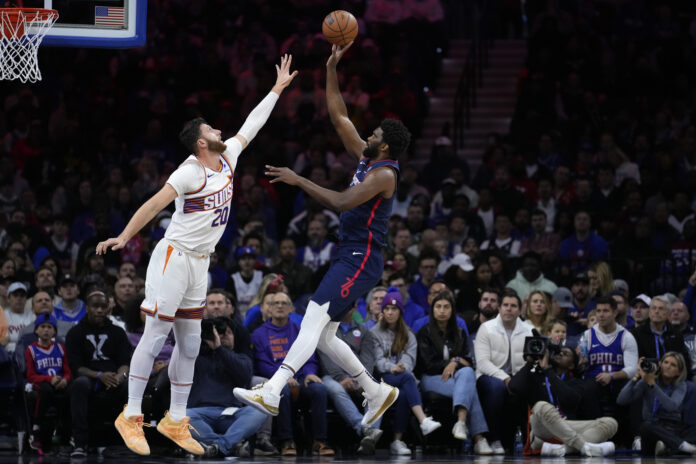
Joel Embiid de los 76ers de Filadelfia salta para lanzar el balón sobre Jusuf Nurkic de los Suns de Phoenix en el encuentro del sábado 4 de noviembre del 2023. (AP Foto/Matt Slocum)
Joel Embiid sumó 26 puntos y 11 rebotes, Kelly Oubre Jr. anotó 25 unidades y los 76ers de Filadelfia superaron el sábado por 112-100 a los Suns de Phoenix para ligar su cuarta victoria seguida.
Los Suns no contaron con Bradley Beal (espasmos en la espalda). Devin Booker (esguince en el tobillo izquierdo) y tambalearon en el cuarto periodo para sufrir su tercera derrota seguida. Kevin Durant mantuvo a Phoenix cerca hasta el final con 31 tantos, además atinó 12 de 14 tiros libres.
Tyrese Maxey firmó 22 puntos y 10 asistencias, mientras que Tobias Harris agregó 18 tantos y 10 tablas por los Sixers.
Filadelfia llevará tan lejos como los puedan llevar Embiid y Maxey, quien cumple 23 años este sábado. Pero ninguno de los dos despegó en la primera mitad y sumar 7 de 23 intentos de tiro de campo.
Embiid además recibió una falta flagrante cuando golpeó con el codo a Jusuf Nurkic en la cara. Maxey dejó ir una en doble cobertura y que llevó a una canasta de los Suns.
Los 76ers fueron estabilizados por otra gran actuación de Harris y Oubre.
Harrisburg, PA –Pennsylvania State Fire Commissioner Thomas Cook is highlighting the importance of fresh batteries in smoke alarms and carbon monoxide detectors as Pennsylvanians’ attention turns toward fall and this weekend’s “fall back” time change.
“Smoke alarms and carbon monoxide detectors are examples of essential lifesaving apparatus,” Cook said. “Just like the rest of our household equipment, these devices require routine maintenance. Simply put, a functional smoke alarm and carbon monoxide detector is the most effective way to ensure one’s family members are alerted early enough to respond. Test your alarms monthly and replace the batteries regularly.”
According to data from the National Fire Protection Association, from the moment an alarm sounds, occupants may have as little as two minutes to safely exit the building.
Cook added dead or missing batteries are the most common cause of smoke alarm or carbon monoxide detector malfunctions. When functioning, smoke alarms can decrease the risk of dying in a home fire by as much as half.
Often called “the silent killer,” carbon monoxide is an odorless, colorless, tasteless gas that can incapacitate victims before they are aware, they have been exposed. Sources include wood-burning fireplaces and stoves, gas-fired fireplaces, appliances, grills and generators, and motor vehicles. Symptoms of carbon monoxide poisoning are often mistaken for the flu and include nausea, headaches, dizziness, disorientation and fatigue.
These safety tips can help you equip your home properly with smoke alarms and carbon monoxide detectors:
Install smoke alarms in every sleeping room and outside each separate sleeping area. Install alarms on every level of the home including the basement.
Large homes may need extra smoke alarms.
It is best to use interconnected smoke alarms. When one smoke alarm sounds, they all sound.
Test all smoke alarms at least once a month. Press the test button to be sure the alarm is working.
A smoke alarm should be on the ceiling or high on a wall. Keep smoke alarms away from the kitchen to reduce false alarms. They should be at least 10 feet (3 meters) from the stove.
People who are hard-of-hearing or deaf can use special alarms. These alarms have strobe lights and bed shakers.
Newer models of smoke alarms marketed as having long-lasting batteries may not need to have their batteries replaced; however, these models should still be tested. Many homeowners still use older models that use standard batteries that must be replaced regularly.
For additional information on fire safety, including seasonal fire safety tips, visit www.osfc.pa.gov.