Millones de estadounidenses ya votaron anticipadamente y otros tantos lo harán este martes en unas elecciones que prometen ser reñidas y en las que decidirán quién ocupará la Casa Blanca los próximos cuatro años: el republicano Donald Trump o la vicepresidenta demócrata Kamala Harris.
Los resultados de las elecciones dependerán de siete estados donde la votación se anticipa muy ajustada: Arizona, Georgia, Michigan, Nevada, Carolina del Norte, Pensilvania y Wisconsin.
A continuación, la información más reciente sobre el día de las elecciones (todas las horas son locales):
———
5:39 a.m.
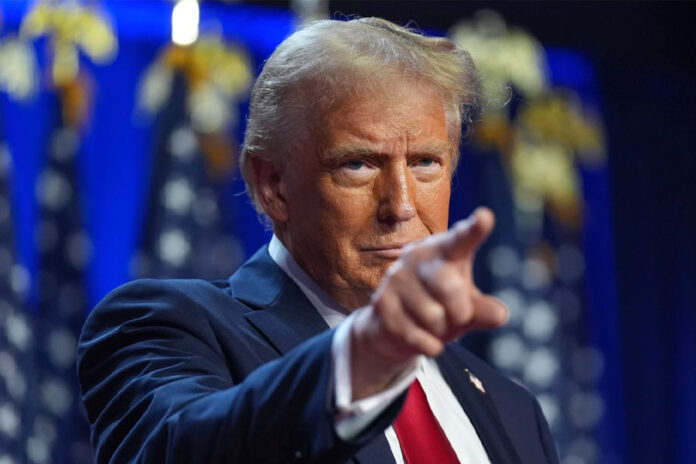
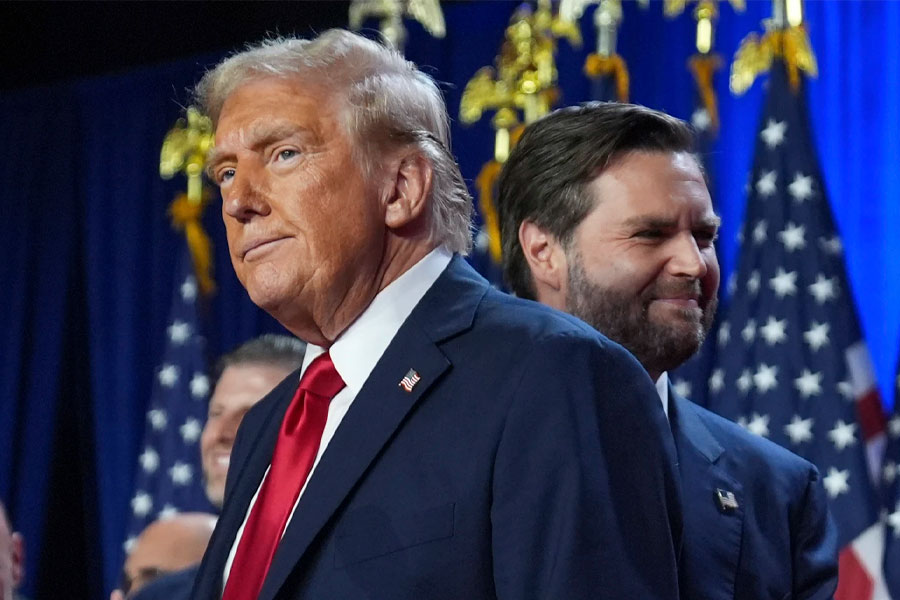
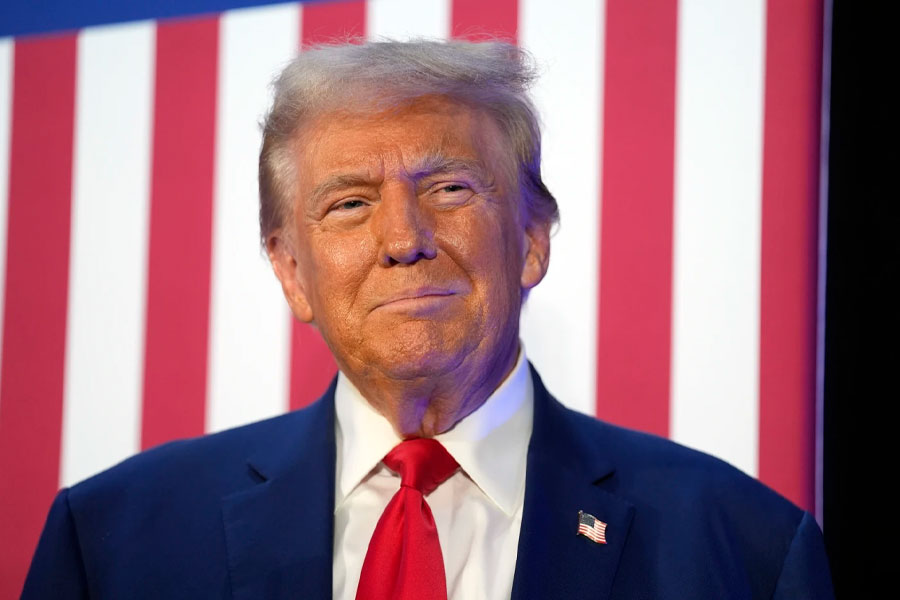
Donald Trump es elegido 47mo presidente de Estados Unidos. Su triunfo ante la vicepresidenta Kamala Harris culmina una turbulenta e histórica campaña que incluyó dos intentos de asesinato en su contra.
5:35 a.m.
———
El expresidente Donald Trump ganó el miércoles el estado clave de Wisconsin tras derrotar a la vicepresidenta Kamala Harris en un campo de batalla crucial. La victoria le otorga a Trump 10 votos del Colegio Electoral. En 2016, Trump ganó Wisconsin por un estrecho margen, convirtiéndose en el primer republicano desde Ronald Reagan en capturar el estado. En 2020, Trump perdió frente al demócrata Joe Biden. Tanto Harris como Trump hicieron de Wisconsin un foco central de sus campañas. En 2020, Trump intentó revertir su derrota en el estado mediante demandas y recuentos, pero fracasó. The Associated Press declaró a Trump ganador a las 5:35 a.m. ET.
———
5:05 a.m.
Las reacciones comenzaron a llegar a lo largo de la madrugada del miércoles, mientras el conteo de votos colocaba a Donald Trump en la antesala de la victoria.
Entre los mandatarios y jefes de Estado que se pronunciaron para felicitar al republicano estaba el canciller alemán, Olaf Scholz; el presidente ucraniano, Volodymyr Zelenskyy; el de Francia, Emmanel Macron; el de Turquía, Recep Tayyip Erdogan; el de Eslovaquia, Peter Pellegrini; el de Finlandia, Alexander Stubb; el líder populista de Serbia, Aleksandar Vucic; el de Dinamarca, Mette Frederiksen; el primer ministro de Nueva Zelanda, Christopher Luxon; el primer ministro de la República Checa, Petr Fiala, entre otros. También el rey de Jordania, Abdullah II.
En América Latina, de los primeros en enviar un mensaje a Trump fueron el mandatario argentino, Javier Milei, y el salvadoreño, Nayib Bukele.
———
4:25 a.m.
Funcionarios electorales en el condado de Wayne reportaron 200.000 votos adicionales a las 4.00 a.m., pero la actualización no ofrecía claridad sobre quién ganará el estado.
La razón: Harris ganó esa actualización con un margen de 46 puntos porcentuales a su favor, permitiéndole aumentar la ventaja frente a Trump en Michigan. Pero él sigue por delante habiendo aún votos por contar
Es todavía pronto para anunciar los resultados.
———
4:01 a.m.
¿Por qué AP no ha anunciado el resultado de las elecciones? Estamos esperando las últimas actualizaciones de la votación en el condado de Wayne, en Michigan, y en el condado de Milwaukee, en Wisconsin, dos bastiones demócratas que representan la única vía para que Harris gane en cualquiera de los dos estados. Es muy pronto para anunciar un resultado.
¿Qué otras votaciones quedan por anunciar? Alaska, Arizona, dos distritos en Maine, Michigan, Minnesota, Nevada y Wisconsin.
———
3:50 a.m.
La presidenta de la Comisión Europea, Ursula von der Leyen dijo que esperaba trabajar con el presidente Donald Trump de nuevo, peses a que en su último periodo impuso aranceles al acero y al aluminio, afectando a la economía del bloque de países.
La UE y Estados Unidos “son más que simples aliados. Tenemos una verdadera relación entre nosotros, conectando a 800 millones de ciudadanos”.
“Millones de trabajos y miles de millones en comercio e inversiones a ambos lados del Atlántico dependen del dinamismo y la estabilidad de nuestra relación económica”, recalcó en su declaración.
———
3:25 a.m.
Mark Rutte, secretario general de la OTAN, felicitó el miércoles a Donald Trump por los resultados de las elecciones y admitió que estaba expectante por empezar a trabajar con él.
“Espero trabajar con él de nuevo para promover la paz a través de la fuerza de la OTAN”, señaló en un comunicado.
Enfrentamos un número creciente de desafíos, desde una Rusia cada vez más agresiva, al terrorismo, la competencia estratégica con China, así como el alineamiento entre Chi
———
3:18 a.m.
Una segunda propuesta electoral que habría restablecido o garantizado el acceso al aborto desde el fallo Roe v. Wade 2022 fue rechaza: en el estado de Dakota del Sur.
La derrota en el estado, tradicionalmente rojo, llega después de que grupos contra el aborto recaudaran y gastaran mucho más que los grupos nacionales, que decidieron mantenerse al margen.
Es una victoria para los republicanos, especialmente para el expresidente Donald Trump, que asumió como propia la anulación del fallo Roe v. Wade.
———
2:53 a.m.
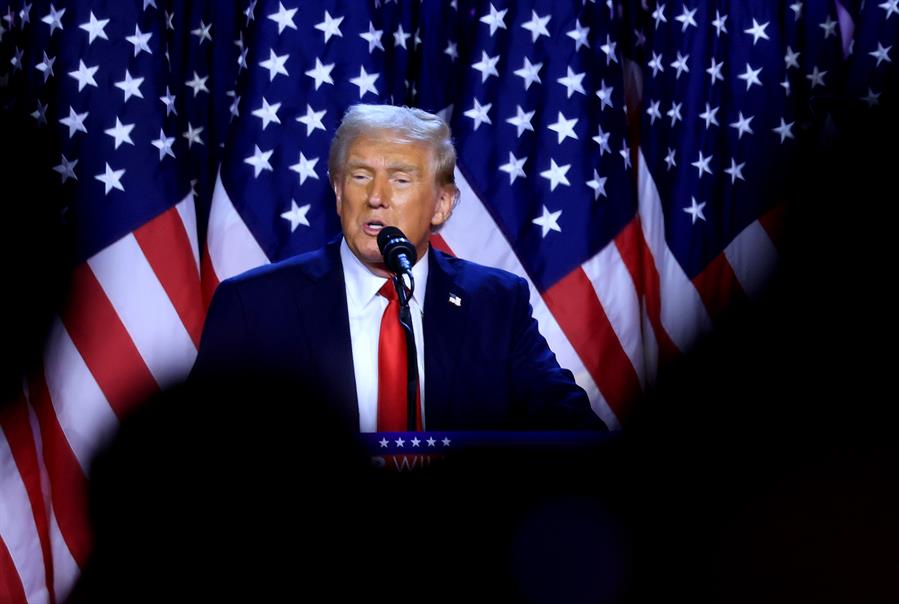
Donald Trump aseguró la madrugada del miércoles que “no descansará” hasta que haya logrado una nación “fuerte, segura y próspera”.
En su discurso al final de la elección presidencial, dijo que todos los días ““lucharé por ustedes con cada aliento de mi cuerpo”.
———
2:51 a.m.
Harris ganó el miércoles en Minnesota en una fórmula con el gobernador del estado y candidato a la Vicepresidencia, Tim Walz, extendiendo una racha ganadora para los demócratas que se remonta a 52 años. Al elegir a Walz, Harris elevó a un gobernador del Medio Oeste, veterano y partidario de los sindicatos que ayudó a promulgar una ambiciosa agenda demócrata para su estado, incluidas amplias protecciones para los derechos al aborto y una generosa ayuda a las familias. Ningún candidato presidencial republicano ha ganado en Minnesota desde Richard Nixon en 1972, aunque Trump estuvo cerca en 2016 cuando quedó a solo 1,5 puntos porcentuales de Hillary Clinton. The Associated Press declaró a Harris ganadora a las 2:48 a.m. ET.
———
2:45 a.m.
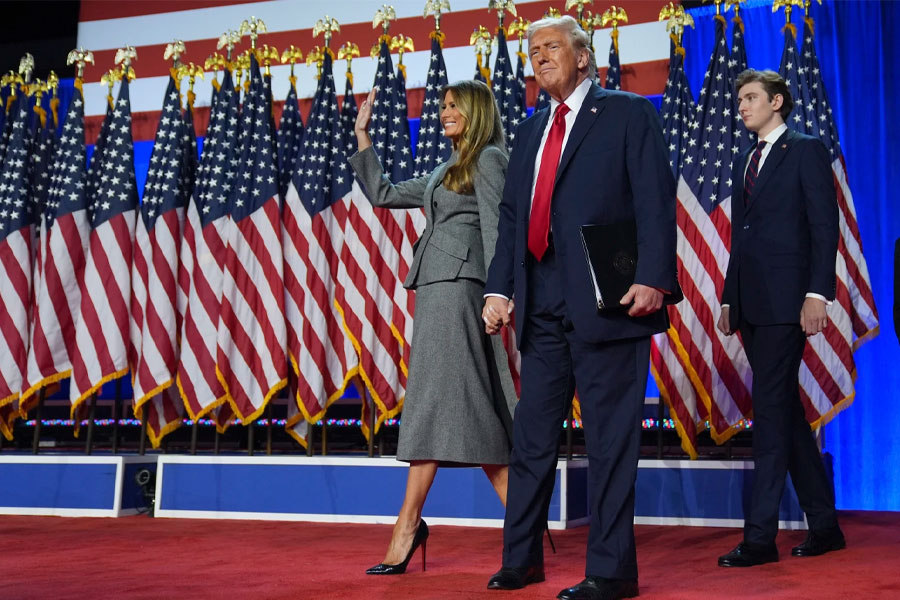
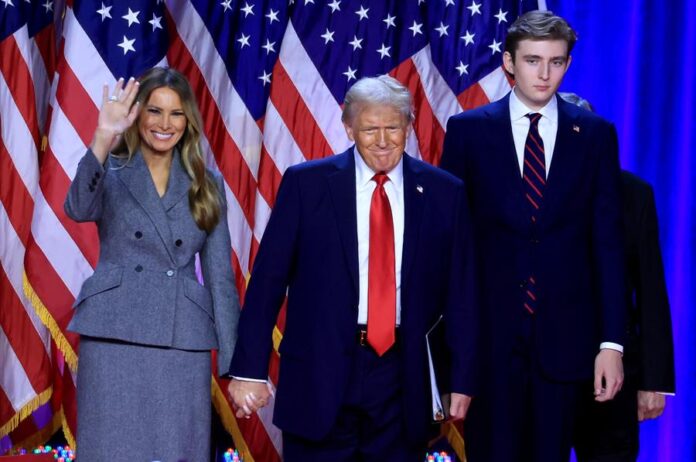
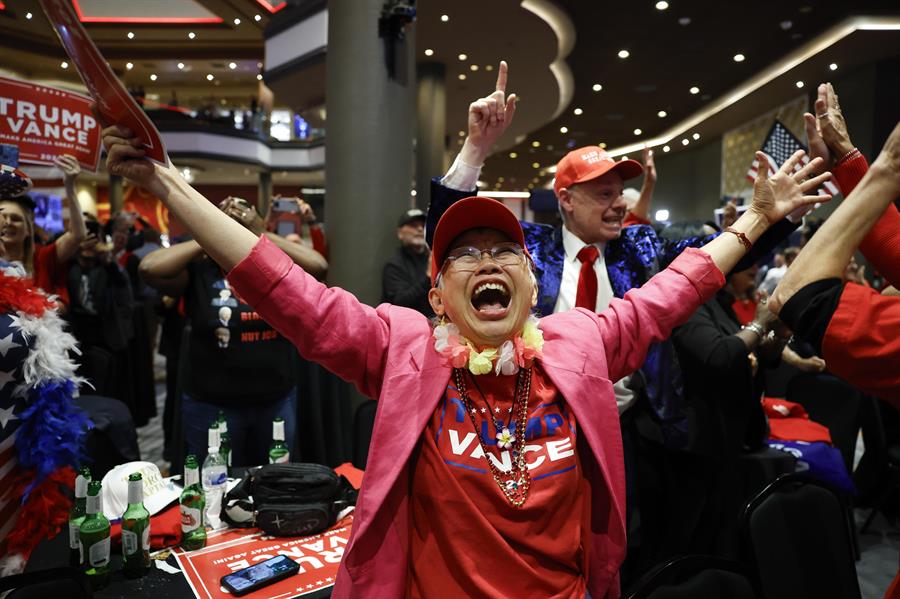
Donald Trump celebró la madrugada del miércoles los resultados electorales que lo ponían en la antesala de volver a la Presidencia de Estados Unidos.
“Este fue, creo, el mayor movimiento político de todos los tiempos”, dijo Trump en su fiesta de las elecciones rodeado de su familia, amigos y principales partidarios políticos.
“Nunca ha habido nada como esto en este país”, dijo y aseguró que “superamos obstáculos que nadie pensó que fueran posibles”.
Con el anuncio de AP del triunfo de Trump en Pensilvania, el expresidente tenía 267 de los 270 votos del Colegio Electoral necesarios para ganar la Casa Blanca.
———
2:28 a.m.
Donald Trump gana en Pensilvania
Donald Trump ganó el miércoles en Pensilvania, venciendo a la demócrata Kamala Harris en un estado considerado un importante campo de batalla. Ambos candidatos hicieron una campaña vigorosa en el estado, visitándolo más que a ningún otro. Trump ganó los 19 votos del Colegio Electoral de Pensilvania cuatro años después de que el demócrata Joe Biden obtuvo el estado, dándole vuelta ahora desde la columna de Trump en 2016 en su camino hacia la captura de la “pared azul”. Desde 1948, ningún demócrata ha ganado la Casa Blanca sin también ganar Pensilvania. The Associated Press declaró a Trump ganador a las 2:28 a.m. ET.
———
1:24 a.m.
En las primeras horas del miércoles, los republicanos empezaron a destacar un cambio demográfico en el apoyo de comunidades hasta ahora orientadas hacia los demócratas.
Datos preliminares de AP VoteCast apuntaban a un cambio entre votantes negros y latinos, que aparentemente dieron ligeramente menos apoyo a Kamala Harris que a Biden hace cuatro años. Cerca de 8 de cada 10 votantes negros respaldaba a Harris, menos que los 9 de cada 10 de Biden.
Entre los votantes hispanos, más de la mitad se alinearon con Harris, pero eso fue ligeramente menor que los 6 de cada 10 que apostaron por Biden en 2020. El apoyo a Trump aparentemente subió también ligeramente entre estos grupos.
“Estoy muy emocionado, no sólo porque crea que vamos a ganar sino por cómo hemos ganado”, dijo el senador republicano Marco Rubio en la fiesta electoral de Trump en West Palm Beach, Florida.
———
1:00 a.m.
Todos los centros de votación están cerrados en los 50 estados y Washington DC
———
1:16 a.m.
Harris ganó el miércoles en Nueva Hampshire, manteniendo una década consecutiva en la que los demócratas han obtenido los cuatro votos del Colegio Electoral en ese estado. Nueva Hampshire ha apoyado a los demócratas en siete de las ocho últimas elecciones presidenciales. La victoria de Harris llega nueve meses después de que el Comité Nacional Demócrata se saltara a Nueva Hampshire en sus elecciones primarias presidenciales. Es la tercera vez que el republicano Donald Trump gana la primaria en Nueva Hampshire, pero pierde el estado en las elecciones generales. The Associated Press declaró ganadora a Harris a la 1:16 a.m. ET.
———
00:58 a.m.
Donald Trump ganó el miércoles el estado clave de Georgia, recuperando sus 16 votos del Colegio Electoral para el Partido Republicano. Joe Biden obtuvo Georgia por un estrecho margen en 2020, pero los republicanos han ganado todas las otras elecciones presidenciales desde 1996. Trump intentó revertir su derrota en Georgia en 2020, con una pelea legal y política que terminó con una acusación en su contra en el estado. Mientras en el estado tiene dos senadores demócratas, la victoria de Trump muestra que Georgia aún posee una inclinación republicana. Seis candidatos aparecieron en las boletas de Georgia, pero los votos de Claudia De la Cruz y Cornel West no fueron contados. The Associated Press declaró a Trump ganador a las 00:58 a.m. ET.
———
00:44 a.m.
Fiesta electoral desmoralizada de Harris: “Aún hay votos que contar”.
El cotitular de la campaña de Kamala Harris, Cedric Richmond, dijo a los asistentes reunidos en lo que estaba previsto que fuera la fiesta electoral de la candidata demócrata en la universidad de Howard que Harris no hablará esta noche, pero que la campaña no se rendía en la lucha contra Trump.
“Aún hay votos que contar. Hay estados en donde no se han dado aún los resultados. Seguiremos toda la noche para asegurarnos de que cada voto sea contado, que todas las voces sean tomadas en cuenta”, dijo Richmond.
Y añadió: “Por eso, no escucharán a la vicepresidenta esta noche, pero sí mañana”.
———
00:23 a.m.
Los republicanos ganan la mayoría del Senado de EEUU después de cuatro años.
Después de que la senadora Deb Fischer se aseguró la reelección en Nebraska, el Partido Republicano ha ganado el control del Senado.
Con al menos 51 escaños asegurados en el Senado, los republicanos recuperarán el control de la cámara por primera vez en cuatro años. Esto le da al partido una influencia importante en Washington y un poder clave para confirmar el gabinete del próximo presidente, así como a cualquier juez de la Corte Suprema si hay una vacante.
Con un puñado de contiendas en disputa aún por decidir, los republicanos aún tienen la oportunidad de aumentar su mayoría.
Los senadores republicanos ya han estado buscando formas de extender los recortes de impuestos que se aprobaron durante el primer mandato de Donald Trump, así como de enviar fondos para endurecer las medidas de seguridad fronteriza.
Sin embargo, el alcance del poder de los republicanos en Washington también estará determinado por los resultados de las contiendas presidenciales y de la Cámara de Representantes.
———
00:00 a.m. (miércoles)
La vicepresidenta ganó el miércoles en Hawai y sus cuatro votos del Colegio Electoral. Son las décimas elecciones presidenciales seguidas en las que Hawai ha apostado por un candidato del Partido Demócrata. La última vez que eligieron a un republicano para la oficina de la Presidencia fue hace 40 años, cuando Ronald Reagan salió victorioso en 1984. Hawai es un estado de sólida base azul, con los demócratas al control de las oficinas electorales a lo largo del estado y dos asientos en la Camára de Representantes. Los demócratas han controlado también por largo tiempo más de tres cuartos de los asientos tanto en la Cámara de Representantes como en el Senado. The Associated Press declaró ganadora a Harris a las 12:00 a.m. ET.
———
11:58 p.m.
El republicano Bernie Moreno derrotó el martes al senador demócrata Sherrod Brown en Ohio, en una de las contiendas por el Senado más competitivas y costosas del año. Moreno, un empresario nacido en Colombia y oriundo de Cleveland, triunfó al destacar el respaldo que recibió del expresidente Trump y al vincular a Brown con las políticas fronterizas y de inmigración de la administración Biden. Brown ha sido una figura permanente en la política de Ohio durante 50 años, pero no pudo superar el fuerte giro a la derecha del antiguo estado que era considerado un referente presidencial, debido a que se centró en el derecho al aborto y el empoderamiento de la clase media. The Associated Press declaró a Moreno ganador a las 11:28 p.m. ET.
———
11:46 p.m.
El senador republicano Ted Cruz ganó el martes la reelección en Texas, tras superar un duro desafío por parte del representante demócrata Colin Allred de Dallas. Cruz, un firme partidario del expresidente Trump, criticó a Allred durante la campaña electoral por ser demasiado liberal para el llamado estado de la Estrella Solitaria. Allred intentó posicionarse como moderado en la contienda y respaldó el derecho al aborto y criticó la prohibición a la interrupción del embarazo en Texas, uno de los más restrictivos del país. The Associated Press declaró a Cruz ganador a las 11:34 p.m. ET.
———
11:49 p.m.
Próximos cierres de campaña a las 12.00 p.m. ET
Algunas partes de Alaska
Hawaii
———
11:43 p.m.
Kamala Harris gana en Virginia, Nuevo México y Oregón, mientras Donald Trump se hace con el estado clave de Carolina del Norte.
Con su victoria en Carolina del Norte, Trump mantiene opciones de alcanzar el umbral de 270 votos del Colegio Electoral.
Podría alcanzar esa cifra mágica si se hace con Georgia y Pensilvania o, si no, si se asegura los votos del Colegio Electoral de Georgia, Michigan y Wisconsin. También podría ganar si consigue Wisconsin y Arizona, así como con otras combinaciones que incluyan a Nevada.
Pero para eso, tendría que romper el llamado “muro azul” de los estados del norte de Michigan, Pensilvania y Wisconsin.
Trump se dedicó a Carolina del Norte en sus últimos días de campaña, con paradas en cuatro ciudades en los cuatro días y terminando su campaña en este estado en Raleigh el lunes.
———
11:34 p.m.
El senador republicano Ted Cruz ganó el martes la reelección en Texas, tras superar un duro desafío por parte del representante demócrata Colin Allred de Dallas. Cruz, un firme partidario del expresidente Trump, criticó a Allred durante la campaña electoral por ser demasiado liberal para el llamado estado de la Estrella Solitaria. Allred intentó posicionarse como moderado en la contienda y respaldó el derecho al aborto y criticó la prohibición a la interrupción del embarazo en Texas, uno de los más restrictivos del país. The Associated Press declaró a Cruz ganador a las 11:34 p.m. ET.
———
11:00 p.m.
Kamala Harris gana en California y Washington; Donald Trump gana en Idaho. Harris ganó el jueves en California, concediéndole su mayor premio en la elección presidencial con los 54 votos del Colegio Electoral. El resultado en el estado ampliamente demócrata en el que Harris fue antes senadora y fiscal general fue el esperado.
Ningún candidato presidencial ha ganado en una disputa presidencial desde 1988 en el estado con más habitantes y el Partido Republicano no ha peleado seriamente por California en unas elecciones presidenciales desde el año 2000. Los demócratas registrados superaban a los republicanos en California con una ventaja en torno a 2 a 1 y el partido tiene el control de cada oficina a lo largo del estado y domina la Asamblea Legislativa estatal y los delegados del Congreso. The Associated Press declaró ganadora a Harris a 11:00 p.m. ET. Harris ganó el jueves en Washington y sus 12 votos del Colegio Electoral del estado. Washington no ha elegido a un candidato presidencial republicano desde Ronald Reagan en 1984. El presidente Joe Biden ganó en Washington en 2020 con el 58% de los votos frente a menos del 39% de Trump. The Associated Press declaró a Harris ganadora a las 11:00 p.m. ET.
Trump ganó el martes en Idaho por tercera elección consecutiva y sumó cuatro votos del Colegio Electoral a su cuenta. Idaho es profundamente republicano, y los candidatos presidenciales republicanos han ganado el estado con más del 60% de los votos en las últimas elecciones. La última vez que un candidato presidencial demócrata ganó Idaho fue hace 60 años, cuando Lyndon Johnson venció al republicano Barry Goldwater por un estrecho margen de poco más de 5.300 votos. The Associated Press declaró a Trump como ganador a las 11:00 p.m. ET.
———
10:52 p.m.
Los votantes de Colorado aprobaron una enmienda a la Constitución estatal que consagra protecciones para el aborto. La medida deroga una prohibición de financiación estatal y local para el aborto, y permite que Medicaid y otros programas de seguro médico del gobierno cubran el procedimiento. El aborto ya es legal en Colorado en todas las etapas del embarazo. Esta es la tercera medida electoral estatal que se ha aprobado el martes por la noche.
———
10:43 p.m.
Donald Trump gana en Kansas y Iowa
Trump ganó el martes Kansas y obtuvo sus seis votos del Colegio Electoral. Los candidatos republicanos han ganado en Kansas en todas las elecciones presidenciales desde 1964, y esta fue la tercera elección consecutiva en la que Trump triunfó en el estado. Los suburbios de la zona de Kansas City, que alguna vez fueron bastiones confiables del Partido Republicano, comenzaron a inclinarse más hacia los demócratas después de que Trump fuera electo presidente en 2016, pero Trump ha conservado su fuerte popularidad en gran parte del estado y particularmente en las áreas rurales. The Associated Press declaró a Trump como ganador a las 10:39 p.m. ET.
Donald Trump ganó Iowa el martes y sus seis votos del Colegio Electoral. Antes considerado un estado reñido, Iowa ha probado ser un claro ejemplo del respaldo para Trump entre los votantes republicanos y su permanencia en el Partido Republicano. Una mayoría de los habitantes de Iowa respaldaron al demócrata Barack Obama en 2008 y 2012 pero eligieron a Trump decisivamente en 2016 y 2020. Ahora, luego de ganar cómodamente el apoyo de los republicanos en las primarias de Iowa más temprano este año e impulsar su candidatura a la reelección, Trump ha ganado el estado en tres elecciones presidenciales consecutivas. The Associated Press declaró a Trump ganador a las 10:39 p.m. ET.
———
10:37 p.m.
Próximos estados en cerrar urnas a las 11:00 p.m.
California
Idaho
Oregón
Washington
———
10.27 p.m.
Kamala Harris gana en el Distrito de Columbia
Donald Trump gana en Montana
———
10:22 p.m.
Trump se ganó el voto de Jordan Voigt, de Carolina del Norte, porque cree que hará que sus hijos tengan una vida más segura ante la inmigración ilegal y la trata de menores con fines sexuales. Es lo que contó la madre soltera de 34 años a la AP en un evento de seguimiento de resultados del Partido Republicano en Asheville, Carolina del Norte.
“Cada vez que vamos al parque, pongo todos los sentidos”, admitió Voigt.
También tuvo algo que decir sobre la economía: la mujer cree que ha ido perdiendo poder adquisitivo en los últimos dos años y medio y que el huracán Helene lo empeoró más. Ella y su familia pasaron 18 días sin luz después de la tormenta.
“No hay mucho margen”, aseguró sobre su presupuesto familiar. “La Navidad va a ser muy complicada este año”.
———
10.05 p.m.
Los neoyorquinos aprobaron una enmienda que expandiría la Constitución estatal contra la discriminación en el lenguaje, de forma que, según sus impulsores, protegería los derechos civiles de las personas que quieren o que han tenido un aborto.
La Constitución estatal ya prohibía la discriminación por cuestiones de raza, credo o religión.
Los oponentes a la enmienda defendían que daría derecho constitucional a los atletas transgénero de participar en deportes de equipo de niñas y mujeres. Ésta es otra victoria para Harris y los demócratas, que llevaron el tema del aborto a su campaña.
———
10:00 p.m.
Donald Trump gana en Missouri, Texas, Ohio, Montana y Utah.
Suma, al momento, 198 votos del Colegio Electoral. Harris cuenta con 99 votos del Colegio Electoral.
———
9:40 p.m.
Sin sorpresas al cierre de urnas en EEUU. La atención gira a los estados clave del este.
Hasta ahora, los resultados no han sido muy sorprendentes tras el cierre de los centros de votación en la mayor parte del país.
Trump ganó en estados de tendencia republicana, como Florida, Alabama, Mississippi y Texas, mientras que Harris se impuso en una franja de Nueva Inglaterra y el noreste, como Nueva Jersey y Nueva York.
Ahora, la atención se centra en los estados clave del este, como Georgia, Carolina del Norte y Pensilvania.
9:25 p.m.
Florida rechaza propuesta electoral para proteger el derecho aborto
Una propuesta electoral que habría protegido el derecho a la aborto en la Constitución estatal de Florida fue rechazada el martes, al no conseguir el 60% necesario para ser aprobada.
El rechazo de la medida convierte a Florida en el primer estado donde una propuesta para proteger el derecho al aborto es rechazada, tras la derogación de Roe v. Wade en 2022. La iniciativa habría impedido a los legisladores crear y reforzar restricciones en el acceso al aborto ante la viabilidad del feto o en caso de riesgo para la salud de la paciente.
The Associated Press anunció el rechazo a la medida a las 9:06 p.m. ET.
———
9:06 p.m.
Una propuesta electoral que habría protegido el derecho a la aborto en la Constitución estatal de Florida fue rechazada el martes, al no conseguir el 60% necesario para ser aprobada.
El rechazo de la medida convierte a Florida en el primer estado donde una propuesta para proteger el derecho al aborto es rechazada, tras la derogación de Roe v. Wade en 2022. La iniciativa habría impedido a los legisladores crear y reforzar restricciones en el acceso al aborto ante la viabilidad del feto o en caso de riesgo para la salud de la paciente.
———
9:01 p.m.
Donald Trump gana en el estado de Nebraska y dos votos del Colegio Electoral, Dakota del Norte, Dakota del Sur, Wyoming, Luisiana y Ohio.
Kamala Harris gana en Nueva York, Delaware e Illinois.
———
9:00 p.m.
El cierre de urnas llegó en varios estados a las 9:00 p.m.
Arizona
Colorado
Iowa
Kansas
Luisiana
Michigan
Minnesota
Nebraska
Nuevo México
Nueva York
Dakota del Norte
Dakota del Sur
Texas
Wisconsin
Wyoming
———
8:38 p.m.
Kamala Harris ganó el jueves en Illinois y obtuvo los 19 votos del Colegio Electoral del estado. Illinois, que siempre ha sido demócrata y es el hogar del expresidente Barack Obama, ha apoyado a candidatos presidenciales demócratas desde 1992. Harris también ganó en Delaware, derrotando fácilmente al republicano Donald Trump. La victoria de Harris en el estado demócrata era una conclusión inevitable, dado el dominio que los demócratas han tenido durante décadas sobre los tres votos del Colegio Electoral del estado.
———
8:30 p.m.
Donald Trump gana en Arkansas y Kamala Harris en Nueva Jersey
El expresidente Donald Trump aseguró el martes seis votos del Colegio Electoral de Arkansas, con lo cual gana un estado ampliamente republicano por tercera vez consecutiva en los comicios presidenciales. Trump obtuvo el respaldo de las principales figuras republicanas del estado, incluida la gobernadora Sarah Huckabee Sanders.
La gobernadora, que se desempeñó como secretaria de prensa de Trump en la Casa Blanca, respaldó la candidatura del expresidente e hizo campaña por él. El exgobernador Asa Hutchinson se postuló sin éxito para la nominación republicana y se negó a respaldar la reelección de Trump. Los demócratas no han ganado una elección presidencial en Arkansas desde 1996, cuando Bill Clinton obtuvo la reelección. The Associated Press declaró a Trump como ganador a las 8:30 p.m. ET.
La vicepresidenta ganó el jueves los 14 votos del Colegio Electoral de Nueva Jersey. Su victoria ante el republicano Donald Trump mantiene el domingo de los demócratas en ese estado, que se ha ido con el candidato demócrata a la presidencia en cada elecciones desde 1988.
Los demócratas de Nueva Jersey tienen cerca de un millón de votantes registrados más que los republicanos. Trump tiene nexos con Nueva Jersey, incluyendo varios clubs de golf a lo largo del estado. También tuvo casinos en Atlantic City, pero terminaron en bancarrota. The Associated Press declaró ganadora a Harris a las 20:00 p.m. ET.
———
8:23 p.m.
Votantes de Trump y Harris, en apoyo explícito a sus candidatos.
Ambos candidatos cosecharon fidelidad entre sus seguidores, un cambio respecto a hace cuatro años cuando Trump fue reemplazado por Joe Biden en la Casa Blanca.
En 2020, cerca de la mitad de quienes votaron por Biden dijeron que le apoyaron en rechazo a Trump. La otra mitad votó porque lo apoyaba. Este año, alrededor de dos terceras partes de quienes respaldaron a Harris lo hicieron motivados por ella. Solo un tercio votó por ella porque rechazaban a Trump.
El entusiasmo en las bases de Trump se mantiene firme. De forma parecida a lo que pasó en 2020, en torno a 8 de cada 10 de sus votantes lo apoyaban, más allá de estar en contra de su rival demócrata.
———
8:00 p.m.
Donald Trump gana en Florida, Mississippi, Oklahoma, Tennessee, Alabama, Carolina del Sur y Virginia Occidental.
Kamala Harris gana en Rhode Island, Maryland, Massachusetts y Connecticut.
———
7:30 p.m.
Donald Trump ganó Virginia Occidental por tercera elección presidencial consecutiva el martes. La victoria suma cuatro votos del Colegio Electoral a la cuenta del expresidente. Virginia Occidental tiene un cortante colegiado menos en este ciclo electoral luego de perder una banca en el Congreso luego el censo de 2020. El estado es uno de los dos únicos de los que Trump ha ganado cada condado en 2016 y 2020. Ningún demócrata ha ganado la elección presidencial en Virginia Occidental desde Bill Clinton en 1996. Los republicanos controlan cada oficina partidista electa en el estado de Virginia Occidental.
———
7:18 p.m.
El representante republicano Mario Díaz-Balart fue reelecto el martes para un escaño en la Cámara de Representantes de Estados Unidos en representación de Florida. El Distrito 26 se extiende por el sur de Florida, desde Hialeah y los suburbios del noroeste de Miami hasta justo al oeste de Naples, en la costa del Golfo. El distrito es mayoritariamente hispano. Díaz-Balart es el miembro de la delegación del Congreso de Florida que lleva más tiempo en el cargo, electo por primera vez en 2002. Es hijo de refugiados cubanos y miembro fundador de un grupo parlamentario de republicanos hispanos. Derrotó al demócrata Joey Atkins. Associated Press declaró a Díaz-Balart ganador a las 6:17 p.m. ET.
———
7:00 p.m.
Kamala Harris ganó el jueves en el bastión demócrata de Vermont. El pequeño estado ha votado a favor de los candidatos democrátas en las anteriores ocho elecciones presidenciales previas. El gobernador republicano de Vermont, Phil Scott, ha sido crítico con el candidato presidencial Donald Trump and votó por el demócrata Joe Biden en las elecciones de 2020.
———
7:00 p.m.
Donald Trump ganó el martes en Kentucky por tercera elección consecutiva y obtuvo ocho votos del Colegio Electoral del estado. El candidato republicano a la presidencia ha ganado Kentucky en todas las elecciones desde que el demócrata Bill Clinton triunfó en el estado en 1996.
El republicano más poderoso de Kentucky, el líder del Senado Mitch McConnell, una vez calificó a Trump como “moralmente responsable” por el ataque al Capitolio del 6 de enero de 2021. Pero en un cambio notable, McConnell respaldó la candidatura de Trump para regresar a la Casa Blanca.
Durante el mandato de Trump, los dos trabajaron juntos para aprobar un paquete de recortes de impuestos y poner a tres jueces conservadores en la Corte Suprema.
———
7:00 p.m.
Donald Trump ganó el martes las elecciones presidenciales en Indiana. El estado, considerado conservador y donde los republicanos han mantenido la gubernatura durante 20 años, le dio a Trump sus 11 votos del Colegio Electoral. Indiana ha sido favorable a Trump en sus tres contiendas por la Casa Blanca. En 2016, el año en que ganó la presidencia, y nuevamente en 2020, Trump obtuvo el 57% de los votos en Indiana. The Associated Press declaró a Trump ganador a las 7:00 p.m. ET.
———-
6:44 p.m.
En torno a 4 de cada 10 votantes decían confiar en que sus votos fueran rigurosamente contados a nivel nacional, según AP VoteCast, una encuesta a más de 115.000.
Cerca de 3 de cada 4 votantes afirmaron tener cierta confianza, mientras que 1 de cada 4 desconfiaban del conteo.
Sin embargo, muchos más votantes confiaban en el proceso de conteo en sus propios estados y cerca de la mitad, incluso estaban muy seguros.
———
6:38 p.m.
Uno de los tres miembros del equipo electoral de Filadelfia, el republicano Seth Bluestein, salió al paso de los comentarios de Trump de que había menciones a fraude masivo en Filadelfia y negó los señalamientos. “No hay absolutamente nada de verdad en esas acusaciones. Es otro ejemplo de desinformación”.
El voto en la ciudad, defendió, es “seguro y está asegurado”.
———
6:27 p.m.
Cuando el día de las elecciones está por concluir, el expresidente Donald Trump dijo en su red social que ya hay comentarios sobre fraude masivo en Filadelfia” y aseguró que las fuerzas del orden van en camino.
No ofreció detalles y no hubo ninguna referencia inmediata a su afirmación.
La jornada de votación transcurrió el martes sin mayores incidentes, salvo algunas notificaciones de problemas con las máquinas de conteo de votos en unos pocos estados.
El fiscal de distrito de Filadelfia, Larry Krasner, abordó el tema en una declaración para responder a los comentarios de Trump y dijo que es el único que está hablando de fraudes.
“No hay ninguna muestra sólida entre las fuerzas del orden que respalden esta acusación descabellada”, recalcó.
———
6:18 p.m.
Luego de años de persistente inflación, los votantes estadounidenses expresaron preocupación por los altos costos en sus hogares y comunidades.
Unos 7 de cada 10 votantes dijeron que estaban “muy preocupados” por el impacto del costo de la comida y otros bienes en sus presupuestos hogareños, de acuerdo con AP VoteCast, un sondeo hecho sobre más 115.000 votantes en todo el país.
Más de la mitad dijeron estar preocupados por los costos de la salud y cerca de la mitad por los gastos de vivienda.
———
6:11 p.m.
Trump lleva ventaja en temas de economía, Harris sobre aborto, según votantes.
Los votantes tuvieron opiniones encontradas sobre si el expresidente Trump o la vicepresidenta Harris serían más adecuados para manejar una variedad de temas, según AP VoteCast, una amplia encuesta a más de 110.000 votantes de todo el país.
Trump tenía ventaja sobre Harris como el candidato más capacitado para manejar la economía, así como la inmigración. Esos temas fueron centrales en su mensaje de campaña, culpando a la administración Biden-Harris por los altos precios y el cruce ilegal en la frontera entre Estados Unidos y México.
Sin embargo, Harris fue vista como la candidata más fuerte en temas relacionados con el aborto, así como en la atención médica. Durante la campaña, Harris habló sobre el acceso al aborto y la atención médica para las mujeres como una cuestión de libertad fundamental, mientras que Trump dijo que era un asunto que era mejor dejar en manos de los estados después de que la Corte Suprema revocara Roe v. Wade en 2022.
Trump dijo que imponer los aranceles a rivales y aliados por igual, así como una tener una mayor producción de petróleo, impulsarían la economía. Harris, por su parte, dijo que sus aranceles empeorarían la inflación. Sobre la cuestión de quién manejaría mejor los impuestos, AP VoteCast encontró que los votantes estaban divididos casi por igual entre los dos candidatos.
———
6:10 p.m.
En cinco centros de votación del condadto de Fulton, en el estado de Georgia, se amplió el horario de votación debido a que tuvieron que cerrar momentáneamente por amenazas de bomba durante el día.
Esas amenazas fueron después desacreditadas por las autoridades.
En cada uno de los centros se extendió el tiempo para votar tanto como estuvieron cerrados durante el día. Los lapsos van de 10 minutos en uno de ellos a 45 minutos en otros dos.
———
6:00 p.m.
Arrancó el cierre de urnas a las 6:00 p.m. en las elecciones de Estados Unidos .
Entre los primeros en concluir la jornada de votación presencial, hay algunas partes de los estados de Indiana y Kentucky.
———
5:23 p.m.
¿Quiere seguir los resultados de las elecciones de EEUU como un profesional? Esto debe considerar
La noche de las elecciones en Estados Unidos es un poco como un rompecabezas, excepto que sólo una pieza aparece a la vez y no se puede ver la imagen de la caja.
Mientras miles de condados y localidades informan los totales de votos puede ser difícil determinar cuándo los conteos reportados hasta el momento reflejan el resultado definitivo.
El primer informe de la noche puede mostrar una ventaja enorme para un candidato, pero ¿por qué esa ventaja disminuye en algunas contiendas y crece en otras? ¿Por qué una sola actualización de votos de una gran ciudad a veces confirma al ganador cuando todavía queda una cantidad sustancial de votos por contar? ¿Cuál es la diferencia entre un “espejismo” y un resultado fidedigno?
Las elecciones pasadas pueden ser una guía: muestran que los votos por correo en las elecciones recientes se han inclinado fuertemente hacia los demócratas y que, en algunos estados, los condados informan esas papeletas primero. Eso puede crear un “espejismo azul” en contiendas que al final terminan como victorias estrechas para los demócratas o incluso triunfos sustanciales para los republicanos. Y a su vez demuestran que los republicanos pueden perder abrumadoramente en las grandes ciudades y de todos modos ganar las elecciones.
Algunos ejemplos recientes en estados clave pueden ayudar a dar una idea de qué esperar desde el momento en que cierran las urnas en Florida, a primera hora de la noche, hasta Arizona, donde la votación concluye a las 10 p.m. hora del este.
———
5:06 p.m.
Las autoridades de la zona de Denver están investigando las “discrepancias” con las firmas de miles de votos por correo que detectaron funcionarios electorales, entre los votos enviados desde un centro de atención para adultos mayores en la ciudad, según uno de los encargados del registro de Denver, Paul Lopez.
Sin dar más detalles, indicó en un comunicado que trabajadores electorales en Colorado revisaron las firmas de votos por correo comparándolas con las que tienen en sus archivos para asegurarse que el voto fue efectivamente emitido por el votante.
Lopez aseguró que su oficina notificó a las fuerzas del orden y que el fiscal de distrito de Denver estaba investigando la situación. También informó que estaban investigando en otros condados cercanos, pero no dio más detalles.
———
4:43 p.m.
En el condado de Story, en el centro de Iowa y donde viven unas 100.000 personas, las máquinas de votación de algunos centros fallaron, lo que anticipa posibles demoras en la presentación de resultados.
“Estamos al tanto de los problemas técnicos relacionados con los tabuladores en algunos centros de votación del condado de Story”, dijo Ashley Hunt Esquivel, portavoz de la Oficina del secretario de Estado de Iowa. “El auditor está trabajando con el proveedor y nuestra oficina para resolverlo. No impide que nadie emita un solo voto. Puede afectar la rapidez con la que podemos informar los resultados”.
La auditora del condado de Story, Lucy Martin, dijo al Des Moines Register que las máquinas no leían “ciertos estilos de papeletas” en aproximadamente 12 de los 45 lugares de votación del condado. Los trabajadores electorales tendrían que contar las papeletas en esos lugares a mano, según los funcionarios locales del Partido Demócrata y Republicano. Las máquinas fueron probadas y se desconoce la causa de las dificultades técnicas, agregó Martin.
———
4:15 p.m.
Harris, a los suyos: “Esto realmente refleja lo mejor de nosotros”.
Harris aprovechó el martes su visita a una central de llamadas del Comité Nacional Demócrata para reconocer el trabajo de sus colaboradores y agradecerles. En un momento, ella misma se puso a hacer llamadas.
“Esto realmente refleja lo mejor de nosotros”, animó Harris a los suyos. Entonces, tomó un celular y se unió a las llamadas.
“Estoy bien”, le dijo a un interlocutor. ”¿Fuiste a votar? Cuando la persona le respondió, ella reaccionó: ”¿En serio? Gracias.
“Solo quería venir a verles y agradecerles por todo lo que están haciendo”, animó Harris a sus colaboradores. “Estamos juntos en esto y tenemos que recordarles el poder que tienen sus votos”.
———-
3:35 p.m.
“Mi fe en este país ha sido restablecida”, dice Walz
El gobernador de Minnesota y candidato a vicepresidente demócrata Tim Walz dijo el martes a reporteros que su experiencia como compañero de fórmula de Kamala Harris ha “restablecido” su fe en la nación. “Es algo verdaderamente notable lo que hacemos cada cuatro años”, dijo en una conversación con reporteros afuera de su avión de campaña.
“Es democracia. Es desordenada. Es hermosa. Es el pueblo”, agregó. “Mi fe en esta nación ha sido tan restablecida”.
Walz dijo que no ha hablado con Harris el día de la elección pero se mostró confiado en una victoria sobre el expresidente Donald Trump. “No puedo describir la diferencia en el ánimo que hay allí afuera entre la gente y qué apetito tiene de algo diferente”, añadió.
———-
3:10 p.m.
Funcionarios en Northville, Michigan, cerraron un centro de votación al mediodía y enviaron a los votantes a otro recinto en un suburbio de Detroit por una pérdida de gas natural.
La empresa Consumers Energy investigaba la fuga.
———
3:05 p.m.
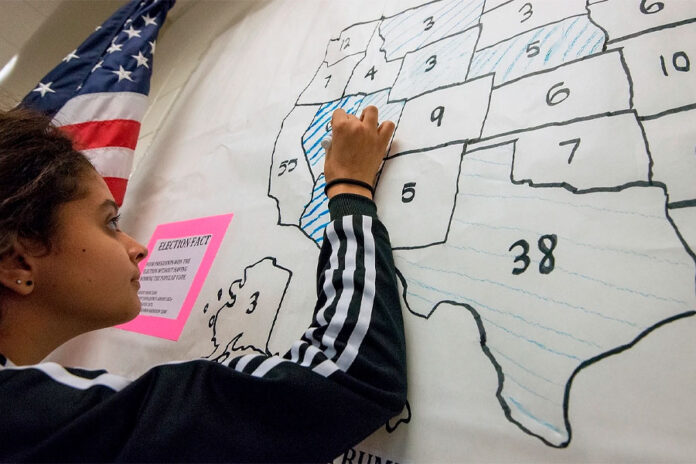
El Colegio Electoral es el sistema de Estados Unidos para elegir presidentes y es diferente al voto popular. Está integrado por 538 miembros y para ganar la presidencia un candidato debe obtener 270 votos electorales —una mayoría de los 538 votos posibles—.
Los votantes colegiados de cada estado votan por el candidato que ganó el voto popular en ese estado.
———-
2:45 p.m.
El FBI indicó que las amenazas de bomba que han sido enviadas apuntando a centros de votación en varios estados tenían origen en direcciones de email procedentes de Rusia, aunque fueron consideradas como no creíbles.
No identificó a qué estados se dirigían, pero el secretario de gobierno de Georgia, Brad Raffensperger, dijo más temprano el martes que había habido algunas amenazas de bomba que procedían de Rusia. En el condado de Fulton, de Georgia, agentes aseguraron que se recibieron “múltiples llamadas” y que forzaron al cierre momentáneo de dos centros de votación.
Este tipo de amenazas están entre algunas de los incidentes a los que le están siguiendo la pista los agentes de Estados Unidos.
Aún así, el consejero del director de la Agencia de Ciberseguridad y Seguridad en la Infraestructura, Cait Conley, aclaró a los medios el martes que no había incidentes de seguridad a nivel nacional que hayan perturbado las elecciones a gran escala.
Las autoridades ya habían advertido sobre desinformación acerca de las elecciones y grupos que defienden los derechos de los votantes están preocupados de que los modelos de IA puedan profundizar las disparidades de información para los votantes hispanohablantes, que son cortejados intensamente tanto por demócratas como por republicanos.
———
2:15 p.m.
La policía del Capitolio de Estados Unidos arrestó el martes a un hombre en un control de seguridad en el Centro de Visitantes del Capitolio. Las autoridades dijeron que olía a combustible y que llevaba un soplete y una pistola de bengalas.
Las autoridades cancelaron las visitas públicas al Capitolio por el resto del día.
La policía señaló que todavía está investigando el caso.
El arresto se produce mientras las autoridades se encuentran en alerta máxima por temas de seguridad en la capital de la nación y han aumentado los patrullajes en áreas del centro y en los alrededores de la Casa Blanca. El 6 de enero de 2021, seguidores de Donald Trump atacaron el Capitolio.
———-
2:00 p.m.
Es probable que el día de las elecciones en Estados Unidos haya largas colas para votar, falten papeletas, la página web de una oficina electoral deje de funcionar temporalmente o las máquinas de recuento de votos se atasquen. Aun así, los trabajadores electorales contabilizan los resultados con exactitud y no hay motivos para creer que este año vaya a ser diferente.
———-
1:24 p.m.
En el pequeño condado de Butler, Pensilvania, la votación era rápida en los recintos del centro de la ciudad, apenas a unas millas de donde Donald Trump sobrevivió a un intento de asesinato el 13 de julio.
Los votantes y un funcionario electoral dijeron que el proceso fluía.
Varios votantes entrevistados estaban divididos casi en partes iguales entre Trump y Kamala Harris, incluso cuando los vecindarios y el campo circundantes están abrumadoramente marcados con carteles y banderas de Trump.
Elizabeth Nanni, de Butler, dijo que votó por Harris, afirmando que la candidata es “infinitamente más inteligente” que su oponente, aunque votó por los republicanos en algunas elecciones.
Louis Fell de Butler, quien votó por Trump, dijo que no creía que el tiroteo del 13 de julio cambiara la decisión de la gente sobre por quién votar, pero que afectó a la comunidad.
Agregó que no sólo el tiroteo, sino las múltiples visitas de ambos candidatos a la región de Pittsburgh, han puesto a la región en el mapa.
———
1:05 p.m.
Un hombre detenido en el estado de Nueva York por amenazar con quemar centro de votación. Fue a votar en Fowler, una población cerca de la frontera con Canadá a eso de las 6.30 a.m., informó la policía del estado de Nueva York en un comunicado. Tenía antecedentes por robo.
Fue informado de que no podía votar por no haberse registrado después de su excarcelación. Eso devino en una reacción de ira y en la amenaza de que volvería con un arma o con quemar el centro de votación, según la policía.
El hombre escapó inicialmente pero después fue localizado y detenido para su traslado a una estación de policía para ser interrogado. Aún están pendientes los cargos contra él.
———-
1:00 p.m.
La votación se desarrollaba el martes sin mayores problemas, salvo algunos reportes de condiciones climáticas extremas, algunos errores en la impresión de las papeletas y problemas técnicos que causaron demoras.
Esos contratiempos registrados hacia el mediodía fueron “en gran medida eventos rutinarios esperados y planificados”, aseguró en rueda de prensa Cait Conley, asesora principal del director de la Agencia de Seguridad de Infraestructura y Ciberseguridad. Dijo que la agencia no tenía ubicado ningún incidente nacional significativo que afectara la seguridad electoral.
El hecho de que decenas de millones de estadounidenses ya hubiesen votado ayudó a que la jornada se desarrollara con relativa fluidez. De hecho, hubo un número récord de votantes en Georgia, Carolina del Norte y otros estados en disputa que podrían decidir el ganador.
———-
12:26 p.m.
Trump sugiere que no cuestionará resultados de elecciones, siempre que sean justos. “Si son unas elecciones justas, sería el primero en reconocer” los resultados, dijo el martes Donald Trump, aunque no estaba claro qué significaba esa definición.
En declaraciones a los periodistas después de votar en Florida, Trump dijo que no tenía planes de decirle a sus seguidores que se abstengan de actos violentos si pierde los comicios.
“No tengo que decírselo” porque “no son personas violentas”, afirmó.
Trump planeaba visitar una oficina de campaña cercana para agradecer a quienes trabajan en su nombre.
———-
12:24 p.m.
¿Votó Trump contra el aborto? Dos veces le preguntaron a Trump si votó contra el aborto en Florida y dos veces eludió la respuesta.
La propuesta electoral en ese estado mantendría la restricción de las seis semanas.
Lo que dijo el expresidente y candidato republicano para esquivar la pregunta fue que él hizo un “gran trabajo” al devolver la materia a los estados. Cuando le volvieron a consultar, se limitó a decir que deberían “parar de hablar del tema”.
———-
12:13 p.m.
Al menos 4.300 solicitudes para votar por correo han sido impugnadas en 14 condados de Pensilvania, dejando a los funcionarios electorales la decisión sobre la elegibilidad de los votantes durante audiencias que se extenderán mucho más allá del día de las elecciones.
Los funcionarios estatales de elecciones señalaron que los “desafíos masivos” se centraron en dos grupos separados: personas que pueden haber reenviado su correo sin cambiar también su registro de votante y votantes estadounidenses no militares que viven en el extranjero.
———-
12:04 p.m.
Los Trump votan en Palm Beach. Donald Trump ha votado en Palm Beach, Florida, y dice que su última campaña presidencial ha sido la mejor hasta ahora.
“Hice una gran campaña. Creo que quizás fue la mejor de las tres. Lo hicimos muy bien en la primera, lo hicimos mucho mejor en la segunda pero luego algo pasó. Diría que ésta es la mejor campaña que hemos hecho”, dijo Trump parado junto a su esposa Melania Trump.
———-
11:45 p.m.
Joe Biden mantiene perfil bajo en la Casa Blanca el día de las elecciones
Sin comparecencias públicas ni la conferencia de prensa habitual, el presidente Biden mantiene hoy, el día de la elección en Estados Unidos, un perfil bajo.
Su último acto de campaña fue el sábado, con un discurso a trabajadores en apoyo a la candidatura de Harris-Walz en Scranton, Pensilvania.
Tampoco ha aceptado preguntas de los periodistas desde el martes pasado en Baltimore. Ese día respondió a los comentarios racistas de un comediante en un acto político de Trump, quien se refirió a Puerto Rico como una “isla flotante de basura”.
————
10:20 a.m.
Los siete estados en disputa tienen diferentes reglas sobre cuándo se cuentan los votos, por lo que se espera que pase algún tiempo antes de que se cuenten todos los votos en esos estados que se espera que decidan la carrera presidencial.
“Vamos a ser pacientes”, dijo la presidenta de campaña de Harris, Jen O’Malley Dillon, durante una aparición el martes en MSNBC. “Vamos a estar muy concentrados en lo que sucederá en la primera parte de la noche. Pero sabemos que algunos de nuestros estados más disputados no se contabilizarán por completo hasta más tarde en la noche o temprano en la mañana”.
O’Malley Dillon dijo tener la esperanza de que la participación temprana en Georgia y Carolina del Norte sea una señal positiva para la campaña de Harris.
Cuando terminó la votación anticipada en Carolina del Norte el sábado, más de 4,4 millones de votantes, o casi el 57% de todos los votantes registrados en el estado, habían emitido su voto.
Mientras tanto, en Georgia más de 4 millones de votantes emitieron su voto anticipado, una cifra récord para el estado.
———
10:00 a.m.
Gane quien gane en Estados Unidos “va a haber buena relación”, garantizó el martes la presidenta de México, Claudia Sheinbaum, durante su conferencia de prensa diaria.
México es el principal socio comercial de Estados Unidos y con quien comparte más de 3.000 kilómetros de frontera. Temas como la migración y la seguridad han sido clave en esta campaña presidencial.
La mandataria aseguró que “es muy importante que en el momento en que se determine quién es el ganador o ganadora, en ese momento tiene que haber reuniones, información de alto nivel para que se conozca lo que se ha hecho en México tanto en términos de combate al narcotráfico, de evitar que llegue fentanilo… y también en términos de la migración”.
Agregó que a veces los políticos estadounidenses no tienen “buena información del esfuerzo que ha hecho México para disminuir la migración o la presencia de migrantes en la frontera… De diciembre de 2023 al cierre de octubre hay una disminución del 75% de migrantes que llegan a la frontera norte”.
———
9:50 a.m.
El Servicio Postal de Estados Unidos está abierto como de costumbre el día de las elecciones, pero antes de que los votantes depositen sus papeletas, deben consultar las fechas límite de su estado.
Algunos estados requieren que los votos por correo lleguen antes del día de las elecciones. Otros sólo necesitan que las papeletas tengan matasellos antes del día de las elecciones. Y algunos estados también permiten que las papeletas de voto por correo se depositen en las urnas o en los lugares de votación hasta el día de las elecciones.
Los votantes deben consultar los sitios web electorales de cada estado para determinar las fechas límite.
———
9:45 a.m.
Luego de una campaña presidencial que generó furia en Puerto Rico por los comentarios incendiarios de un comediante en un mitin de Donald Trump, los puertorriqueños pueden apoyar a Kamala Harris o Trump en una votación simbólica si así lo desean. Si bien los puertorriqueños son ciudadanos estadounidenses, los de la isla no pueden votar en las elecciones presidenciales.
La elección sigue teniendo consecuencias, ya que los votantes elegirán un nuevo gobernador. Si gana Jenniffer González, del Partido Nuevo Progresista, será la primera vez en la historia de la isla que el partido obtiene tres mandatos consecutivos. Si gana Juan Dalmau, candidato por el Partido Independentista y el movimiento Victoria Ciudadana, será el primer triunfo de un candidato que no representa a ninguna de las dos fuerzas principales que han dominado la política de la isla durante décadas. A los votantes también se les preguntará por séptima vez sobre el estatus político de Puerto Rico.
Casi dos millones de votantes en Puerto Rico son elegibles para participar en las elecciones del martes, aunque está por verse cuántos lo harán. La apatía de los votantes ha dominado las elecciones recientes.
———
8:47 a.m.
Un grupo de unos 2.500 migrantes, entre ellos familias completas de una decena de países, salió de la frontera sur de México el martes al amanecer coincidiendo con el inicio de la jornada electoral en Estados Unidos.
“La frontera sur se está poniendo más peligrosa y aparte de eso no tenemos una oportunidad de trabajo”, dijo el venezolano Heyson Díaz, quien reconoció que también quieren mandar un mensaje a los candidatos estadounidenses. “Los migrantes no somos delincuentes, somos personas que quieren llegar a un país a que nos brinden una oportunidad de trabajo para poder salir adelante”, agregó.
La formación de grupos de migrantes más o menos grandes que se mueven por el sur de México se convirtió en algo habitual en los últimos años coincidiendo con cumbres o citas de alto nivel que tenían la migración en su agenda.
Recientemente todas las caravanas fueron disueltas después de que las autoridades mexicanas las dejaran avanzar durante días hasta que sus integrantes acabaran agotándose.
La migración ha sido uno de los temas centrales de esta campaña en la que el republicano Donald Trump prometió deportaciones masivas de quienes calificó de criminales, mientras la demócrata Kamala Harris optaba por posturas más conciliadoras pero apostando por más seguridad fronteriza y mantener las restricciones al asilo.
Las únicas caravanas que llegaron a la frontera con Estados Unidos fueron las primeras, que tuvieron lugar a fines de 2018 y principios de 2019 coincidiendo con el inicio de la administración del presidente mexicano Andrés Manuel López Obrador.
———
8:30 a.m.
Los fiscales generales de 47 estados y tres territorios de Estados Unidos instan a la gente a permanecer en paz y a “condenar preventivamente cualquier acto de violencia relacionado con los resultados” de las elecciones.
“Hacemos un llamado a todos los estadounidenses a votar, participar en el discurso civil y, sobre todo, respetar la integridad del proceso democrático”, escribieron. “La violencia no tiene cabida en el proceso democrático, ejerceremos nuestra autoridad para hacer cumplir la ley contra cualquier acto ilegal que la amenace”.
———
8:25 a.m.
Cuando las urnas abrieron a las 7 a.m. en Florida, la mayoría de los votantes registrados del estado ya habían emitido su voto anticipado, incluido el voto por correo y el voto anticipado en persona, según un análisis de datos estatales realizado por el Laboratorio Electoral de la Universidad de Florida.
De los que esperaron para votar el día de las elecciones, muchos estaban cumpliendo anticipadamente con su deber cívico, según funcionarios electorales.
En el condado de Orange, hogar de la ciudad de Orlando, más de 4.700 personas votaron en los primeros 20 minutos de apertura de las urnas, según una publicación en las redes sociales de la oficina del supervisor electoral del condado.
———
8:20 a.m.
En Tijuana, México, los migrantes hicieron fila horas antes de sus citas de las 5 a.m. para ingresar legalmente a Estados Unidos utilizando una aplicación telefónica en línea que la administración de Joe Biden introdujo en enero de 2023 para desalentar los cruces fronterizos ilegales.
Más de 852.000 inmigrantes han entrado a Estados Unidos a través de la aplicación CBP One, cuyo futuro depende del resultado de las elecciones presidenciales de Estados Unidos.
Donald Trump ha criticado duramente a CBP One como parte de su plataforma migratoria que incluye planes para deportaciones masivas. Kamala Harris ha dado pocos detalles específicos sobre inmigración, pero se espera que continúe en gran medida con las políticas de la administración Biden, incluidas severas restricciones a la solicitud de asilo.
Varios de los más de 100 inmigrantes con citas en Tijuana -en su mayoría venezolanos, pero también muchos cubanos y haitianos- dijeron que estaban al tanto de las elecciones estadounidenses, pero que no tenían impacto sobre cuándo y si debían abandonar sus hogares.
———
8:15 a.m.
Donald Trump pasó las primeras horas en Michigan, donde concluyó un mitin nocturno en Grand Rapids. El candidato republicano planea pasar el día en Florida, donde se espera que vote en persona, a pesar de haber dicho que votaría anticipadamente. Tiene previsto celebrar una fiesta de observación de la campaña en Palm Beach el martes por la noche.
Kamala Harris planea asistir a una fiesta la noche de las elecciones en la Universidad Howard en Washington, una casa de estudios históricamente negra donde se graduó en Economía y Ciencias Políticas en 1986. Harris dijo el domingo que ya ha votado por correo.
———
8:10 a.m.
Las empresas alrededor de la Casa Blanca continuaban cubriendo las ventanas y levantando vallas temporales en precaución por la preocupación de que el día de las elecciones, y los siguientes, pudiera haber disturbios.
La alcaldesa Muriel Bowser dijo que su oficina también está intensificando la presencia en los distritos comerciales. El lunes la jefa de la policía metropolitana, Pamela Smith, había dicho a los residentes de la ciudad que la fuerza está preparada para lo que pueda suceder el día de las elecciones.
“Nuestro equipo ha estado totalmente comprometido y vigilante”, dijo. “Somos los mejores del país en lo que hacemos y seguiremos trabajando contrarreloj para mantener a Washington D.C. seguro y a nuestros residentes a salvo”.
———
7:00 a.m.
Casi dos tercios de los votantes sufragaron anticipadamente en 2020, un aumento impulsado por la pandemia en el marco de un cambio de décadas en Estados Unidos para favorecer la votación antes del día de las elecciones. Cada estado permite alguna forma de emitir el voto antes del día de las elecciones y Alabama comenzó este año el 11 de septiembre, cuando empezó a distribuir boletas por correo.
Hasta el martes los votantes de todo el país han devuelto un total de 82.052.087 votos anticipados en las elecciones generales de 2024.