

3.3 C
Philadelphia
spot_img
Inicio Blog Página 586

La tormenta tropical Ernesto descarga aguaceros en el nordeste del Caribe y pone rumbo a Puerto Rico

tormenta
Una imagen de satélite de GOES-16 GeoColor tomada a las 4:30 de la tarde EDT y proporcionada por la Oficina Nacional de Administración Oceánica y Atmosférica de Estados Unidos (NOAA, por sus siglas en inglés) se ve la tormenta tropical Ernesto sobre el océano Atlántico y moviéndose en dirección oeste-noroeste hacia las Antillas Menores, el lunes 12 de agosto de 2024. (Foto: AP/NOAA)

San Juan, Puerto Rico. — La tormenta tropical Ernesto golpeó el martes el nordeste del Caribe en su camino hacia Puerto Rico, donde las autoridades cerraron escuelas y oficinas del gobierno.

La tormenta se encontraba el martes por la mañana unos 480 kilómetros (300 millas) al este-sureste de San Juan, Puerto Rico. Sus vientos máximos sostenidos eran de 75 kilómetros por hora (45 millas por hora) y se desplazaba al oeste a 30 km/h (18 mph).

“No es un huracán, pero de todas maneras trae lluvias fuertes”, dijo el gobernador, Pedro Pierluisi, dijo que instaba a la gente a buscar refugio para primera hora de la tarde del martes.

Pierluisi activó a la Guardia Nacional mientras equipos en toda la isla visitaban zonas propensas a inundaciones y a residentes ancianos dentro de los preparativos de última hora.

Los meteorólogos han advertido de inundaciones generalizadas y posibles deslizamientos de tierra, con entre 15 y 20 centímetros (6 y 8 pulgadas) de lluvia y cantidades más altas en áreas aisladas. Seis de los embalses de Puerto Rico estaban ya desbordados por la tormenta.

Se emitieron alertas de tormenta tropical para Puerto Rico, Vieques, Culebra, las Islas Vírgenes estadounidenses y británicas, Antigua, Barbuda, Anguila, San Cristóbal y Nieves, Montserrat, Guadalupe, San Martín, San Bartolomé y Saint Maarten.

El Centro Nacional de Huracanes dijo que Ernesto pasaría sobre o cerca de Puerto Rico y las Islas Vírgenes británicas y estadounidenses el martes por la noche.

Las autoridades también advirtieron que Ernesto provocaría apagones generalizados dado el frágil estado de la red eléctrica de Puerto Rico, que aún está en reconstrucción después de que el huracán María azotó la isla en septiembre de 2017 con fuerza de categoría 4.

“Eso es una realidad”, dijo Juan Saca, presidente de Luma Energy, una compañía privada que opera la transmisión y distribución de la energía eléctrica de Puerto Rico.

Los apagones también eran motivo de preocupación en las vecinas Islas Vírgenes estadounidenses por razones similares. Incluso antes de que se acercara la tormenta, las autoridades anunciaron apagones en las islas de St. John y St. Thomas que afectaron a todos sus habitantes.

“Estén atentos a esto”, dijo el gobernador de las Islas Vírgenes estadounidenses, Albert Bryan Jr., cuyo gobierno anunció el martes por la mañana el cierre de todas las escuelas.

Ernesto remojó el martes por la mañana la isla caribeña francesa de Guadalupe, donde las autoridades cerraron varias carreteras importantes, instaron a la gente a quedarse a cubierto y advirtieron que la calidad del agua corriente se vería afectada durante varios días.

Ernesto es la quinta tormenta con nombre de la temporada de huracanes del Atlántico. Se esperaba que se fortaleciera a huracán el jueves por la mañana a su paso por aguas abiertas antes de dirigirse a Bermudas.

La Oficina Nacional de Administración Oceánica y Atmosférica de Estados Unidos (NOAA por sus siglas en inglés) pronostica una temporada de huracanes en el Atlántico superior a la media este año debido a temperaturas récord en el océano. Pronostica entre 17 y 25 tormentas con nombre, y de cuatro a siete huracanes de categoría 3 o superior.

Ventilación natural y refrigeración sostenible para crear espacios más saludables

arquitectura
Yermys Peña es arquitecta, especialista en ciudades inteligentes y sostenibles. IG @yermyspena www.yermyspena.com

Como arquitecta especializada en bioclimática y sostenibilidad, he tenido la oportunidad de trabajar en diversos proyectos donde la ventilación natural juega un papel fundamental. Es crucial implementar métodos de ventilación natural en nuestros espacios para crear ambientes saludables y sostenibles.

La ventilación natural es un concepto que se refiere a la circulación de aire fresco en un espacio, sin la necesidad de utilizar sistemas mecánicos. Aprovecha los recursos naturales, como el viento y las diferencias de temperatura, para mantener una temperatura agradable y renovar el aire en nuestros espacios interiores.

Una manera es ubicando estratégicamente las ventanas en zonas opuestas de presión. Esto permite que el aire fluya constantemente, renovando el aire viciado y eliminando los contaminantes presentes en el ambiente. También es importante orientar las puertas y ventanas hacia la dirección predominante del viento en verano, maximizando así la entrada de aire fresco.

Otro aspecto a considerar es aumentar la separación vertical entre las ventanas. Esto favorece una mejor circulación del aire, creando corrientes ascendentes y descendentes que promueven una ventilación más efectiva. Además, contar con ventanas accesibles que se puedan abrir nos permite controlar la entrada de aire fresco y mantener un ambiente saludable.

En mi experiencia, he visto cómo la implementación de métodos de ventilación natural puede transformar nuestros hogares. Al aprovechar las corrientes de aire externas, podemos reducir los costos de energía al mantener una temperatura agradable. Esto no solo nos permite ahorrar dinero en nuestras facturas, sino que también contribuye a la reducción de la huella de carbono.

En cuanto a la refrigeración sostenible, se han logrado avances significativos. Esto implica el uso de refrigerantes menos dañinos para la capa de ozono y el clima, así como la adopción de sistemas que consuman menos energía y utilicen fuentes renovables cuando sea posible.

Un enfoque sostenible para la refrigeración es vital para abordar el cambio climático. La investigación actual se centra en el uso de fluidos naturales como el dióxido de carbono (CO2), el amoníaco (NH3), los hidrocarburos (HCs) y el agua (H2O) como refrigerantes seguros para el clima. Estos ofrecen una solución a largo plazo, permitiendo una transición a alternativas sostenibles sin recurrir a sustancias limitadas.

Además de reemplazar gases de efecto invernadero, el uso del CO2 como refrigerante también puede contribuir al ahorro de energía. La integración de necesidades de refrigeración, congelación, calefacción y aire acondicionado en un mismo sistema basado en CO2, ha demostrado reducir el consumo de energía en un 35% en supermercados.

En definitiva, la combinación de ventilación natural y refrigeración sostenible nos permite crear espacios más saludables, reducir los impactos ambientales y mejorar nuestra calidad de vida.

* Yermys Peña es arquitecta, especialista en ciudades inteligentes y sostenibles. IG @yermyspena www.yermyspena.com

Violent crime fell in major US cities in the first half of 2024

Violent

Violent crime rates in major US cities fell in the first half of 2024 compared to the same period last year, continuing a downward trend observed throughout the last 50 years, highlighted Monday the United States Department of Justice.

A preliminary report by the Major Cities Chiefs Association (MCCA) showed that in the first six months of the year in 69 cities violent crime, which includes homicides, rapes, robberies, and aggravated assaults, fell by 6%.

«Violent crime has continued to drop during the first six months of this year compared to the same period last year, including a 17% decrease in homicides,» highlighted a statement from the office of US Attorney General Merrick Garland.

The report shows that among the cities where violent crime fell the most were Columbus, Ohio, with 41%, and Omaha, Nebraska, with 30%.

Miami and Washington DC also saw significant reductions, both by 29%, although the former experienced an increase in homicides.

According to the MCCA statistics, which do not include New York City, Boston topped the list with the largest drop in homicides at 78%, followed by Philadelphia at 42%.

Garland’s office said the figures show the fruits of the «ambitious strategy to combat violent crime rooted in investing in our partnerships with other federal law enforcement agencies, with state and local law enforcement who risk their lives to keep their communities safe.»

«Our message remains clear: we will not rest until every person and every community is safe from violent crime,» it added.

Former president and Republican candidate Donald Trump and other leaders of that party have more than once pointed out that the US is experiencing a crime boom, blaming it on the administration of the current president, Democrat Joe Biden.

Meanwhile, the campaign office of Vice President and Democratic candidate Kamala Harris also alluded to the report that shows «record declines» in crime in the country, with the homicide rate «on track for the largest drop in history.» 

Shapiro administration invests more than $2 million in SECO/VACUUM to bring the company’s US manufacturing headquarters to Pennsylvania from Poland

Pennsylvania

The vacuum furnace manufacturer is investing $4.1 million in the expansion project, which will create and retain 61 total jobs in Crawford County.  

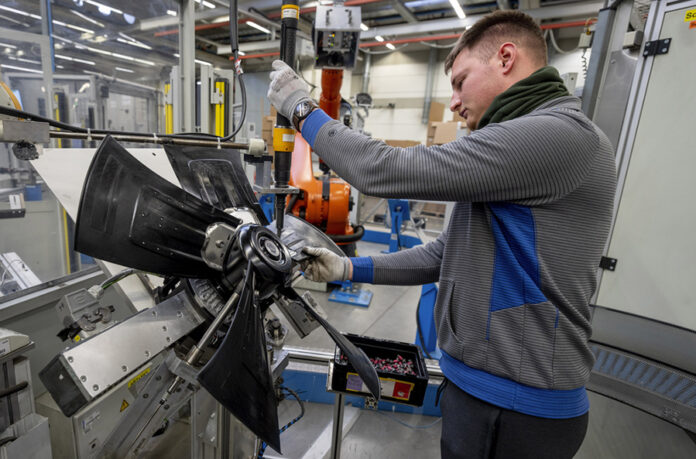
Harrisburg, PA – Today, Governor Josh Shapiro announced the Commonwealth is investing over $2 million to support the growth of SECO/VACUUM (SECO/VAC) a vacuum furnace manufacturer in Crawford County. SECO/VACUUM’s $4.1 million expansion project includes the relocation of the company’s US manufacturing headquarters from Poland to Meadville, Pennsylvania, creating at least 23 new, full-time jobs and retaining an additional 38 jobs. 

“I am proud that that SECO/VAC has chosen to move their US manufacturing headquarters to Pennsylvania – with our skilled workforce, strategic location, and great quality of life, Pennsylvania is the best place in the country to grow your business and succeed,” said Governor Shapiro. “Pennsylvania continues to be a national leader in manufacturing, and when companies like SECO/VAC set up headquarters here, it sends a clear message that Pennsylvania is open for business. We worked across the aisle to secure major investments in economic development in the state budget this year – and we’ll use those investments to continue to attract more companies like SECO/VAC that want to come to Pennsylvania, create jobs, and be part of what we’re building all across the Commonwealth.” 

SECO/VACUUM currently leases 10,000-square-feet of space at the Crawford Business Park in Meadville for its vacuum furnace sales and service office. The company will relocate its U.S. vacuum furnaces manufacturing operations from its current headquarters site in Poland to the Crawford Business Park location. SECO/VACUUM has identified an additional 72,000-square-feet at its current location that will be repurposed into manufacturing and assembly space. The space will be leased for at least 10 years from the Economic Progress Alliance of Crawford County (EPACC).  

The company received a funding proposal from the Department of Community and Economic Development (DCED) for a $2 million Redevelopment Assistance Capital Program (RACP) grant and a $69,000 workforce development grant to train workers. 

“We’re proud to work with a strong, global company like SECO/VACUUM, who will bring more high-quality manufacturing jobs to Northwest Pennsylvania,” said DCED Secretary Rick Siger. “Governor Shapiro and I are working hard to attract business and industry to the Commonwealth and we look forward to seeing SECO/VACUUM’s continued growth and success here in Crawford County.” 

Established in 2017, SECO/VACUUM, backed by parent company SECO/WARWICK, S.A., is a leading vacuum furnace manufacturer in the North American heat-treating market. Vacuum furnaces remove air from the heating chamber during operation. A lot of industries, laboratories, and manufacturers rely on these high-powered vacuum furnace systems to perform daily functions – from heat treatment to sanitation.  

“Our area has always been known for its excellence in manufacturing,” said Senator Michele Brooks. “The SECO/VACUUM Technologies expansion will not only add additional jobs for local families but will also continue this legacy.” 

“The SECO/WARWICK Group has been producing heat treating equipment in Meadville for well over 100 years and, thanks to support from Governor Shapiro and his Administration, the people of the Commonwealth, the Economic Progress Alliance of Crawford County, and our parent company; SECO/VACUUM will continue the legacy of providing innovative heat treating solutions to the North American market by expanding our manufacturing capabilities for equipment built right here in Pennsylvania,” said Piotr Zawistowski, President/Managing Director, SECO/VACUUM Technologies. “We’re very excited about this opportunity and what it means, not only for us but for the Commonwealth and our local Meadville community.” 

The expansion project was coordinated by the Governor’s Action Team, an experienced group of economic development professionals who report directly to the Governor and work with businesses that are considering locating or expanding in Pennsylvania. Governor’s Action Team Executive Director Brent Vernon was on hand in Meadville today to help celebrate the announcement and tour the SECO/VACUUM facility. 

Additionally, DCED’s Office of International Business Development (OIBD) provided support and technical assistance to help the company relocate their headquarters from Poland to Meadville. 

“With the Commonwealth’s investment in the project, an existing warehouse facility will be transformed into a hi-tech, state-of-the-art manufacturing facility which will allow an international company to expand in Pennsylvania,” said Jim Becker, Executive Director, Economic Progress Alliance of Crawford County. “This investment will allow SECO/VACUUM to invest and create jobs that help drive our local and regional economies. We’re excited that we can support SECO/VACUUM’S expansion in Crawford County!” 

Since day one, Governor Shapiro and his Administration have been working aggressively to make Pennsylvania a leader in innovation and economic development and create opportunity for all Pennsylvanians. The Governor’s ten-year Economic Development Strategy announced earlier this year will capitalize on the Commonwealth’s strengths and reignite our economy.  

Since taking office, the Shapiro Administration has secured and announced nearly $2 billion in private sector investments through the Governor’s Action Team and PA SITES (Pennsylvania Strategic Investments to Enhance Sites) investments.  

The 2024-25 bipartisan budget delivers on the Governor’s key priorities to make Pennsylvania more competitive economically and includes: 

  • $500 million for site development, including $400 million for the PA SITES (Pennsylvania Strategic Investments to Enhance Sites) program;
  • $20 million for the Main Street Matters program to support small businesses and commercial corridors that are the backbone of communities across our Commonwealth;
  • $20 million in state funding for small minority-owned businesses in Pennsylvania; and 
  • $15 million for tourism marketing to boost our economy, attract more visitors, and support good-paying jobs — building on the Governor’s launch of the Great American Getaway brand to encourage tens of millions within a few hours’ drive to visit Pennsylvania.

You can read Pennsylvania’s first economic development strategy in 20 years here. Get more information on how the Governor’s budget will create economic opportunity for all Pennsylvanians here.    

Pennsylvania man accused of voting in 2 states faces federal charges

Pennsylvania
A roll of "I Voted!" stickers are shown, Oct. 6, 2020, at the Miami-Dade County Elections Department in Doral, Fla. (Photo: AP/Wilfredo Lee/File)

HARRISBURG, Pa. — A man faces federal charges that he voted in both Florida and in Pennsylvania for the 2020 presidential election, and twice in Pennsylvania during the November 2022 election.

The U.S. attorney’s office in Philadelphia said Friday it had filed five charges against 62-year-old Philip C. Pulley of Huntingdon Valley, alleging he violated federal election law by falsely registering to vote, double voting and engaging in election fraud.

It’s unclear how often double voting occurs or how often it is prosecuted. But a review published in December 2021 by The Associated Press found fewer than 475 potential cases of voter fraud in the six battleground states disputed by former President Donald Trump in the 2020 election. Those cases were too few to have made a difference in his reelection defeat.

Pulley is accused of using a false Philadelphia address and Social Security number when in 2020 he registered in Philadelphia while already being registered to vote in Montgomery County, Pennsylvania, and Broward County, Florida. That year he requested a mail-in ballot in Philadelphia and voted in both Montgomery and Broward, according to the criminal allegations.

The charging document also claims that in November 2022, with a U.S. Senate seat on the ballot, he voted in both Philadelphia and Montgomery counties.

Federal prosecutors say Pulley had a history of using his address in Huntingdon Valley, Montgomery County, to vote from 2005 through last year. Broward County records indicate he was a Republican in 2018 when he registered in Lighthouse Point, Florida, and that he has voted several times from that address.

Pennsylvania voting records indicate Pulley was registered as a Republican in Montgomery County from the 1990s until he changed it to the Democratic Party last year. A few years prior, in February 2020, he registered as a Democrat in Philadelphia — where he voted in general elections in 2021, 2022 and 2023, the records show.

Pulley did not have a lawyer listed in court records. Messages were left seeking comment at phone numbers and an email address linked to him.

Emiten alerta de tormenta tropical para islas del noreste del Caribe

tormenta
Esta imagen de satélite de la Oficina Nacional de Administración Oceánica y Atmosférica (NOAA), el sábado 29 de junio de 2024, muestra al huracán Beryl, al centro abajo, sobre el océano Atlántico mientras se dirige hacia el sureste del Caribe. (Foto: VOA/Archivo)

El Centro Nacional de Huracanes de EE. UU. emitió este lunes una advertencia sobre la formación de una tormenta tropical que impactará a varias islas del noreste del Caribe. El fenómeno recorrería la región y alcanzaría a Estados Unidos donde podría convertirse en el huracán Ernesto.

San Juan, Puerto Rico. — Los meteorólogos emitieron el lunes alerta de tormenta tropical para varias islas del noreste del Caribe, que incluyen Antigua, Barbuda, Anguila, San Cristóbal, Nieves, Montserrat, Guadalupe, San Bartolomé y San Martín.

También se emitió un aviso de tormenta tropical para Puerto Rico, las Islas Vírgenes de Estados Unidos y las Islas Vírgenes Británicas.

El Centro Nacional de Huracanes de Estados Unidos prevé que la perturbación se convertirá en una depresión tropical más tarde el lunes y luego se fortalecerá a tormenta tropical a medida que se acerca al noreste del Caribe. Luego se pronostica que se convertirá en un huracán el jueves, cuando gire al norte hacia Bermudas.

Se prevé que la perturbación se convertirá en Ernesto, la quinta tormenta con nombre de la temporada de huracanes del Atlántico.

Los meteorólogos pronostican que el sistema causará inundaciones y deslizamientos de tierra.

Las autoridades prevén lluvias en Guadalupe el lunes y que pase cerca de San Bartolomé y San Martín.

El centro huracanes con sede en Miami pronostica que la perturbación se acercará a Puerto Rico y a las Islas Vírgenes de Estados Unidos y Británicas el martes por la noche.

La perturbación se encuentra a unos 845 kilómetros (525 millas) al este-sureste de Antigua. Tiene vientos máximos sostenidos de 45 kilómetros por hora (30 millas por hora) y se mueve hacia el oeste a 43 km/h (26 mph).

La Administración Nacional Oceánica y Atmosférica de Estados Unidos (NOAA) pronostica una temporada de huracanes en el Atlántico superior a la media este año debido a las temperaturas oceánicas cálidas récord. Pronostica entre 17 y 25 tormentas con nombre, y de cuatro a siete huracanes de categoría 3 o superior.

Health Department to spray for mosquitoes in Pennypack and Fairmount parks

mosquitoes

These previously scheduled sprays did not happen due to weather conditions. This release is the same as the previous one, but with updated dates and product name.

 
PHILADELPHIA. The Philadelphia Department of Public Health’s Vector Control staff is planning to apply treatments to control adult mosquitoes in Pennypack Park on Tuesday evening, August 13, and in Fairmount Park on Wednesday evening, August 14, both at or around dusk. Rain dates will take place on the following evening, if weather conditions don’t allow for the spray. See maps below for the specific streets that spraying will take place on.
 
Samples taken by Vector Control staff in the targeted area have shown adult mosquito populations that can potentially carry the West Nile virus. The treatments will be administered via a truck-mounted machine spraying fine aerosol droplets. The mist stays aloft and kills mosquitoes on contact. The truck-mounted operation will spray Duet®, which is a synthetic pyrethroid. This product has no residual effects and evaporates quickly into the atmosphere.
 
Certain mosquitoes species carry West Nile virus, which, when transmitted to people, can cause West Nile encephalitis, and infection that can result in an inflammation of the brain. Individuals are urged to take personal protection precautions to avoid being bitten by mosquitoes. Many mosquitoes are most active at dusk and dawn. Be sure to use insect repellent with an EPA registered active ingredient and wear long sleeves and pants at these times or consider staying indoors during these hours.
 
Individuals can take a number of measures around the home to help eliminate mosquito-breeding areas, including:
 

  • Removing things that can catch and hold water, like trash cans, plastic containers, or pots.
  • Drilling holes in the bottom of outdoor trash cans and recycling containers.
  • Turning over plastic baby pools at the end of the day.
  • Removing old tires.
  • Having clogged roof gutters cleaned; roof gutters can produce millions of mosquitoes each season.
  • Changing the water in birdbaths frequently.
  • Cleaning and chlorinating swimming pools; a swimming pool left untended by a family on vacation for a month can produce enough mosquitoes to result in a neighborhood-wide problem.

 
To prevent mosquito bites:
 

  • Make sure screens fit tightly over doors and windows to keep mosquitoes out of homes.
  • Wear long-sleeved shirts, long pants and socks when outdoors, particularly when mosquitoes are most active at dawn and dusk, or in areas known to have large numbers of mosquitoes.
  • When possible, reduce outdoor exposure at dawn and dusk during peak mosquito periods, usually April through October.
  • Use insect repellents according to the manufacturer’s instructions. An effective repellent will contain DEET, picaridin, or oil of lemon eucalyptus.
  • Consult with a pediatrician or family physician about the use of repellent on children. (Repellent is not recommended for children under the age of two months.)

 
For more information about West Nile virus and the state’s surveillance and control program, go to www.westnile.state.pa.us. For questions on the West Nile Virus program in Philadelphia, call 215-685-9000.

Shapiro administration enhances 511PA to assist travelers to little league world series

Shapiro

Harrisburg, PA – The Pennsylvania Department of Transportation (PennDOT) encourages motorists traveling to the Little League World Series in Williamsport to plan their trip using the enhanced real-time travel and alternate-route information available on a specialized web page at www.511PA.com/map/page/LLWS.

The page continues Governor’s Shapiro’s commitment to providing digital services that are responsive, user-friendly, and accessible to every Pennsylvanian. Hosted through the department’s www.511PA.com traveler information website, the page is dedicated to monitoring traffic conditions on the primary travel routes to the event. Travel times and alerts are provided for: Route 15 south to Route 220 to Market Street (from north); Route 15 north (from south); Interstate 80 east to Route 220 north to Market Street (from west); and I-80 west to Route 15 north (from east).

“511PA is a valuable tool to empower the public and minimize congestion,” said PennDOT Secretary Mike Carroll. “By providing this real-time information, motorists can more easily plan the route that works best for them as they travel to this exciting event.”

The page includes the average travel time for the primary route as well as one or two alternate routes. Users can see incidents, construction, traffic cameras, and traffic speeds on the map.

PennDOT’s Central Region Traffic Management Center is also supporting the Little League World Series by posting real-time travel information on dynamic message signs and transmitting audio messages on highway advisory radio systems to assist travelers.

Motorists can check conditions on major roadways by visiting www.511PA.com. 511PA, which is free and available 24 hours a day, provides traffic delay warnings, weather forecasts, traffic speed information and access to more than 1,000 traffic cameras.

511PA is also available through a smartphone application for iPhone and Android devices, by calling 5-1-1, or by following regional Twitter alerts accessible on the 511PA website.

Follow PennDOT on X and like the department on Facebook and Instagram.

Pennsylvania continues national ag conservation leadership, investing $9.9 million to protect 30 farms in 14 counties from future development

Pennsylvania

2,654 prime farmland acres preserved in Adams, Armstrong, Berks, Cumberland, Lackawanna, Lancaster, Lehigh, Lycoming, Monroe, Montgomery, Northampton, Susquehanna, Washington, York counties

Harrisburg, PA – The Shapiro Administration announced today that Pennsylvania is investing more than $9.9 million to purchase development rights for 2,654 acres on 30 farms in 14 counties, protecting them from future residential or commercial development. These conservation easement purchases ensure that Pennsylvania farmers will have the quality land they need to continue supporting families, communities, and jobs in the future.

“Pennsylvania is a great place to do business,” Agriculture Secretary Russell Redding said. “Our location near ports, interstates, railways, and 40 percent of the U.S. population means farmers face fierce competition from developers seeking to buy their land. Saving fertile farmland for producing food, rather than losing it to warehouses and suburban sprawl is a critical investment the Shapiro Administration is making along with farm families and county and local governments to feed our families, and our economy, and our future together.”

These easement purchases multiply the impact of Pennsylvania dollars invested in conservation initiatives, including the $154 million Agricultural Conservation Assistance Program (ACAP),  Clean & Green tax incentives, $13 million in Resource Enhancement and Protection tax credits, and historic levels of support for Pennsylvania farmers who are conserving and enhancing the clean water and healthy soil they need to be productive in the future.

Governor Josh Shapiro’s bipartisan 2024-25 budget includes new investments in agriculture innovation and conservation to keep Pennsylvania a national leader, including a new $10 million Agriculture Innovation and Conservation Fund, plus $35 million in new dollars for ACAP, and another $5 million for the Nutrient Management fund.

Pennsylvania leads the nation in preserved farmland. Since 1988, when voters overwhelmingly supported creating the state’s Farmland Preservation Program, Pennsylvania has protected 6,422 farms and 641,908 acres in 58 counties from future development, investing more than $1.7 billion in state, county, and local funds.

The state partners with county, and sometimes local government and nonprofits to purchase development rights, ensuring a strong future for farming and food security. By selling development rights, farm owners ensure that their farms will remain productive farms and never be sold to developers.

Farms preserved this month, by county, along with a breakdown of the total $9,939,980 invested are as follows:  

Adams County – Total investment – $403,419; state – $329,881; county – $19,612; Union Township – $53,925

Arentz Family #3, 72-acre crop farm, Union Township

Clay D. and Judith A. Roche, 15-acre crop farm, Hamilton Township

John E. Sanders 28-acre crop farm, Mount Pleasant Township

Armstrong County – Total investment – $246,440; state – $224,165; county – $22,275

Clayholm Farms #3, 123-acre crop and livestock farm, West Franklin Township

Berks County – Total investment – $699,312; state – $568,285; county – $131,027

Geiger Family, 84-acre crop farm, Ontelaunee Township

Debra A. Gingrich, Sarah Gingrich and Christy M. Yohn, 117-acre crop farm, Bethel Township

Christopher and Lisa C. Teprovich 46-acre crop farm, Centre Township

Cumberland County – Total investment – $1,462,961, state – $812,961, county – $650,000

Gertrude M. and Brian E. Hair, 75-acre crop and livestock farm, South Newton Township

David C., Rachel J., and Rebecca K. Hershberger,122-acre crop and livestock farm, Hopewell Township

Paul E. & Harry G. Hoch #4, 79-acre crop farm, Southampton Township

Loren B. & Brenda N. Newswanger, 143-acre crop and livestock farm, Dickinson Township

Lackawanna County – Total investment – $101,885 state only

Brianna M. and Thomas J. Nichols, Jr. #1, 40-acre crop farm, Greenfield Township

Lancaster County – Total investment – $2,589,500, state — $2,050,051, county — $539,449

Pattye Y. Barley, 60-acre crop farm, Manor Township

Glenn C. and Helen M. Hershey, 83-acre crop farm, Leacock Township

Gregory D. and Lafaye H. Musser, 75-acre crop farm, Penn Township

Christian L. and L. Ruthy Petersheim, 94-acre crop farm, Salisbury Township

Red Knob Farm, 112-acre crop farm, Fulton Township

Joel H. & Irene W. Rutt, 150-acre crop and livestock farm, Rapho Township

Ruby S. and David R. Stoltzfus, Jr., 78-acre crop farm, Salisbury Township

Lehigh County – Total investment – $403,444, state – $206,406, county – $189,330, townships – $7,708

Alan P. and Donna M. Behnke, 20-acre crop farm, Lower Milford Township

Matthew J. Urffer and Jessica J. Bales, 43-acre crop farm, Lower Milford Township

Lycoming County – Total investment – $135,926; state – $127,988; county – $7,939

Wayne E., Ruth H., James A., and Linda Vandine, 106-acre crop farm, Moreland Township

Monroe County – Total investment – $193,679 state only

Esther Mager Vasil, 31-acre crop farm, Eldred Township

Montgomery County – Total investment – $1,713,431; state – $1,681,261; county – $32,170

Todd R. and Jeanette L. Baringer #1, 18-acre livestock farm, Upper Hanover Township

Freeds Partnership #1, 66-acre crop farm, New Hanover Township

Northampton County – Total investment – $434,999, state – $196,489, county – $238,510

358 Menahan Street, 56-acre crop farm, Lower Mount Bethel Township

Charles B., Natalie J., and Zachary B. Rush, 48-acre crop farm, Moore Township

Susquehanna County – Total investment – $417,944; state – $285,658; county – $132,286

Philip S. and Michele K. DePue, 264-acre crop and livestock farm, Franklin Township

Washington County – Total investment – $557,846, state — $454,762, county — $103,084

L. Putnam and Betty Foley,181-acre crop and livestock farm, Robinson Township

York County – Total investment – $579,194; state – $6,900; county – $572,294

Z&Z Farms #1, 225-acre crop and livestock farm, Dover Township

To learn more about Pennsylvania’s Farmland Preservation Program and investments in a secure, sustainable future for Pennsylvania, visit agriculture.pa.gov.

Learn how Governor Josh Shapiro’s Economic Development Strategy recognizes agriculture as key to our future economic success, and find more investments in a strong future for Pennsylvania agriculture at shapirobudget.pa.gov.

La Casa Blanca divulga plan contra la pérdida de tiempo de consumidores que hacen reclamos

Casa Blanca
El secretario de Educación de Estados Unidos, Miguel Cardona, declara durante una sesión del subcomité presupuestario del Senado sobre servicios humanos, salud, empleo, educación y agencias relacionadas en el Capitolio, Washington, el 30 de abril de 2024. (Foto: VOA)

La Casa Blanca presentó este lunes una iniciativa que implicará a varias agencias federales para poner fin a los obstáculos, papeleo y pérdidas de tiempo que algunas corporaciones crean a los consumidores para obtener reembolsos o cancelaciones.

El programa ‘El tiempo es dinero’ quiere hacer más fácil cancelar suscripciones, permitir que los reembolsos de la aerolíneas sean automáticos cuando no hayan entregado un servicios, permitir reclamaciones a los seguros de salud de manera digital o evitar que los servicios de atención al cliente estén diseñados para no permitir tramitar reclamaciones con sencillez.

El Buró de Protección Financiera del Consumidor (CFPB, por sus siglas en inglés) tendrá un rol central en este plan y se encargará, por ejemplo, de crear normas y guías para evitar que bancos y otras instituciones financieras usen chatbots con Inteligencia Artificial que no permitan acceder a ayuda o hagan creer al consumidor que hablan con humano.

La iniciativa también implicará al Departamento de Educación para mejorar la comunicación y procesos entre las escuelas y los padres, con guías para hacer más sencillo el papeleo.

El plan del presidente estadounidense, Joe Biden, y su vicepresidenta, Kamala Harris, se anuncia la misma semana en que la candidata presidencial ha prometido presentar su programa económico para los próximos cuatro años si gana las elecciones.

Harris prometió la semana pasada que presentará las líneas de su plan para reducir el coste de vida y reforzar la economía a la par que aseguró que cree en la independencia de la Reserva Federal para dictar la política monetaria en contraste con su rival republicano, Donald Trump, quien opinó que el Ejecutivo tiene que tener voz en ese proceso.