PHILADELPHIA. – United States Attorney Jacqueline C. Romero announced that Jared Stanley, 32, of Lindenwold, New Jersey, entered a plea of guilty on Friday, October 11, 2024, before United States District Court Judge John F. Murphy to three counts of Hobbs Act robbery and one count of carrying, using, and brandishing a firearm during and in relationCamden County man pleads ¡guilty to violent armed robberies of three corner stores in Philadelphia’s Kensington section
Stanley committed all three robberies during a two-week span in late January and early February of this year.
On January 21, 2024, the defendant entered the Birch Mini-Market, located at 2001 East Birch Street. He approached the counter, pointed a gun at the cashier, and demanded money. When the cashier didn’t understand him, Stanley started screaming at them. He repeatedly hit the cashier in the head with the gun, stole approximately $550 from the register, and fled.
On January 28, 2024, Stanley and an unidentified co-conspirator entered the Capricorno Grocery, located at 2000 East Orleans Street. Stanley walked to the employee area of the store, displayed a firearm, grabbed the employee by the shirt and forcibly pulled him away, pistol whipped him repeatedly, and stood guard over him while his accomplice went back to the register and stole approximately $500.
On February 2, 2024, Stanley and an unidentified co-conspirator entered Bonifacios Grocery, located at 3052 Frankford Avenue. They pushed an employee to the cash register, told him to get on the ground and then pistol whipped him in the head. Stanley and his accomplice then stole approximately $500 from the cash register and fled the store on foot.
Stanley is scheduled to be sentenced on January 29, 2025. He faces a mandatory minimum sentence of seven years in prison and a maximum possible sentence of life imprisonment, five years of supervised release, a $1,250,000 fine, and a $500 special assessment.
This case is part of Project Safe Neighborhoods (PSN), a program bringing together all levels of law enforcement and the communities they serve to reduce violent crime and gun violence, and to make our neighborhoods safer for everyone. On May 26, 2021, the department launched a violent crime reduction strategy strengthening PSN based on these core principles: fostering trust and legitimacy in our communities, supporting community-based organizations that help prevent violence from occurring in the first place, setting focused and strategic enforcement priorities, and measuring the results.
The case was investigated by the FBI and the Philadelphia Police Department and is being prosecuted by Assistant United States Attorney Robert E. Eckert.
Submission period applies to PennDOT-owned projects and infrastructure
Harrisburg, PA – The Pennsylvania Department of Transportation (PennDOT) Office of Public-Private Partnerships (P3) announced today that it is accepting unsolicited proposals for transportation projects from the private sector through Oct. 31.
The submission period applies to PennDOT-owned projects and infrastructure. During this period, the private sector can submit proposals offering innovative ways to deliver transportation projects across a variety of modes including roads, bridges, rail, aviation, and ports. Proposals can also include more efficient models to manage existing transportation-related services and programs.
The private sector may also submit applications for non-PennDOT-owned assets directly to the P3 board during this time. Transportation entities outside of the governor’s jurisdiction, such as transit authorities, may establish their own timelines or accept proposals year-round. Unsolicited proposals are being accepted through 11:59 PM on Oct. 31. Instructions on how to submit a project and information on the unsolicited proposal review process can be found on the state’s P3 website.
The state’s P3 law allows PennDOT and other transportation authorities and commissions to partner with private companies to participate in delivering, maintaining, and financing transportation-related projects.
As part of the P3 law, the seven-member Public Private Transportation Partnership Board was appointed to examine and approve potential public-private transportation projects. If the board determines a state operation would be more cost-effectively administered by a private company, the company will be authorized to submit a proposal and enter into a contract to either completely or partially take over that operation for a defined period of time.
The next unsolicited proposal acceptance period will occur in April 2025. To learn more about P3 in Pennsylvania, including active projects, visit PennDOT’s website.
Harrisburg, PA – The Pennsylvania Department of Education (PDE) today encouraged Pennsylvanians to nominate an outstanding educator to be the Commonwealth’s 2026 Teacher of the Year.
“Every day in classrooms across the Commonwealth, our outstanding educators are making a difference for millions of learners,” said Secretary of Education Dr. Khalid N. Mumin. “Being named Pennsylvania Teacher of the Year is a prestigious honor that opens doors and creates exciting opportunities for networking, professional development, and mentorship—and gives hard-working teachers the accolades they deserve.”
The Teacher of the Year program celebrates excellence in teaching and honors individuals who have made outstanding contributions to the young people of Pennsylvania. Nominations will be accepted until December 16, 2024.
The finalists are selected from applicants and recognized in Harrisburg each fall. Pennsylvania’s 2026 Teacher of the Year will be announced at a state awards ceremony in early December 2025 and will represent the Commonwealth at various local, regional, and national functions culminating in the National Teacher of the Year ceremony at the White House.
Through the National State Teacher of the Year (NSTOY) program, PDE identifies and honors exemplary teaching and classroom practices across the commonwealth. NSTOY annually recognizes a professional who inspires students of all backgrounds and abilities to learn; who has the respect and admiration of students, parents, and colleagues; and who plays an active and useful role in both school and community.
The Teacher of the Year program is co-sponsored by PDE and the Pennsylvania chapter of the National State Teacher of the Year (NSTOY-PA), which was founded in 1995.
The 2024 Pennsylvania Teacher of the Year, named last December at PDE’s SAS Institute, was Ashlie Crosson, who teaches Grade 10 English, AP Language, & Journalism at Mifflin County High School in the Mifflin County School District in Lewistown. The 2025 Pennsylvania Teacher of the Year will be announced at PDE’s SAS Institute on December 9, 2024.
La maestra de jardín de infantes Karen Drolet, izquierda, trabaja con un estudiante en Raíces Dual Language Academy, una escuela pública en Central Falls, Rhode Island, el 9 de febrero de 2022. (Foto: VOA)
Un reciente estudio reveló que, pese a los esfuerzos, los estudiantes latinos en EE. UU. no han logrado recuperarse a nivel académico tras la pandemia de COVID-19.
Unos cuatro años desde el inicio de la pandemia de COVID-19 y más de uno desde su fin oficial, el progreso académico de los estudiantes en Estados Unidos avanza muy lento, una situación que se agrava entre los escolares de origen hispano.
Así lo indica un estudio de la Universidad Harvard y Stanford, que reveló que los estudiantes habían recuperado solo un tercio de su pérdida académica en matemáticas y un cuarto de su pérdida en lectura. Sin embargo, un dato que encendió las alarmas es que los estudiantes de origen hispano o que enfrentan barreras de idioma, registran un progreso mínimo y en algunos casos, ninguno.
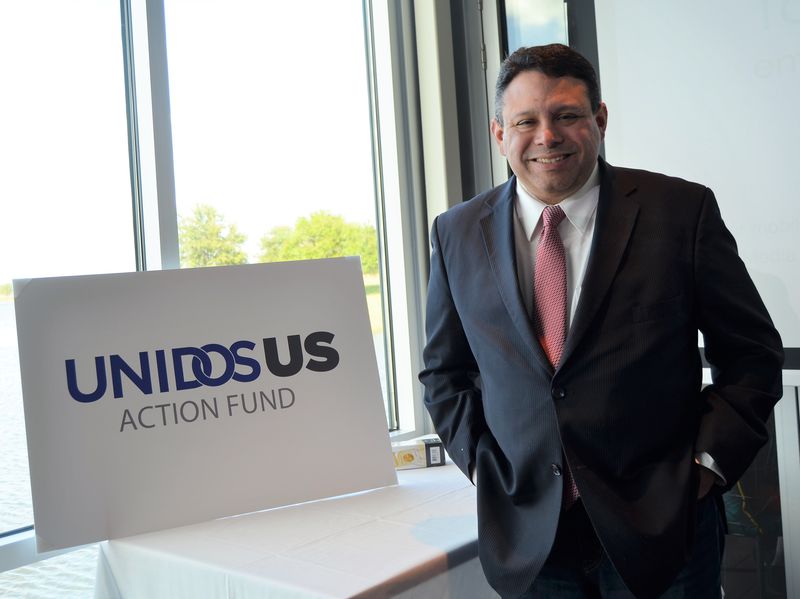
“Esto demuestra que si bien se está dando una recuperación académica entre los estudiantes, tristemente los latinos no están avanzando y se deben tomar acciones inmediatas para no correr el riesgo de tener una generación perdida», dijo a la Voz de América, Lina Lenis, analista política en temas de educación de la organización UnidosUS.
La pandemia de COVID-19 obligó a cerrar las escuelas públicas de todo Estados Unidos a principios de 2020 para pasar a una educación a distancia y luego en algunos casos semipresencial.
Esta nueva modalidad trajo consigo desafíos como el acceso a internet y la falta de comunicación e interacción social entre los estudiantes, maestros y padres de familia.
“La pandemia puso fin a casi dos décadas de progreso académico. Los resultados en las evaluaciones nacionales decayeron drásticamente en 2022 en comparación con 2019. Según un indicador, serían necesarios más de seis meses de instrucción adicional para que los estudiantes latinos de secundaria recuperen los niveles de rendimiento prepandémicos en lectura y matemáticas”, agregó Lenis.
El educador de origen hispano Mario Villanueva Ramos atribuye esta situación a que después de la pandemia los estudiantes abandonaron las rutinas de lectura.
«Para un estudiante, si no lee, no va a avanzar. He podido ver que los niños están usando mucho más los aparatos electrónicos, pero que en lugar de ayudarlos a crecer sus conocimientos, se han convertido en un problema”, afirma Villanueva.
El maestro asistente de las escuelas públicas del condado de Fairfax en el estado de Virginia, asegura que “la tecnología les está sirviendo a los estudiantes como una distracción y no se están enfocando en su rendimiento académico”.
“La pandemia fue nefasta, pero ahora regresan a la escuela y todo lo están relacionando al uso de la tecnología. Ellos han abandonado la lectura y seguramente en casa no tienen el apoyo que necesitan para desarrollar el hábito. Leer será la única clave para salir de este problema que estamos enfrentando en la educación”.
Según un informe de UnidosUS, siete de cada 10 familias latinas aseguran estar preocupadas porque sus hijos no están al nivel del grado que cursan y más de seis de cada 10 familias hispanas piensan que las escuelas deberían hacer más para ayudar a aquellos alumnos que se quedaron rezagados durante la pandemia.
Aprovechar al máximo los fondos para la educación
El Fondo de Ayuda de Emergencia para Escuelas Primarias y Secundarias otorgó tres rondas de financiación para la educación en EE. UU. con el propósito de mitigar los efectos de la pandemia. Sin embargo, según UnidosUS “algunos distritos escolares o estados no están aprovechando al máximo los fondos que otorga el gobierno federal. Se deben evaluar qué iniciativas funcionan para saber cómo ponemos a obrar ese dinero”.
Para ello, la mayor organización latina en territorio estadounidense recomienda invertir en tutorías intensivas, tiempo adicional, como por ejemplo agregar una hora más a la jornada escolar, junto a más clases de verano y inclusión de la familia en estos esfuerzos.
“Ahora más que nunca debemos trabajar con nuestros líderes para que se aprovechen los fondos al máximo y que las inversiones que se realicen sean sostenibles. Durante la pandemia hubo una inyección de fondos, pero nuestro trabajo no debe quedarse ahí porque para una recuperación completa se deben seguir dando los fondos para terminar con lo que se empezó”, asegura la experta en políticas educativas de UnidosUs, Lina Lenis.
Martina Flores, madre de un estudiante, vive en carne propia esta falta de fondos. Según contó a la VOA recibió una carta de la escuela de su hijo en la que le explicaban que el menor, quien cursa el cuarto grado, no podría ser incluido en el programa conocido como “Title I” para nivelar sus conocimientos en lectura y comprensión, porque el sistema escolar no contaba con los recursos necesarios.
“Me contactaron a través de una carta, donde solo me decían que lamentablemente mi hijo no podía ser incluido en el programa Título I y que entraría a una lista de espera por falta de fondos».
«La verdad no me quedó claro y solo me dijeron que debía esperar para ver si se abrían más fondos o que pregunte en la escuela qué otros programas podían ofrecerle a mi hijo”, cuenta la señora Flores, quien hasta el momento sigue a la espera de alguna noticia.
El programa de “Title I” ofrece fondos federales a través de agencias educativas estatales para asistir a familias de escasos recursos para aminorar la brecha educativa y proveer educación de alta calidad a estudiantes con desventajas académicas.
¿Qué más se puede hacer?
Pero no toda la responsabilidad en la educación debe dejarse en manos de las escuelas. Tanto la organización UnidosUS y el educador Mario Villanueva coinciden en que para mejorar el nivel educativo de los escolares, el trabajo empieza en casa. Ambos consideran en que una buena relación entre padres, estudiantes y la escuela es la mejor ecuación.
“La educación de nuestros niños y jóvenes no solo depende de la escuela, sino es un triángulo donde escuela, padres e hijos deben estar bien involucrados. Si las tres partes colaboran estos chicos van a ser exitosos”, afirma Mario Villanueva.
Por su parte, Lina Lenis de UnidosUS asegura que si bien la educación en EE. UU. “no está pasando por su mejor momento”, los padres deben saber cuáles son sus derechos para abogar por la mejor educación para sus hijos, porque solo así estarán informados de todos los recursos y programas extracurriculares que ofrecen las escuelas.
“Si no logramos esta recuperación completa en lo académico, corremos el riesgo de tener una generación que se puede perder porque al no estar preparada se verá afectada nuestra economía y la del país. Por el bienestar de todos, hay que poner mayor atención al problema educativo y concientizar a nuestras comunidades”, recomienda la experta.
Community Resilience Grant from Bank of America and the Arbor Day Foundation will help develop tree canopy in Norristown, PA
PHILADELPHIA, PA. –PHS is proud to be a recipient of Bank of America and the Arbor Day Foundation’s Community Resilience Grant, which supports the organization’s first-ever Spanish language PHS Tree Tenders Workshop on October 20, 2024. Participants in the free workshop will receive training and education on planting and caring for trees and will participate in a hands-on planting and tree care demonstration at the PHS Green Resource Center at Norristown Farm Park.
Local Norristown participants will receive a free container tree to kickstart their interest in planting and caring for trees as newly trained PHS Tree Tenders. The PHS Tree Tenders program is a nationally recognized volunteer-based tree advocacy program consisting of over 6,400 volunteers in 100 neighborhoods throughout the Philadelphia region.
Through this workshop, PHS hopes to engage Norristown’s Spanish-speaking community through tree care training and education. The intensive course will introduce the community to the PHS Tree Tenders program, working with community groups, and pruning trees. Presenters from both PHS and the Philadelphia Orchard Project will be in attendance.
The Community Resilience Grant program enables the design and implementation of projects that utilize trees and other green infrastructure to build resilience in Norristown, PA, which is one of PHS’s priority neighborhoods – an area where programming is systematically delivered to rectify environmental inequity. PHS has created and implemented a comprehensive strategy of best practices in community engagement including authentically listening to and building relationships with leaders and stakeholders within Norristown’s Black, Latino, and other communities of color, and working systematically to target and develop tree canopy in these communities.
Studies have shown that there is a positive correlation between health and convenient access to natural elements — the more a person is surrounded by greenery, the better their health outcomes may be. Furthermore, a thriving canopy can help mitigate flooding, reduce temperatures to curb the urban heat island effect, improve water quality in critical watershed locations, and filter airborne pollutants in highly industrialized communities.
«At PHS, we believe that everyone deserves the opportunity to connect with nature and experience its benefits. By offering this Spanish-language PHS Tree Tenders workshop and tree giveaway, we’re taking a significant step towards making tree care accessible to all members of the Norristown community. Our goal is to empower residents with the knowledge and resources they need to create a greener, healthier neighborhood for themselves and future generations. This is at the heart of our community engagement work: meeting people where they are and providing the support they need to thrive,» said Matt Rader, President of the Pennsylvania Horticultural Society.
As of 2019, US Census data shows Norristown’s population is 37.2% Black or African American, 27.9% white (non-Hispanic), 27.1% Hispanic, and 6.4% two or more races. Almost 20% of Norristown’s population lives below the poverty line. According to American Forests’ data, Norristown encompasses many neighborhoods with low tree equity scores. PHS aims to rectify environmental inequity for residents in the Norristown community through empowering residents with the education, tools, and resources needed to plant and care for trees and develop their tree canopy.
“Expanding green spaces and increasing the number of trees in our region brings many benefits to our community,” said Jim Dever, President, Bank of America Greater Philadelphia. «It is critical that we support the work of increasing the natural infrastructure in disadvantaged communities that are impacted by the effects of a changing climate. The Arbor Day Foundation’s program and Pennsylvania Horticultural Society’s continued work to expand access by training Spanish speaking tree tenders is important for creating more sustainable and climate-resilient cities.»
For more information on the PHS Tree Tenders program, please visit here.
ABOUT PENNSYLVANIA HORTICULTURAL SOCIETY The Pennsylvania Horticultural Society (PHS), an internationally recognized nonprofit organization founded in 1827, uses horticulture to advance the health and well-being of the Greater Philadelphia Region. PHS programs create healthier living environments, increase access to fresh food, expand access to jobs and economic opportunity, and strengthen deeper social connections between people. PHS’s work spans 250 neighborhoods; an expansive network of public gardens and landscapes; year-round learning experiences; and the nation’s signature gardening event, the Philadelphia Flower Show. PHS provides everyone with opportunities to garden for the greater good as a participant, member, donor, or volunteer.
About the Arbor Day Foundation Founded in 1972, the Arbor Day Foundation has grown to become the largest nonprofit membership organization dedicated to planting trees, with more than one million members, supporters and valued partners. Since 1972, almost 500 million Arbor Day Foundation trees have been planted in neighborhoods, communities, cities and forests throughout the world. Our vision is to lead toward a world where trees are used to solve issues critical to survival.
As one of the world’s largest operating conservation foundations, the Arbor Day Foundation, through its members, partners and programs, educates and engages stakeholders and communities across the globe to involve themselves in its mission of planting, nurturing and celebrating trees. More information is available at arborday.org.
About Bank of America Bank of America is one of the world’s leading financial institutions, serving individual consumers, small and middle-market businesses and large corporations with a full range of banking, investing, asset management and other financial and risk management products and services. The company provides unmatched convenience in the United States, serving approximately 69 million consumer and small business clients with approximately 3,800 retail financial centers, approximately 15,000 ATMs (automated teller machines) and award-winning digital banking with approximately 58 million verified digital users. Bank of America is a global leader in wealth management, corporate and investment banking and trading across a broad range of asset classes, serving corporations, governments, institutions and individuals around the world. Bank of America offers industry-leading support to approximately 4 million small business households through a suite of innovative, easy-to-use online products and services. The company serves clients through operations across the United States, its territories and more than 35 countries. Bank of America Corporation stock (NYSE: BAC) is listed on the New York Stock Exchange.
The Philadelphia Reentry Coalition reports around 25,000 formerly incarcerated citizens return to Philadelphia annually. According to the Pennsylvania DOC’s 2022 Recidivism Report, the most recent overall recidivism rate is 64.7 percent within three years of release. Of those who were reincarcerated within a three-year span, 75 percent recidivated within the first 16 months after release.
“I’m incredibly proud to join the Office of Reentry Partnerships in their unveiling of the city’s first Neighborhood Resource Center,” said Mayor Cherelle L. Parker. “In creating a government that Philadelphians can see, touch, and feel, I am committed to bringing vital resources to Philadelphians, no matter where they are in our great city. The NRC is an opportunity for us to make the lives of our residents just a little bit easier, and I look forward to this Neighborhood Resource Center being a model for Philadelphia and beyond.”
The NRC will feature onsite case management, workforce training, digital literacy training, and benefits navigation. It will also serve as a criminal record pardon and expungement hub. The Center, in partnership with Uplift Solutions, is designed to be a one-stop-shop for social services and public benefits for residents of the community, particularly those who are justice impacted.
“We are proud to join Mayor Parker in presenting the first NRC to promote public safety and reduce recidivism by enhancing reentry,” said Assata Thomas, Executive Director, Office of Reentry Partnerships. “This unique model will feature core elements like workforce development and clemency assistance but will also include needs assessment to ensure we are meeting the immediate needs of community members who are justice impacted.”
Additional centers will open throughout North Philadelphia initially, with future centers to be established throughout Philadelphia over time, promoting public safety and providing an infrastructure of reentry support throughout all of Philadelphia.
“It is my honor to announce the opening of our city’s first Neighborhood Resource Center alongside Mayor Parker and our leadership at the Office of Reentry Partnerships,” said Adam Geer, Chief Public Safety Director, City of Philadelphia. “Breaking barriers to resources and supports for our formerly incarcerated community members is an essential part of Philadelphia’s prevention mission. By bringing our City’s resources to Philadelphians where they live, we are giving people one less thing to worry about when they’re looking for support. I want to thank Mayor Parker for her ongoing support for this project and Assata Thomas and ORP for their leadership in bringing this to fruition.”
The first Neighborhood Resource Center opened October 10, 2024.
Further Support for the Neighborhood Resource Center:
“Gracias mayor parker for bringing city services closer to our community. As servants to our constituents, we know firsthand how needed these services are and we are thankful to have the mayor’s office as a partner. We look forward to a long and productive relationship with mayor Parker, Desmond McKinson, Atif Bostic, Uplift Solutions, the neighborhood resource center, and all its partners.” – Danilo Burgos, State Representative
“This is one of the most exciting and transformational actions ever taken by the City of Philadelphia, and we thank the administration for leaning forward into this critically important service. Providing site users with assistance will close a gap that could otherwise derail lives, and thus we are excited to be a part of this reaffirming and supportive center!” – Cindy Bass, City Councilmember (8th District)
“I look forward to referring constituents to the wholistic services provided at the Allegheny West NRC as well as hosting legislative events and activities to drive foot traffic into the site. These centers are crucial to providing resources the formerly convicted need to be successful in their reentry journey.” – Senator Sharif Street
As a minister one of the early lessons I learned was, ‘when you show up looking like hope, people will give you their hopelessness.’ I’m reminded of that because the Hunting Park NLC is ‘hope’ in brick-and-mortar. These resource hubs for all citizens, but particularly our returning Philadelphians, represent the city of hope and good governance we want to keep building.” – Nicolas O’Rourke, At-Large Councilmember, City of Philadelphia
«When we focus on helping formerly incarcerated individuals obtain the same opportunities for stable employment, housing and education, we are giving folks a second chance at life,» Parker said. «Everyone deserves the chance at a healthy and happy life, full of opportunity – not to be defined by one bad decision for the rest of their life. This NRC will serve as a catalyst for change in our community and set people on the right path to move forward.» – Representative Darisha Parker
Ribbon cutting attended by elected officials and community members
The Philadelphia Reentry Coalition reports around 25,000 formerly incarcerated citizens return to Philadelphia annually. According to the Pennsylvania DOC’s 2022 Recidivism Report, the most recent overall recidivism rate is 64.7 percent within three years of release. Of those who were reincarcerated within a three-year span, 75 percent recidivated within the first 16 months after release.
“I’m incredibly proud to join the Office of Reentry Partnerships in their unveiling of the city’s first Neighborhood Resource Center,” said Mayor Cherelle L. Parker. “In creating a government that Philadelphians can see, touch, and feel, I am committed to bringing vital resources to Philadelphians, no matter where they are in our great city. The NRC is an opportunity for us to make the lives of our residents just a little bit easier, and I look forward to this Neighborhood Resource Center being a model for Philadelphia and beyond.”
The NRC will feature onsite case management, workforce training, digital literacy training, and benefits navigation. It will also serve as a criminal record pardon and expungement hub. The Center, in partnership with Uplift Solutions, is designed to be a one-stop-shop for social services and public benefits for residents of the community, particularly those who are justice impacted.
“We are proud to join Mayor Parker in presenting the first NRC to promote public safety and reduce recidivism by enhancing reentry,” said Assata Thomas, Executive Director, Office of Reentry Partnerships. “This unique model will feature core elements like workforce development and clemency assistance but will also include needs assessment to ensure we are meeting the immediate needs of community members who are justice impacted.”
Additional centers will open throughout North Philadelphia initially, with future centers to be established throughout Philadelphia over time, promoting public safety and providing an infrastructure of reentry support throughout all of Philadelphia.
“It is my honor to announce the opening of our city’s first Neighborhood Resource Center alongside Mayor Parker and our leadership at the Office of Reentry Partnerships,” said Adam Geer, Chief Public Safety Director, City of Philadelphia. “Breaking barriers to resources and supports for our formerly incarcerated community members is an essential part of Philadelphia’s prevention mission. By bringing our City’s resources to Philadelphians where they live, we are giving people one less thing to worry about when they’re looking for support. I want to thank Mayor Parker for her ongoing support for this project and Assata Thomas and ORP for their leadership in bringing this to fruition.”
The first Neighborhood Resource Center opened October 10, 2024.
Further Support for the Neighborhood Resource Center:
“Gracias mayor parker for bringing city services closer to our community. As servants to our constituents, we know firsthand how needed these services are and we are thankful to have the mayor’s office as a partner. We look forward to a long and productive relationship with mayor Parker, Desmond McKinson, Atif Bostic, Uplift Solutions, the neighborhood resource center, and all its partners.” – Danilo Burgos, State Representative
“This is one of the most exciting and transformational actions ever taken by the City of Philadelphia, and we thank the administration for leaning forward into this critically important service. Providing site users with assistance will close a gap that could otherwise derail lives, and thus we are excited to be a part of this reaffirming and supportive center!” – Cindy Bass, City Councilmember (8th District)
“I look forward to referring constituents to the wholistic services provided at the Allegheny West NRC as well as hosting legislative events and activities to drive foot traffic into the site. These centers are crucial to providing resources the formerly convicted need to be successful in their reentry journey.” – Senator Sharif Street
As a minister one of the early lessons I learned was, ‘when you show up looking like hope, people will give you their hopelessness.’ I’m reminded of that because the Hunting Park NLC is ‘hope’ in brick-and-mortar. These resource hubs for all citizens, but particularly our returning Philadelphians, represent the city of hope and good governance we want to keep building.” – Nicolas O’Rourke, At-Large Councilmember, City of Philadelphia
«When we focus on helping formerly incarcerated individuals obtain the same opportunities for stable employment, housing and education, we are giving folks a second chance at life,» Parker said. «Everyone deserves the chance at a healthy and happy life, full of opportunity – not to be defined by one bad decision for the rest of their life. This NRC will serve as a catalyst for change in our community and set people on the right path to move forward.» – Representative Darisha Parker
This combination of photos taken in Pennsylvania shows Sen. Bob Casey, D-Pa., left, at a campaign event, Sept. 13, 2024, in Wilkes-Barre, and David McCormick, the Republican nominee for Senate in Pennsylvania, at a campaign event, April 25, 2024, in Harrisburg. (Photo: AP/File)
HARRISBURG, Pa.— Democratic U.S. Sen. Bob Casey of Pennsylvania and Republican challenger David McCormick meet for their second debate Tuesday evening, with control of the Senate on the line and tens of millions of dollars pouring into the race every week.
During their first debate two weeks ago, Casey tried to drive home the message that McCormick is a wealthy, carpetbagging ex-hedge fund CEO who got rich at the expense of Americans and will serve the interests of billionaires.
McCormick painted Casey as a weak, do-nothing out-of-touch career politician who will vote almost 100% of the time with President Joe Biden and Vice President Kamala Harris.
Mail-in voting has already begun in the pivotal swing-state seat, and the outcome of this race, one of the nation’s most expensive, could help determine which party controls the narrowly divided Senate.
Casey, perhaps Pennsylvania’s best-known politician, is seeking a fourth term in what he calls his toughest reelection challenge yet.
Casey, 64, supported Biden’s major initiatives, including his $1.9 trillion pandemic relief package, and is a staunch ally of labor unions. The former state auditor general and treasurer has won six statewide elections and is Pennsylvania’s longest-serving Democrat in the Senate. He has campaigned on preserving the middle class, abortion rights, labor rights and voting rights — and calls McCormick and former President Donald Trump a threat to all those.
McCormick, 59, is making his second run for the Senate after losing narrowly to Dr. Mehmet Oz in 2022’s Republican primary. He was CEO of Bridgewater Associates, the world’s largest hedge fund, sat on Trump’s Defense Advisory Board and served in top positions under President George W. Bush. Those included posts as a Commerce undersecretary tasked with policy over controlling exports of sensitive technologies and a Treasury undersecretary as the administration tried to prevent bank failures during the recession.
McCormick backs Trump’s pledge to extend the tax cuts he signed into law in 2017 and to carry out a mass deportation of immigrants who are in the country without permission — prioritizing people with criminal records. McCormick also opposes abortion rights, but said he wouldn’t vote for a national ban on abortion.
Democrats currently hold a Senate majority by the narrowest of margins, but face a difficult 2024 Senate map.
More than $190 million has been spent on this single race so far, according disclosures to the Federal Election Commission. The total is on track to exceed $320 million, based on campaign ad tracking by AdImpact, which includes spots reserved between now and Election Day.
The 60-minute debate will air starting at 7 p.m., hosted by WPVI -TV in Philadelphia, which will broadcast it live. Univision 65 in Philadelphia will simulcast it with Spanish language translation. Both stations will stream it live online, as will ABC News Live and Univision’s VIX.
Both Casey and McCormick were uncontested for their party’s nominations. Also on the ballot in this race are John Thomas of the Libertarian Party, Leila Hazou of the Green Party and Marty Selker of the Constitution Party. They were not invited to the debate.
Pedestrians walk past the Pennsylvania Capitol in Harrisburg, Pa., Nov. 19, 2019. (Photo: AP/Matt Rourke/File)
HARRISBURG, Pa.— Pennsylvania’s legislative Republicans would like to pass additional voter ID requirements, restrict abortion and make election changes to improve their odds of winning judicial races. Democrats want to bump up the state’s minimum wage and widen civil rights for LGBTQ people.
In the closely divided General Assembly, those proposals have gone nowhere.
Next month the state’s voters will determine whether to change that dynamic, filling all 203 House seats and half the 50-member Senate. Democrats go into the election with a one-seat House majority, while in the Senate, Republicans have 28 seats and therefore majority control.
Democrats would need to flip three Senate seats to get the chamber to a 25-25 deadlock, leaving Democratic Lt. Gov. Austin Davis to break ties on procedural votes but not final passage of legislation. They hope to thread the needle by taking GOP seats in Harrisburg, Erie and the Pittsburgh area while returning all of their own incumbents.
This year, a few dozen legislative races across the country could determine party control in state capitols, affecting state laws on abortion, guns and transgender rights. Statehouse control is more politically important in the wake of recent U.S. Supreme Court decisions weakening federal regulatory oversight, giving more power to states.
In state House elections, it’s typical that only a couple dozen races are close enough to be competitive — a handful in the Philadelphia suburbs along with others scattered around the state.
Democrats were aided by redrawn district lines when they flipped a net of 12 seats two years ago, retaking majority control after more than a decade in the legislative wilderness. A state House rule linking majority status to the results of elections rather than new vacancies has meant Democrats have maintained control of the chamber floor even as two members resigned this summer and gave Republicans a bare 101-100 margin. Those seats were filled Sept. 17 by Democrats who ran unopposed, and both are also unopposed in the General Election.
This fall, more than half of the House districts have only one candidate on the ballot.
Among the Republican targets in the House is Rep. Frank Burns, a Cambria County Democrat who has somehow stayed in office despite facing biennial GOP challenges in the very Republican Johnstown area. Another is Rep. Jim Haddock, a freshman Democrat who won a Lackawanna and Luzerne district by about 4 percentage points two years ago.
Democrats have hopes of unseating Rep. Craig Williams, R-Delaware, who made an unsuccessful bid for the GOP’s attorney general nomination this spring. Outside Pittsburgh, Rep. Valerie Gaydos is also seen as relatively vulnerable.
Rep. Nick Pisciottano, a Democrat, is giving up his Allegheny County district to run for state Senate. Rep. Jim Gregory lost the Republican primary to Scott Barger, who is unopposed in a Blair County district. Brian Rasel, a Republican, faces no other candidate to succeed Rep. George Dunbar, R-Westmoreland.
Rep. Malcolm Kenyatta, D-Philadelphia, is unopposed for reelection but he’s also running for auditor general, raising the possibility the two parties could be tied after the votes are counted.
The state Senate races widely seen as the most competitive are the reelection efforts of Sen. Dan Laughlin, R-Erie, and Sen. Devlin Robinson, R-Allegheny. Dauphin County Sen. John DiSanto, a Republican, is not seeking another term after his district saw significant changes through redistricting. State Rep. Patty Kim, D-Dauphin, and Nick DiFrancesco, a Republican and the Dauphin County treasurer, are facing off to succeed DiSanto.
Democrats have to defend a Pittsburgh state Senate opening because of the retirement of Sen. Jim Brewster, a Democrat. Pisciottano is going up against Republican security company owner Jen Dintini for Brewster’s seat.
Democratic presidential nominee Vice President Kamala Harris speaks during a campaign rally at Erie Insurance Arena, in Erie, Pa., Monday, Oct. 14, 2024.(Photo: AP/Gene J. Puskar)
Vice President Kamala Harris zeroed in on former President Donald Trump ‘s comments suggesting the U.S. military could be used to deal with “the enemy from within” as the two presidential nominees took the fight for battleground Pennsylvania to opposite ends of the state on Monday.
Harris, at her rally in northwestern Pennsylvania, called Trump a serious threat to American democracy who is “out for unchecked power.”
“He considers anyone who doesn’t support him or who will not bend to his will an enemy of our country,” Harris said after playing a clip of the comment on the jumbo screen at her rally at an Erie arena. “This is among the reasons I believe so strongly that a second Trump term would be a huge risk for America, and dangerous.”
Democrat Harris and Republican Trump have been become fixtures in the country’s largest 2024 battleground state. It was Harris’ 10th visit to Pennsylvania this campaign season, and Trump’s Monday town hall in suburban Philadelphia came after visits last week to Scranton and Reading.
Harris is highlighting what she says are examples of Trump’s increasingly “unstable and unhinged” behavior. It’s part of her effort to win over a small universe of undecided voters and tear away even a small slice of traditionally Republican voters in the fight for Pennsylvania and six other closely contested states that are expected to determine who wins next month’s election.
Democratic presidential nominee Vice President Kamala Harris speaks as an image of Republican presidential nominee former President Donald Trump appears on screen during a campaign rally at Erie Insurance Arena, in Erie, Pa., Monday, Oct. 14, 2024. (Photo: AP/Jacquelyn Martin)
She argued that Trump’s comments in a Fox News “Sunday Morning Futures” interview are the latest example of threatening rhetoric from the former president that should concern Americans about what a potential second Trump term could look like.
“I think the bigger problem is the enemy from within,” Trump said. He added: “We have some very bad people. We have some sick people, radical left lunatics. And I think they’re the big — and it should be very easily handled by, if necessary, by National Guard, or if really necessary, by the military, because they can’t let that happen.”
Trump’s running mate, Sen. JD Vance, defended Trump’s comments during a campaign stop in Minneapolis earlier Monday.
“Is it a justifiable use of those assets if they’re rioting and looting and burning cities down to the ground? Of course it is. Right?” Vance told reporters. “I think the question is, is it a justifiable use of assets, depends on what’s actually happening.”
Harris and Trump have thrown themselves fully into the race for Pennsylvania.
Democratic presidential nominee Vice President Kamala Harris speaks during a campaign rally at Erie Insurance Arena, in Erie, Pa., Monday, Oct. 14, 2024. (Photo: AP/Jacquelyn Martin)
Trump beat Hillary Clinton by more than 40,000 votes in Pennsylvania on his way to winning the presidency in 2016. But Joe Biden, a Scranton native, beat Trump by about 80,000 votes in the state four years ago.
Both sides believe the race for Pennsylvania could be even closer this time.
Trump spoke at a town hall Monday in suburban Oaks. Responding to a man who said his dream of homeownership feels out of reach, Trump said regulations make it too expensive to build in some places. He repeated his pledge to increase U.S. oil drilling, which he said would drive down costs, though domestic production is already at record highs.
“We’re going to drill baby drill, we’re going to have so much energy and we’re going to bring prices down,” Trump said.
He also claimed that government data from crime statistics to jobless numbers is “fake,” alleging the numbers are manipulated to help the incumbent Democrats.
Trump cut short his remarks after twice being interrupted by medical emergencies, turning the town hall into a concert instead. After the second incident, Trump spoke for a few more minutes and then called for music. He then stood onstage — at times swaying along — as music played.
Harris’ campaign called Erie a “pivot” area, a Democratic-majority city of about 94,000 people bordered by suburbs and rural areas with significant numbers of Republicans. Erie County is often cited as one of the state’s reliable bellwether regions, where the electorate has a decidedly moderate voting record. Trump visited Erie on Sept. 29.
Harris also talked up early voting during her rally. Mail-in voting is well underway in the state where some 7 million people are likely to cast votes in the presidential race.
Republican presidential nominee former President Donald Trump arrives at a campaign town hall at the Greater Philadelphia Expo Center & Fairgrounds, Monday, Oct. 14, 2024, in Oaks, Pa. (Photo: AP/Alex Brandon)
“If you have already received your ballot in the mail, please do not wait,” Harris urged her supporters. “Fill it out and return it today or tomorrow. But please get it out.”
Beforehand, she stopped by a newly opened coffee shop and record store in Erie as she continues to press her case for Black men’s support.
The visit to LegendErie Records and Coffee House, a Black-owned small business, came after her campaign unveiled a plan earlier Monday to give Black men more economic opportunities and other chances. The campaign is trying to step up outreach to Black men, a key voting bloc that has some Democrats concerned about a possible lack of enthusiasm.
Pennsylvania and its 19 electoral votes, the most of any swing state, have generated the most attention by far from the Democratic and Republican presidential campaigns. Including Monday’s scheduled events, they will have made 46 stops in the state, according to Associated Press tracking of the campaigns’ public events.
Michigan, with 33 visits, and Wisconsin, with 29, are the next most-visited states, illustrating how both campaigns are focusing on winning states that had been part of the Democrats’ so-called “blue wall” until Trump emerged as the Republican standard-bearer.
Democratic presidential nominee Vice President Kamala Harris speaks during a campaign rally at Erie Insurance Arena, in Erie, Pa., Monday, Oct. 14, 2024. (AP Photo/Jacquelyn Martin)
Democrats have won three straight elections for Pennsylvania governor, and both current U.S. senators are Democrats, but the state’s Legislature is closely divided.
Trump rallygoer Tom Bonanno said he believed there was greater enthusiasm for Trump this year than in the former president’s two previous campaigns.
”I’m feeling a shift because the economy affects everyone,” Bonanno said. “It’s not just going to be on, you’re feeling joy or happiness or whatever they’re running on. It’s about the economy once again.”
Luther Manus, 97, a World War II and Vietnam veteran, walked from Harris’ Monday night rally impressed with the candidate but was circumspect about how much she’ll be able to accomplish in a polarized Washington if she wins.
“I think she’s superb,” Manus said as the arena was emptying out. But he added: «If they give her a Democratic Senate and a Democratic House, she’ll be able to do much of what she said. Without that, she’s going to have a problem, just like Obama and Biden.”
Governor Shapiro spoke at the inaugural AI Horizons Summit in Pittsburgh and joined leaders from Carnegie Mellon University, University of Pittsburgh, and NVIDIA to Launch First-of-its-Kind AI Tech Community in Pittsburgh
The Shapiro Administration has incorporated introductory lessons about generative AI into training for Commonwealth employees, launched a first-in-the-nation pilot program with OpenAI to empower state workers, and leveraged partnerships with leading universities and private sector innovators
Pittsburgh, PA – Today, Governor Josh Shapiro joined hundreds of technology leaders at the inaugural AI Horizons Summit in Pittsburgh’s Bakery Square, a one-day event focused on exploring the rapidly evolving field of Artificial Intelligence (AI) and its transformative potential across industries. At the summit, Governor Shapiro discussed the significant progress the Commonwealth has made to empower its employees in generative AI and develop effective use cases of generative AI since he signed a nation-leading Executive Order one year ago.
Also at the summit, Governor Shapiro helped launch the first-ever NVIDIA AI Tech Community – a new partnership between NVIDIA, Carnegie Mellon University, and the University of Pittsburgh aimed at enhancing Pittsburgh’s innovation ecosystem in robotics, autonomy, and AI – signing a certificate commemorating the announcement alongside Carnegie Mellon University President Dr. Farnam Jahanian, University of Pittsburgh Chancellor Joan Gabel, and NVIDIA Public Sector Vice President Anthony Robbins.
“We need to lean into innovation and adapt to the changing tech environment while we continue to educate ourselves about new technology. That’s why last year, I signed an Executive Order to govern the use of generative artificial intelligence and take advantage of the opportunities this new technology presents to ensure our Commonwealth approaches generative AI responsibly and ethically,” said Governor Shapiro. “When I signed that executive order, I also announced that my Administration was partnering with Carnegie Mellon University, one of Pennsylvania’s leading generative AI research institutions, to leverage the expertise we have in Pennsylvania on generative AI usage. Building on that collaboration, the NVIDIA AI Tech Community is an example of how Pennsylvania is working to bring industry leaders together to minimize the risks and maximize the benefits of artificial intelligence. Pennsylvania is continuing to lead the nation in responsible, ethical uses of generative artificial intelligence.”
Governor Shapiro and his Administration have taken proactive steps to harness new technologies – like generative AI – while empowering the state workforce. Last year’s Executive Order established responsible standards and a governance framework for generative artificial intelligence (AI) use by Commonwealth agencies and establish a Generative AI Governing Board to guide Commonwealth policy, use, and deployment. The Executive Order enumerates ten core values governing the use of generative AI in Pennsylvania, including: accuracy, adaptability, employee empowerment, equity and fairness, innovation, mission alignment, privacy, proportionality, safety and security, and transparency.
Expanding Training for Commonwealth Employees
Less than a week after Governor Shapiro signed the Executive Order, the Office of Administration (OA) published a new website and information technology policy on generative AI to help guide and support Commonwealth employees. An overview of generative AI, its risks, and its uses is now included in employees’ mandatory security training.
Partnering with CMU’s Block Center for Technology and Society
When he signed the Executive Order, Governor Shapiro also announced a partnership with Carnegie Mellon University’s Block Center for Technology and Society, one of Pennsylvania’s leading generative AI research institutions, which created opportunities for the Commonwealth to leverage faculty expertise and receive advisory support for the Generative AI Governance Board. CMU faculty experts have provided advice as the Board oversees the responsible, efficient, and ethical use of generative AI across the Commonwealth and has worked to identify opportunities for pilot projects in which the use of generative AI could significantly empower employees in their work.
ChatGPT Enterprise Pilot Program
In January, Governor Shapirolaunched a first-in-the-nation pilot with OpenAI providing some Commonwealth employees with access to ChatGPT to encourage ethical AI use for public services and to make government services more accessible.
Over the course of the pilot, OA has collected employee feedback in the form of biweekly feedback entries, user interviews, and live feedback sessions. 54 Commonwealth employees were part of phase 1 of the ChatGPT Enterprise pilot, and subsequent phases have had as many as 125 participants. Initial results showed employees self-reported saving an average of 105 minutes a day on tasks when assisted by ChatGPT on the day they most recently used ChatGPT, using the tool for brainstorming, code creation, and initial drafting of content, engaging in a human tech partnership.
About the NVIDIA AI Tech Community
The NVIDIA AI Tech Community will be anchored by two state-of-the-art research centers in Pittsburgh – Carnegie Mellon University will lead a center focused on robotics, autonomy, and AI, while the University of Pittsburgh will head a center for AI and intelligent systems. These hubs aim to drive cutting-edge advancements and strengthen the city’s innovation ecosystem, solidifying Pennsylvania as a leader in the rapidly growing AI technology landscape.
NVIDIA aims to accelerate innovation and the commercialization of AI technologies through partnerships with these universities. The initiative will also engage Pittsburgh-based AI startups through the NVIDIA Inception program, including Lovelace AI and Skild AI, as well as software development companies via the NVIDIA Connect program.
Read theExecutive Order 2023-19, Expanding and Governing Generative Artificial Intelligence Within the Commonwealth of Pennsylvania.