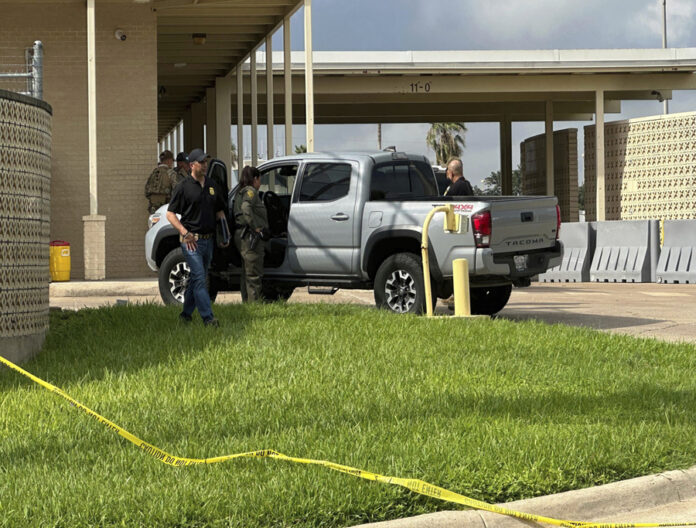
Agentes trabajan en la escena de un tiroteo en una instalación de la Patrulla Fronteriza en McAllen, Texas, el lunes 7 de julio de 2025. (AP Foto/Valerie Gonzalez)
McALLEN, Texas, EE. UU.— Un hombre con un fusil de asalto disparó docenas de rondas contra agentes federales y una instalación de la Patrulla Fronteriza en Texas el lunes, hiriendo a un policía, antes de que las autoridades lo abatieran.
Las autoridades identificaron al agresor como Ryan Louis Mosqueda, de 27 años, quien, según dijeron, disparó contra los agentes que salían del edificio, que está cerca de la frontera entre Estados Unidos y México. El jefe de policía de McAllen, Victor Rodriguez, dijo que Mosqueda tenía un «chaleco táctico» además del fusil cuando los agentes respondieron al fuego.
Horas antes del ataque en McAllen, el padre de Mosqueda fue detenido por la policía de Weslaco alrededor de las 2:30 de la mañana por una infracción de tráfico, según el portavoz de la policía, Heriberto Caraveo. El padre dijo a la policía que estaba buscando a su hijo, quien, según él, tenía problemas psicológicos y portaba armas en su auto, dijo Caraveo a The Associated Press.
La policía dice que el sedán blanco de dos puertas que Mosqueda condujo a la instalación tenía letras pintadas —posiblemente en latín— en la puerta del lado del conductor.
“Qué significa, o si es una razón subyacente para que él estuviera aquí, no lo sé”, dijo Rodriguez cuando se le preguntó sobre el graffiti.
Después de que Mosqueda fue abatido, las fuerzas del orden encontraron otras armas, municiones y mochilas dentro del vehículo.
“Hay muchas, muchas más rondas de munición en su mochila”, indicó Rodriguez.
El jefe de policía dijo que su departamento recibió una llamada sobre el tiroteo alrededor de las 5:50 de la mañana. Un oficial que respondió al tiroteo, un veterano de 10 años, resultó herido en la rodilla. Rodriguez dijo que no estaba claro si la herida fue causada por metralla o una bala.
La policía dice que Mosqueda estaba vinculado a una dirección en Michigan, pero fue reportado como desaparecido de una dirección en Weslaco, Texas, alrededor de las 4:00 de la mañana del lunes. Weslaco se encuentra a unos 32 kilómetros (20 millas) de la instalación de la Patrulla Fronteriza.
“Una hora y unos minutos después, estaba en este lugar en particular abriendo fuego contra el edificio federal y nuestros agentes federales”, dijo Rodriguez.
Los detalles exactos del reporte de persona desaparecida no fueron compartidos inmediatamente con los medios.
Rodriguez dijo que ya no había una amenaza activa para el público, pero se desconoce si otras personas estuvieron involucradas en el ataque. Señaló que el motivo y los eventos que llevaron al ataque son parte de la investigación en curso, que está siendo liderada por el FBI.
El ataque se produce mientras la administración del presidente Donald Trump intensifica las deportaciones. Stephen Miller, el subjefe de despacho de la Casa Blanca y principal arquitecto de las políticas de inmigración de la administración Trump, recientemente estableció un objetivo de al menos 3.000 arrestos migratorios al día, frente a unos 650 diarios durante los primeros cinco meses de la administración.
En un comunicado de la oficina de prensa del gobernado Josh Shapiro, dieron a conocer lo que consideran un paso decisivo para fortalecer el sistema de salud de la mancomunidad.
El estado ha implementado de forma completa su participación en tres importantes compacts de licencias interestatales, lo que permitirá a médicos, enfermeros y fisioterapeutas con licencias vigentes en otros estados ejercer en Pensilvania en cuestión de días. Esta medida busca agilizar la cobertura de vacantes, reducir trámites innecesarios y garantizar una atención más rápida y accesible para todos los residentes del estado.
A partir del 7 de julio, Pensilvania forma parte oficial del Interstate Medical Licensure Compact (IMLC), el Nurse Licensure Compact (NLC) y el Physical Therapy Licensure Compact (PT Compact). Estos acuerdos permiten que más de 300,000 enfermeros, cerca de 65,000 médicos y más de 17,000 fisioterapeutas tengan mayor flexibilidad para ejercer en múltiples estados, al mismo tiempo que abre la puerta a profesionales foráneos para trabajar legalmente y sin retrasos en la Commonwealth.
“El objetivo es claro: atraer y retener talento calificado, llenar vacantes críticas, y mejorar la calidad del sistema de salud para todos los habitantes de Pensilvania”, expresó el gobernador Shapiro durante el a{ununcio realizado en el WellSpan Education Center, en York. “Nos comprometimos a cortar la burocracia y a responder a las necesidades reales de nuestro sistema de salud. Hoy, lo estamos cumpliendo”.
Según el comunicado, la decisión responde a un panorama preocupante: más de 850,000 residentes de Pensilvania viven en áreas designadas como con escasez de proveedores de salud, según datos federales. Además, el 14% de las vacantes en enfermería siguen sin cubrirse —un porcentaje que se eleva al 26% en zonas rurales. Para 2026, se prevé una escasez de 20,000 enfermeros en el estado.
Con la adhesión total a estos convenios, el proceso que antes tomaba semanas o incluso meses, ahora puede completarse en solo días. Los profesionales foráneos que cumplan con los requisitos podrán comenzar a ejercer casi de inmediato. Esta medida tiene un impacto doble: permite incorporar talento de otros estados y mejora la movilidad laboral de los profesionales de salud locales.
La secretaria ejecutiva de enfermería de WellSpan Health, Patty Donley, celebró la iniciativa: “Esto nos permitirá responder más rápido a las necesidades de los pacientes y garantizar continuidad en la atención. Más que una política administrativa, esto es una acción concreta en favor del cuidado de las personas”.
El secretario, Al Schmidt, destacó que la Administración Shapiro trabajó de manera coordinada con agencias federales como el FBI y el Departamento de Justicia para cumplir con todos los requisitos necesarios y lograr, tras años de intentos fallidos, la plena implementación de los acuerdos de licencias interestatales.
Esta medida forma parte de un conjunto de acciones destinadas a fortalecer el sistema de salud en Pensilvania, entre las que se incluyen la reducción significativa en los tiempos de emisión de licencias profesionales, la eliminación de un rezago de más de 35,000 solicitudes de Medicaid, inversiones en programas de formación, y más de $22 millones en reembolsos de préstamos estudiantiles para profesionales del área de adicciones.
Además, el presupuesto propuesto para 2025-26 contempla nuevas inversiones por más de $50 millones para apoyar hospitales, ampliar programas de reembolso en áreas rurales, financiar matrículas para estudiantes de enfermería, mejorar la seguridad del paciente y otorgar plena autoridad de práctica a enfermeros con experiencia.
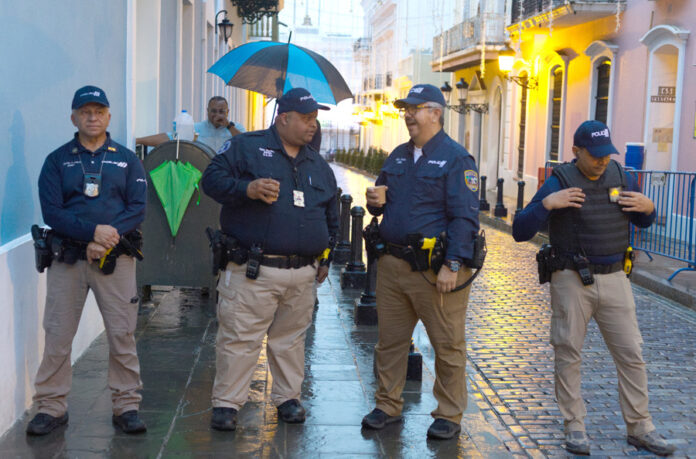
Un grupo de policías en Puerto Rico. (Foto: EFE/Thais Llora/Archivo)
San Juan.- El Departamento de Justicia aseguró este lunes su «compromiso» a la protección de las víctimas de violencia machista, así como su «acceso a la justicia y apoyo integral», tras la muerte a tiros de un padre de 60 años hacia la pareja de su hija, luego de que este le diera una paliza.
«Expresamos nuestra empatía con todas las víctimas de violencia de género y reiteramos nuestro compromiso con su protección, acceso a la justicia y apoyo integral», expresó la agencia gubernamental en un comunicado de prensa.
«Reconocemos la profunda indignación, el dolor y el sentido de impotencia que generan las situaciones de violencia doméstica, particularmente cuando se trata de una víctima cercana como es el caso de una hija», agregó Justicia.
La dependencia pública dio estas declaraciones luego de que el pasado sábado, el imputado, Miguel Ángel González Varela, de 60 años, asesinara a disparos a Whisler Jared Rancel Galarza, de 21 años, frente al apartamento 325 en el edificio A-12 en el residencial público Manuel Zeno Gandía, en Arecibo.
De acuerdo con las autoridades, González Varela disparó con su arma a la que tiene licencia de portación contra Rancel Galarza, luego de que su hija le contara que este le había dado una paliza, una de tantas, pero que nunca había presentado alguna querella.
Por ello, a González Varela le radicaron varios cargos criminales, entre ellos, asesinato en primer grado.
Mientras, el juez Rafael Lugo determinó causa probable para arresto contra González Varela por los delitos imputados. El magistrado impuso una fianza global de 200.000 dólares, la cual el imputado no prestó.
Ante todo ello, una de las hijas del imputado creó una cuenta en las redes para que la ciudadanía aporte económicamente para costear la defensa de su padre y la que ya sobrepasa los 60.000 dólares.
«De igual forma, entendemos el trasfondo emocional que puede llevar actuar a una persona desde la desesperación y frustración. No obstante, nuestro llamado es confiar en el sistema judicial y recurrir a los procesos legales establecidos», apuntó Justicia.
San Juan.– La histórica residencia musical ‘No Me Quiero Ir De Aquí’, que hará Bad Bunny en el Coliseo de Puerto Rico, en San Juan, del 11 de julio al 14 de septiembre, ha provocado que las búsquedas en Airbnb en la isla hayan aumentado más de un 140 % durante esas fechas ante el mismo periodo en 2024.
Así lo informó este lunes en un comunicado la empresa de alojamiento sobre la residencia de 30 espectáculos que ofrecerá Bad Bunny como preámbulo a su gira mundial ‘Debí Tirar Más Fotos’, que arranca el 21 de noviembre en República Dominicana y culmina el 2 de julio de 2026 en Bruselas, Bélgica
Según la nota, el 140 % en el aumento de búsquedas en Airbnb fue recopilado en su plataforma desde todo el mundo para viajar a Puerto Rico del 9 de julio al 16 de septiembre de 2025.
Los principales países de origen con mayor aumento en búsquedas para viajar en las fechas en que se realizará el gran evento son: Estados Unidos, Puerto Rico, España, México, Canadá, Colombia, República Dominicana, Chile, Francia y Ecuador.
Mientras, las ciudades en Estados Unidos conocidas por su alta población puertorriqueña, como Nueva York, Orlando y Chicago, son las que muestran mayor interés de búsqueda de huéspedes para alojamientos en Airbnb en Puerto Rico durante las fechas de la residencia, agregó la plataforma.
La tendencia también destaca cómo los grandes eventos pueden ayudar a aumentar el turismo desde mercados clave con profundos lazos con Puerto Rico.
A su vez, los viajeros apoyan a los negocios locales y ayudan a generar un impacto económico para los anfitriones locales, ya que los turistas ahora están gastando dinero en más comunidades fuera de los lugares tradicionales.
A su vez, los municipios de Puerto Rico más buscados son Vega Baja -tierra de crianza de Bad Bunny-, Guaynabo, San Sebastián, Cayey, Manatí y Mayagüez, en la zona costera en el oeste de la isla.
Esto, de acuerdo con Airbnb, demuestra una dispersión del turismo, ya que los viajeros buscan ir más allá de la capital para experimentar Puerto Rico de una manera más local.
Según una encuesta de Airbnb, el 50 % de los anfitriones en la isla utiliza Airbnb como una forma de generar ingresos que les ayuda a enfrentar el aumento en el costo de vida, lo que resalta cómo la plataforma se ha convertido en una solución económica accesible y adaptable.
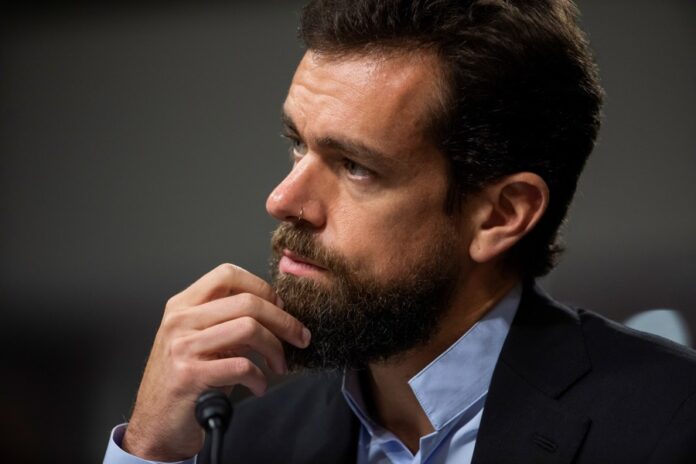
El empresario Jack Dorsey, uno de los creadores de Twitter y Bluesky, lanzó este lunes una aplicación de mensajería descentralizada y encriptada que usa la red de conectividad Bluetooth, llamada Bitchat, y que ya están probando un grupo de 10.000 usuarios.
Dorsey comunicó a través de X que Bitchat es una especie de experimento suyo que le recuerda al antiguo chat IRC y explicó que se trata de un servicio de «red en malla» Bluetooth, por lo que funciona sin internet, y además no usa «servidores, cuentas o recolección de datos».
El excéntrico empresario dijo que la versión beta, disponible en TestFlight, ya ha alcanzado un máximo de 10.000 personas y está siendo revisada para su lanzamiento completo, mientras respondía a lo largo de la jornada a los comentarios de quienes la han probado.
Bitchat «provee comunicación efímera y encriptada sin apoyarse en infraestructuras de internet, haciéndola resiliente a apagones de red y censura», indica un documento técnico publicado por Dorsey en el portal Github, en el que comparte la «arquitectura técnica, protocolos y mecanismos de privacidad» de la ‘app’.
También indica que los mensajes solo se almacenan en los dispositivos y que desaparecen por defecto sin alcanzar una infraestructura centralizada, y se puede «chatear en público» o entrar en salas que pueden protegerse con una contraseña.
Dorsey es conocido por sus emprendimientos tecnológicos, entre ellos la red social Twitter (ahora X), que fundó en 2006; la firma de pagos Square (ahora Block), en 2009; o Bluesky, una red alternativa a X, que fundó en 2019, y en cuya junta directiva trabajó hasta su salida en 2024.
El empresario, conocido por su estilo de vida bohemio, es un gran defensor del código abierto para contrarrestar el dominio de las grandes compañías sobre las tecnologías, incluida la inteligencia artificial (IA).
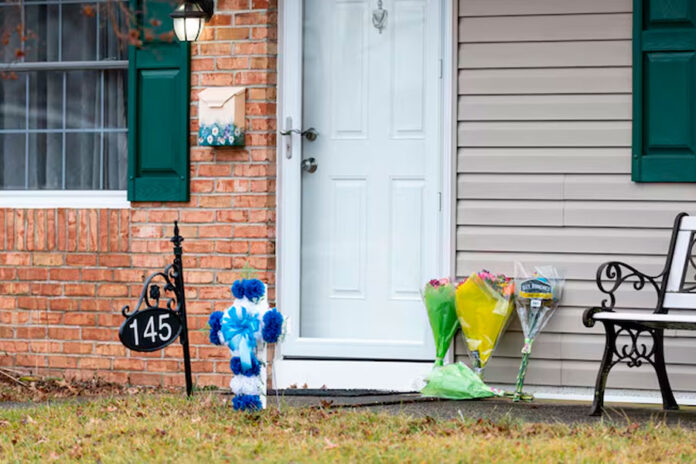
Flowers rest at the front door of the Mohn residence in Upper Orchard section of Levittown, Pa., on Feb. 2, 2024. (Photo: AP/Tyger Williams/The Philadelphia Inquirer/File)
DOYLESTOWN, Pa. — The mother of a Pennsylvania man accused of shooting and beheading his father described from the witness stand on Monday that she found Michael F. Mohn’s body in a first-floor bathroom.
«I believe I screamed,” Denice Mohn said through tears as Justin D. Mohn’s murder trial began in a suburban Philadelphia courtroom. “I was screaming out front. I think I dialed 911.”
She testified she saw her husband when she had been home for lunch earlier. “I said goodbye,” she said. “And I said I’ll see you later.”
Justin Mohn, 33, is accused of killing his father and posting video of his severed head online — and calling for others to help him try to overthrow the U.S. government. He faces charges of murder, abuse of a corpse, terrorism related crimes and other offenses for the January 2024 killing of his father at the Levittown home where the three lived.
Denice Mohn testified that she and her husband had been offering financial support and guidance as Justin Mohn looked for a job. She described her husband’s relationship with him as a “father-son relationship.”
During the first few hours of trial, prosecutors played 911 audio calls from the night Michael Mohn was killed, with a woman screaming in the background. The judge heard neighbor James Carnley testify about helping Denice Mohn after she found her husband. Carnley told a dispatcher that Michael Mohn had no head. Prosecutors played the YouTube video in which Justin Mohn held up his father’s severed head.
Prosecutors described the homicide as “something straight out of a horror film,” and said in an opening statement that Justin Mohn killed his father to intimidate federal workers, calling it a “cold, calculated, organized plan.”
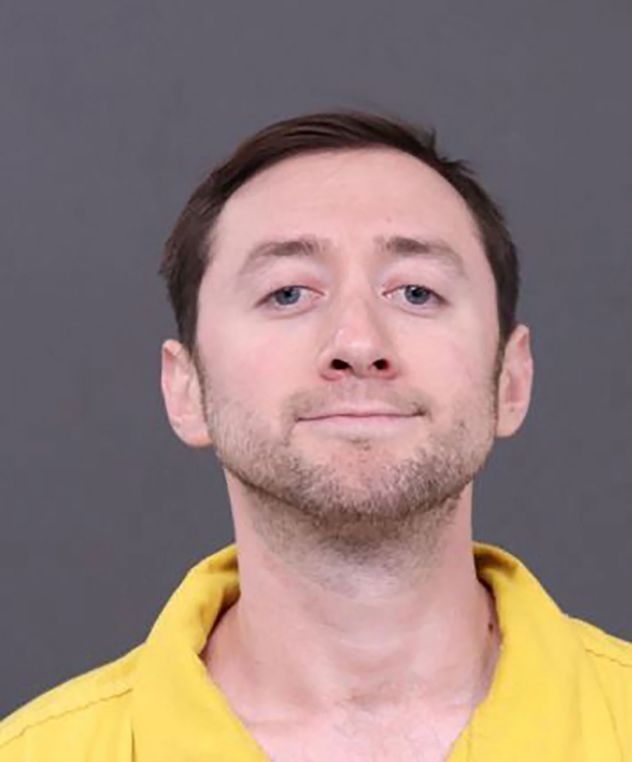
This photo provided by the Bucks County, Pa., District Attorney’s Office shows Justin Mohn, the man accused of beheading his father in their suburban Philadelphia home in January 2024. (Photo: AP/Bucks County District Attorney’s Office/File)
Mohn’s defense attorneys declined to give an opening statement.
Prosecutors have said Justin Mohn shot his father with a pistol he bought the day before the shooting, then decapitated him with a kitchen knife and machete. The 14-minute YouTube video was live for several hours before it was removed.
Evidence presented at the trial before Judge Stephen A. Corr included graphic photos as well as the video that Justin Mohn had posted to YouTube. The judge gave members of the public at the trial a warning about the images and said they could leave before they were shown. The proceedings are known as a bench trial, with only a judge, not a jury, presiding.
Justin Mohn, wearing a brown sport coat, dark shirt and tie, watched the witness testimony and viewed the videos and photos without any apparent reaction.
Mohn was armed with a handgun when arrested later that day after allegedly climbing a 20-foot (6-meter) fence at Fort Indiantown Gap, the state’s National Guard headquarters. He had hoped to get the soldiers to “mobilize the Pennsylvania National Guard to raise arms against the federal government,” Bucks County District Attorney Jennifer Schorn said at a news conference last year.
Mohn had a USB device containing photos of federal buildings and apparent instructions for making explosives when arrested, authorities have said.
He also had expressed violent anti-government rhetoric in writings he published online, and the YouTube video included rants about the government, immigration and the border, fiscal policy, urban crime and the war in Ukraine.
Michael Mohn, who was 68, had been an engineer with the geoenvironmental section of the U.S. Army Corps of Engineers. In the video, Justin Mohn described his father as a 20-year federal employee and called him a traitor.
During a competency hearing last year, a defense expert said Mohn wrote a letter to Russia’s ambassador to the United States seeking a deal to give Mohn refuge and apologizing to President Vladimir Putin for claiming to be the czar of Russia.
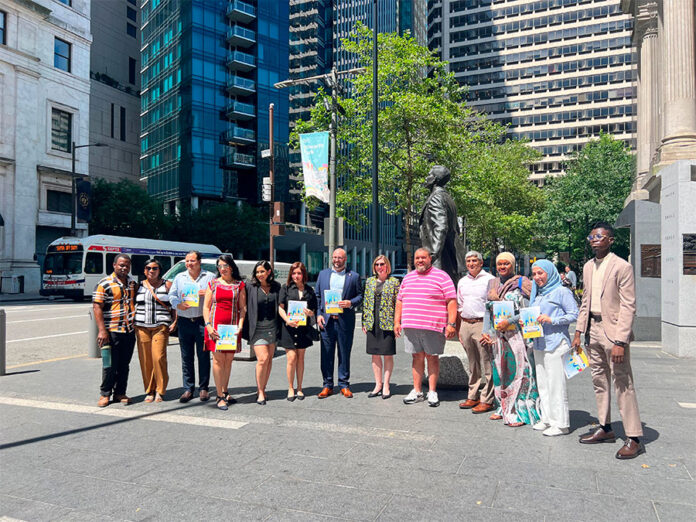
2. Miembros del Comité de los 70 y de TWC en la conferencia de prensa del 24 de junio. (Foto: Cortesía/The Welcommming Center)
Gracias a una colaboración entre “The Welcoming Center” (TWC), “Committee of 70” y el Instituto de Liderazgo de Inmigrantes de TWC, se publicó recientemente la guía sobre el Gobierno de la ciudad en español y en francés.
Ala’a Quniebi, especialista de apoyo de acción cívica de TWC. (Foto: Leticia Roa Nixon)
Ala’a Quniebi, especialista de apoyo de acción civil de TWC, en entrevista nos compartió que la idea de este proyecto surgió de los graduados del Instituto de Liderazgo Inmigrante “ya que durante sus sesiones notaron que documentos importantes del Gobierno de la ciudad no estaban disponibles en lenguajes múltiples”.
Con base en esta observación nació la idea de asociarse con “Committee of 70 (C70) que es una organización independiente, no partidista y sin fines de lucro de Filadelfia. Su enfoque primario es abogar por el mejoramiento del Gobierno de la ciudad y del estado.
Su misión es mejorar el acceso a información esencial acerca de cómo funciona la Ciudad de Filadelfia proveyendo traducciones claras y precisas en español y francés para las comunidades que hablan dichos idiomas, con la visión de expandir esta guía en más idiomas en el futuro.
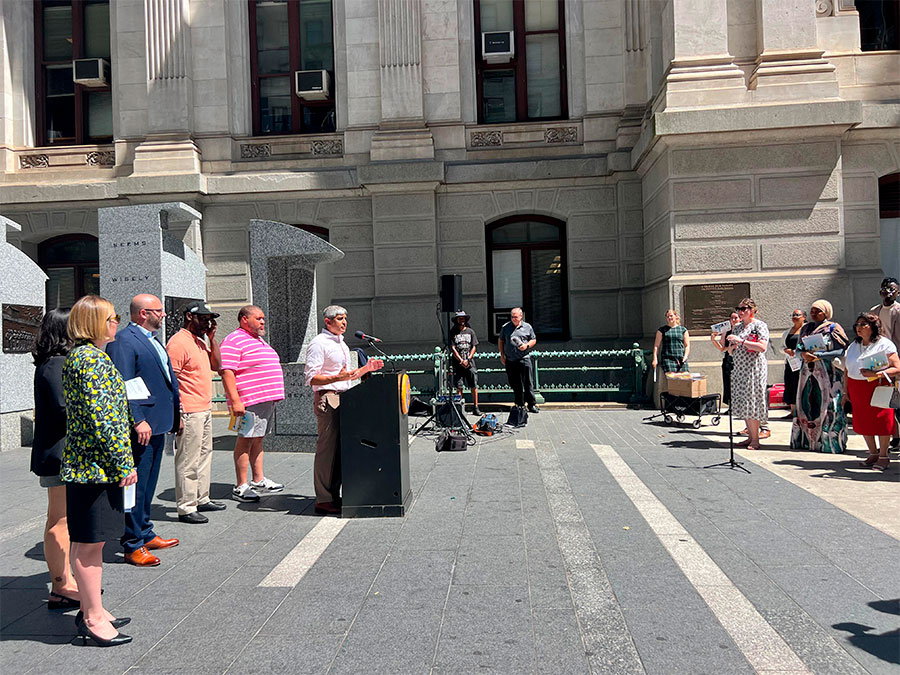
Anuj Gupta, presidente y director ejecutivo de TWC anunciando las guías. (Foto: Cortesía/The Welcoming Center)
Todo esto es parte de una misión compartida a través de “Community Translation Voices” para romper las barreras del idioma y asegurar que la información esencial sea accesible para todos por igual, tanto residentes estadounidenses como para inmigrantes. “Este trabajo es de la comunidad para la comunidad y para entender cómo funciona nuestra ciudad, no es solamente el conocimiento adquirido sino también tener un sentir de pertenencia”, puntualiza la especialista jordana.
Los participantes de este proyecto trabajaron diligentemente usando un proceso de colaboración estructurado, así como una serie de herramientas para asegurar la precisión y relevancia cultural de cada traducción. “Estamos orgullosos de su increíble trabajo y estamos deseosos de compartir más acerca del desarrollo del proyecto”, finalizó Ala’a Quniebi.
“The Welcoming Center” es una organización sin fines de lucro que promueve el crecimiento económico a través de la integración de los inmigrantes a la ciudad. Está ubicado en 211 N.13th Street, 4th Floor, Philadelphia, PA 19107, 215-557-2626. Ahí se pueden conseguir copias de las guías en español y francés.
Este contenido forma parte de Every Voice, Every Vote, un proyecto colaborativo gestionado por The Lenfest Institute for Journalism. El apoyo principal para Every Voice, Every Vote en 2024 y 2025 lo proporciona William Penn Foundation con fondos adicionales de The Lenfest Institute for Journalism, Comcast NBC Universal, The John S. and James L. Knight Foundation, Henry L. Kimelman Family Foundation, Judy y Peter Leone, Arctos Foundation, Wyncote Foundation, 25th Century Foundation y Dolfinger-McMahon Foundation. Para obtener más información sobre el proyecto y ver una lista completa de los patrocinadores, visite Every Voice, Every Vote . El contenido editorial es creado sin intervención de los donantes del proyecto.
En estos convulsos tiempos para la comunidad inmigrante en el país, escuchamos casos de abusos de todo tipo. En particular, quiero llamar la atención de los inmigrantes con una visa T a los que su empleador está amenazando con reportarlo a las autoridades de inmigración: es crucial que se entienda que estas amenazas no solo son ilegales, sino que van en contra del propósito fundamental por el cual el Congreso creó esta protección migratoria.
Conoce tus derechos
El estatus T de no inmigrante es un beneficio temporal que permite que algunas víctimas de una forma severa de trata humana permanezcan en Estados Unidos si han ayudado a las agencias del orden público en la detección, investigación o enjuiciamiento de actos de trata de personas.
La trata de personas es un crimen en el que los traficantes usan la fuerza, el fraude o la coerción para obligar a las personas vulnerables a proporcionar trabajos o servicios, incluido el sexo comercial.
Las visas T ofrecen una protección a las víctimas y fortalecen la capacidad de las agencias del orden público para detectar, investigar y procesar los actos de trata de personas.
Me gustaría mencionar que la visa T permite ajustar el estatus y solicitar la residencia después de tener la visa T y estar físicamente presente en EE. UU. durante tres años.
Cuando un empleador amenaza a un portador de visa T con reportarlo a inmigración, está perpetuando exactamente el tipo de intimidación y control que la ley busca combatir y por lo cual fue creada por el Congreso en octubre de 2000, como parte de la Ley de Protección a Víctimas de Trata de Personas y Violencia.
Las amenazas de tu empleador pueden constituir varios delitos federales, incluyendo intimidación de testigos y obstrucción de la justicia. La visa T existe precisamente para proteger a las personas contra este tipo de coerción.
Qué hacer en caso amenazas de un empleador:
1. Documenta:
· Graba conversaciones (donde sea legal hacerlo)
· Guarda todos los mensajes de texto, emails y comunicaciones escritas
· Anota fechas específicas, nombres de testigos, y descripciones detalladas de cada incidente
· Toma fotografías de cualquier evidencia física
2. Busca asistencia legal:
Contacta a un abogado de inmigración con experiencia en casos de trata humana. Muchas organizaciones ofrecen servicios gratuitos o de bajo costo para víctimas de trata.
3. Reporta a las autoridades:
En caso de recibir amenazas, puedes reportar:
· Departamento de Trabajo: Si involucran violaciones de leyes laborales
· FBI: Para amenazas criminales o intimidación
· Fiscalía local: Para amenazas criminales
4. Pide ayuda a la comunidad:
· National Human Trafficking Hotline: 1-888-373-7888 (disponible 24/7)
· Organizaciones locales que asisten a víctimas de trata humana
· Clínicas legales en universidades que ofrecen servicios de inmigración.
Las amenazas de deportación son una herramienta de control que los empleadores inescrupulosos usan para explotar a trabajadores vulnerables. Como portador de una visa T, ya has demostrado valor al ayudar a las autoridades a combatir la trata humana. No permitas que un empleador abuse de ese valor para su beneficio.
* Lauren Eagan, nombrada para la edición 2025 de Los Mejores Abogados de América® para la Ley de Inmigración, es fundadora y directora ejecutiva de Eagan Immigration. https://eaganimmigration.com/
FILADELFIA.—Tres personas murieron y otras 10 resultaron heridas en un tiroteo en un vecindario del sur de Filadelfia, informaron las autoridades.
Las tres personas que fallecieron eran adultas, y dos de los heridos eran menores, dijo el comisionado de policía Kevin Bethel a los periodistas. El tiroteo ocurrió poco antes de la 1 de la mañana en una calle residencial en Grays Ferry, señaló.
«Hubo varios disparos en la cuadra», afirmó Bethel.
La policía informó que una persona con un arma fue detenida.
Bethel comentó que la policía ya había respondido a la misma cuadra desde el sábado por la noche hasta el domingo por la mañana y se realizaron algunos arrestos.
No se supo de inmediato qué motivó el tiroteo.
«Esto es cosa de cobardes que se las dan de bravucones», expresó Bethel.
El tiroteo ocurrió después de otros tiroteos en la ciudad y en otros lugares de Estados Unidos durante el fin de semana del Cuatro de Julio. Entre ellos, al menos ocho personas fueron alcanzadas por disparos cerca de un club nocturno en el sur de Filadelfia.
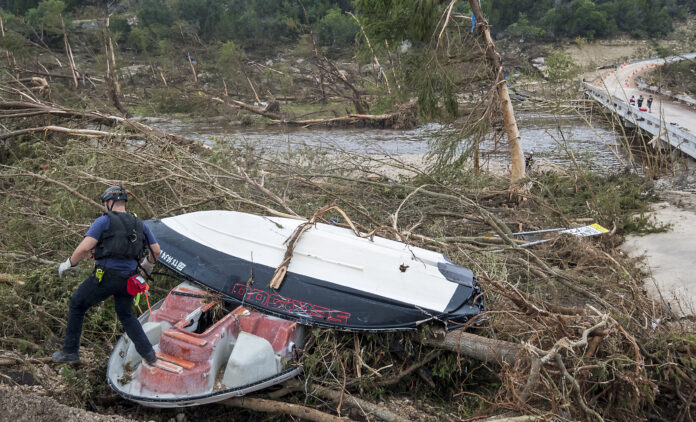
Cuadrillas de rescate registran la orilla del río Guadalupe en búsqueda de desaparecidos tras las inundaciones, el 6 de julio de 2025, en Ingram, Texas. (AP foto/Rodolfo Gonzalez)
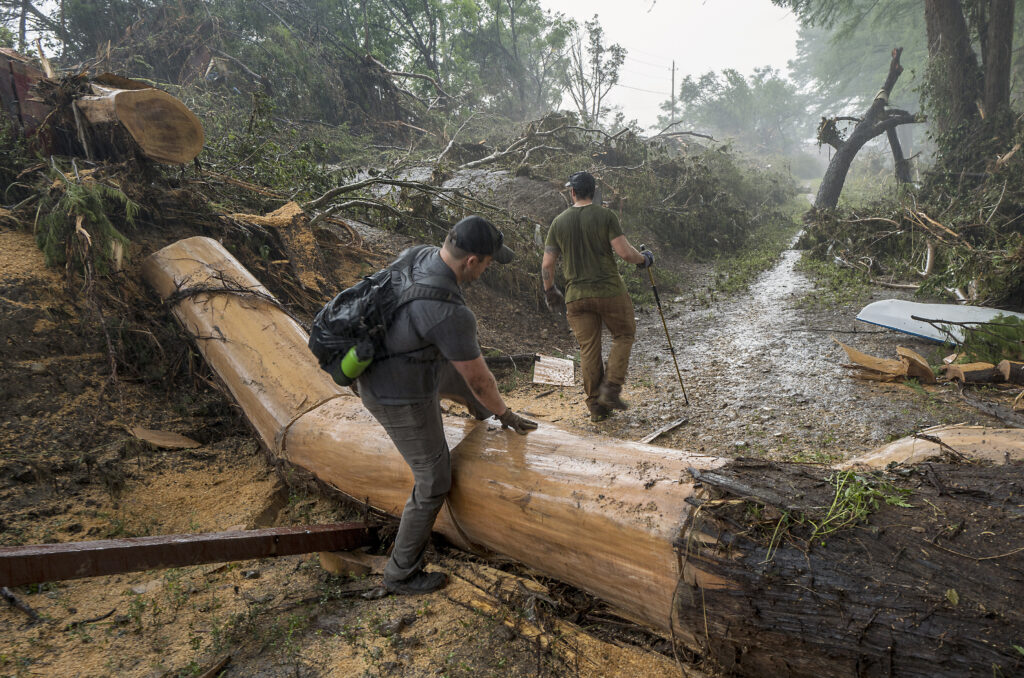
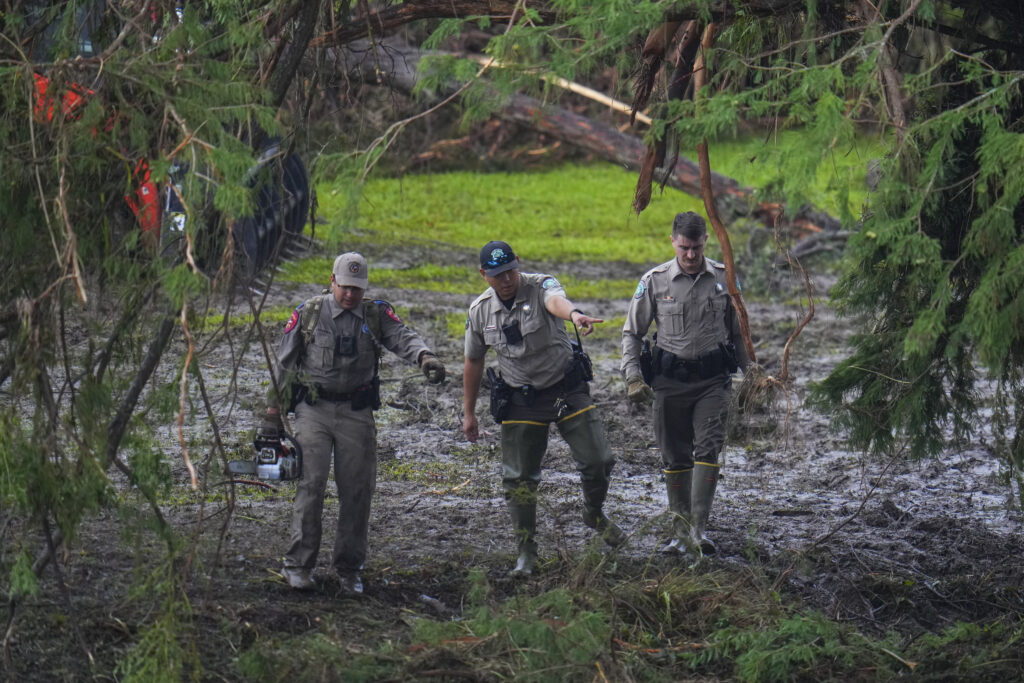
Familias examinaban escombros empapados el domingo y entraban a cabañas vacías en Camp Mystic, un campamento de verano para niñas destrozado por inundaciones repentinas que arrancaron casas de sus cimientos y dejaron al menos 82 muertos en el centro de Texas.
Los rescatistas maniobraban a través del terreno escarpado, en el cual hay serpientes, incluyendo la venenosa boca de algodón, continuando su búsqueda desesperada de los desaparecidos, incluidas 10 niñas y un guía de campamento. Por primera vez desde que las tormentas comenzaron a azotar Texas, el gobernador Greg Abbott indicó que en todo el estado había 41 personas que se confirmó no habían sido localizadas y que podrían faltar más.
El riesgo de inundaciones peligrosas seguía siendo alto en el centro de Texas el lunes, donde se esperaban más lluvias mientras los equipos buscaban con urgencia a los desaparecidos tras un diluvio durante el fin de semana festivo. Las autoridades dijeron que había certezas de que el número de muertos aumentaría.
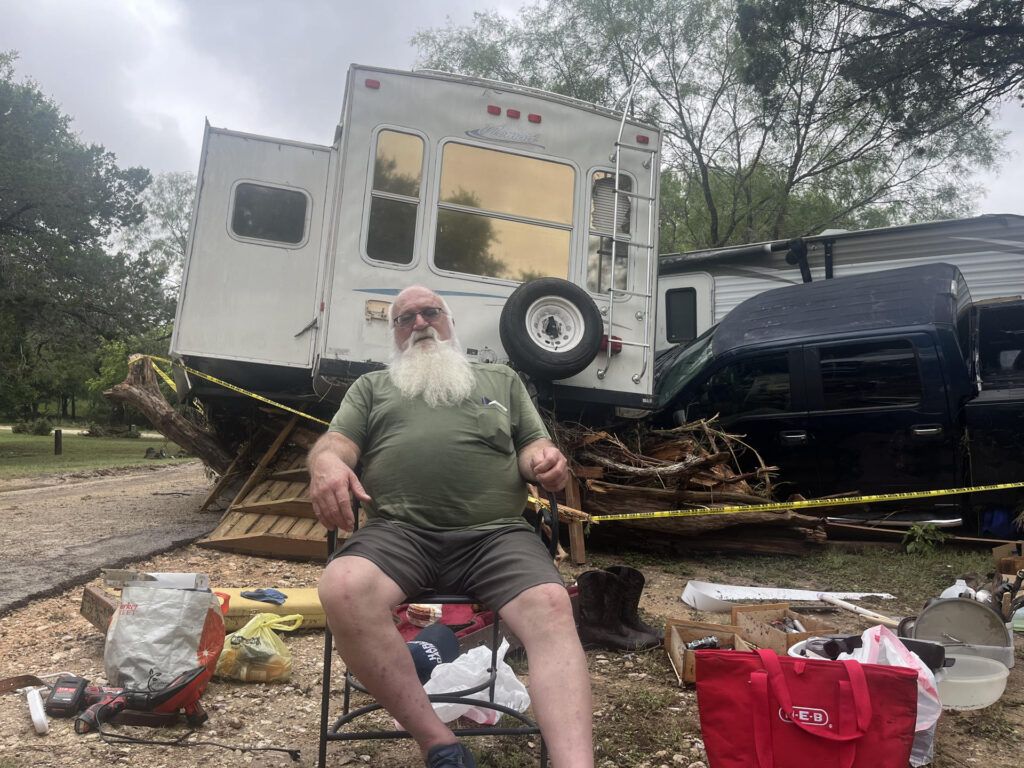
Los residentes del condado de Kerr comenzaron a limpiar el barro y a salvar lo que podían de sus propiedades demolidas mientras relataban huidas angustiosas de las aguas de la inundación que subían rápidamente el viernes por la noche.
Reagan Brown dijo que sus padres, octogenarios, lograron escapar colina arriba mientras el agua inundaba su hogar en la ciudad de Hunt. Cuando la pareja se enteró de que su vecina de 92 años estaba atrapada en su ático, regresaron y la rescataron.
“Luego pudieron llegar a su cobertizo de herramientas en un terreno más alto, y los vecinos comenzaron a llegar a su cobertizo de herramientas durante la madrugada, y todos lo resistieron juntos”, dijo Brown.
Voluntarios buscan a personas desaparecidas a lo largo de las márgenes del río Guadalupe tras inundaciones recientes, el domingo 6 de julio de 2025, en Hunt, Texas. (Foto: AP/Rodolfo Gonzalez)
En el área de Hill Country, hogar de varios campamentos de verano, los rescatistas han encontrado los cuerpos de 68 personas, incluidos 28 niños, dijo el jefe de la policía del condado de Kerr, Larry Leitha.
Se reportaron otras 10 muertes en los condados Travis, Burnet, Kendall, Tom Green y Williamson, según funcionarios locales.
El gobernador advirtió que nuevas rondas de lluvias intensas que durarían hasta el martes podrían producir más inundaciones peligrosas, especialmente en lugares ya saturados.
A las familias se les permitió recorrer el campamento a partir de la mañana del domingo. Una niña salió de un edificio llevando una gran campana. Un hombre cuya hija fue rescatada de una cabaña en el punto más alto del campamento caminó por la orilla del río, buscando en grupos de árboles y debajo de grandes rocas.
Una familia se fue con un baúl azul. Una adolescente tenía lágrimas en el rostro mientras se asomaba por la ventanilla abierta, contemplando los escombros a medida que el automóvil se alejaba lentamente.
Agentes inspeccionan una zona del Campamento Mystic a orillas del Río Guadalupe después de que una inundación repentina arrasara la zona, el domingo 6 de julio de 2025 en Hunt, Texas. (Foto: AP/Julio Cortez)
Buscando en la zona del desastre
Cerca, cuadrillas cercanas con maquinaria pesada extraían troncos de árboles y ramas enredadas del agua mientras buscaban en el río.
Voluntarios y algunas familias de los desaparecidos llegaron a la zona del desastre y buscaron a pesar de que se les pidió que no lo hicieran.
Las autoridades enfrentaban crecientes preguntas sobre si se emitieron suficientes advertencias en un área vulnerable a las inundaciones desde hace mucho tiempo y si se hicieron suficientes preparativos.
El presidente, Donald Trump, firmó una declaración de desastre grave el domingo para el condado Kerr y dijo que probablemente visitaría el viernes: “Lo habría hecho hoy, pero simplemente estaríamos estorbándoles”.
“Es algo horrible lo que ocurrió, absolutamente horrible”, dijo a los periodistas.
Oraciones en Texas… y desde el Vaticano
El gobernador prometió que las autoridades trabajarán las 24 horas y señaló que se estaban revisando otras áreas a medida que el agua retrocedía. Declaró que el domingo sería un día de oración para el estado.
En Roma, el papa León XIV ofreció oraciones especiales por aquellos afectados por el desastre. El primer pontífice estadounidense de la historia habló en inglés el domingo al final de su bendición del mediodía: “Me gustaría expresar mis sinceras condolencias a todas las familias que han perdido seres queridos, en particular a sus hijas que estaban en el campamento de verano, en el desastre causado por el desbordamiento del río Guadalupe en Texas en Estados Unidos. Oramos por ellos”.
Refugio desesperado en árboles y áticos
Los sobrevivientes compartieron historias aterradoras de cómo se habían visto arrastrados y se aferraron a árboles mientras las aguas crecidas arrasaban árboles y autos a su alrededor. Otros huyeron a los áticos, rezando para que el agua no los alcanzara.
En el Campamento Mystic, una cabaña llena de niñas se aferró a una cuerda tendida por los rescatistas mientras cruzaban un puente con el agua azotando sus piernas.
Entre los muerto confirmados había una niña de ocho años de Mountain Brook, Alabama, que estaba en el Campamento Mystic, y la directora de otro campamento en esa carretera.
Dos hermanas de Dallas en edad escolar estaban desaparecidas después de que las aguas se llevaran su cabaña. Sus padres estaban en una cabaña distinta y estaban a salvo, pero los abuelos de las niñas no han sido encontrados.
Jef Heflin, uno de los damnificados por las inundaciones habla durante una entrevista con EFE este sábado, en el área de Kerrville, Texas (EE. UU.). (Foto: EFE/Alejandra Arredondo)
Se emitieron alertas antes del desastre
El jueves, el Servicio Meteorológico Nacional advirtió sobre posibles inundaciones y luego envió una serie de alertas de inundaciones repentinas en las primeras horas del viernes antes de activar emergencias de inundaciones repentinas, una alerta inusual que advierte de un peligro inminente.
Las autoridades y los funcionarios electos han dicho que no esperaban una lluvia tan intensa, el equivalente a meses de lluvia para el área.
El administrador de la ciudad de Kerrville, Dalton Rice, dijo que las autoridades están comprometidas con una revisión completa de la respuesta de emergencia.
Cuando se preguntó a Trump si todavía planeaba eliminar la Agencia Federal para el Manejo de Emergencias, el mandatario dijo que era algo “de lo que podemos hablar más tarde, pero ahora estamos ocupados trabajando”. Ha dicho que quiere reformar, si no eliminar por completo, FEMA y ha criticado duramente su desempeño.
También se le preguntó a Trump si planeaba recontratar a alguno de los meteorólogos federales que fueron despedidos este año como parte de recortes generalizados del gasto gubernamental.
“Creo que no. Esto fue algo que sucedió en segundos. Nadie lo esperaba. Nadie lo vio. Hay personas muy talentosas allí, y no lo vieron”, dijo el presidente.