

Inicio Blog Página 1170

States clamp down on freight trains, fearing derailments and federal gridlock

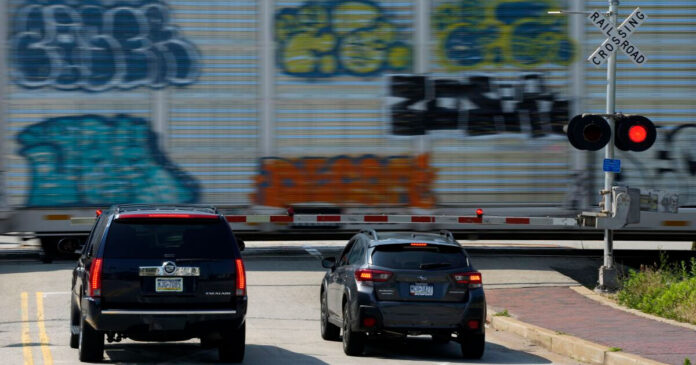
A CSX freight train rolls through a crossing in Homestead, Pa., Sunday, June 18, 2023. Spurred on by train derailments, some states with busy criss-crossing freight railroads are pursuing their own safety remedies rather than wait for federal action amid industry opposition and questions about whether they even have authority to make the changes. (Photo: AP/Gene J. Puskar)

HARRISBURG, Pa. — Spurred on by train derailments, some states with busy criss-crossing freight railroads are pursuing their own safety remedies rather than wait for federal action amid industry opposition and questions about whether they even have authority to make the changes.

The activity comes after a train carrying toxic chemicals derailed on Feb. 3 along the Ohio-Pennsylvania border, prompting new legislation and reviving long-stalled efforts as backers voice skepticism that the federal government is capable of helping.

Legislatures in at least a dozen states have advanced measures in recent weeks, including some in states such as Minnesota that have witnessed disruptive derailments.

Some of the new requirements include provisions long resisted by the railroad industry. It contends it’s capable of making improvements and that its growing efficiency — including significantly longer trains and a much smaller workforce — doesn’t compromise safety.

In large part, states want limits on the length of trains that routinely stretch more than 2 miles long and on how much time trains can block road crossings — which can disrupt traffic and block emergency response vehicles.

Freight cars sit in Norfolk Southern’s Conway Terminal in Conway Pa., Saturday, June 17, 2023. Spurred on by train derailments, some states with busy criss-crossing freight railroads are pursuing their own safety remedies rather than wait for federal action amid industry opposition and questions about whether they even have authority to make the changes. (Photo: AP/Gene J. Puskar)

They are also pursuing rules to maintain the current standard of two-person crews, bolster the trackside detectors used to identify equipment problems and require more notice to local emergency responders about hazardous freight.

The railroads argue that the industry’s overall safety record has been improving even as trains have grown longer and crew sizes shrank over the decades. So Norfolk Southern CEO Alan Shaw said in an interview that he doesn’t think it makes sense to regulate those areas.

“We’re going to follow the science and we’re going to follow the data,” Shaw said. “We’re looking for investments in safety that are going to drive favorable outcomes.”

And the state efforts to regulate rail are fraught with legal uncertainty over whether only the federal government can enforce such requirements. And Congress and federal regulators are considering similar measures.

Ohio moved quickly, with the Republican-controlled government enacting a new law within two months of the Norfolk Southern train derailment in East Palestine.

The evacuation from the fiery crash extended into Pennsylvania, where the state House of Representatives approved a wide-ranging safety bill in early June.

The sponsor, Rep. Rob Matzie, a Democrat whose western Pennsylvania district is home to a major rail freight handling hub, said he is satisfied with the state’s legal standing.

Norfolk Southern locomotives are moved in Norfolk Southern’s Conway Terminal in Conway, Pa., Saturday, June 17, 2023. Spurred on by train derailments, some states with busy criss-crossing freight railroads are pursuing their own safety remedies rather than wait for federal action amid industry opposition and questions about whether they even have authority to make the changes. (Photo: AP/Gene J. Puskar)

He said he is sick of hearing that the East Palestine derailment is an isolated incident, that the rail companies are making improvements or that the federal government will order safety improvements.

“It’s now time for this state to act,” Matzie told colleagues during floor arguments. “We can’t wait for federal regulations, which always seem to be in the works, but never quite get done. Or for federal laws that will never ever see the light of day.»

States maintain that Congress long ago gave them the authority to regulate aspects of rail safety that federal regulations don’t cover and that courts require federal law to be clear about when that responsibility rests exclusively with a federal agency.

Railroads, however, argue that federal law broadly gives federal agencies exclusive jurisdiction to regulate rail transportation and that state laws ostensibly aimed at rail safety often do not actually improve safety.

Prior experiences haven’t exactly inspired confidence that the federal government will act quickly.

For instance, a 2008 law requiring the deployment of positive train control systems — equipment designed to prevent train-to-train collisions, over-speed derailments and other accidents — wasn’t fully implemented until almost 2021.

Then in 2018, then-President Donald Trump’s administration dropped a proposed rule that would have required trains hauling highly flammable liquids like crude oil to be fitted with advanced braking systems.

Two rail union officials — Jason Doering and Matt Parker — who have both lobbied for legislation in Nevada for years said it’s important for states to act because they’re not optimistic that Congress will pass meaningful reforms over the strong lobbying of the railroads in a polarized political climate. Plus, they said “the federal government’s approach to rail safety has historically been more reactionary than proactive.”

The Norfolk Southern derailment in East Palestine spurred legislation in Congress that advanced out of committee in the Democratic-controlled Senate, but its future in that chamber — not to mention the Republican-controlled House — is uncertain amid industry opposition.

Sen. Sherrod Brown, an Ohio Democrat who is a lead sponsor, said earlier this month that they are still trying to line up support and predicted “pressure by the rail lobby and, frankly, from some Republican leaders to weaken or kill the bill.”

Even though government data shows that derailments have declined in recent years, there were still 1,049 of them last year — roughly three a day. More than three quarters of them happen at slow speeds in railyards and don’t cause significant damage.

The industry contends that it remains the safest way to transport hazardous materials over land. Norfolk Southern and all the major railroads have announced steps to improve safety— such as by installing more trackside detectors that railroads use to spot problems and prevent derailments — though regulators and lawmakers have urged them to do more.

Norfolk Southern locomotives are moved in Norfolk Southern’s Conway Terminal in Conway, Pa., Saturday, June 17, 2023. Spurred on by train derailments, some states with busy criss-crossing freight railroads are pursuing their own safety remedies rather than wait for federal action amid industry opposition and questions about whether they even have authority to make the changes. (Photo: AP/Gene J. Puskar)

Investigators are still working to determine exactly what caused the East Palestine derailment. In a preliminary report, they said the likely cause was an overheating bearing on one of the railcars — but wasn’t flagged by a trackside detector early enough to prevent an accident.

Joseph L. Schofer, a retired professor of civil and environmental engineering from Northwestern University, said some rules being proposed at the state and federal level — for instance, minimum crew size — have nothing to do with the East Palestine derailment because that train actually had three people in its crew.

He also said state-to-state rules will result in chaos.

“What one state does to regulate the industry will have impacts on all states,” Schofer said. “Logically we ought to be able to establish a comprehensive, integrated rule set, based on a firm understanding of the rail industry as an integrated whole.”

Some bills were percolating before the East Palestine derailment.

In March, Utah Gov. Spencer Cox signed legislation creating an Office of Rail Safety, with backers citing disputes with railroads over widening roads at hundreds of rail crossings, but also derailments there.

“This is the most substantive state safety bill for my industry in over 50 years,” a union representative, Danny Brewer, told lawmakers at a February hearing.

The new law empowers state employees to take over the safety inspections otherwise performed by federal inspectors, and also to scrutinize rail crossings and seek federal penalties for trains blocking highway crossings without justification.

New York is advancing wide-ranging legislation that includes standards for more safety equipment after Gov. Kathy Hochul called for rail safety measures, citing the East Palestine derailment.

In Minnesota, Gov. Tim Walz signed a bill that requires railroads to promptly provide information to public safety agencies about hazardous materials being transported.

Norfolk Southern locomotives are moved in Norfolk Southern’s Conway Terminal in Conway, Pa., Saturday, June 17, 2023. Spurred on by train derailments, some states with busy criss-crossing freight railroads are pursuing their own safety remedies rather than wait for federal action amid industry opposition and questions about whether they even have authority to make the changes. (Photo: AP/Gene J. Puskar)

The Kansas Senate approved a bill to limit trains to 8,500 feet, but it is sitting in a House committee at least until the session resumes in January. Gov. Laura Kelly supports it, her office said.

Some measures have hit roadblocks.

In Nevada, Republican Gov. Joe Lombardo vetoed legislation passed by the Democratic-controlled Legislature on party-line votes that would have capped train length at 7,500 feet. Lombardo said in his veto message that the bill was a “policy overreach” and possibly unconstitutional.

In Pennsylvania, the House-approved bill faces doubters in a Republican-controlled Senate where top Republicans suggest that it goes beyond state enforcement powers.

“There’s some concern that what the House passed lacks enforceability,” Senate Majority Leader Joe Pittman, a Republican, said in an interview. «And I don’t think we’re ever well-served to pass bills that can’t have proper enforcement.”

Prosecutors seek the death penalty against man accused of slaying of 4 University of Idaho students

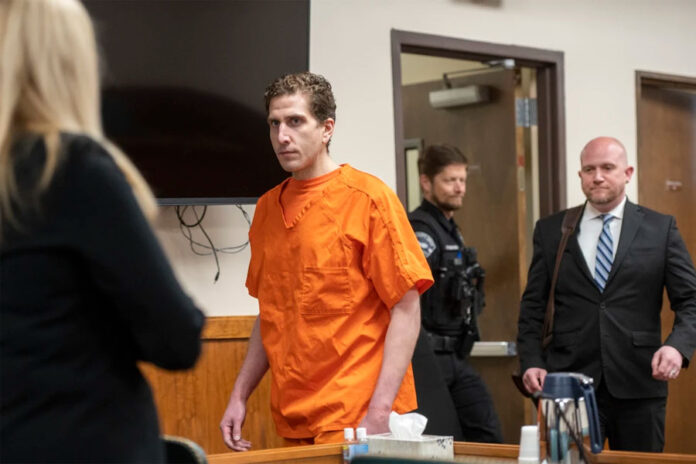
Bryan Kohberger enters the courtroom for his arraignment hearing in Latah County District Court, May 22, 2023, in Moscow, Idaho. Prosecutors say they are seeking the death penalty against Kohberger, the man accused of stabbing four University of Idaho students to death in November 2022. Latah County Prosecutor Bill Thompson filed the notice of his intent to seek the death penalty in court on Monday, June 26. (Photo: AP/Zach Wilkinson/The Moscow-Pullman Daily News/File)

Boise, Idaho. — Prosecutors say they are seeking the death penalty against a man accused of stabbing four University of Idaho students to death late last year.

Bryan Kohberger, 28, is charged with four counts of murder in connection with the deaths at a rental house near the Moscow, Idaho, university campus last November. Latah County Prosecutor Bill Thompson filed the notice of his intent to seek the death penalty in court on Monday.

A not-guilty plea was entered in the case on Kohberger’s behalf earlier this year. A hearing in the case is scheduled for Tuesday.

The bodies of Madison Mogen, Kaylee Goncalves, Xana Kernodle and Ethan Chapin were found on Nov. 13, 2022, at a rental home across the street from the University of Idaho campus. The slayings shocked the rural Idaho community and neighboring Pullman, Washington, where Kohberger was a graduate student studying criminology at Washington State University.

Police released few details about the investigation until after Kohberger was arrested at his parents’ home in eastern Pennsylvania early Dec. 30, 2022. Court documents detailed how police pieced together DNA evidence, cellphone data and surveillance video that they say links Kohberger to the slayings.

Investigators said traces of DNA found on a knife sheath inside the home where the students were killed matches Kohberger, and that a cellphone belonging to Kohberger was near the victims’ home on a dozen occasions before the killings. A white sedan allegedly matching one owned by Kohberger was caught on surveillance footage repeatedly cruising past the rental home around the time of the killings.

But defense attorneys have filed motions asking the court to order prosecutors to turn over more evidence about the DNA found during the investigation, the searches of Kohberger’s phone and social media records, and the surveillance footage used to identify the make and model of the car. The motions are among several that will be argued during the hearing Tuesday afternoon.

In an affidavit filed with the motions, defense attorney Anne Taylor said prosecutors have only provided the DNA profile that was taken from traces found on the knife sheath, not the DNA profiles belonging to three other unidentified males that were developed as part of the investigation.

Defense attorneys are also asking for additional time to meet case filing deadlines, noting that they have received thousands of pages of documents to examine, including thousands of photographs, hundreds of hours of recordings, and many gigabytes of electronic phone records and social media data.

Idaho law requires prosecutors to notify the court of their intent to seek the death penalty within 60 days of a plea being entered. In his notice of intent, Thompson listed five “aggravating circumstances” that he said could qualify for the crime for capital punishment under state law; including that more than one murder was committed during the crime, that it was especially heinous or showed exceptional depravity, that it was committed in the perpetration of a burglary or other crime, and that the defendant showed “utter disregard for human life.”

If a defendant is convicted in a death penalty case, defense attorneys are also given the opportunity to show that mitigating factors exist that would make the death penalty unjust. Mitigating factors sometimes include evidence that a defendant has mental problems, that they have shown remorse, that they are very young or that they suffered childhood abuse.

Idaho allows executions by lethal injection. But in recent months, prison officials have been unable to obtain the necessary chemicals, causing one planned execution to be repeatedly postponed. On July 1, death by firing squad will become an approved back-up method of execution under a law passed by the Legislature earlier this year, though the method is likely to be challenged in federal court.

Biden-Harris Administration Announces Nearly $1.7 Billion to Help Buses on the Roads in Communities Across the Country

Foto: Mary Luz Marques

Today, the U.S. Department of Transportation’s Federal Transit Administration (FTA) announced 130 awards totaling nearly $1.7 billion from President Biden’s Bipartisan Infrastructure Law for transit projects in 46 states and territories. This funding invests in more than 1,700 American-built buses that will be manufactured with American parts and labor. Nearly half of these buses will be zero-emission models, bringing the total number of zero-emission transit buses funded by the Bipartisan Infrastructure Law over two years to more than 1,800 – and more than doubling the number of zero-emission transit buses on America’s roadways. Many of the grant recipients have pledged to buy standardized buses and vans and avoid customization, which will result in faster delivery and lower costs.

In addition to investing in the future of transit, the awards announced today also invest in America’s workers. Twenty-two of the funded projects will operate with project labor agreements to ensure their efficient and timely completion, and 34 projects have committed to the gold standard model of registered apprenticeship, with supportive services such as childcare for employees. In addition, the zero-emission bus grants include millions of dollars in funding for workforce programs that will train today’s internal combustion mechanics to become tomorrow’s electric motor technicians. and the projects will include millions of dollars in funding for workforce programs that help transition today’s diesel mechanics to tomorrow’s electric motor technicians. The awards announced today are part of President Biden’s Investing in America agenda, which is rebuilding our nation’s infrastructure and creating a manufacturing and innovation boom powered by good-paying jobs that grow the American economy from the bottom up and middle out.

“Every day, over 60,000 buses in communities of all sizes take millions of Americans to work, school, and everywhere else they need to go,” said U.S. Transportation Secretary Pete Buttigieg. “Today’s announcement means more clean buses, less pollution, more jobs in manufacturing and maintenance, and better commutes for families across the country.” 

Today’s investment is the second bus grant package funded by President Biden’s signature Bipartisan Infrastructure Law, which has now invested more than $3.3 billion in American transit buses and the infrastructure that supports them. Over the next three years, record funding for American transit investment secured under President Biden’s leadership will provide almost $5 billion more.

“Today, we are creating new opportunities to dramatically improve the lives of millions of Americans who ride on buses every day,” said FTA Administrator Nuria Fernandez. “Thanks to the President’s Bipartisan Infrastructure Law, these grants will help deliver a cleaner and more modern mode of transportation, designed to reach everyone, and to work for everyone, particularly in places that haven’t received enough resources in the past.”

Federal support for bus projects over the last several years has been instrumental in moving people and helping communities advance toward their climate goals. For example, Sun Tran in Tucson added five electric buses in 2021 with help from an FTA bus grant. The agency now has 10 electric buses on the road and plans to transition to a fully zero-emission fleet by 2050. By replacing diesel buses, Sun Tran has decreased greenhouse gas emissions by nearly 230,000 pounds per year and reduced noise pollution.

Examples of projects selected to receive FY 2023 funding include:

  • The Washington Metropolitan Area Transit Authority (WMATA) will receive $104 million to convert its Lorton, VA, bus garage to a fully electric facility, buy approximately 100 battery-electric buses, and develop a workforce training program for drivers, mechanics, and first responders to ensure safe and efficient operations of the fleet. This project will support WMATA’s plans to accelerate its transition to a 100-percent zero-emission bus fleet and create good paying construction jobs, which will be supported through a project labor agreement and registered apprenticeships.
  • King County Metro Transit in Seattle, Washington, will receive $33.5 million to buy approximately 30 battery-electric buses and charging equipment and train workers to maintain the electric fleet. The project will convert 27 bus routes that serve low-income areas and expand Metro’s apprenticeship program, including promoting transit careers for residents in underserved communities.
  • The Ohio Department of Transportation will receive $29.3 million to help 10 transit agencies serving both rural and urban communities buy dozens of low- or no-emission buses that will replace older vehicles. The agencies will expand their fleets to support essential services, train workers in good-quality careers, and begin the decarbonization transition for several of Ohio’s major transit systems. The new battery electric, CNG, and propane powered buses supported by this grant will provide better reliability, improve air quality, and lower maintenance costs across the state.
  • Iowa City, Iowa will receive nearly $23.3 million to buy four electric buses to replace older diesel vehicles that have exceeded their useful life and to replace its operations and maintenance facility, originally constructed in the 1980s. The project will improve transit system conditions, create more reliable and reduce greenhouse gas emissions.
  • The Seneca Nation of Indians in Western New York will receive nearly $6 million to replace an outdated maintenance facility with a new building that will serve as an operations hub for the Seneca Nation Department of Transportation, including the Seneca Transit System (STS). The building, which will allow STS to store and maintain transit buses, will serve as the jumping-off point for services in five New York counties.

See all Fiscal Year (FY) 2023 projects here, and learn more in our data visualization tool.

The projects announced today are supported by FTA’s Grants for Buses and Bus Facilities and Low- and No-Emission (Low-No) Vehicle programs. The Buses and Bus Facilities program provides federal funding for transit agencies to buy and rehabilitate buses and vans and build and modernize bus facilities. The Bipartisan Infrastructure Law provides nearly $2 billion through FY 2026 for the program. For FY 2023, approximately $473 million for grants was available under this program.

FTA’s Low-No program makes funding available to help transit agencies buy or lease American-built low- or zero-emission vehicles, including buses and vans; make facility and station upgrades to accommodate low- or zero-emission vehicles; and purchase supporting equipment like chargers for battery electric vehicles. The Bipartisan Infrastructure Law provides $5.5 billion through FY 2026 for the Low-No Program – more than six times greater than the previous five years of funding combined. For FY 2023, approximately $1.22 billion was available for grants under this program.

For recipients of funding for zero-emission projects, free technical assistance by the Joint Office of Energy and Transportation is available to support transit agencies’ shift to low- or zero-emission transit vehicles. For more information, visit RideElectric.gov.

In response to the Notice of Funding Opportunity, FTA received 475 eligible project proposals totaling approximately $8.7 billion in requests.

Caravana sale de California para “educar” sobre políticas antiinmigrantes de Ron DeSantis

SB 1718 Anti-Immigrant
Fotografía cedida por Juan José Gutiérrez donde aparecen unas personas mientras sostienen una pancarta contra la ley antiinmigrante SB 1718 de Florida (Foto: EFE/Juan José) Gutiérrez

La caravana “Todos Somos Florida” partió este lunes desde California hacia Arizona, en un recorrido que prevé escalas en varios estados para ganar apoyos y “educar” sobre las políticas antiinmigrantes del gobernador floridano, el republicano Ron DeSantis.

Tras realizar varios eventos en Los Ángeles durante el fin de semana, una docena de vehículos con más de 50 personas salieron este lunes por la mañana de esta ciudad hacia el estado de Arizona como parte de la caravana que partió el 23 de junio desde San Diego y espera llegar el 30 de junio a Tallahassee, capital de Florida, y manifestarse contra la ley antiinmigrante SB 1718, que entra en vigor el 1 de julio.

La caranava hizo dos paradas más en ciudades californianas (San Bernardino y Coachella).

“Esperamos que esta caravana se convierta en un convoy con muchas personas desde sus ciudades, conscientes de esta lucha”, dijo a EFE Juan José Gutiérrez, director de la Coalición Derechos Plenos para los Inmigrantes, quien viaja en la caravana.

Los activistas tienen programadas manifestaciones en cada una de las paradas que tienen programadas, donde se entrevistarán con ciudadanos y líderes.

“Estas charlas con alcaldes, funcionarios y los mismos trabajadores nos ayudan a educar a estas personas sobre los ataques de DeSantis, y aunque parezca que el esfuerzo es muy pequeño, vamos ganando adeptos y se pasa la voz”, declaró Gutiérrez.

Explicó que están usando una estrategia similar con la que se derrotó la Propuesta 187, una ley aprobada por los votantes de California en 1994 que fue las más duras de la historia del estado contra los indocumentados y que marcó el comienzo de las protestas masivas en favor de los inmigrantes sin estatus legal en Estados Unidos.

Esa iniciativa pretendía prohibir a los indocumentados el acceso a servicios de salud y educación pública en California, y abogaba por la deportación de inmigrantes al exigir a los maestros, médicos y policías que denunciaran a cualquier extranjero sospechoso de no tener estatus legal.

La Propuesta 187 nunca entró en vigor por una demanda que finalmente logró que una corte la declarara inconstitucional.

“En Florida también se va a utilizar esa estrategia. Tenemos conocimiento de que hay un equipo legal que presentará una demanda, pero no podemos dejar esto en manos de los abogados. Lo primero es crear conciencia de lo peligrosas que son estas iniciativas y personas como De Santis”, indicó Gutiérrez.

Con este mensaje la caravana hará paradas en Phoenix y Tucson (Arizona); Las Cruces (Nuevo México); El Paso, San Antonio y Houston (Texas), y Nueva Orleans (Luisiana). Un grupo de Chicago (Illinois) también saldrá para unirse a la caravana.

La parada final es la capital de Florida, donde los activistas esperan llegar el 30 de junio para apoyar un boicot de varios días.

La líder sindical Dolores Huerta también se unirá al esfuerzo.

Príncipe Guillermo pone en marcha proyecto acabar con la indigencia

El príncipe británico Guillermo habla durante una visita al Mosaic Clubhouse de Lambeth, que ayuda a la gente que padece problemas de salud mental, como parte de su gira por Gran Bretaña para lanzar un proyecto dirigido a poner fin a la indigencia, en Londres, el lunes 26 de junio de 2023. (Foto: AP/Chris Jackson)

El príncipe Guillermo puso en marcha el lunes un proyecto de cinco años para acabar con la indigencia de larga duración en Gran Bretaña, y afirmó que quiere asegurarse de que los casos de personas sin hogar sean “inusuales, breves y no se repitan”.

El heredero al trono anunciará los detalles del programa en los próximos dos días mientras visita seis proyectos piloto en todo el país que han recibido subvenciones de hasta 500.000 libras (637.000 dólares) cada uno de la Fundación Real, la organización benéfica que apoya el trabajo de Guillermo y su esposa Catalina.

“Es una gran tarea, pero creo firmemente que trabajando juntos es posible conseguir que la falta de vivienda sea inusual, breve y no se repita, y tengo muchas ganas de trabajar con nuestros seis lugares para hacer realidad nuestra ambición”, dijo Guillermo en un comunicado.

Los seis proyectos apoyados por la iniciativa, conocida como Homewards, implican esfuerzos de colaboración por parte de organizaciones locales, particulares y empresas para combatir el problema de las personas sin techo en sus comunidades. Homewards también espera emular el éxito de Finlandia, donde las personas reciben una vivienda permanente como primer paso antes de tratar otros problemas, como la drogadicción.

La iniciativa surge en un momento en que el aumento de los alquileres y la escasez de viviendas asequibles empujan a más personas a quedarse sin hogar, en medio del mayor descenso del nivel de vida desde la Segunda Guerra Mundial.

“Mi primera visita a un albergue para personas sin hogar fue cuando tenía 11 años con mi madre. Las visitas que hicimos dejaron una impresión profunda y duradera″, dijo Guillermo al lanzar el programa. “Conocí a muchas personas extraordinarias y escuché muchas historias personales desgarradoras. Demasiadas personas se han encontrado sin un lugar estable y permanente al cual puedan llamar hogar”.

Según Matt Downie, director ejecutivo de la organización benéfica Crisis, uno de los grupos que colaboran con Homewards, en Gran Bretaña hay unas 300.000 personas sin hogar cada noche.

Una docena de empresas españolas participan en principal feria alimentaria de Puerto Rico

Director del IPEX, Luis Noe. (Foto: EFE/Ismael Herrero/Archivo)

San Juan, Puerto Rico.- Una docena de empresas de la región española de Castilla La Mancha presentarán esta semana en el mayor evento del sector alimentario de Puerto Rico sus productos, entre ellos vinos, aceite de oliva, quesos y dulces.

El Instituto de Promoción Exterior de Castilla-La-Mancha (IPEX) tendrá su propio estand en el Conference & Food Show 2023 en San Juan, organizado por la Cámara de Mercadeo, Industria y Distribución de Alimentos (MIDA) del 29 de junio al 1 de julio.

«Vemos mucho potencial en el mercado de Puerto Rico para productos agroalimentarios españoles», aseguró a EFE el director del IPEX, Luis Noé, quien también considera que la isla puede ser «una puerta de entrada al mercado estadounidense».

Estarán presentes en la feria las bodegas Santa Cruz de Alpera, Ayuso, Finca los Alijares, Finca Élez, Montalvo Wilmot y Castiblanque; así como la empresa Foobespain, dedicada a la exportación de vino.

También acuden a la cita las compañías Los Barbechos, Vega Mancha, Aceites Jerez, Terrallana Natural y la compañía líder en el sector del turrón Delaviuda.

En opinión del director del IPEX, «hay capacidad de crecimiento» para la venta de productos manchegos en Puerto Rico y para «aumentar su presencia».

Desde el IPEX, el objetivo de esta misión es servir de «puente» para facilitar a las empresas participantes el contacto con importadores, distribuidores e incluso restaurantes, indicó Noé.

Puerto Rico es un mercado nuevo para la mayoría de las empresas manchegas que vienen al Conference & Food Show 2023 de MIDA, que se celebra en el Centro de Convenciones de San Juan.

Según MIDA, se trata del «evento cumbre de la industria de alimentos en el Caribe» y en él se fomenta el intercambio entre suplidores, vendedores, compradores, mayoristas y detallistas.

En el último año, se han intensificado los lazos entre Castilla La Mancha y Puerto Rico y, de acuerdo al director del IPEX, «la relación es cada vez más estrecha».

Hubo una misión multisectorial del IPEX en octubre del año pasado a San Juan de empresas del sector energético, turístico y de la construcción, entre otras.

En paralelo, la empresa puertorriqueña Toro Verde ha anunciado una inversión millonaria para establecer un complejo turístico en Cuenca.

En su viaje a España de enero pasado, el gobernador de Puerto Rico, Pedro Pierluisi, realizó una visita a Toledo en el marco de este impulso de las relaciones.

The next big advance in cancer treatment could be a vaccine

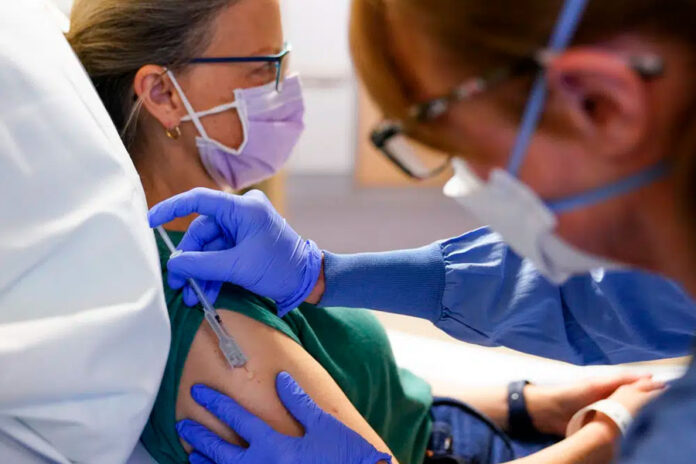
Registered nurse Erika Obrietan administers the third dose of an experimental breast cancer vaccine to patient Kathleen Jade at University of Washington Medical Center - Montlake, Tuesday, May 30, 2023, in Seattle. Jade, 50, learned she had breast cancer in late February. She's getting the vaccine to see if it will shrink her tumor before surgery. “Even if that chance is a little bit, I felt like it’s worth it," said Jade, who is also getting standard treatment. (Photo: AP/Lindsey Wasson)

The next big advance in cancer treatment could be a vaccine.

After decades of limited success, scientists say research has reached a turning point, with many predicting more vaccines will be out in five years.

These aren’t traditional vaccines that prevent disease, but shots to shrink tumors and stop cancer from coming back. Targets for these experimental treatments include breast and lung cancer, with gains reported this year for deadly skin cancer melanoma and pancreatic cancer.

“We’re getting something to work. Now we need to get it to work better,” said Dr. James Gulley, who helps lead a center at the National Cancer Institute that develops immune therapies, including cancer treatment vaccines.

More than ever, scientists understand how cancer hides from the body’s immune system. Cancer vaccines, like other immunotherapies, boost the immune system to find and kill cancer cells. And some new ones use mRNA, which was developed for cancer but first used for COVID-19 vaccines.

For a vaccine to work, it needs to teach the immune system’s T cells to recognize cancer as dangerous, said Dr. Nora Disis of UW Medicine’s Cancer Vaccine Institute in Seattle. Once trained, T cells can travel anywhere in the body to hunt down danger.

“If you saw an activated T cell, it almost has feet,» she said. «You can see it crawling through the blood vessel to get out into the tissues.”

Patient volunteers are crucial to the research.

Kathleen Jade, 50, learned she had breast cancer in late February, just weeks before she and her husband were to depart Seattle for an around-the-world adventure. Instead of sailing their 46-foot boat, Shadowfax, through the Great Lakes toward the St. Lawrence Seaway, she was sitting on a hospital bed awaiting her third dose of an experimental vaccine. She’s getting the vaccine to see if it will shrink her tumor before surgery.

A dose of an experimental breast cancer vaccine is pictured at University of Washington Medical Center – Montlake, Tuesday, May 30, 2023, in Seattle. The medication is being tested to shrink tumors and stop cancer from coming back. Targets for these experimental treatments include breast and lung cancer, with gains reported this year for deadly skin cancer melanoma and pancreatic cancer. (Photo: AP/Lindsey Wasson)

“Even if that chance is a little bit, I felt like it’s worth it,» said Jade, who is also getting standard treatment.

Progress on treatment vaccines has been challenging. The first, Provenge, was approved in the U.S. in 2010 to treat prostate cancer that had spread. It requires processing a patient’s own immune cells in a lab and giving them back through IV. There are also treatment vaccines for early bladder cancer and advanced melanoma.

Early cancer vaccine research faltered as cancer outwitted and outlasted patients’ weak immune systems, said Olja Finn, a vaccine researcher at the University of Pittsburgh School of Medicine.

“All of these trials that failed allowed us to learn so much,” Finn said.

As a result, she’s now focused on patients with earlier disease since the experimental vaccines didn’t help with more advanced patients. Her group is planning a vaccine study in women with a low-risk, noninvasive breast cancer called ductal carcinoma in situ.

More vaccines that prevent cancer may be ahead too. Decades-old hepatitis B vaccines prevent liver cancer and HPV vaccines, introduced in 2006, prevent cervical cancer.

In Philadelphia, Dr. Susan Domchek, director of the Basser Center at Penn Medicine, is recruiting 28 healthy people with BRCA mutations for a vaccine test. Those mutations increase the risk of breast and ovarian cancer. The idea is to kill very early abnormal cells, before they cause problems. She likens it to periodically weeding a garden or erasing a whiteboard.

Others are developing vaccines to prevent cancer in people with precancerous lung nodules and other inherited conditions that raise cancer risk.

Research scientist Kevin Potts uses a multichannel pipette to dissociate ovarian cancer cells with the enzyme trypsin at UW Medicine’s Cancer Vaccine Institute Thursday, May 25, 2023, in Seattle. Once dissociated, the cells can then be either analyzed or re-seeded to conduct additional experiments. (Photo: AP/Lindsey Wasson)

“Vaccines are probably the next big thing” in the quest to reduce cancer deaths, said Dr. Steve Lipkin, a medical geneticist at New York’s Weill Cornell Medicine, who is leading one effort funded by the National Cancer Institute. “We’re dedicating our lives to that.”

People with the inherited condition Lynch syndrome have a 60% to 80% lifetime risk of developing cancer. Recruiting them for cancer vaccine trials has been remarkably easy, said Dr. Eduardo Vilar-Sanchez of MD Anderson Cancer Center in Houston, who is leading two government-funded studies on vaccines for Lynch-related cancers.

“Patients are jumping on this in a surprising and positive way,” he said.

Drugmakers Moderna and Merck are jointly developing a personalized mRNA vaccine for patients with melanoma, with a large study to begin this year. The vaccines are customized to each patient, based on the numerous mutations in their cancer tissue. A vaccine personalized in this way can train the immune system to hunt for the cancer’s mutation fingerprint and kill those cells.

But such vaccines will be expensive.

“You basically have to make every vaccine from scratch. If this wasn’t personalized, the vaccine could probably be made for pennies, just like the COVID vaccine,” said Dr. Patrick Ott of Dana-Farber Cancer Institute in Boston.

Research scientist Kevin Potts looks at ovarian cancer cells under a microscope at UW Medicine’s Cancer Vaccine Institute Thursday, May 25, 2023, in Seattle. Vaccines under development at UW Medicine are designed to work for many patients, not just a single patient. Tests are underway in early and advanced breast cancer, lung cancer and ovarian cancer. Some results may come as soon as next year. (Photo: AP/Lindsey Wasson)

The vaccines under development at UW Medicine are designed to work for many patients, not just a single patient. Tests are underway in early and advanced breast cancer, lung cancer and ovarian cancer. Some results may come as soon as next year.

Todd Pieper, 56, from suburban Seattle, is participating in testing for a vaccine intended to shrink lung cancer tumors. His cancer spread to his brain, but he’s hoping to live long enough to see his daughter graduate from nursing school next year.

“I have nothing to lose and everything to gain, either for me or for other people down the road,” Pieper said of his decision to volunteer.

One of the first to receive the ovarian cancer vaccine in a safety study 11 years ago was Jamie Crase of nearby Mercer Island. Diagnosed with advanced ovarian cancer when she was 34, Crase thought she would die young and had made a will that bequeathed a favorite necklace to her best friend. Now 50, she has no sign of cancer and she still wears the necklace.

She doesn’t know for sure if the vaccine helped, “But I’m still here.”

Día Mundial de la Refrigeración

Foto ilustrativa. Día Mundial de

El Día Mundial de la Refrigeración, un proceso termodinámico indispensable para la mejora de la calidad de vida de las personas, destacando su amplia contribución en las economías de las naciones en el marco de la pandemia por COVID-19 y el cambio climático a nivel mundial, que se celebra el 26 de junio.

Con esta efeméride se conmemora a individuos, grupos profesionales, asociaciones y las tecnologías responsables de mantener objetos y entornos con temperatura controlada. Este Día Mundial cuenta con el apoyo del Programa de las Naciones Unidas para el Medioambiente (PNUMA).

La refrigeración es un proceso termodinámico a través del cual se extrae la energía térmica de elementos sólidos y fluidos para disminuir su temperatura, mediante la utilización de fluidos denominados refrigerantes.

Constituye una de las aplicaciones más relevantes en la industria de alimentos, permitiendo prolongar su conservación y ralentizar la proliferación de bacterias. La refrigeración tiene un alto impacto en sectores clave de la economía, contribuyendo a la protección del medio ambiente, mejoramiento de la calidad de vida y mayor confort, con el menor consumo de energía posible, entre otros beneficios.

Mencionamos algunos de ellos:

  • Conservación de alimentos para el consumo seguro, evitando su descomposición por el calor.
  • Reducción de la temperatura de maquinarias o materiales utilizados en procesos industriales, para su óptimo funcionamiento.
  • Es utilizada para la fabricación y conservación de vacunas y medicinas.
  • Climatización de espacios destinados al uso doméstico, comercial e industrial, mediante la utilización de dispositivos de refrigeración: congeladores, acondicionadores de aire, cámaras frigoríficas, entre otros.
  • El proceso conocido como criogénesis (enfriamiento a bajas temperaturas) es aplicado en investigaciones científicas, así como para el licuado de ciertos tipos de gases.

Anualmente la Secretaría del WRD (World Refrigeration Day) selecciona un lema para la celebración de esta efeméride. Para 2023, el tema es: «Refrigeración de próxima generación». Ello requiere que ingenieros e investigadores impulsen la innovación y la tecnología. Para 2022, el tema fue «La refrigeración mantiene la frescura de los alimentos». Y en el 2021 fue “Campeones de la refrigeración: carreras geniales para un mundo mejor».

Además, se proponen temas como animar a las personas a limpiar su refrigerador, y el por qué es importante hacerlo.

La principal finalidad de esta campaña es inspirar a estudiantes y jóvenes profesionales a nivel mundial, a enfrentar los desafíos que se presenten en su entorno.

UE pide cautela tras revuelta de mercenarios contra Rusia

Soldados rusos realizan tareas de limpieza en la zona del Distrito Militar del Sur, en Rostov del Don, Rusia, el domingo 25 de junio de 2023. (Foto. AP)

Los ministros de la Unión Europea pidieron cautela el lunes luego que una fallida revuelta de mercenarios en Rusia generó dudas sobre el control del poder del presidente ruso Vladímir Putin y si los mercenarios podrían instalarse justo al otro lado de la frontera en Bielorrusia.

En conversaciones en Luxemburgo, algunos ministros de Relaciones Exteriores de la UE señalaron que el breve levantamiento encabezado por Yevgeny Prigozhin, el líder del Grupo Wagner, es como si Putin hubiera desatado a su propio monstruo como Frankenstein. Varios también señalaron que quedan muchas preguntas, incluyendo el paradero preciso de Prigozhin y si llevará tropas con él.

Muchos parecían estar de acuerdo en que una respuesta clave a la crisis sobre Rusia era ayudar a Ucrania a sacar cualquier ventaja posible de la situación.

“Estamos analizando esto cuidadosamente”, dijo a los periodistas la ministra de Relaciones Exteriores de Alemania, Annalena Baerbock. “También hay riesgos involucrados que aún no podemos evaluar en este momento. Para nosotros, los europeos, lo único que importa es apoyar a Ucrania”.

El jefe de política exterior de la UE, Josep Borrell, que presidió la reunión, dijo que el monstruo que Putin creó con Wagner está “actuando en contra de su creador”. Agregó que “el sistema político muestra fragilidades y el poder militar se resquebraja”.

“Ahora, más que nunca, es momento de apoyar a Ucrania”, sostuvo Borrell.

El ministro de Relaciones Exteriores de Austria, Alexander Schallenberg, dijo a los periodistas que Putin “no puede deshacerse de los fantasmas que invocó, y ahora lo perseguirán”. Citó la revuelta como prueba de que “hay grietas en la estructura de poder” en Rusia.

Dirigiéndose a los ministros por enlace de video, el ministro de Relaciones Exteriores de Ucrania, Dmytro Kuleba, los instó a aprovechar los más recientes acontecimientos.

“Rusia se está debilitando día a día. Ahora es de vital importancia proporcionar a Ucrania todas las armas que necesita”, dijo, incluyendo la artillería y los misiles, pero también sanciones más duras.

A Prigozhin se le concedió el exilio en Bielorrusia, a sólo 35 kilómetros (22 millas) de la capital de Lituania, Vilnius. Se desconoce si enfrentará cargos. El presidente bielorruso Alexander Lukashenko, quien negoció el acuerdo, dio pocos detalles.

Mandatarios rusos, ya sean civiles o militares, no han comentado sobre la situación.

Cauteloso ante la inseguridad que esto podría significar para su país, el ministro de Relaciones Exteriores de Lituania, Gabrielius Landsbergis, dijo que aspira ver “planes muy específicos” de sus aliados para reforzar el flanco oriental de la OTAN, entre ellos Estonia, Letonia y Polonia.

Filis vencen 7-6 a unos Mets que pagan caro sus errores

Trea Turner de los Filis de Filadelfia se roba la tercera base camino a anotar con una remolcada de Nick Castellanos en la quinta entrada del encuentro ante los Mets de Nueva York el domingo 25 de junio del 2023. (Foto: AP/Laurence Kesterson)

FILADELFIA.— El relevista de los Mets Jeff Brigham propinó pelotazos a Kyle Schwarber y Trea Turner con las bases llenas en la octava entrada, propiciando las anotaciones del empate y la ventaja definitiva, después de que el tercera base Brett Baty cometió un clave error en fildeo, y el resultado fue una victoria 7-6 para los Filis de Filadelfia ante los Mets de Nueva York el domingo.

Abajo por 6-3 en la octava, los Filis anotaron cuatro veces ante el ineficaz bullpen de los Mets y se recuperaron para llevarse dos de tres ante sus rivales divisionales.

Josh Walker permitió que se embasaran los tres primeros bateadores que enfrentó y le dejó las bases llenas a Brigham (0-2).

En resumen, los Filis recibieron tres boletos, sus bateadores fueron golpeados dos veces, se embasaron con un error y sumaron un imparable en una entrada de cuatro carreras.

Incluso para el nivel de errores cómicos que acostumbran los Mets, se trató de un sorprendente colapso.

El mánager de los Mets Buck Showalter fue expulsado en la novena y la afición, que abarrotó el Citizens Bank Park, enloqueció.

Por los Mets, el dominicano Starling Marte de 4-1 con una empujada. El puertorriqueño Francisco Lindor de 5-1 con una anotada y una remolcada. El venezolano Omar Narváez de 1-1 con dos anotadas.

Por los Filis, el panameño Edmundo Sosa de 3-1 con una anotada.