Inicio Blog Página 1101

Drone may have been flying near Pennsylvania jail before homicide suspect’s escape, police say

This booking photo provided by the Warren, Pa., City Police Department shows Michael Burham. Authorities searching for the inmate described by police as “very dangerous” who used bed sheets to escape from a northwestern Pennsylvania jail on Thursday, July 6, 2023, say they believe he is still in the area and have found stockpiles or campsites in the woods he may have been using. Burham was a suspect in a homicide investigation and was being held on $1 million bail on kidnapping, burglary and other charges, authorities said. (Photo: AP/Warren City Police Department)

WARREN, Pa. — Authorities are seeking information about a drone that may have been flying near a northwestern Pennsylvania jail before the escape of a homicide suspect last week, and they say they have increasing concerns that the escaped prisoner may be armed.

Michael Burham, 34, fled the Warren County Prison late Thursday by climbing on exercise equipment to gain access to the roof and then used a rope fashioned from jail bedding to get down, authorities said. Prior to his escape, Burham had been held on $1 million bail and was facing numerous charges, including kidnapping and burglary.

Lt. Col. George Bivens of the Pennsylvania State Police told reporters Wednesday afternoon that the drone was heard by a couple of people — although he didn’t know whether it was seen — “immediately adjacent to the jail” just before the escape. Surveillance video did not capture any drone, he said.

“I’m not a big believer in coincidences,» he said. «There could be a perfectly innocent and reasonable explanation. … If there’s not an innocent explanation, perhaps that assists us in finding him and also finding anyone providing aid.»

Bivens also said recent information has made him increasingly worried that Burham is armed. He did not give further details.

Prosecutors in Chautauqua County, New York say Burham is the prime suspect in the May 11 killing of Kala Hodgkin, 34, and a related arson in Jamestown, New York. He’s also accused of having abducted an elderly couple in Pennsylvania while trying to evade capture before his arrest in South Carolina, and Warren police consider him “very dangerous.”

State police say more than 200 state, federal and local law enforcement officers are involved in the manhunt and reward money in the case now totals $19,500. Police have said they believe Burham is still in the area more than five days after his escape, having found campsites and small stockpiles they believe are associated with him. Investigators have also said they believe he is getting help from someone and have vowed to prosecute anyone who aids him.

Warren County commissioners, meanwhile, vowed Wednesday to make security upgrades and reevaluate procedures.

Commissioners say the law requires inmates to be provided with time in the jail yard, a room with a cage on the top floor, and inmates are taken there in shifts. While there, they are on camera monitored by staff, but “the amount of time that he got out of that roof was quicker than anybody could respond to to get inside the room,” Commissioner Jeff Eggleston said Wednesday. Whether such monitoring was effective security was “absolutely” under review, he said.

“Everything associated with the yard, and the people inside, and how they’re observed is going to be reviewed and potentially changed,” he said. The exercise equipment is being replaced with equipment “that doesn’t provide access to higher elevations,” commissioners said in a statement, and officials were also going to review prisoner access to materials, such as the sheets used to make a rope, once the criminal investigation is completed, Eggleston said.

“Every element of their life in the jail is being evaluated and we’ll potentially change policy,” he said. Commissioners had already agreed to allocate money to increase security on the rooftop complex so that “no one’s ever going to even think to try to climb out of there ever again.”

The commission’s vice chair, Benjamin Kafferlin, said the county’s “rigorous internal investigation” would include a review of “every second” of video surveillance and interviews with people both inside or outside the jail.

“We’re not on a witch hunt, but we are going to seek justice, including if that means with our employees,” he said.

Warren County Sheriff Brian Zeybell has said the response by police and guards “couldn’t have been any quicker,” and in fact he believes “Burham saw red and blue lights within two minutes of leaving that jail.”

Police have said Burham taught himself survival skills and had military reserve training, and the large search area includes difficult terrain and cabins, oil and gas sheds, and shacks affording a fugitive a place to hide. Bivens said 500 tips have come in since the manhunt began.

In September 2014 in Pennsylvania, a manhunt of more than a month and a half ensued after a gunman killed a state trooper and permanently disabled another in an ambush outside the Blooming Grove barracks. Eric Frein, of Canadensis, also described as a self-taught survivalist, was captured after a 48-day search. He was convicted and sentenced to death, though Pennsylvania has a moratorium on executions.

After the deadly July 1996 Olympic park bombing in Atlanta, Eric Robert Rudolph hid in the mountains of western North Carolina for more than five years, apparently living off the land and using survival skills he learned as a soldier. Authorities also suspected the serial bomber had help from sympathizers or others during that time. Rudolph, who also was charged in a deadly blast at an Alabama abortion clinic, was caught in 2003 after being seen scavenging for food near a grocery store trash bin in Murphy, North Carolina. He was sentenced to life in prison.

Editorial Roundup: Pennsylvnia

storm

Philadelphia Daily News/Inquirer. July 9, 2023

Editorial: High marks for Gov. Shapiro’s first state budget even as GOP lawmakers fail to learn their lesson

As Republicans engaged in culture war tactics to please their base, the governor and Democrats focused on ensuring quality education, ample economic opportunity, and dependable public safety.

Gov. Josh Shapiro’s first state budget may not fulfill every Pennsylvanian’s wish list, but the $45.5 billion plan represents serious progress for the Keystone State, with significant increases in funding for public education, an extension to a home repair and weatherization program, and finally weaning the Pennsylvania State Police off of its reliance on transportation funding.

Shapiro also demonstrated a willingness to sacrifice his own priorities in the service of what’s best for the commonwealth. State Republicans could learn from his example.

Initially, the governor forged a deal with Senate Republicans. In exchange for their support for a $567 million increase in money for schools through the state basic education funding formula, Shapiro backed a new $100 million program to establish Lifeline Scholarships — essentially vouchers that would allow lower-income families in underperforming school districts to opt for private schooling. K-12 students would get $5,000, high school students would get $10,000, and special-needs students, regardless of age, would receive $15,000.

Given the one-vote Democratic majority in the state House, which includes members who have in the past strongly supported school choice, Shapiro had legitimate reason to believe that the program could pass in both chambers. House Democrats, however, balked at the potential threat to public education. In the end, Shapiro promised to line-item veto his own proposal to avert a showdown.

While this move has upset Republicans eager to achieve a long-standing priority, it was the right call for the state. Given the way voucher programs elsewhere have drained critical support away from public education while failing to produce improved test scores, launching a large voucher program as part of the budget process was never a good idea.

Even with a relatively small outlay, such a big change to the way Pennsylvania educates its children requires a more significant public debate before proceeding. House Democrats were right to use their newfound power to push back.

Rather than raging at the governor, Harrisburg Republicans need to recognize a new reality: Their party no longer dominates the General Assembly. They also should remember it was their ongoing prioritization of culture war issues over delivering for Pennsylvanians that cost them control of the House.

Yet, judging from GOP lawmakers’ approach to higher education funding and thecombative confirmation process forcabinet nominees, they remain committed to this approach.

For generations, Pennsylvania’s state-affiliated universities — Temple University, Lincoln University, the University of Pittsburgh, and Pennsylvania State University — have provided a quality college education at a reasonable price for residents. Thanks to a meltdown from Pennsylvania House Republicans, that promise was jeopardized.

Republicans wanted to end fetal research and medical support for transgender people. According to Inquirer reporting, a vendetta against Pitt Chancellor Emeritus Mark Nordenberg for helping to enact the state’s first non-gerrymandered legislative map animated some Republican votes as well.

Without state funding, the universities would need to significantly increase in-state tuition. This would force students to either defer attendance or take on more student debt, just because of political posturing in Harrisburg. Whatever the motivation, this stunt was ill-advised — Pennsylvania’s students and families deserve better.

While their House colleagues picked fights with college students, Senate Republicans embarrassed themselves with their decision to deny a successful confirmation vote to Secretary of the Commonwealth Al Schmidt, acting Health Secretary Debra Bogen, and other cabinet nominees.

Schmidt, himself a Republican, is uniquely suited to the job. For roughly a decade, he served as one of three City Commissioners, responsible for administering Philadelphia’s elections. His track record in that role was impressive. Schmidt used his position to make more election data publicly available, pursued workplace reforms, and helped launch the first departmental website. Schmidt’s office also helped clean up local elections. It was a referral from his office that led to the conviction of former U.S. Rep. Ozzie Myers for election fraud.

He also stood up against former President Donald Trump’s attempts to suppress Philadelphia’s votes and steal Pennsylvania’s electors. For that, the mild-mannered reformer became a bogeyman for the far-right. Former Trump attorneyLinda Kerns blasted Schmidt’s nomination, and State Sen. Doug Mastriano, the party’s failed nominee for governor who marched on the U.S. Capitol during the Jan. 6, 2021, insurrection, voted against him in committee.

While Schmidt was confirmed by default — after Republicans avoided a full Senate vote on the nomination, likely to prevent recrimination from Trump — Bogen, who helped lead Allegheny County through the COVID-19 pandemic, saw her nomination withdrawn after Republicans on the Health and Human Services Committee opted to deny her a favorable recommendation.

Bogen, who is eminently qualified for the position, acted prudently and recommended the same public health policies as other county, state, and federal health officials. Yet for some Harrisburg Republicans, trying to protect Pennsylvanians from the pandemic disqualified her for the job.

There’s a pattern in these Harrisburg GOP maneuvers. Each represents an attempt to placate the party base rather than an attempt to improve the lives of all.

This is the exact style of culture war politics that voters resoundingly rejected in the 2022 election. If Pennsylvanians wanted a state government that is obsessed with persecuting trans people, relitigating the 2020 election, second-guessing the commonwealth’s pandemic response, and drawing legislative districts that are favorable to incumbents, they would have voted for Mastriano. Instead, he lost by roughly 800,000 votes.

Meanwhile, despite their disagreement over Lifeline Scholarships, House Democrats and Shapiro kept their focus where it mattered most: ensuring quality education, ample economic opportunity, and dependable public safety in every corner of the commonwealth.

Imagine how the state would benefit if Harrisburg Republicans did the same.

___

Pittsburgh Post-Gazette. July 8, 2023

Editorial: Move transit tax options forward

Bills recently introduced in the General Assembly would potentially boost transit in the state’s most populous counties, including Allegheny and Philadelphia, by giving them local tax options to improve or expand their transit systems. Local revenue options for transit projects include taxes on income, alcohol, rental cars, and real-estate sales.

Allegheny and Philadelphia-area counties would decide which, of up to three additional, taxes to approve — or whether to use any of them at all. This flexible and sorely needed plan, now in the House Local Government Committee, should move forward immediately.

No city or state can become first-class without a first-class transit system. Systems in Pittsburgh and Philadelphia need to get better, as those regions will absorb most of the state’s additional 2.5 million people expected over the next two decades. Under the current funding system, however, significant improvements are difficult, if not impossible. Without the authority to raise more local money, large counties can’t secure federal grants that require local-funding matches.

As a result, Pennsylvania is losing millions of dollars from federal infrastructure and other grant programs. Transit systems in Philadelphia and Pittsburgh need upgrades and expansions, not only to improve service for people without vehicles or other transportation options, but also to attract more so-called choice riders, who use transit for convenience, lower stress, and other reasons.

Allegheny County Executive Rich Fitzgerald has been a long-time proponent of giving counties more ways to raise money locally. Further property tax increases would be an unfair and unsustainable way to do it.

Owing to transit’s broad social, environmental, and economic benefits, local tax option bills in the House, sponsored by Philadelphia Democrat Joe Hohenstein, should get bi-partisan support. In 2019, a House Transportation Infrastructure Task Force, headed by Republican Martina White of Philadelphia, recommended them in an overview of Pennsylvania’s transportation systems and funding.

Mr. Hohenstein has also pointed out the vital role the Southeastern Pennsylvania Transportation Authority played, following the recent collapse of an overpass on Interstate 95 in Northeast Philadelphia.

Transit is essential to support the independence of seniors and people with disabilities, as well as poor and working-class people who don’t have access to reliable vehicles to get to work and elsewhere.

Pennsylvania’s future depends largely on healthy and robust transit systems. The future of those system depends on local funding options unlocked by a House plan that should move ahead immediately.

___

Pittsburgh Tribune-Review. July 6, 2023

Editorial: Is leaving Pa. the way to find lower taxes and cost of living?

Commonwealth Foundation poll shows a lot of Pennsylvanians are considering relocation.

Tell us something we didn’t know.

Pennsylvania has been aware of its changing demographics for years. Decades, actually.

Pennsylvania lost one of its seats in the U.S. House of Representatives after the 2020 census, bringing the number of Keystone State lawmakers down to just 17. The state lost a seat after the 2010 count, too, just like 2000.

The good news was the bleeding slowed to just one every 10 years. The six prior censuses had taken away two or three congressional districts. You have to go back to 1920 to see a year in which Pennsylvania didn’t lose a seat — and to 1910 to see any gained.

It isn’t that Pennsylvania is losing people, per se. The population is growing — just not in that age group and not as fast as other places. Census numbers show Pennsylvania’s population rose about 300,000 people, or about 2.4%, between 2010 and 2020, topping 13 million.

But nationally, the population grew 7.4%, meaning Pennsylvania just isn’t growing at the same rate as America overall. That means other states are growing faster.

The Commonwealth Foundation poll of 800 registered voters showed that 42.25% considered moving. The reasons? Taxes and the cost of living primarily, but other issues noted show a grab bag of political motivations.

Pennsylvania has been a powerhouse state for the economy and politics. It contains the universities that drive innovation and education, the manufacturing that can push growth, a considerable amount of the financial sector and is a massive contributor to the energy industry. The state is a transportation linchpin for moving goods. Politically, you aren’t wrong to say that as Pennsylvania votes, so goes the nation.

The bottom line and the voting record require people to be here and stay here to contribute. With more people looking to leave, that’s the continuation of a troubling trend.

But is the survey telling us what we need to know? Or do we need more than a list of grievances?

People looking for greener pastures need more data about what they are hoping to find elsewhere and what the reality would look like when they get there. They also need to know that sometimes it’s better to fix up the house where you live than it is to pack up and move.

There is overlap sometimes between states that are seeing growth and those that have lower cost of living, but not always. Among those growing fastest are Florida, Idaho and Montana. Montana is 15th for low cost of living, with Idaho 17th and Florida 36th, according to U.S. News and World Report. Pennsylvania is 28th.

The states with the lowest tax burdens are Alaska, Delaware and New Hampshire — all on the high side of cost of living. Pennsylvania is 30th in tax burden, according to financial services website WalletHub, although the state does tip the scales dramatically in some areas, like gas tax.

Pennsylvania has a lot to improve. We need more jobs and better jobs with the kind of paychecks that make supporting a family and owning a home more than a pipe dream. But the numbers don’t say that’s more likely to happen elsewhere.

We just need more Pennsylvanians willing to do the work of making the state where they live into the home of their dreams.

___

Scranton Times-Tribune. July 10, 2023

Editorial: Clock ticks on legal pot sales

Fully legalized marijuana sales began June 30 in Maryland. Through July 4, according to the Maryland Cannabis Administration, consumers purchased $10.4 million worth of medicinal and recreational pot — more than 2.5 times the amount of medicinal marijuana they bought over the same weekend in 2022.

In New Jersey, recreational pot sales began April 1, 2022. By Dec. 31, consumers had purchased $329 million worth of recreational pot plus $226 million worth of medicinal marijuana. New York projected total pot sales of $663 million this year, the first to include recreational pot.

In June, Forbes estimated that the national legal marijuana market was worth $45 billion.

Those numbers will make it more difficult for Pennsylvania lawmakers to hold out on fully legalizing marijuana. The situation is similar to the early 2000s, when many lawmakers opposed casino gambling but rolled over to ensure the state government’s share of the vigorish. Pennsylvania now draws more government revenue from gambling than any other state.

Two senators from opposite ends of the state and the political spectrum, Republican Dan Laughlin of Erie and Democrat Sharif Street of Philadelphia, have introduced a bill to legalize general retail marijuana sales.

Citing markets in neighboring states, Laughlin said “…we have a duty to Pennsylvania taxpayers to legalize adult-use marijuana to avoid losing out on hundreds of millions of dollars of new tax revenue and thousands of new jobs.”

Street, citing the disproportionate impact of pot law enforcement on poor and minority communities, said “legalizing the use of adult cannabis will help us fully and equitably fund education, lower property taxes and address a variety of community needs ….”

The economic and social justice benefits of legalized pot use do not mean that it is problem-free. But the bill addresses safety issues.

It would make 21 the minimum purchase age, ensure police authority to prosecute pot-impaired drivers, ban marketing toward children, address workplace drug-testing, and more.

Given the pervasive regional and national pot markets, the senators are right that Pennsylvania cannot remain an island of prohibition.

Legalization has broad public support. Lawmakers finally should pull the trigger on it while including the strongest possible safety measures.

___

Wilkes-Barre Citizens’ Voice. July 8, 2023

Editorial: Mass murder template for gun reforms

Republican state lawmakers who have tried to impeach Philadelphia District Attorney Larry Krasner as their scapegoat for gun violence, while refusing to consider gun safety laws, meet Kimbrady Carriker.

Police charged Carriker Wednesday with murdering five people in his southwest Philadelphia neighborhood and wounding four others Monday night.

Carriker is a poster child for several of the proposed gun safety laws that Republican majorities repeatedly have deposited in the state Capitol’s dumpster.

He used “ghost guns” for his alleged rampage. Such weapons are sold in pieces. Unlike fully assembled weapons, they do not include serial numbers and are not subject to background checks. Police say Carriker’s weapons were an AR-15-style semiautomatic rifle and a handgun, both assembled from kits

“If he would’ve dropped that weapon and got away, we would’ve had no way to trace that weapon back to him,” Philadelphia Deputy Police Commissioner Frank Vanore said.

Yet the Legislature will not outlaw ghost guns, require background checks to buy them, or even require registered serial numbers so that they can be traced. Philadelphia police recovered 575 ghost guns during criminal investigations in 2022.

Carriker also was deeply troubled. He had posted on social media that “evil spirits” were following him. His neighbors told police that he had been agitated in the days before the rampage, shouting biblical passages at all hours of the day and night. And a relative said he had taken to wearing body armor and other tactical equipment, which he also wore during his alleged murder spree.

Yet the Legislature will not approve a “red flag” law, under which relatives or police may remove weapons from a person whom a court, after an evaluation and hearing, deems to be danger to himself or others.

The latest tragedy probably won’t make any difference in Harrisburg — where lawmakers also won’t allow cities to adopt their own gun safety laws — because, you know, Krasner. But at least Da’Juan Brown, 15; Lashyd Merritt, 21; Ralph Moralis, 59; Dymir Stanton, 29; and Joseph Wamah Jr., 31; the murder victims, won’t have to worry about it.

END

Cerca de 22 millones de hispanos son aficionados a los videojuegos en EE. UU., dice reporte

Jóvenes juegan videojuegos próximos a estrenarse. Imagen de archivo. (Foto: EFE/David Maung)

Cerca de 22 millones de hispanos son aficionados a los videojuegos en Estados Unidos, un pasatiempo que practican frecuentemente 65 % de las personas en el país y jugadores de todos los grupos demográficos, incluidos el género, la raza, el origen étnico y la edad, encontró la encuesta anual de la Entertainment Software Association (ESA).

El reporte reveló que los videojuegos son uno de los pasatiempos más populares en EE. UU., con 212,6 millones de personas que los practican cada semana. Los hispanos representan el 10 % de estos jugadores, lo que representa el mayor porcentaje dentro de los grupos minoritarios.

Casi dos tercios de los adultos estadounidenses juegan videojuegos con regularidad. Entre los menores de 18 años el porcentaje salta al 76 %.

En todas las edades, 46 % de los jugadores son mujeres, 53 % son hombres y aproximadamente 1 % de los 4.000 encuestados se identificaron de otra manera o eligieron no identificarse.

El jugador promedio tiene 32 años y ha jugado videojuegos durante 21 años.

Una cuarta parte (26 %) de los jugadores estadounidenses tienen menos de 18 años, el 35 % tienen entre 18 y 34 años, el 14 % tienen entre 35 y 44, el 11 % tienen entre 45 y 54 y el 14 % tiene 55 años o más.

Stanley Pierre-Louis, presidente y director ejecutivo de ESA (que reúne a las principales firmas de la industria de los videojuegos), destacó en un comunicado que los videojuegos “siguen siendo un pilar en los hogares estadounidenses” y que los resultados del sondeo demuestran que este pasatiempo “no solo nos conecta, sino también mejora nuestra sensación de bienestar”.

Por ejemplo, el 80 % de los jugadores de videojuegos juegan con otros y el 71 % dicen que los juegos crean entornos acogedores e inclusivos.

La gran mayoría de los jugadores (88 %) están de acuerdo en que los videojuegos ayudan a expandir sus círculos sociales, y el 82 % dicen que pueden presentar a las personas nuevos amigos y nuevas relaciones.

El 76 % de los padres estadounidenses juegan videojuegos con sus hijos, y la mitad (50 %) de los jugadores han conocido a un buen amigo, cónyuge o pareja a través de los juegos.

El 87% de los jugadores dicen que los videojuegos crean experiencias accesibles para personas con diferentes capacidades físicas.

Elon Musk lanza xAI, una nueva empresa de inteligencia artificial

El multimillonario empresario Elon Musk. (Foto: EFE/MICHEL EULER/Archivo

El multimillonario empresario Elon Musk anunció este miércoles la puesta en marcha de xAI, una nueva compañía de inteligencia artificial cuyo propósito, asegura, será «comprender la verdadera naturaleza del universo».

Según la web de la firma, el proyecto estará liderado por el propio Musk y cuenta con un equipo de una decena de personas que han trabajado en empresas como DeepMind, OpenAI, Google Research, Microsoft Research o Tesla.

La compañía tiene previsto organizar una conferencia a través de Twitter este viernes en la que los interesados podrán conocer al equipo y hacerles preguntas y está buscando ingenieros e investigadores para unirse a su plantilla, según señala en su web.

Musk ha alertado en los últimos meses de los peligros que plantea la inteligencia artificial y el pasado marzo pidió junto a otros empresarios e investigadores la suspensión durante seis meses de los sistemas «más poderosos que GPT-4», el último modelo lanzado por OpenAI.

Sin embargo, en abril ya había adelantado que estaba preparando su propio proyecto de inteligencia artificial como una alternativa a los sistemas desarrollados por Google u OpenAI, aliada de Microsoft, a los que criticaba por estar «siendo entrenados para ser políticamente correctos».

«El peligro de entrenar a la IA para ser «woke» -en otras palabras, para mentir- es mortal», ha llegado a escribir en Twitter.

Según dijo entonces en una entrevista con Fox News, su iniciativa busca ser una «tercera opción» y confía en que, aunque «llega tarde» a la carrera, su proyecto «haga más bien que mal».

Musk es cofundador de OpenAI, fue uno de sus primeros inversores y llegó a ser copresidente. No obstante, en 2018 se convirtió en una sociedad limitada (LP, por sus siglas en inglés) y Musk dejó su directiva.

Desde que la empresa sacó al mercado su popular ChatGPT, Musk ha defendido que sin sus inversiones iniciales OpenAI no existiría, pero también ha criticado en numerosas ocasiones el trabajo hecho por la compañía.

La senda dorada

Banco Central de los Estados Unidos. (Foto: Archivo)

Las últimas cifras sobre creación de empleo en junio en Estados Unidos revelaron una desaceleración, pero todavía desafiantes de la efectividad de los diez aumentos consecutivos de la tasa de interés, aprobados hasta ahora por el banco central para controlar la inflación. La semana pasada el Departamento de Trabajo informó que en junio fueron creados 209,000 nuevos empleos, menos que la cifra revisada de 306,000 creados en mayo, a pesar del aumento de la tasa de interés a más de 5 por ciento, el nivel más alto en 15 años. La tasa de desempleo descendió desde 3.7 por ciento en mayo a 3.6 por ciento en junio. El cuidado de la salud con 41,000 nuevos empleos, el gobierno con 60,000, y la construcción con 23,000, fueron los sectores que crearon más puestos de trabajo en junio, mientras que el comercio al menudeo perdió 11,200.

También en junio, el salario promedio por hora aumentó 0.4 por ciento y 4.7 por ciento desde el año pasado, todavía debajo de la tasa de 5 por ciento del índice básico de precios al consumidor, el cual excluye alimentos y combustibles y aún está lejos del objetivo de 2 por ciento del banco central.

El índice de precios al consumidor para junio será el último disponible antes de la próxima reunión del Comité de Mercado Abierto del banco central, calendarizada para el 25 y 26 de julio. Si, como se espera, el Comité aprueba otro aumento en la tasa de interés, eso puede indicar una desviación de lo que el presidente del banco de la Reserva Federal de Chicago Austam Goolsbee llama “la senda dorada:” bajar la inflación sin causar una recesión (The New York Times 07|08|23).

The golden path

Banco Central de los Estados Unidos. (Foto: Archivo)

The latest employment creation figures for June in the United States revealed a slowdown, but still challenging the effectiveness of the ten consecutive interest rate increases approved thus far by the central bank to control inflation. The Labor Department informed last week 209,000 new jobs were created in June, less than the revised 306,000 created in May, despite interest hikes to over 5 percent, the highest level in 15 years. The unemployment rate decreased from 3.7 percent in May to 3.6 percent in June. Healthcare with 41,000 new jobs, government with 60,000, and construction with 23,000, were the sectors which created more new jobs in June, while retail lost 11,200.

Also in June, average hourly earnings increased 0.4 percent and 4.7 percent from a year earlier, still below the rate of 5 percent in the core consumer price index, which excludes food and fuels and remains far from the central bank’s 2 percent objective.

The Consumer Price Index for June will be the last available before the next meeting of the central bank Open Market Committee, scheduled for July 25-26. If, as expected, the Committee approves another interest rate increase, it may indicate deviating from what the president of the Federal Reserve Bank of Chicago Austan Goolsbee calls “the golden path,” to get inflation down without causing a recession (The New York Times 07|08|23). 

Condenados a penas de cárcel los primos del gobernador de Puerto Rico por fraude

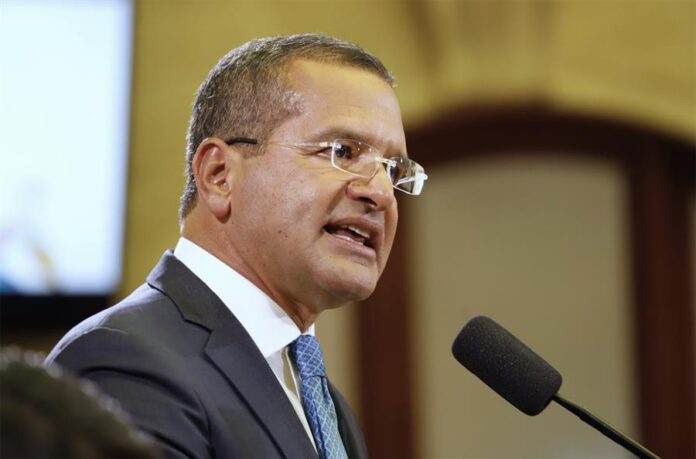
Fotografía de archivo del gobernador de Puerto Rico, Pedro Pierluisi. EFE/Thais Llorca

San Juan.- Walter y Eduardo Pierluisi Isern, primos del gobernador de Puerto Rico, Pedro Pierluisi, fueron condenados este martes a 43 y 24 meses de cárcel, respectivamente, por defraudar al Gobierno federal aproximadamente 3,7 millones de dólares (3,3 millones de euros al cambio de hoy)

La jueza federal Camille Vélez Rivé sentenció a Walter Pierluisi a 43 meses de prisión, dos años de libertad vigilada y al pago de más de 2 millones de dólares como restitución, informó la Fiscalía Federal en un comunicado.

Walter presidía la empresa American Management and Administration Corporation (AMAC), que tuvo contratos con la Administración de Vivienda Pública de la isla y a través de la cual se cometió el fraude.

Su hermano, Eduardo Pierluisi, fue condenado a cumplir 24 meses de prisión, dos años de libertad supervisada y al pago de 363.202 dólares.

La magistrada justificó que Eduardo jugó un rol «menor» en el esquema de fraude y, además, tomó en cuenta su situación médica, ya que le han diagnosticado cáncer.

Según los documentos judiciales, robaron dinero deliberada e intencionalmente de los programas de asistencia federal del Departamento de Vivienda y Desarrollo Urbano de los Estados Unidos (HUD, en inglés) entre 2014 y 2022 para su propio uso y el de otros.

Walter Pierluisi obtuvo aproximadamente 2.035.498 dólares en fondos del HUD que estaban destinados para gastos operacionales en los residenciales públicos, mientras que su hermano Eduardo se apropió de 363.202 dólares.

Los acusados, junto al exdirector de finanzas de AMAC, David Vélez Hernández, se declararon culpables en abril pasado de un cargo de robo de fondos de HUD para la administración de 34 proyectos de vivienda pública en Puerto Rico.

La sentencia contra Vélez Hernández se conocerá el próximo 28 de agosto.

«Las sentencias de hoy envían un mensaje claro de que en cualquier momento en que los dólares federales se utilicen indebidamente y sin importar quién robe el dinero de los contribuyentes, trabajaremos incansablemente para buscar justicia», subrayó el fiscal federal para Puerto Rico, Stephen Muldrow.

Por su parte, el gobernador aseguró en declaraciones escritas al medio Primera Hora que sus primos, que también fueron sus colaboradores políticos, «le fallaron al pueblo y a su familia, y ahora sufrirán las consecuencias».

En octubre de 2022, el FBI y otras agencias federales allanaron las oficinas centrales de AMAC y el bufete Pierluisi Isern Law Office en San Juan, ambos de Walter, así como la residencia de Eduardo.

Un mes después de esta intervención, la Administración de Vivienda Pública canceló los contratos con esa empresa.

Senado confirma a latina Rosie Hidalgo para dirigir oficina sobre violencia contra mujeres

Foto: Archivo EFE/EPA/Michael Reynolds

Washington.- El Senado de Estados Unidos confirmó este martes a Rosie Hidalgo como directora de la Oficina sobre Violencia Contra las Mujeres, la primera latina al frente de esa agencia en el Departamento de Justicia.

Hidalgo, con más de tres décadas de trabajo en el problema de la violencia doméstica, es actualmente asistente especial y consejera principal del presidente Joe Biden en el Consejo de Política de Géneros en la Casa Blanca.

Su designación fue confirmada con 51 votos en favor y 42 en contra.

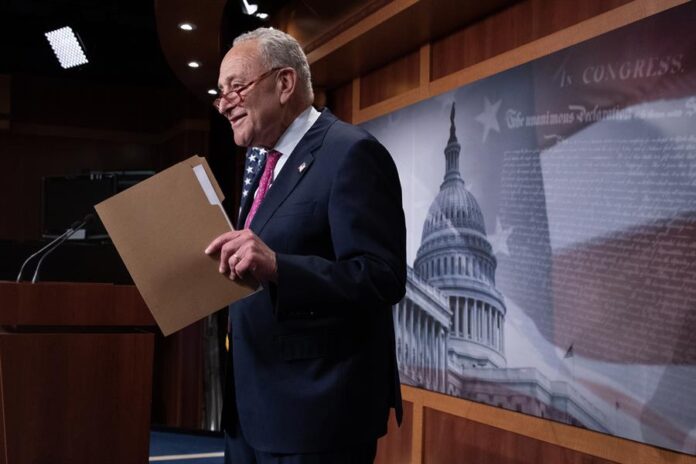
El líder de la mayoría del Senado, Chuck Schumer, dijo en declaraciones enviadas a EFE, que Hidalgo es «una gran líder en la lucha para acabar con la violencia de género».

«Me enorgullece haber liderado su confirmación como la primera directora latina de la Oficina de Violencia contra la Mujer”, agregó el senador demócrata.

Durante la Presidencia de Barack Obama (2009-2017), Hidalgo fue subdirectora para Política en la Oficina sobre Violencia contra las Mujeres del Departamento de Justicia.

Hidalgo, hija de inmigrantes cubanos, ha pasado 10 años de su vida adulta en tres diferentes países latinoamericanos, incluida una estancia en la República Dominicana entre 2002 y 2006.

En ese país Hidalgo ayudó en el establecimiento de una red comunitaria de prevención e intervención ante la violencia doméstica y trabajó como consultora del Banco Mundial sobre reformas en los servicios sociales.

«Hidalgo es una defensora firme de las víctimas y sobrevivientes, con décadas de experiencia en política pública», afirmó la Coalición Nacional contra la Violencia Doméstica (NCADV) cuando Hidalgo fue postulada para el nuevo cargo.

«Es querida por la comunidad defensora y conocida por su liderazgo, su visión y su humor», añadió el comunicado de NCADV.

Después de graduarse de la Escuela de Leyes en la Universidad de Nueva York, Hidalgo trabajó como abogada en Doors, un centro de servicios legales en el norte de Virginia, y entre 2006 y 2009 fue directora de la organización sin fines de lucro Alianza.

También ha sido directora de Política Pública en Esperanza, un centro de alcance nacional que se ocupa de la instrucción, la investigación y la promoción de políticas que respondan a la violencia de género en las comunidades latinas.

“Con su experiencia en defender a las víctimas de violencia doméstica y su compromiso con la justicia, ella será una líder sobresaliente”, afirmó el senador demócrata Bob Menéndez en un mensaje difundido en la red Twitter.

La confirmación de Hidalgo se dio horas después de que el Senado ratificara a la también latina Xochitl Torres Small como la primera persona latina al frente de la subsecretaría de Agricultura de Estados Unidos. Torres, de 38 años y origen mexicano, fue nominada en febrero por el Gobierno del presidente Joe Biden y fue confirmada con 84 votos en favor y ocho en contra.

Patrocinador ofrece 20.000 entradas gratis al Mundial de Mujeres en Nueva Zelanda

CJ Bott, de Nueva Zelanda, persigue un balón frente a Thi Thanh Nha Nguyen, de Vietnam en un partido de fogueo para el Mundial en Napier , el lunes 10 de julio de 2023 (Foto: AP/John Cowpland)

Un patrocinador está ofreciendo 20.000 entradas gratuitas a los partidos del Mundial femenino de fútbol en Nueva Zelanda, un país en que el rugby domina la escena deportiva y donde se han registrado bajas ventas de boletos.

De acuerdo con la FIFA, 1,25 millones de entradas se han vendido para los diferentes duelos en ambas sedes, Australia y Nueva Zelanda. De esa cifra de boletos, 320.000 se han vendido para los encuentros en Nueva Zelanda, pero en sólo seis de esos partidos el estadio estaría cerca de llenarse.

El jueves, la firma contable Xero, auspiciante del torneo, informó que ofrecería 5.000 entradas gratuitas para un partido en cada una de las cuatro subsedes dentro de Nueva Zelanda.

Dave Beeche, director general del Mundial de mujeres, dijo al New Zealand Herald que la FIFA se siente “cómoda” con el índice actual de venta de boletos en el país. Afirmó que las ventas se han elevado en las semanas recientes, ante una cobertura mayor del certamen.

“Naturalmente, hay algunos partidos que experimentan una mayor demanda, con las Kiwis y algunos de los equipos más destacados”, dijo Beeche, usando el mote de la selección neozelandesa. “”Pero estamos contentos con el progreso en general».

El mes pasado, Sarai Bareman, directora de fútbol femenino en la FIFA, externó algunas preocupaciones sobre el ritmo de la venta de las entradas en Nueva Zelanda, pese a que éstas en general han superado a las de Francia 2019.

Bareman dijo que las ventas en Australia han sido impulsadas por el apoyo a la selección local, que tiene aspiraciones legítimas al título. En cambio, las neozelandesas jamás han ganado un partido de la fase de grupos de un Mundial.

Un problema mayor reside en el hecho de que el fútbol no es en general un deporte tan visto en Nueva Zelanda. Y rara vez ha atraído a los aficionados hacia los estadios en los meses más fríos del año.

La selección nacional de rugby, conocida como los All Blacks, jugará ante Sudáfrica en Auckland el domingo, en un encuentro que podría haber llenado el estadio varias veces.

Casa Blanca anuncia estrategia para proteger a comunidades del calor extremo

ARCHIVO - Un niño bebe agua de una botella bajo un sol abrasador en Los Ángeles, California, el 30 de agosto de 2022.

La administración del presidente Joe Biden mencionó los récords de calor registrados en el país el pasado junio y calificó la situación de «alarmante», al tiempo que resaltó la necesidad de ayudar a las comunidades a «planificar, prepararse y recuperarse» de estos eventos extremos.

El gobierno de Estados Unidos anunció este martes una nueva estrategia para proteger a las comunidades del país, afectadas por la ola de calor extremo que afecta a gran parte del planeta, como resultado de la crisis climática.

«La situación es alarmante y requiere una respuesta de toda la sociedad para garantizar que las comunidades tengan el apoyo que necesitan para planificar, prepararse y recuperarse de estos eventos climáticos extremos, que le están costando miles de millones de dólares cada año a EE. UU.», indicó la Casa Blanca en un comunicado.

Como parte de la estrategia, la Administración Nacional Oceánica y Atmosférica (NOAA en inglés) establecerá dos centros de investigación virtuales para «ayudar a gestionar y mejorar la resiliencia al calor extremo».

Estos contarán con una inversión de 5 millones de dólares, como parte de un histórico paquete de leyes, aprobado por el Congreso de EE. UU. y firmado por el presidente en agosto pasado, que destinará unos 430 miles de millones de dólares en total para afrontar el reto del cambio climático.

Coordinados a través del Sistema Nacional Integrado de Información sobre la Salud del Calor (NIHHIS en inglés), estos centros ayudarán a brindar asistencia técnica e
información procesable y adaptada localmente, útil para que «comunidades históricamente marginadas y desatendidas» puedan prepararse mejor para olas de calor extremo.

Además, la administración de presidente Joe Biden desarrollará una Estrategia Nacional de Calor centrada en la «equidad y justicia ambiental», alineada con su estrategia de Desafío Regional de Resiliencia Climática, anunciada el pasado junio, por la que destinará unos 575 millones de dólares para auxiliar a comunidades vulnerables.

Por último, la Casa Blanca convocó a líderes, activistas climáticos y legisladores a participar en la venidera Cumbre sobre Resiliencia Climática y Sostenibilidad en Vivienda Asequible, que se centrará en la reducción del impacto del calor extremo y otros fenómenos del cambio climático en comunidades estadounidenses de bajos ingresos.

De acuerdo con los Centros para el Control y la Prevención de Enfermedades en EE. UU. (CDC en inglés), el agotamiento o la insolación, entre otras enfermedades relacionadas con el calor, ocurren cuando el cuerpo no puede enfriarse adecuadamente.

Advierten que los efectos de un golpe de calor pueden sufrirse sin estar expuestos directamente al sol y señalan que la humedad, especialmente en lugar sin acceso a aires acondicionados, también pueden causar padecimientos.