On Easter Sunday morning, as NASA astronauts aboard Artemis II orbited more than 200,000 miles above Earth, crew member Victor Glover looked back at the planet and offered a reminder of our shared humanity: “We are one people, sharing one world, and we have to get through this together.”
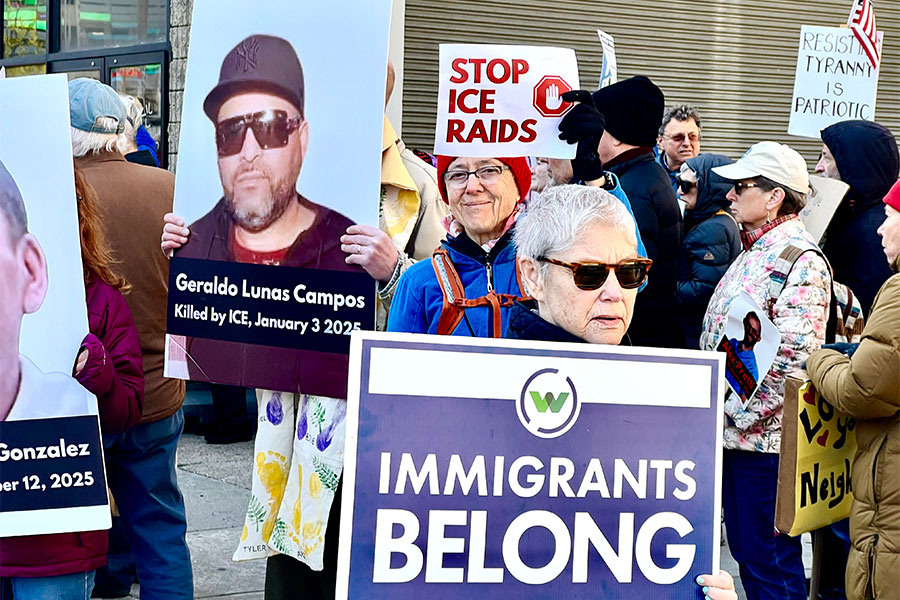
The very next day, on a Center City sidewalk in Philadelphia, a circle of interfaith clergy gathered to make a similar plea — not from outer space, but from the concrete corner of 8th and Cherry Streets, directly outside the Philadelphia ICE Field Office at 114 N. 8th Street. “This weekly gathering is a public witness for those suffering under ICE brutality,” State Sen. Art Haywood said. “We have been showing up every Monday morning at 11 a.m. for 26 consecutive weeks, and we will be here again next Monday — and every Monday after that — until the brutality ends. Everyone is invited.”
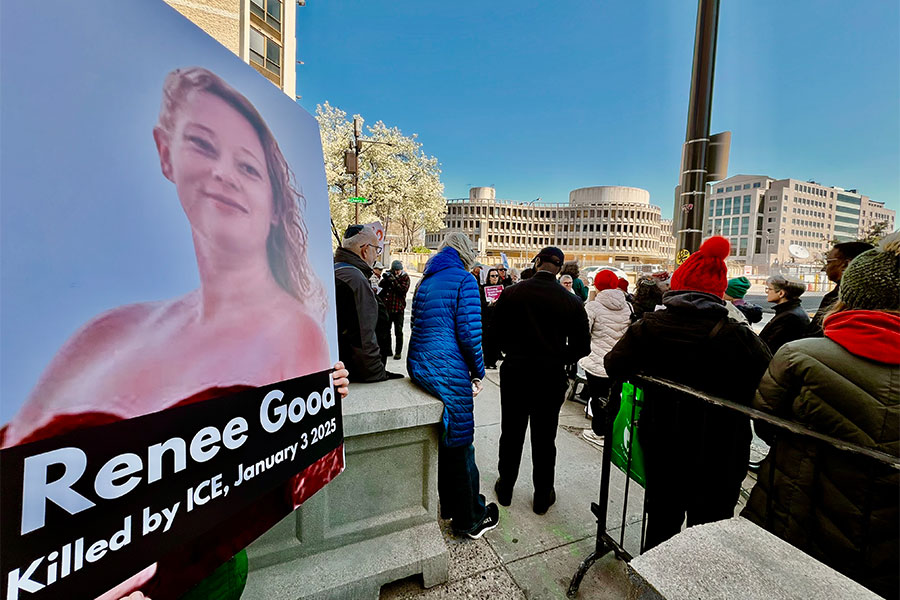
April 6, marked the group’s observance of both Passover and Good Friday. The weather was cool and sunny. Foot traffic moved steadily along the busy block. There, gathered in faithful solidarity, stood Christian ministers, Jewish rabbis, and Muslim imams — hand in hand, shoulder to shoulder, their voices rising together in song. ICE agents walked past without incident, in contrast to March 30, when 10 clergy members involved in the weekly witness were detained or cited after blocking an ICE garage entrance. Monday’s vigil was peaceful but purposeful: an interfaith act of quiet resistance against what participants described as the morally reprehensible harms of current immigration enforcement.
The weekly gatherings have drawn a broad coalition of faith communities united by a shared conviction: that immigration enforcement, as it is currently carried out, constitutes a moral crisis that demands a moral response. Haywood, one of the group’s most visible leaders, took part in every aspect of Monday’s service. “This is our 26th week being here at the field office,” he told the crowd. “The brutality must end. The deaths in detention must end. We call on ICE agents to return to their humanity and fulfill their call to conscience.” He then invoked the story of Moses, drawing a parallel between today’s immigration policies and Pharaoh’s oppression in the Book of Exodus. “Let my people go!” he called out. The clergy and community members echoed him, repeating the phrase in a chant that rose from the sidewalk and carried through the street: “Let my people go!”
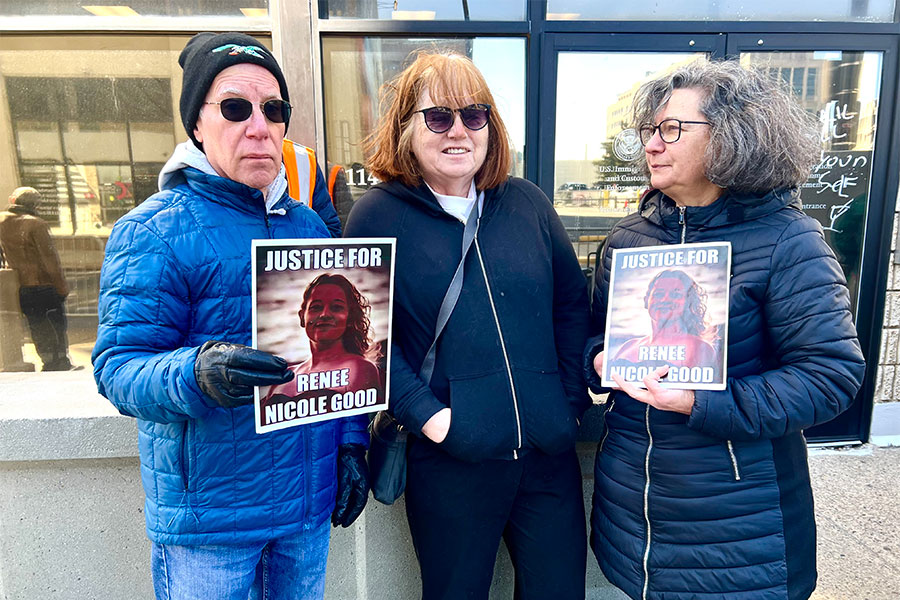
They have stood in the cold and the rain. They have returned again and again because they believe conscience must be embodied — that faith without presence is just words.
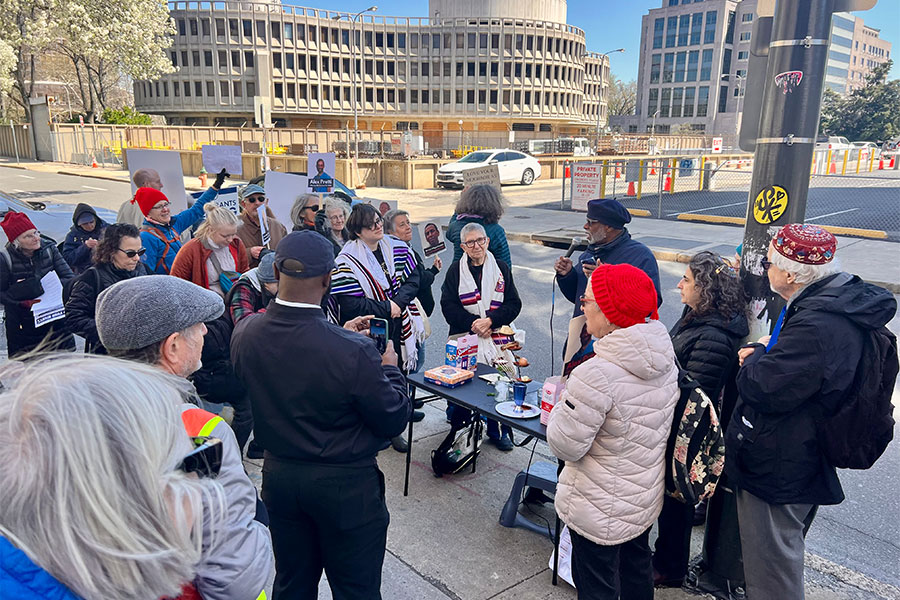
Songs were sung about welcoming the stranger and tending to those in distress. Ancient words took on new urgency in the mouths of people who meant every syllable. Group leaders said anyone can attend. The gatherings are peaceful and open to all, whether or not they belong to a faith community. Even ICE agents have been invited into the circle, though none have accepted.
For 26 weeks and counting, Philadelphia clergy and their allies have returned to that stretch of Center City sidewalk believing that public faith means showing up — again and again — where suffering is hardest to ignore.