


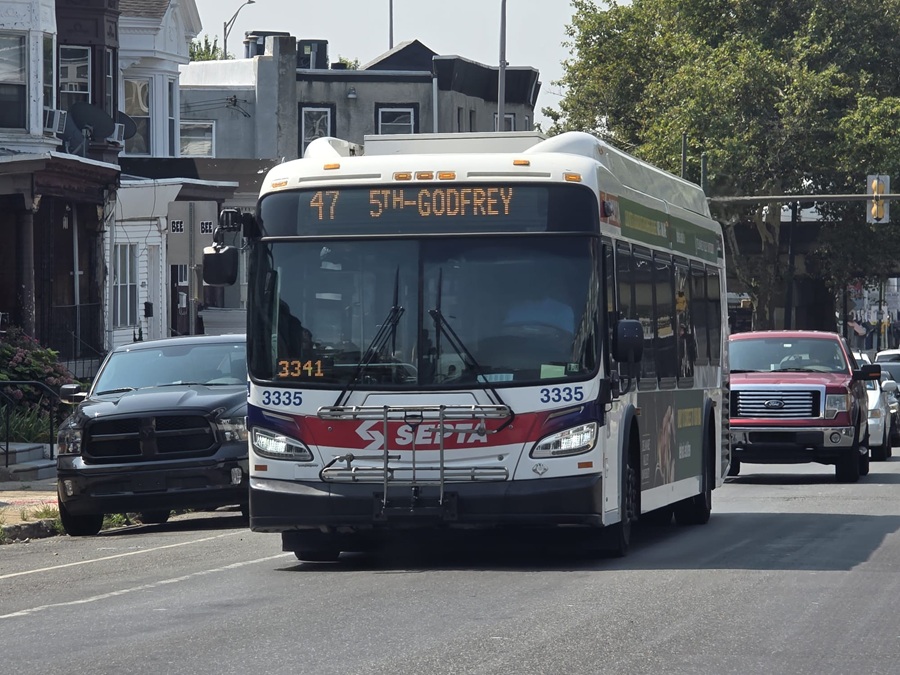
PHILADELPHIA — SEPTA unveiled a proposed $2.7 billion budget for Fiscal Year 2027 on Thursday that would maintain current fares and service levels while continuing investments in safety, reliability and customer improvements.
The proposal includes a $1.84 billion operating budget and a $920.7 million capital budget, representing an increase of just 1.9% over the current fiscal year.
SEPTA officials said the plan does not include fare increases or service cuts, but warned that the transit agency’s long-term future remains uncertain without a permanent funding solution from the state. The proposal relies on the second and final year of a $394 million capital fund transfer approved by the Pennsylvania Department of Transportation to help support operations.
“By using the resources we receive even more efficiently, we continue to do more with less and reinforce our commitment to being good stewards of taxpayer dollars,” SEPTA General Manager Scott A. Sauer said in a statement.
Sauer said stable, dedicated funding would allow SEPTA to continue modernizing the system and supporting southeastern Pennsylvania’s economy and communities.
SEPTA said ongoing austerity measures, along with additional revenue from advertising, parking and investments, have generated nearly $30 million in annual savings. Those efforts reduced the agency’s structural budget deficit from $213 million to $192 million.
The agency said it has made progress in safety, cleanliness, reliability and ridership recovery during the past year, despite financial challenges. SEPTA is also moving forward with several projects designed to improve the rider experience, including its New Bus Network initiative, the purchase of new buses and the installation of additional full-length fare gates.
The proposed $920.7 million capital budget is part of SEPTA’s larger 12-year, $16.3 billion capital program.
Of that amount, SEPTA plans to dedicate $7.7 billion to replacing aging trolley cars, Market-Frankford Line trains and Regional Rail cars. The agency also expects to restart replacement of its bus fleet in Fiscal Year 2027 as a result of the reduced structural deficit.
However, SEPTA acknowledged that its long-term capital plan depends heavily on borrowing. The agency expects to borrow $4.3 billion over the next 12 years to pay for critical railcar replacements.
Even with that borrowing, SEPTA said it does not have enough funding to fully replace the Broad Street Line trains, many of which are approaching 50 years in service.
At the same time, SEPTA’s backlog of deferred repairs has doubled over the last decade to $10.2 billion. Officials said the growing maintenance needs threaten system reliability and could increase repair costs in the future.
SEPTA also noted that its capital budget remains significantly lower than those of comparable transit agencies around the country.
Public hearings on the operating budget will take place May 11 at 11 a.m. and 7 p.m., and May 12 at 10 a.m. and 4 p.m. Hearings on the capital budget are scheduled for May 13 at 11 a.m. and 7 p.m.
All hearings will be held both in person at SEPTA headquarters and virtually through WebEx.
The SEPTA Board is expected to consider the proposed budgets during its June meeting. If approved, the new budget would take effect July 1, the start of Fiscal Year 2027.