

Before the arguments began — before the placards were raised, the microphones tested, and the overflow rooms filled beyond capacity — there was singing. The young cadets of the Maritime Academy Charter School Sea Shanty Chorus stood near the entrance of the meeting on the afternoon of February 26 and filled the room with their voices. Children — clear-eyed, earnest, dressed neatly in matching blue and white sailor suits. They were unaware of the full weight of what the adults in that room were about to decide. Their song rose above the noise of the crowd. It carried the innocence of students who still believe that the people in charge will do right by them. It was the most powerful moment of the night, which hadn’t even begun.
What followed was hours of testimony, tears, pointed accusations, and raw grief dressed up as public comment. The Board of Education convened to hear a presentation on Accelerating Opportunity: The School District of Philadelphia Facilities Master Plan — a sweeping $2.8 billion proposal to modernize 159 school buildings, co-locate programs in others, and close 18 campuses beginning in 2027–28. The plan covers all 307 district facilities and represents the most significant reimagining of Philadelphia’s public-school landscape in a generation.
The room told its own story before a single word was spoken. Bright T-shirts moved through the crowd like a field of flags — yellow for Lankenau, blue for Welsh, red for Moffet. Each color represented a school. Each school represented a community. Each community represented families who had driven, walked, and taken buses to this building to deliver one message: not without us.
Superintendent Dr. Tony B. Watlington Sr. opened with a question. «How do we give our children the best shot at life?» He was not asking rhetorically. «How do we drive faster academic performance in the nation’s sixth-largest city? This plan is our blueprint, our north star, it’s our roadmap. I want to center the children in our city.» He added that joy and wellness are not footnotes to his vision — they are foundational to it. «One of our core values in our plan is joy for the school students and work around wellness policies.»
He spoke of progress: buildings rebuilt, playgrounds installed, hydration stations in every school. He spoke of 85 buildings still rated unsatisfactory or poor, and a district with more seats than students. What the plan does not speak to — at least not directly — is how those buildings got that way. Philadelphia’s schools did not crumble on their own. In 2011 and 2012, the state cut $287 million from the district’s budget. Federal stimulus dollars evaporated. In 2013, 24 schools closed. More than 10,000 students — most of them Black, most of them low-income — were displaced. A Pennsylvania appellate court ruled the state’s funding formula unconstitutional in 2023. New dollars have followed — slowly. The damage is layered and still visible in every cracked ceiling and broken boiler on the closure list.
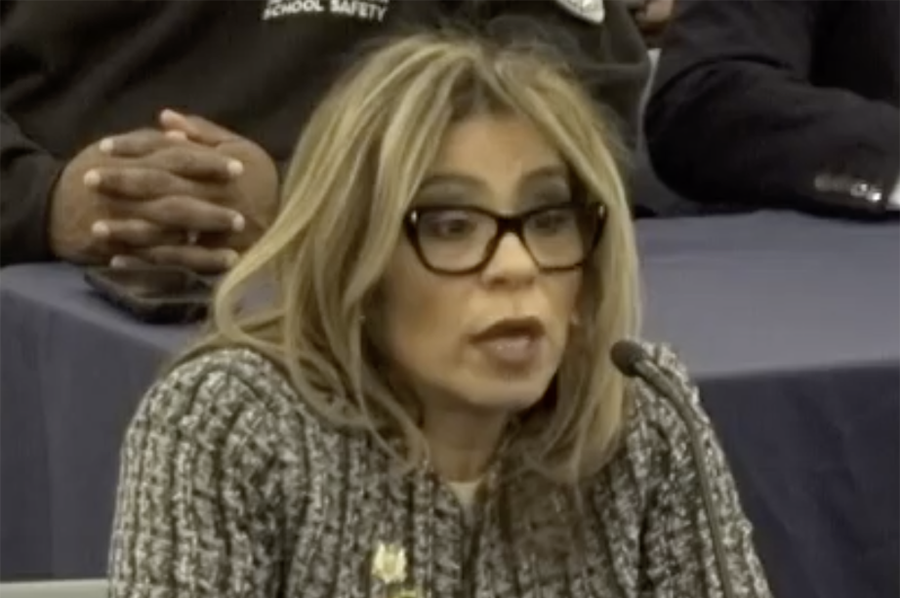
Board members had an opportunity to respond to the proposal. Wanda Novalés, Vice President of the Board of Education, did not mince words. She acknowledged the superintendent’s work. She appreciated the plan’s scope and complexity. But she had spent time in the community. She had listened. And what she heard could not be set aside. «This conversation cannot just be about buildings,» Novalés said. «The standard cannot just be operational efficiency.» She named what others had only implied. These neighborhoods have been under-resourced — not by accident, but by design. Doing nothing, she said plainly, is not leadership. And of Stetson: the students there have borne the cost of the district’s historical neglect. That is not a metaphor. It is a fact.
Several elected officials came to testify. City Councilwoman Quetcy Lozada opened by thanking every parent and teacher who had shown up. Then she leveled her gaze. «Teachers, parents, and students — the general public — all feel excluded from this conversation,» she said. «We are talking about our children, not numbers, not data.» She questioned the data driving closure decisions, noting that buildings in worse condition had been left off the list entirely. She named schools that deserved investment, not abandonment: Moffet, Welsh, and Harding Elementary. And she declared that Stetson posed a health safety risk to anyone in the building. «The conditions are deplorable. Invest in Stetson now! I urge the school district to slow down — slow down — and visit every school.»
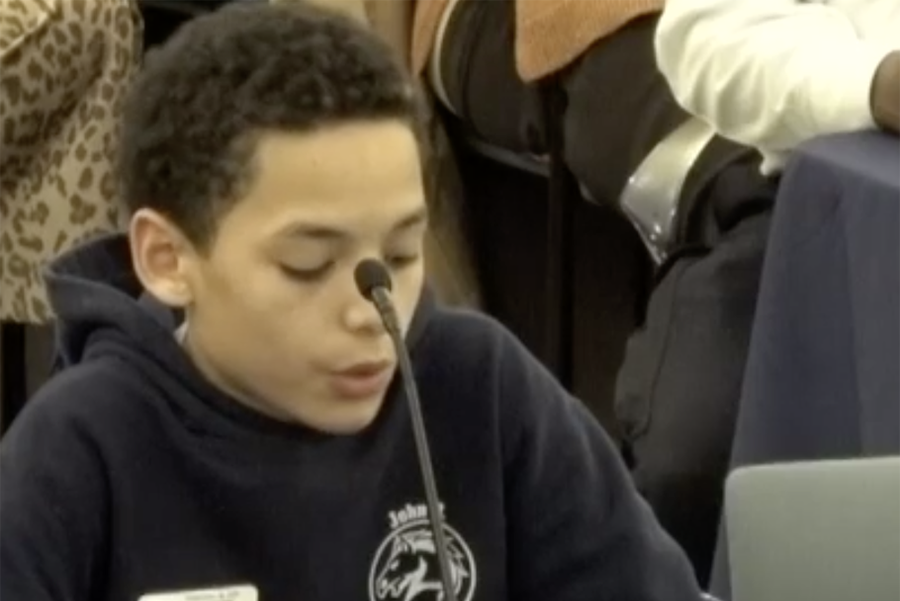
When Alejandro Alvarado, a student at John B. Stetson Middle School, approached the podium with the composure of someone who has been carrying a truth for too long, he echoed the sentiments of City Councilwoman Quetzy Lozada. «It isn’t fair to close our school after 12 separate calls to make repairs — especially to our roof,» he said. «Don’t punish students for issues that we did not cause.» He spoke for every child sitting inside a building that had been promised repairs but was handed neglect instead.
City Councilwoman Jamie Gauthier arrived with sincere disenchantment with the proposal and the past lack of care for these schools. «I don’t have words to describe how disappointed I am with the proposal presented today,» she told the board. «The plan sucks resources out of the West and the Southwest. It significantly disadvantages Brown and Black students. Ninety percent of those impacted by this plan are Black or Latino. This is not a solution, and could cause irreparable harm.»
State Senator Anthony Hardy Williams arrived with a guest — a mother, and a 93-year-old retired Philadelphia public school teacher, whose quiet presence spoke before she said a word. Williams became emotional at the podium. He told the board he was the last surviving member of his childhood circle of school friends. He said he owed it to his father, his mother, and the teachers who shaped him to stand in that room and speak. The chamber went still.
During open public comment, one mother refused to stop speaking when her time expired. She had more to say, and she said it. When staff asked her firmly to step away from the microphone, the room erupted. «Let her speak!» The shout came from everywhere at once — the overflow rooms, the back rows, the hallway. It was not chaos. It was clarity. These parents had not come to be managed. They had come to be heard.
A public town hall is scheduled for March 12, where 90 registered speakers — prioritizing those from affected schools — will be heard. The full plan is available at philasd.org/fpp.
The complete February 26 board meeting, which lasted more than 8 hours, is available to watch online here.
At the close of the meeting, no vote was taken on Accelerating Opportunity: The School District of Philadelphia Facilities Master Plan. No decision was reached.