

Following weeks of unrest and heightened federal immigration enforcement, the deployment of the National Guard to Minneapolis, Minnesota, and the possibility of active-duty U.S. Army troops being deployed to the city, have raised deep concerns, particularly among Hispanic and immigrant communities who say they are already living under intense stress.
One of the families I spoke to told me that they feel they are not in the United States, but rather in a military dictatorship like the ones they escaped. Francis and her mother, Teresa, live in Minneapolis, close to where Renee Nicole Good was killed; they are second-generation U.S. citizens, Philadelphia transplants who have adopted their new home because of the peaceful spirit of the communities they live in.
I checked in on them this week to see if they were feeling safe. Francis is married to Miguel, a U.S. resident and Mexican national, and they just had a baby girl.” My family members are legally here, but are also all people of color, I am afraid, and I just stay home all the time with the baby,” she said.
Miguel, her husband, goes to work, but often has to stay with other workers at the warehouse site because the workers are afraid to travel home after work hours.
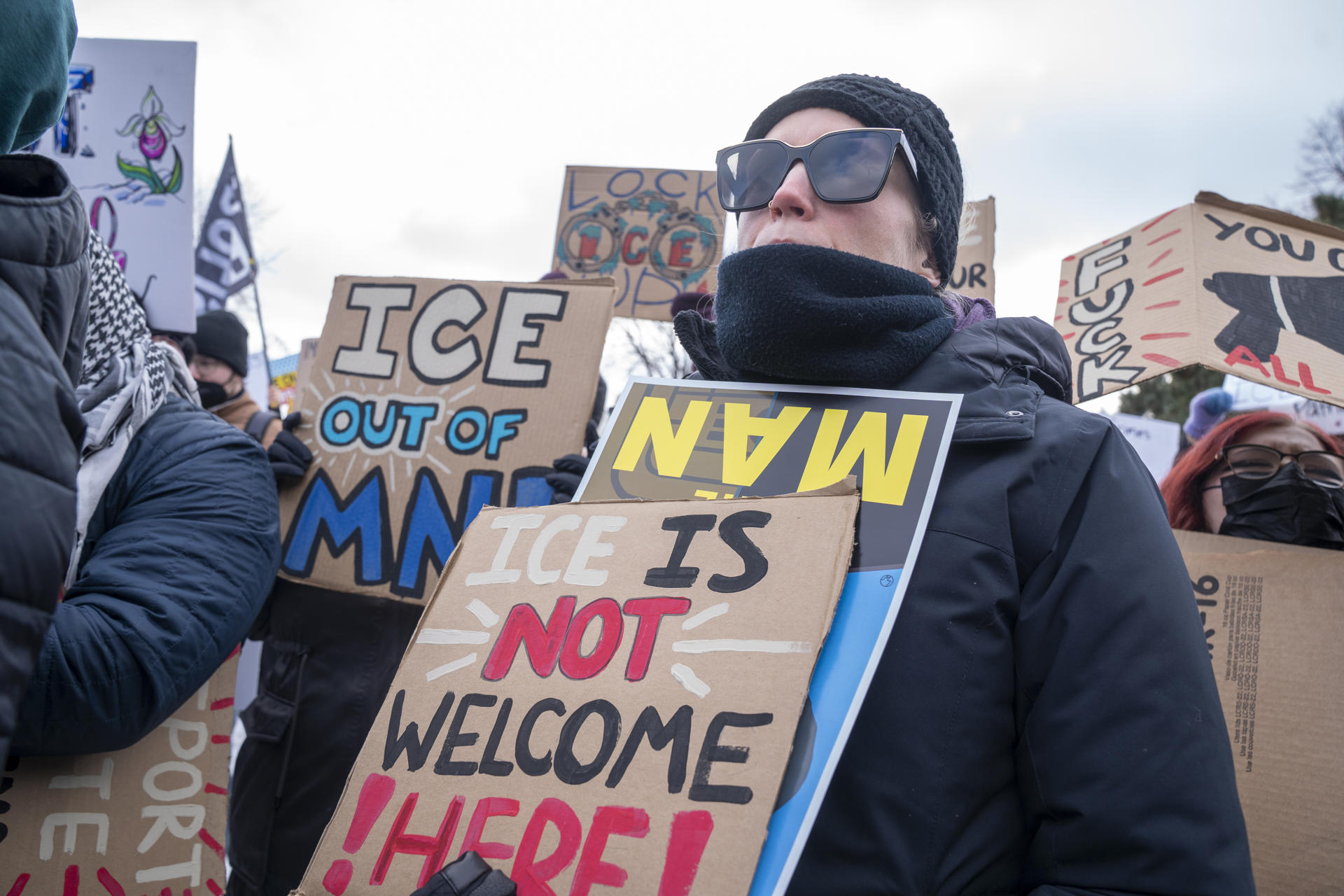
Community advocates say the presence of ICE federal agents, combined with talk of military escalation, sends a powerful and troubling message.
For immigrants, lawful residents, and U.S. citizens, the visibility of armed ICE agents reinforces a perception that their neighborhoods are being treated as security threats rather than communities deserving protection.
Small business owners in predominantly Hispanic areas report less foot traffic as customers stay home in fear. Parents cannot send their children to school, and schools have closed. Workers in construction, food service, and transportation sectors say even routine commutes feel risky.
These disruptions are affecting local economies and social stability. Civil rights groups also warn of a broader chilling effect. When people fear surveillance or retaliation, they are less likely to protest, report abuses, or engage with local governments. The result is a quiet erosion of civic participation — one that disproportionately affects communities already marginalized by immigration policy and negative political rhetoric.
State and city officials in Minnesota have publicly challenged the federal government’s approach, arguing that escalating enforcement through military presence will only deepen divisions and inflame tensions.
Lawsuits and investigations have followed, underscoring the divisions between state and federal authorities. For Hispanic communities watching this unfold, the concern goes beyond legal theory.
It is about safety, dignity, and whether constitutional limits will truly protect those who feel most. “For now”, said Francis, “ I am trying to work online at home to help out with the rising costs of food, healthcare costs, and our basic needs. I can’t go back to my job in this environment. I am worried and praying for a better future for our daughter.