


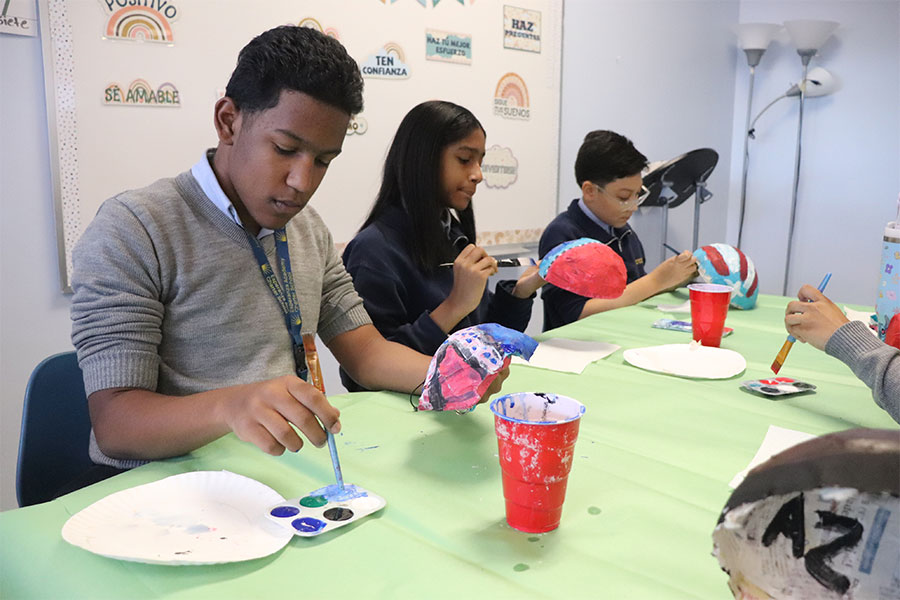
«What does your Vejigante mask represent?» For Hispanic Heritage Month, Jackeline Rodriguez’s 7th-grade Spanish class at Esperanza Academy explored their roots through learning about and creating their own Vejigante masks, an art form worn by the traditional folkloric character found at Puerto Rican festivals. Many of her students painted flags or other symbols tied to their heritage on their papier-mâché creations. For Ms. Rodriguez, the Vejigante represents culture – a blend of traditions.
Though the Vejigantes are unique to Puerto Rico, similar sinister characters known by different names appear in pre-Lent traditions across the Caribbean and Latin America, such as the Diablo Cojuelo of the Dominican Republic and the Diablicos of Panamá. Their titles and features are uniquely shaped by the cultural influences and historical events of each particular country, region, or city that celebrates them. Evidence of their shared roots, these characters generally play out historical themes of good versus evil, colonizers versus the people they oppressed, and imperialism versus resistance. Many have evolved over time to represent a more mischievous character who playfully antagonizes festival-goers.
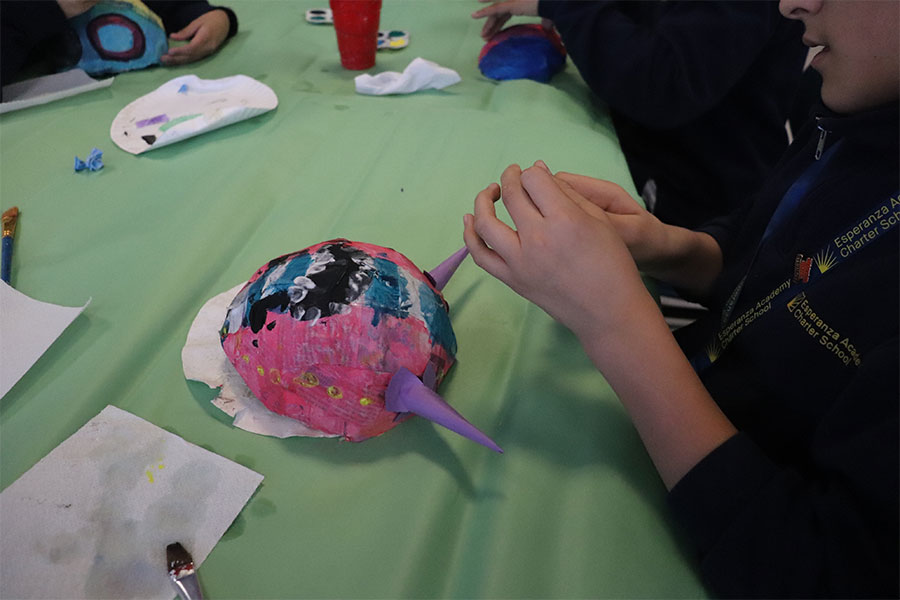
Vejigantes have always been a key symbol of Puerto Rican culture and identity, often adorning the walls of Puerto Rican homes, and have recently been re-popularized through their appearance in Bad Bunny’s “LA MuDANZA” music video and Rauw Alejandro’s Cosa Nuestra tour performance. Today, influenced to varying degrees by Spanish, African, and Taíno cultures, the two main styles of Puerto Rican Vejigante masks come from Ponce, made of papier-mâché, and from Loíza, made from coconuts and other natural materials. Over time, the art of creating masks has been left to elders but with new musical artists reviving interest and teachers’ thoughtful planning, students in the diaspora are reviving interest and continuing the tradition.
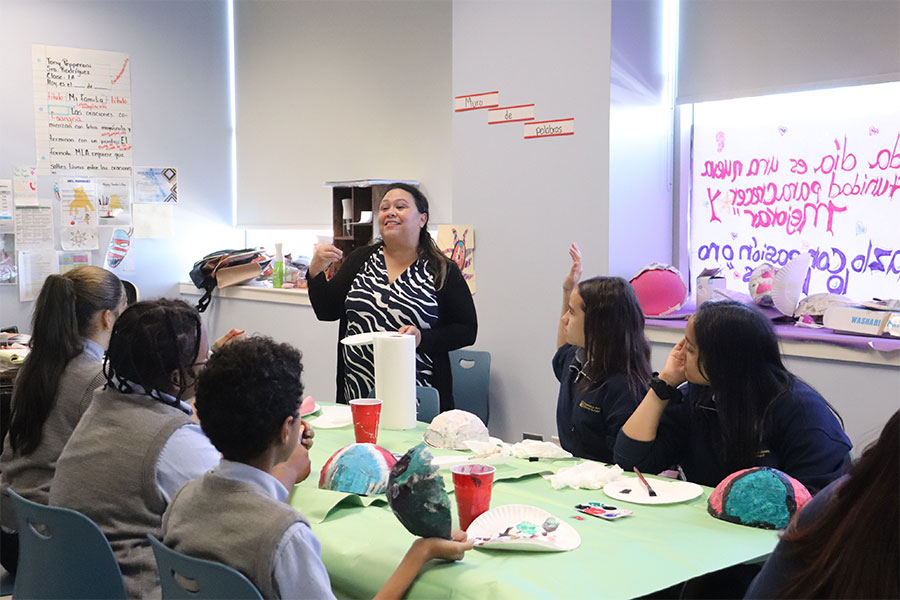
Though this project is for the students, it also has personal significance for Ms. Rodriguez, who moved to the U.S. mainland from Puerto Rico when she was 11. “My mom decided that she was gonna come live with her sister. I found that when you move to the U.S., you kind of lose your roots. They fade away. Although we spoke Spanish in the house and everything was the same, it wasn’t. Because you go to another school, you have other friends, you speak another language. When I started Esperanza, I started re-connecting with my roots. So in a way, I connected with my roots through this craft, through the creation of the masks.”
Just like the masks themselves are a product of different places and cultures, Esperanza Academy’s students also represent a tapestry of different homelands and heritages. Ms. Rodriguez shared what she wants her class to learn through this experience: “I want them to understand: I am who I am because of this. Because of this history, because of this blend. I want them to understand the history of the Vejigantes and the meaning behind the masks. To realize that art speaks louder than words. I want them to develop empathy and respect for diversity and culture; I want them to feel pride for their cultural heritage and love their culture now and throughout their lives. I want them to love and accept themselves for who they are because they are beautiful and they have a beautiful background.” And now, through papier-mâché, her students can see more clearly the beautiful mestizaje of cultures and traditions that have shaped them.
To learn more, check out The Vejigante & the Folk Festivals of Puerto Rico by Edwin Fontanez or Vejigante Masquerader by Lulu Delacre.