


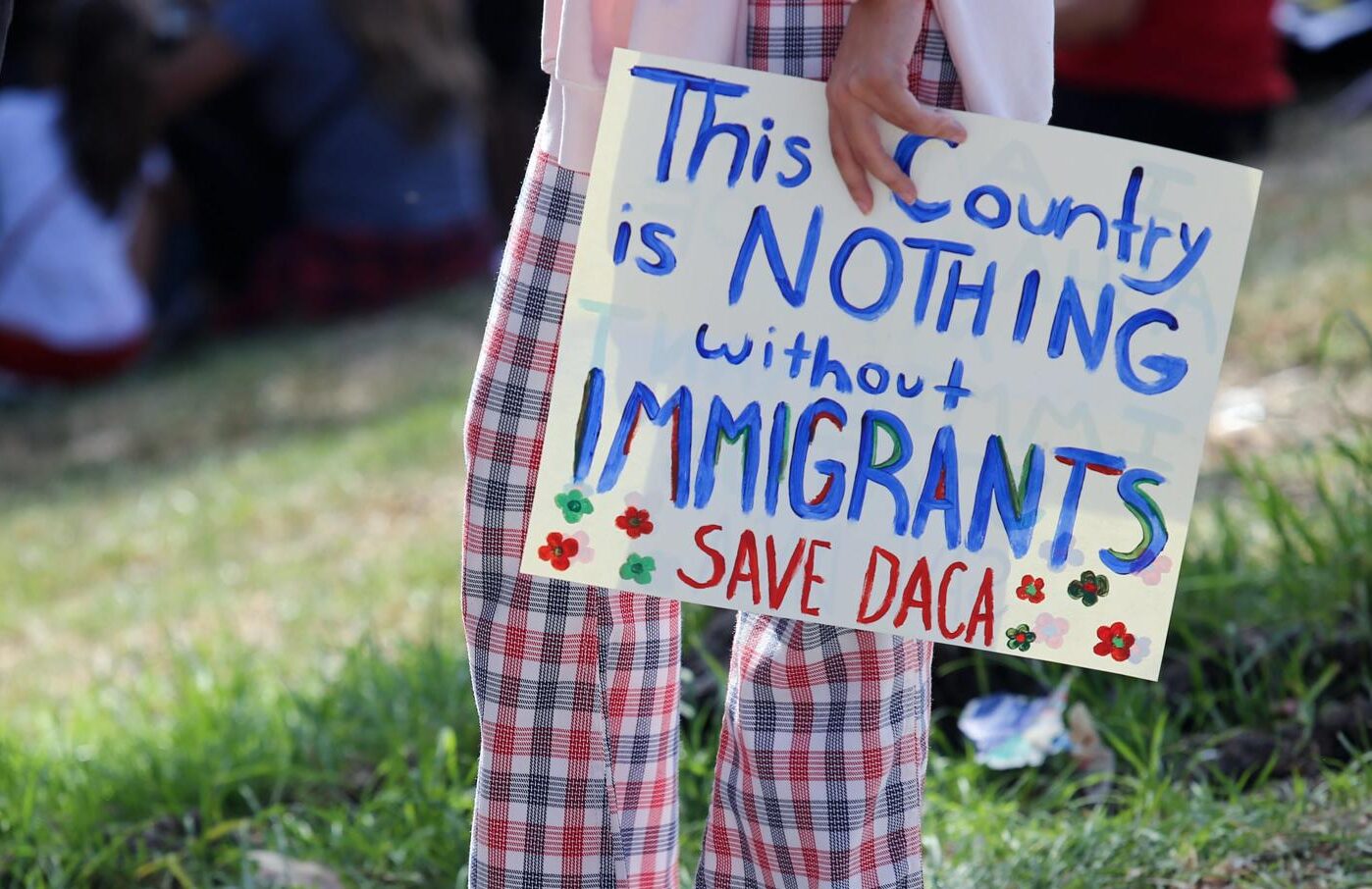
Without the explicit terror seen in other parts of the world where “ethnic cleansing” is carried out, millions of people are already leaving the United States, not because of war, but out of fear. Fear of being detained because of their appearance, interrogated for speaking Spanish, or treated as suspects simply for existing as Latinos.
At a time when anti-immigrant and anti-Hispanic sentiment is intensifying in several states across the country—where just “looking Latino” can be enough to be stopped or questioned about immigration status—other regions are taking meaningful steps toward inclusion and recognition.
More than a million immigrants and their children, many of whom are already U.S. citizens, have chosen to leave hostile states due to constant fear, discrimination, and lack of protection. This internal migration is having profound economic effects, not only in the regions losing active populations but across the entire country. The economy is feeling the strain, and the repercussions are widespread.
Since January 2025, under Donald Trump’s second term, approximately 400,000 people have been deported. In addition, 1.6 million undocumented immigrants have voluntarily left the country in response to increasingly harsh immigration policies. In total, 2 million people have left the U.S. in less than a year. This figure reflects not only the impact of raids and detentions but also the widespread fear that has taken hold in many Latino communities.
Yet amid this troubling landscape, there are signs of hope. The state of New Jersey has taken a historic step by passing a law requiring public schools to teach the history and contributions of Latinos as part of the Social Studies curriculum, from elementary through high school. This measure, signed by Governor Phil Murphy, aims to solidify the legacy of Latino and Hispanic communities in the state.
Senator Teresa Ruiz, one of the bill’s authors, emphasized that 87% of key topics in Latino history are either absent or minimized in textbooks. This invisibility has left a deep void in the national narrative. “Our children deserve to see that history accurately reflected and Latinos represented in exceptional spaces,” Ruiz stated.
This new curriculum, set to take effect in the 2026–2027 school year, not only acknowledges the role Latinos have played in building the United States, but also affirms their presence in all areas—from the arts and sciences to public service and the economy.
At Impacto, we remain committed to amplifying the voices of those who are often unheard. Sadly, the current climate has created a pervasive fear that prevents many from speaking freely, as they worry about retaliation or backlash in an increasingly polarized environment. We’ve observed with concern how, even at public demonstrations, people are more hesitant to be photographed, covering their faces with masks to avoid being identified.
However, we cannot succumb to silence. Fear must not drown out truth. This is a time to speak out and bear witness—because history demands it.
That’s why we’ve created a new section called “La Pajarita”, a safe space where anyone can send us their reflections, reports, or testimonies without needing to reveal their identity. We want this to be a channel for free, courageous, and necessary expression.
While some sectors continue to resist Latino growth and visibility, others celebrate their contributions and work toward a more inclusive future. The question we must ask ourselves as a community is both urgent and profound:
What are we doing to defend our worth in the face of a movement that seems to be encouraging a kind of silent ethnic cleansing?