


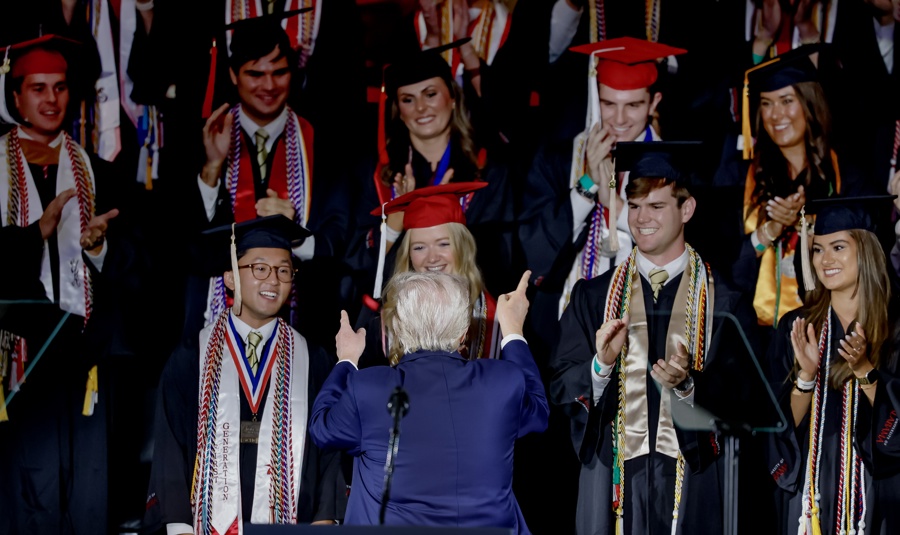
International Desk.- Educational attainment across developed countries has reached “an all-time high,” with nearly half of young adults now holding a university degree, the Organisation for Economic Co-operation and Development (OECD) said Tuesday.
“Educational attainment is at an all-time high, with around half (48 percent) of young adults in OECD countries now completing tertiary education, up from just 27 percent in 2000,” the organization said in its annual report, Education at a Glance 2025.
“These graduates tend to enjoy higher earnings, more stable employment and better health,” it added.
Women continue to outpace men in higher education. Some 55 percent of women in the 25–34 age group now hold a university degree, compared with 42 percent of men, a gender gap that has widened slightly since 2019.
Women are also more likely to graduate on time as 75 percent finish their studies within the scheduled period or within three extra years, versus 63 percent of men.
Completion rates overall remain modest. Across 32 OECD and partner countries, only 43 percent of university students graduate on schedule, though 70 percent finish within three additional years. Dropouts are often tied to unmet expectations, academic challenges, and financial obstacles, particularly the lack of scholarships for disadvantaged students.
Students whose parents hold a university degree are 70 percent likely to graduate, compared with just 26 percent among those whose parents do not.
While the share of adults without secondary education has dropped from 15 percent in 2019 to 13 percent in 2024, large gaps remain in countries including Brazil, China, Costa Rica, India, Indonesia, Mexico, Portugal, South Africa, and Turkey.
In Costa Rica, India, Indonesia, Mexico, Peru, and South Africa, more than one-third of people aged 25 to 34 have not completed upper secondary school.
The payoff for graduates remains significant. On average, those with a university degree earn 54 percent more than adults with only secondary education, while the earnings gap rises to over 83 percent for master’s or doctoral graduates.
However, challenges persist as 13 percent of university graduates in 29 countries failed to meet minimum literacy standards in 2023.
In Latin America, spending levels remain particularly low. Peru and Mexico invest roughly $2,600 and $4,000 per primary school student respectively, far below the OECD average of $12,438.