


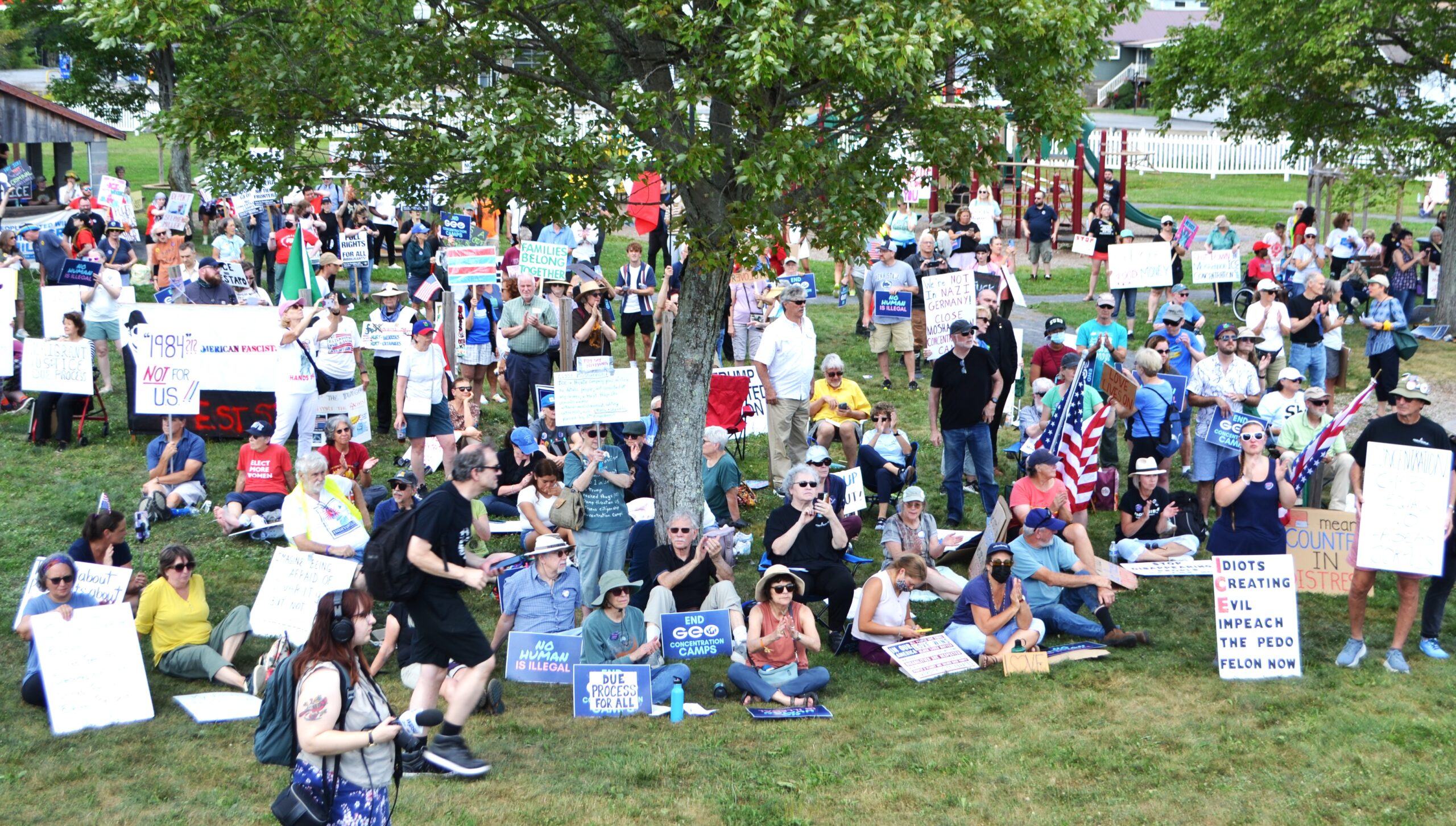
Activists from across Pennsylvania denounce inhumane conditions and urge officials not to renew ICE and GEO Group contracts
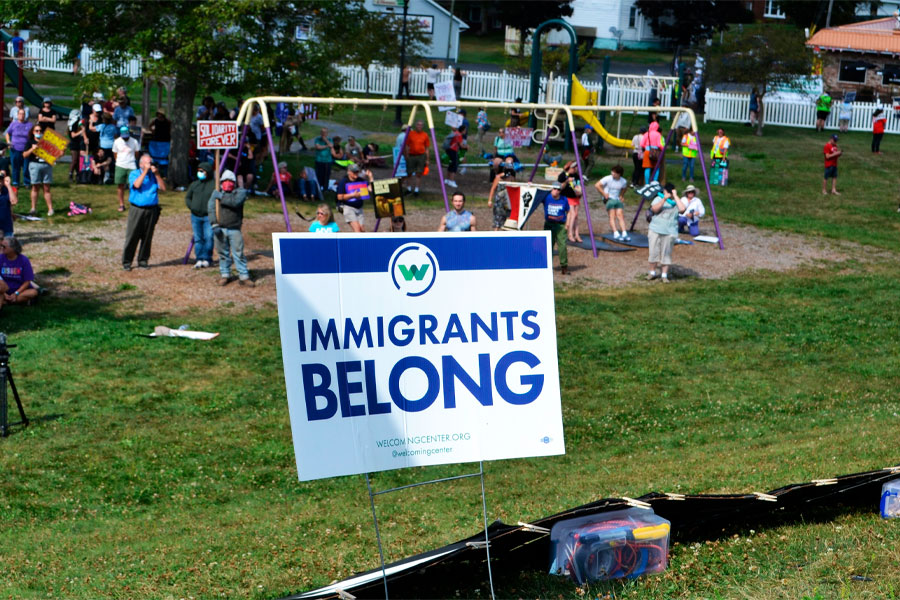
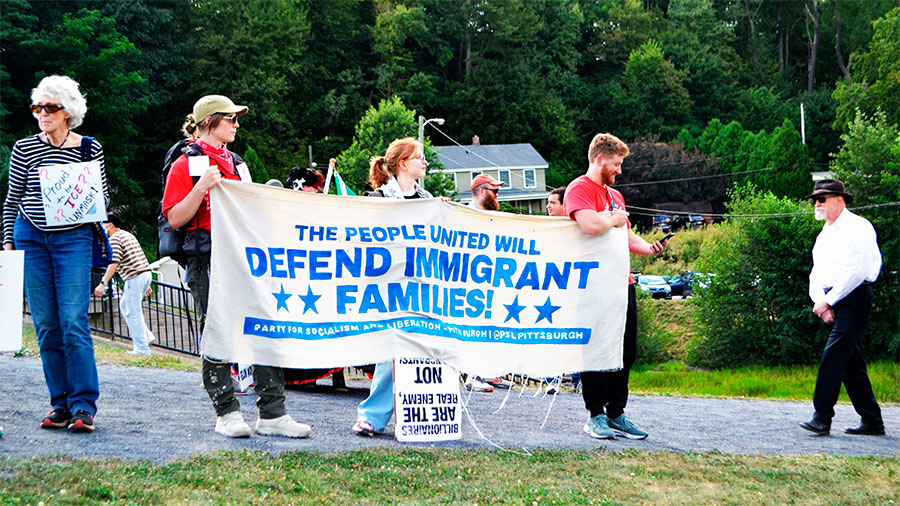
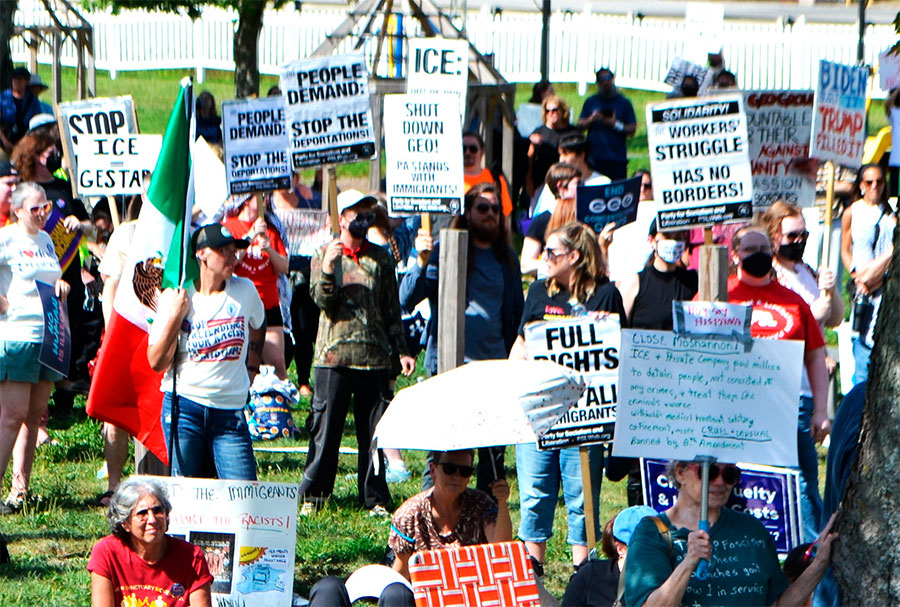
Philipsburg, PA — Nearly 500 activists from Central Pennsylvania, Pittsburgh, and Philadelphia gathered on August 24 at Philipsburg Memorial Park and Cold Stream Dam to demand the closure of the Moshannon Valley Processing Center (MVPC), the largest federal detention facility in Pennsylvania and the northeastern United States.
Organized by Pittsburgh Women for Democracy, Indivisible, and other human rights and immigrant advocacy groups, the protest also called on Clearfield County commissioners not to renew the facility’s contract with U.S. Immigration and Customs Enforcement (ICE) and the Florida-based for-profit company GEO Group in 2026.
Megan Guidi, founder of Pittsburgh Women for Democracy, stated:
“More than 15 days in solitary confinement is considered torture by United Nations experts. Yet a 2024 study by Physicians for Human Rights shows the average in ICE detention is 27 days.”
She added that, according to ICE’s own data, no other facility uses solitary confinement as frequently as MVPC:
“As of this spring, 147 detainees were held in solitary confinement each month.”
Protesters also demanded the release of those currently detained at MVPC without transferring them to other ICE facilities, and called for the closure of similar centers in Elizabeth, Pike, Clinton, Erie, and Delaney Hall—regionally and nationwide. Organizers urged members of Congress to use their authority to enter MVPC and witness the conditions firsthand.
Voices of Outrage and Solidarity
Philipsburg Councilmember Luther Gette emphasized the public’s responsibility to speak out against injustice, echoing recent demands from the American Civil Liberties Union (ACLU).
Rabbi Linda Holzman of the New Sanctuary Movement highlighted the death of Chaofeng Ge, a 32-year-old Chinese national, earlier this month at MVPC. His death marks the second since the facility began operating in September 2021.
State Representative Christopher Rabb of Philadelphia’s 200th District delivered a powerful message:
“Seeking safety is not a crime and should never result in a death sentence. This is not a processing center—it’s a prison profiting from human suffering. Shutting it down is not radical. What’s truly radical is normalizing cruelty and dehumanization. Every detainee has a story, a family, and a future worth fighting for. Pennsylvania cannot turn a blind eye to this injustice. It’s time for Clearfield County to end its contract with ICE and GEO Group and remove them from our state.”
Rose De La Luz of “Unides para Servir” in Norristown shared her struggle to visit her cousin, detained for a traffic violation while riding as a passenger. During a recent visit, she arrived at 10:30 a.m. but was repeatedly turned away by guards with arbitrary excuses until 4:30 p.m.
Jaime Martínez, community defense organizer with Casa San José in Pittsburgh, condemned MVPC’s operations:
“This facility reflects a society that chooses detention over the American Dream, incarceration over integrity, and profit over people. It runs on our taxpayer dollars and at the expense of human dignity.”
Martínez recounted visiting a friend who spent nine days in solitary confinement without being allowed to wash his uniform.
“Cold cells, scalding hot showers, rooms packed with 200 people—conditions that strip away individuality and humanity,” he said.
Anonymous testimonies were read aloud to protect the safety of detainees. One described being shackled and transported for four hours without knowing the destination:
“Upon arrival, we were given a uniform, a bag of food, and taken to a cell with 50 women. I had an apple in my bag, and everyone stared at it. One woman hadn’t had fresh fruit in a year. I cut the apple into tiny pieces and gave mine to her.”
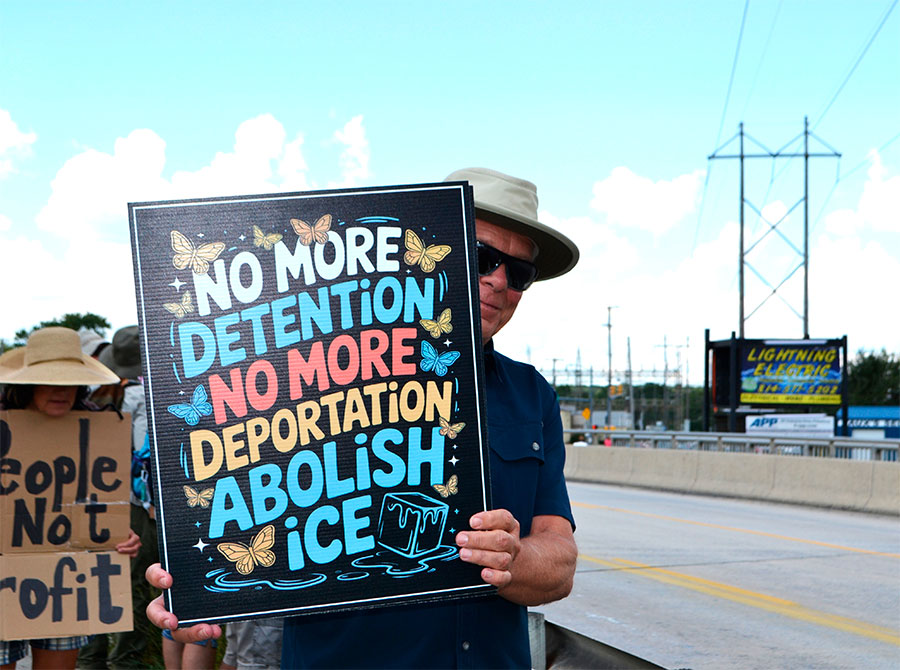
Many detainees at MVPC have no criminal record and are held without due process. They are transported from Pennsylvania, Ohio, and New Jersey to this remote prison, four hours from Philadelphia, where they endure isolation, substandard medical care, lack of timely access to interpreters, and a long record of human rights violations documented by groups like Juntos and the ACLU.