



I just returned from Puerto Rico, and something shifted in me.
This wasn’t just a vacation—it was a homecoming. My best friend had recently retired and moved back to our hometown of Mayaguez, to take care of his mother. This was a spiritual reset. A reminder of who we are, what we carry, and what we continue to fight for. The island is, as always, beautiful and complicated. There’s hardship, yes—blackouts, we didn’t have water the last few nights, a bit of poverty, inequality—but there’s also a rising energy. A cultural rebirth. And nowhere was that more visible than in the streets, in the art, and especially in the impact of Bad Bunny’s residency.
What he brought to the island wasn’t just music. It was presence. It was pride. It was an unapologetic statement: Puerto Rico is not invisible. We are here. And we are enough.
That message hit me hard, especially in contrast to life on the mainland, where being Latino, even being a U.S. citizen, still often comes with being treated like an outsider. As immigrants, we currently live in a time where just existing feels political. Everything from our language to our livelihood is under scrutiny.
But something happened in Salinas that brought it all together for me. I was buying quenepas at a small fruit stand when I looked up—and standing there, just like anyone else, was Tego Calderón. In shorts, sandals, no bodyguards. Just part of the town.
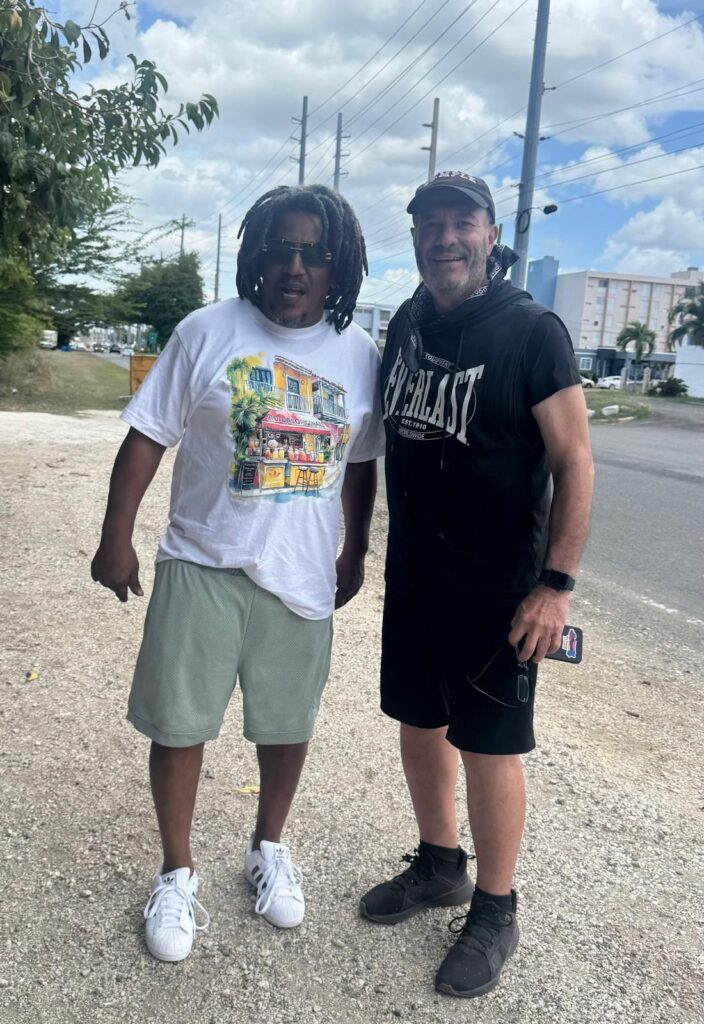
Tego’s music has always been more than rhythm and rhyme. He speaks the truth. He challenges injustice. He talks about colonialism, inequality, race, and poverty—and he does it without fear. In that moment, seeing him so grounded, so real, reminded me of the power of voice. Of being rooted and speaking for those who often aren’t heard.
We chatted briefly—just a moment—but it stayed with me. It reminded me that no matter where we are, we carry our island with us: our struggles, our pride, our resilience. And as an immigrant, both to Puerto Rico and to the US, I carry both realities: the hope of being part of something better, and the exhaustion of constantly having to prove that I belong, that my children and grandchildren belong. That my parents’ journey and dreams that they brought from Colombia were not in vain.
Right now, immigrants are under attack—whether through policy, language, or silence. We are called “invaders” “Rapists” “Criminals” while we all know that we are the backbone of many industries.
But here’s what I know after this trip: Being Latino is not a burden. It’s a badge of survival. Of creation. Of defiance. And to be an immigrant, especially now, is to live in resistance every single day.
We’re not going anywhere. Our stories matter. Our voices are loud. And our presence—like Tego, like Bad Bunny, like the man selling quenepas in Salinas—is not up for debate.