


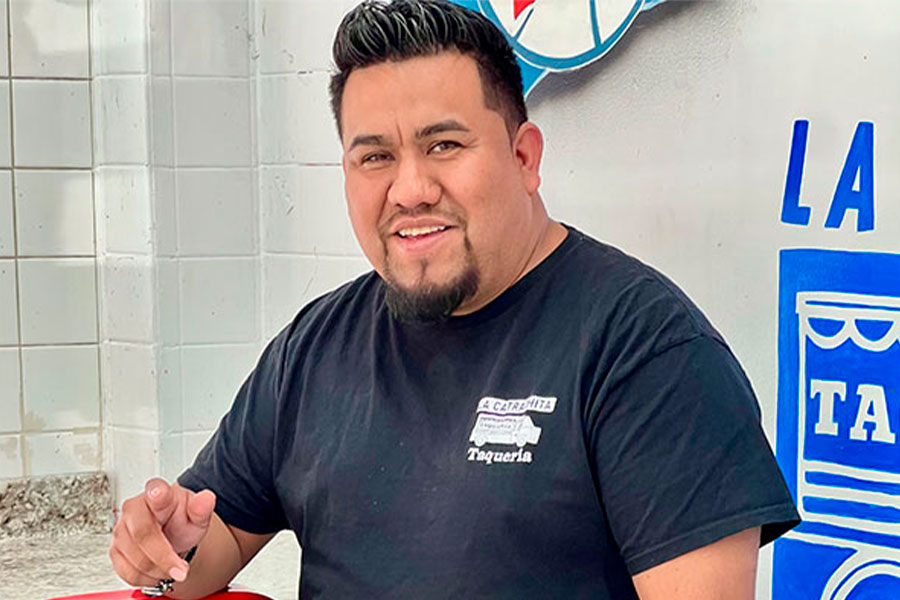
By the time Charly Gómez was 12 years old, he had already learned what many adults never manage to: how to identify opportunities, take risks, and build something out of almost nothing.
On a ranch near Metztitlán, Hidalgo, in the mountains of Mexico, he grew up in an environment where life followed the rhythm of the land, the weather, the animals, and family labor. There was dough on the comal before dawn, roosters crowing, and workdays that began early because survival demanded it.
His father emigrated to the United States in search of work. At first, he returned occasionally. Then the visits stopped—and the money did too. Left behind were a mother struggling to move forward, younger siblings, and a childhood cut short.
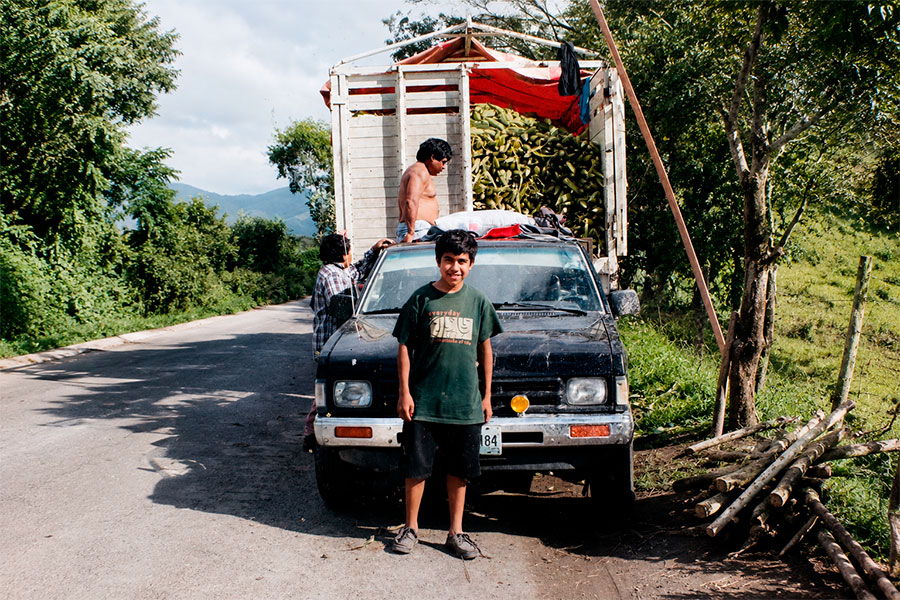
At six years old, he took on responsibilities far beyond his age. He began by selling leafy vegetables grown by his family. Later, he sold shaved ice in the town plaza. He carefully observed customers, learning what sold, what didn’t, and how much effort each product required.
At eight or nine, he focused on corn. But the local plaza wasn’t enough to support his family. A larger market in Tapalapa, Hidalgo, offered the possibility of real income. By age 12, he says, he was earning up to 30,000 pesos a day in sales—about $1,500 at the time. With that, he bought a small truck for the business.
Eventually, he left school to keep working. He doesn’t see it as a failure, but as a responsibility. He wasn’t a dropout. He was a provider.
Charly sold corn in volumes large enough to justify buying his own truck—not as a childhood dream, but as a business decision. His family needed income, and the bigger market offered higher volume. So he studied demand, identified opportunities, and moved his product strategically.
Then the frost came. He was 14 when a cold wave destroyed his entire corn crop. Overnight, the business disappeared. There was nothing left to sell and no way to help his family.
Shortly afterward, at just 15, he crossed into the United States.
He first arrived in Fresno, California, where he worked in the fields. The labor was exhausting, but ranch life had prepared him for heat, fatigue, repetition, and long days alongside adults. He worked without complaint and sent as much money as possible back to his family.
“I’ve never been afraid of hard work,” Gómez said.
But that wasn’t his final destination. After hearing about new opportunities, he traveled alone to the East Coast and arrived in Philadelphia.
His first job was in a pizzeria. There, he learned by watching and doing whatever was necessary. He studied every aspect of the business: the kitchen, the customers, the pace—and the English language.
“I learned everything about pizzerias and eventually opened my own,” he said. “I also learned English there. Philadelphia is a city with a lot of potential.”
Over the years, he has sold ice cream, vegetables, corn, pizza, tacos, and more. He describes himself as a salesman, organizer, and entrepreneur. He has studied with motivational coaches such as Alex Day, Luis Fallas, and César Lozano, and today he is also a speaker.
He handles concepts from the modern business world—mindset, branding, visibility—but his foundation is simpler and tougher: work, observation, and adaptability.
“The best product doesn’t always sell,” he said. “The most well-known one does.”
Today, he owns five restaurants in the Philadelphia area and operates four food trucks. With a franchise model in development and a memoir set for release this year, he has become a recognized figure in the city’s Mexican food scene.
His story is not just one of immigrant success. It is a story of hunger—literal, economic, emotional, and entrepreneurial.
“What you need isn’t just motivation,” he said. “It’s hunger. You have to really want it. It doesn’t matter where you come from, if you believe in yourself.”
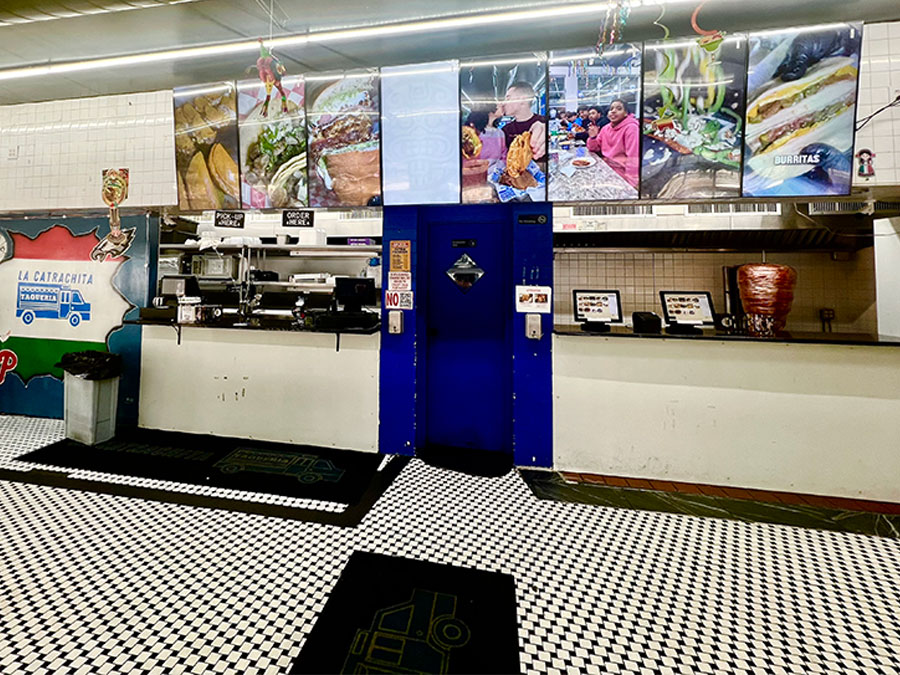
I met him one recent afternoon at La Catrachita Taquería, at 1200 South Ninth Street, on the corner of Federal.
The cornfields of Metztitlán are far from South Ninth Street. And yet, they are present in everything that happens there.
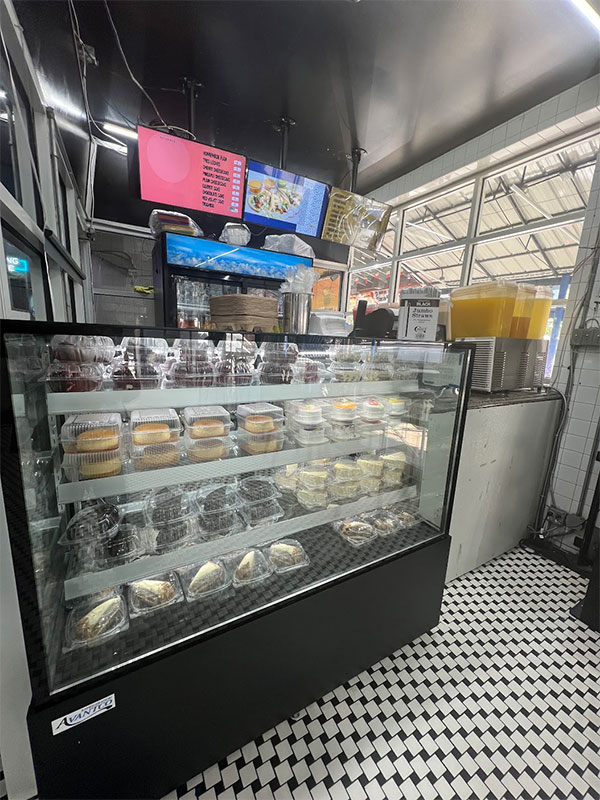
The space where La Catrachita now operates had been empty for a long time after the previous restaurant closed. Today, it stands out with its blue-and-white design. Inside, a simple counter with stools serves a steady flow of customers.
Charly welcomed me and took me through the kitchen. Large pots of birria simmered slowly, with a rich, aromatic red broth. It was a glimpse into the work behind the business: discipline, effort, and precision.
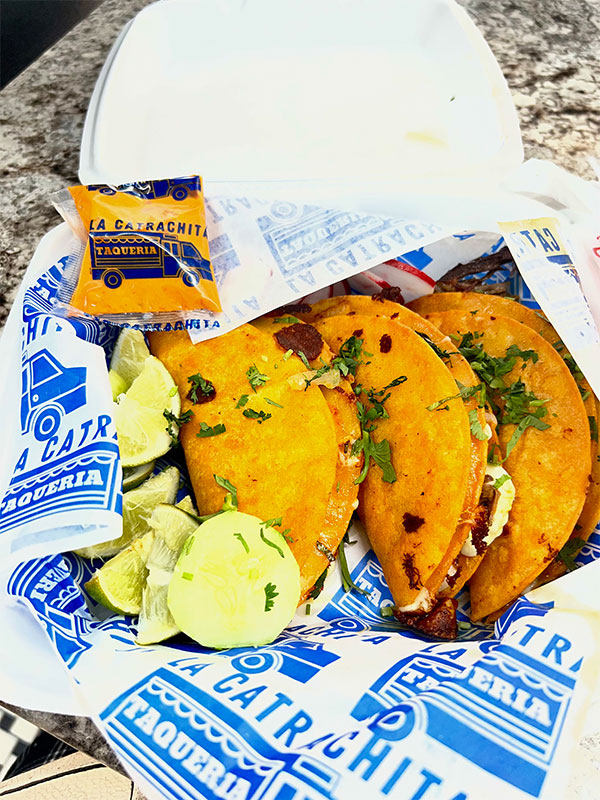
Before I left, he offered me the house specialty. Three beautifully presented birria tacos, served with individual salsas and fresh radishes. The result was refined, almost elegant. The flavor, bold—of the kind that builds its own reputation.
The restaurant has also revitalized a corner of the neighborhood.
“We’re happy to have this taquería here,” said longtime resident Mark Rosa. “This place was empty for a long time. We come at least once a week. And Charly is always positive.”
Optimism is part of his image, but it doesn’t erase the challenges.
His father left when he was a child. He worked from a very young age. He crossed the border alone. He lost investments. He faced failures. But he always adjusted.
Today, his mother lives comfortably in the home he built for her. His siblings are successful, and one lives with him in Philadelphia. His children are growing up in the business, learning more than recipes: resilience and discipline.
His book will be released in December. It will tell the story of a ranch boy who became an entrepreneur—and who, through his social media, with nearly 40,000 followers, inspires others who, like him, dare to dream big.