

People in Philadelphia (including Hunting Park) know that our summers are getting hotter and more humid. As temperatures rise, warmer air can hold more moisture, often pulled from the nearby Atlantic Ocean, creating conditions for stronger, more unstable storms that can build quickly and cause heavy rain, strong winds, and sudden flooding. That same pattern can show up in the winter too—when temperatures drop low enough, that extra moisture can fall as heavier snow or dangerous ice, like the storm we experienced in January. These are not distant problems—they are changes we can see and feel right here at home.
When it comes to heat, neighborhoods in Philadelphia are vulnerable because they have lots of dark buildings built close together, lots of pavement, and few trees and green spaces. This creates an “urban heat island effect,” where heat from the sun during the day is absorbed into asphalt streets and parking lots and the dark roofs of houses. At night, the heat is slowly released, preventing our neighborhoods from cooling off.
Philadelphia is also vulnerable to flooding because it lies at the confluence of two rivers and is close to the ocean. Our sewers are often clogged by litter, especially in neighborhoods where we don’t have trash cans on every corner. We are also in the path of hurricanes that start further South and bring rain and wind to our city. This wind can knock down tree branches and electrical poles and cause power outages.
Even when extreme weather events don’t happen in Philadelphia, they can still affect us. Hotter weather and droughts mean that more forest fires happen in New Jersey, California, and Canada. Winds blowing from these fires can make the air in our city smoky and dangerous, making it more difficult to go to school or work.
When extreme weather happens, poorer neighborhoods are affected the most. Elderly people, children, and people with asthma and other health conditions get sick more easily during heat waves and on poor air quality days. Families living paycheck to paycheck cannot afford to stay home from work because of heat or smoke and have a harder time paying utility bills and affording air conditioners, air purifiers, repairs after floods, and other things that can help keep them safe at home.
What is climate resilience?
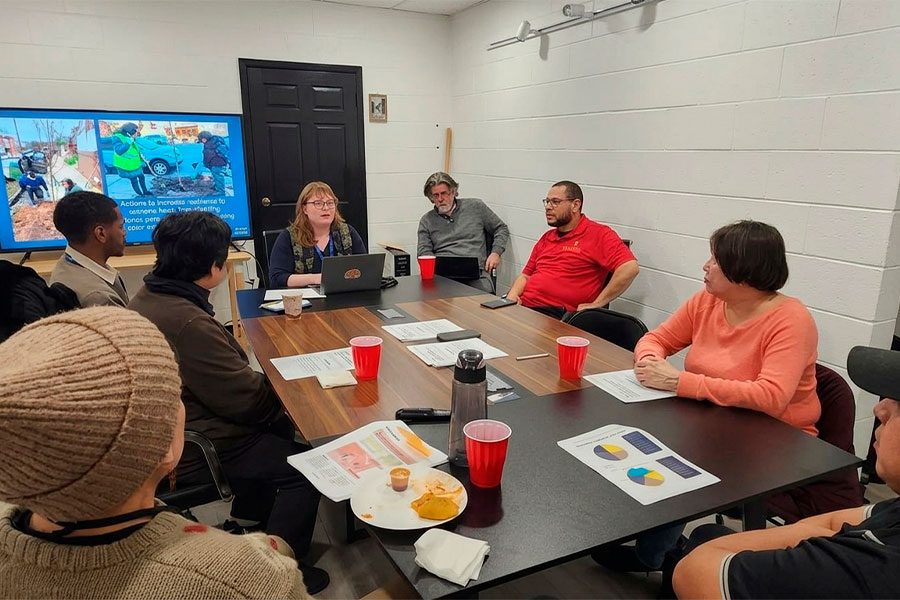
Climate resilience is a phrase used to describe all the ways communities can get ready for these impacts of climate change and help their neighborhoods stay safer. At Esperanza, we are working to create a climate resilience plan for the Hunting Park neighborhood. A climate resilience plan might combine several solutions, like environmental education and alerts from the city or physical changes like trees, shade structures, cooling centers, and so on. A plan might also include programs to help people make home repairs, upgrade appliances, or pay their bills. All these things can make a big difference, especially when we put them all together and think about what resources we need to take action.
A good climate resilience plan includes the voices and experiences of people who are dealing with climate change. If you live in Hunting Park, we want to hear from you! You are the expert on the ways extreme heat, poor air quality, and other climate risks have impacted your life. If you would like to help create Hunting Park’s Climate Resilience Plan, please reach me out 267-710-5265 or mdoyle@esperanza.us.