


The assassination of Charlie Kirk has shaken the foundations of public debate in the United States. Beyond the ideological positions one may hold regarding his figure, what happened represents a direct threat to one of the fundamental pillars of any democracy: freedom of expression.
Utah Governor Spencer Cox delivered a speech that was at times moving, indignant, and revealing, following the murder of the ultraconservative activist, which took place during a university event at Utah Valley University on September 10, 2025.
Cox described Charlie Kirk’s murder as a “political crime” and expressed his deep sadness over the event. In his speech, he made an urgent call for national reconciliation, warning that extreme polarization is destroying the country’s social fabric, while also pledging justice against the perpetrator of the crime and noting that the state is considering the death penalty. He also highlighted that Kirk was more than a public figure: he was a father and husband committed to dialogue and freedom of expression. The governor concluded with a reflection on the need to heal as a nation to prevent further tragedies of this kind.
While this was the message summarized by most U.S. media outlets, regardless of their ideological leanings, international outlets amplified another of his remarks; one that once again revealed an anti-immigrant rhetoric: “I prayed that the perpetrator had come from outside, from another state, that he was a foreigner, but my prayer was not answered; it was one of us.” This was in reference to the revelation that Tyler Robinson, a 22-year-old Utah resident, a university student with no criminal record, from a Mormon, conservative family, with Republican parents, was the alleged perpetrator of what some have described as a kind of digital-age magnicide.
Tyler appeared in court by video call wearing an anti-suicide vest, and all evidence seems to indicate that he was the one who shot Charlie Kirk, a key figure in contemporary American conservatism. Founder of Turning Point U.S.A., Kirk dedicated himself to promoting “ideological diversity” on campuses he believed were dominated by a progressive worldview. To his followers, he was a brave defender of free speech and of marginalized young conservatives. To his detractors, his provocative style and controversial statements made him divisive and offensive.
That very freedom of expression he defended has been questioned by dismissals at all levels of people accused of insensitivity or of straying from the MAGA chorus, a movement that, in a sort of popular beatification, condemns anyone who questioned what Kirk preached.
There was also a certain duality in his persona: while he often proclaimed his faith in Christ, his discourse did not always reflect the Word of God printed in the Bible, particularly regarding love toward the foreigner, since Kirk opposed even legal immigration.
On gun control (in a country where firearms outnumber inhabitants), he once said:
“I think it’s worth paying the price, unfortunately, of some gun deaths each year so that we can have the Second Amendment and protect our other God-given rights.” Tragically, he himself became one of those who paid the ultimate price.
He maintained that: “White privilege does not exist. It is a racist concept invented by the left.” Yet in times when simply looking Hispanic can lead to being stopped by police, such denial rings hollow.
About Pope Francis, Kirk declared: “I can’t get over the idea that this Marxist who proclaims himself head of his church could be a representation of Christ.” Nevertheless, condemnation of his assassination has been resounding from the Catholic Church.
His legacy is ambivalent: on one hand, he inspired a generation of young ultraconservatives; on the other, he deepened divisions within an already polarized society. His impact will depend on how his ideas and actions are remembered in the future. But what is most troubling now is that some celebrate his death, while others attempt to silence those who, despite his passing, continue to reject values they never shared with him.
In a free society, the right to express ideas –even the most uncomfortable ones– must be protected. Silencing someone for thinking differently is not only an act of violence, it is a signal that dialogue has been replaced by intolerance.
Freedom of expression is not a privilege reserved for those who think like us. It is a universal right that must protect both the conservative activist and the progressive, the believer and the atheist, the immigrant and the native. Defending it does not mean agreeing with everything that is said; it means recognizing that free thought is the foundation of a civilized society. Today more than ever, we must reaffirm our commitment to dialogue, respect, and the freedom to think differently.
At Impacto, we believe this moment calls for reflection. Are we willing to defend freedom of expression even when we disagree with what is being said? Or have we reached the point where dissent is punished with exile—or with death?
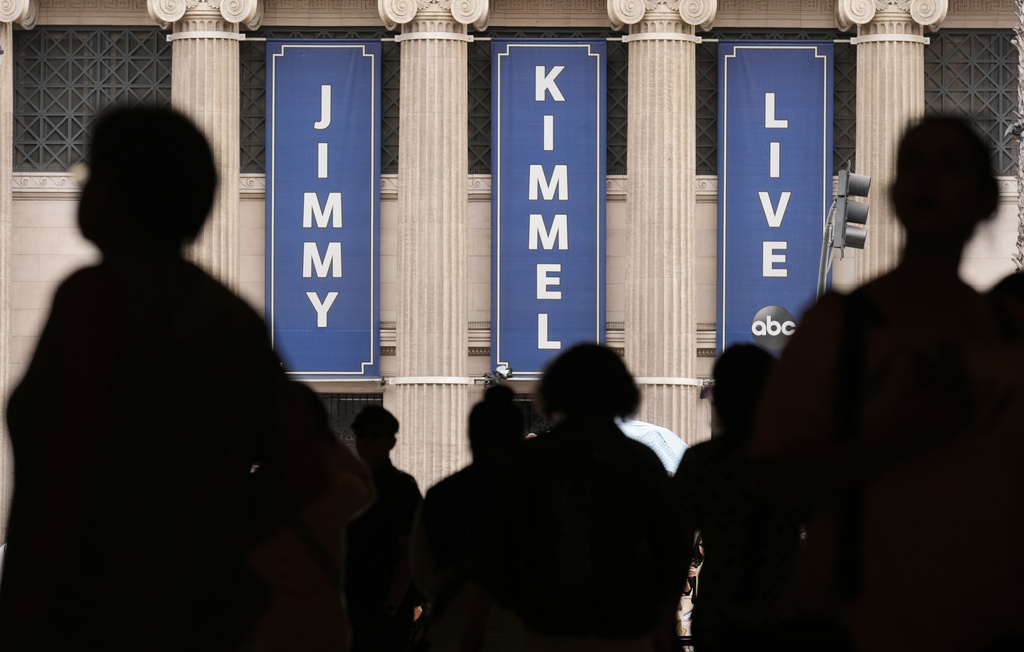
The reactions to the reactions have been troubling. Reports have emerged of dismissals, media censorship, and legislative proposals that could further restrict free speech. In the name of security, we risk eroding the right to dissent. And that, in any democracy, is dangerous. Still, the lingering question remains: are we truly free to choose to be enslaved, and how far do we cross that line? We have much to reflect on and much to evolve.