


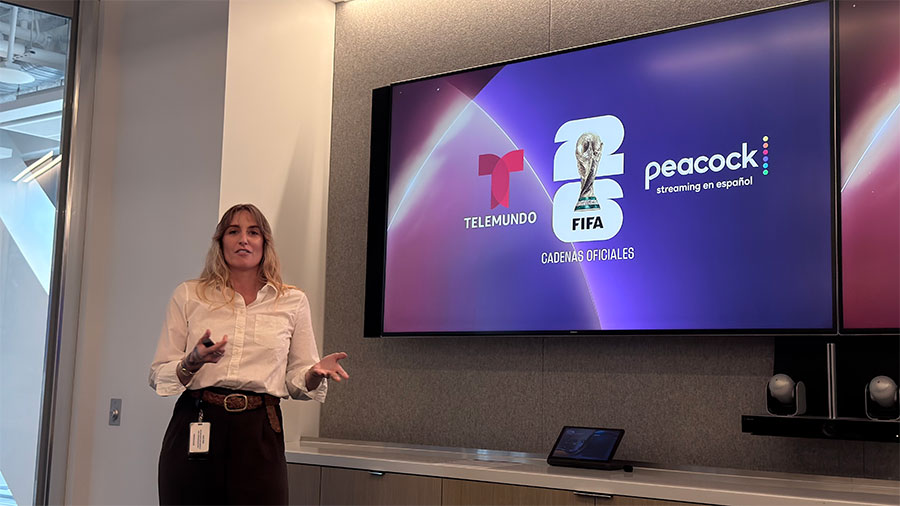
World Cup viewing is family behavior. The match is on, but so is the conversation. Someone checks the standings. Someone asks who starts next. Someone wants the replay. Someone sends the clip. A child may remember the celebration. A parent may remember the call. A creator may remember the angle. A family may remember the room.
García was direct about the challenge. “The experience outside of Xfinity is a very clunky one,” he said. “You have to have different devices. And it’s expensive.” Fans often need different services and websites for statistics. In his view, “what real sports fans deserve is having all of that integrated.”
That is where Comcast stands apart. MultiView allows users to watch up to four sporting events. One person may want soccer, another baseball, and another basketball, but the experience can still happen together.
Fan View adds another layer. Users can select teams, follow schedules, view group standings, check odds, see clips, and access content tied to favorite countries. García described the experience as “mission control for sports.” It gives families control without removing the feeling that makes the World Cup powerful.
Highlights are not filler; they are how World Cup memory moves. A family may not rewatch ninety minutes, but they will return to the goal, the save, the penalty, the celebration, the call, and the face beside them.

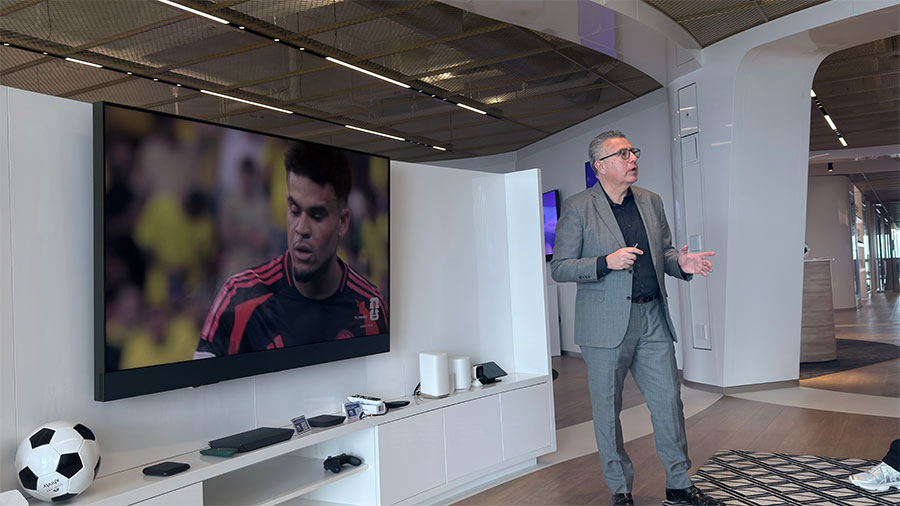
That is where artificial intelligence enters. García did not present AI as replacing culture or emotion. “For us, AI is a tool that enables us to get faster to that surprising delight, our consumers,” he said.
“With Xfinity and AI, what we’re able to do is to, you can personalize your highlights,” García said. “You can go from corner kick to goal, to penalty and sort of navigate the key moments of the game on your own in your own way.”
That is the memory-machine idea in practical form. Replay cannot fully recreate the first time. It cannot return to the uncertainty, the room, or the first shock. But it can return the cue: the image, the call, the chant, and the moment a family wants to feel again.
Peacock presented World Cup features, including a dedicated hub, Telemundo coverage, live games, replays, interactive schedules, search by country or athlete, vertical clips, prediction games, and mobile viewing angles. Xfinity Mobile and Xfinity Membership expanded the message beyond television, showing how the experience follows fans from home to work and gatherings.
For journalists, creators, and community media, García identified opportunity. “The access to the World Cup through Xfinity is probably as close as you can get to a real thing,” he said. He also said there is “a very interesting opportunity to create content, leveraging the platform,” including content with “4K quality behind you and talking about games.”
In Philadelphia, that opportunity matters. The World Cup will be played in homes, restaurants, barber shops, small businesses, community centers, and gatherings. It will connect migration, language, neighborhood pride, and family memory.
For Latino communities, the World Cup is not simply watched. It is celebrated, debated, shouted, suffered through, remembered, and replayed. If Comcast delivers on the experience it presented, the stadium of the future will not only be in an arena. Comcast will help bring that experience back to the place where many World Cup memories begin: the living room at home.