


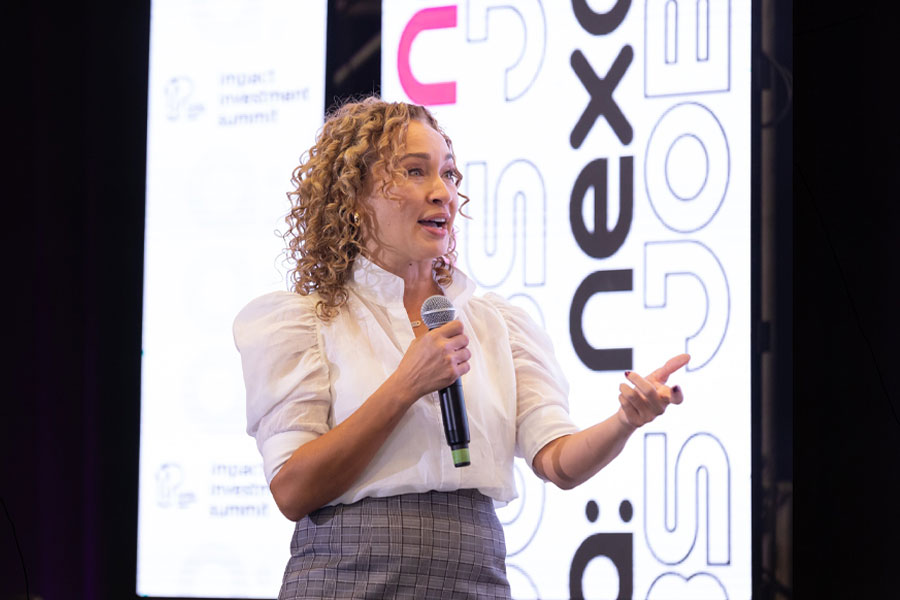
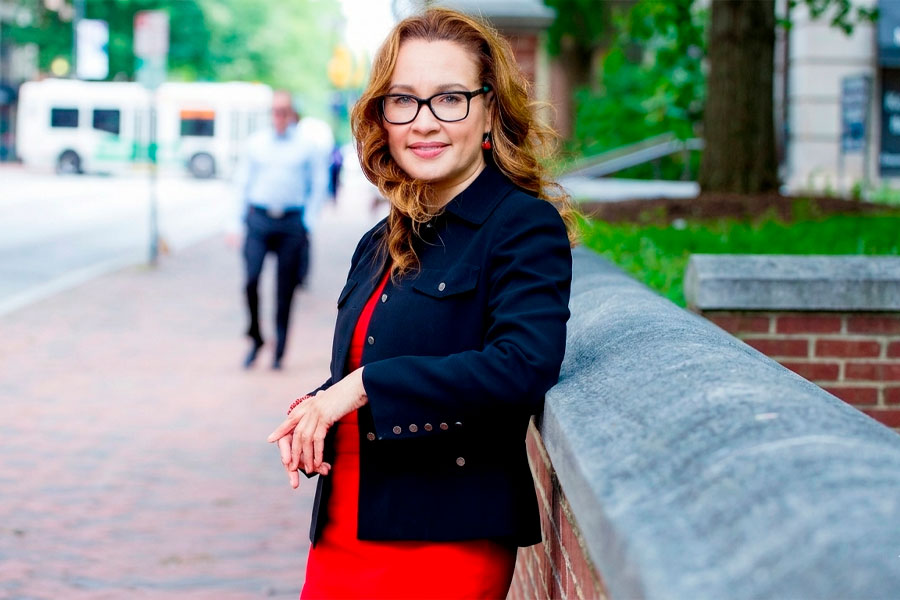
Of Puerto Rican descent, Nancy Santiago lives between the island and the Greater Philadelphia area, yet she is truly a citizen of the world. She is the Chief Executive Officer of Tribus Global, a company that advises governments and nonprofit organizations on social impact initiatives. Perla Lara, Editor‑in‑Chief of Impacto, spoke with the renowned psychologist, who has spent years working in government offices and has held senior roles across three presidential administrations, either as a public official or as an advisor on education, social investment, and health policy, as well as in nongovernmental institutions serving children affected by abuse, violence, and other forms of childhood trauma.
Nancy was born in Philadelphia, where she first began her advocacy for mental health, educational equity, and the future of young people. A specialist in social policy, she has worked in settings such as juvenile detention centers and school coordination offices, and has delivered lectures in several countries. Beyond her extensive professional background, one theme remains constant in her message: the urgency of listening to young people before it is too late.
Nancy is the daughter of a Puerto Rican father and a Philadelphia‑born mother, with a Colombian stepfather, embodying a rich Latino and urban identity. Her personal story passed through the same dysfunctional systems she now seeks to transform.
She was educated at Philadelphia High School for Girls and later attended Temple University, where she earned a master’s degree in family counseling. Her career began in the 1990s, working with young people involved in the juvenile justice system, where she identified the lack of meaningful pathways for adolescents to reintegrate into school.
“At that time, there was no real reintegration system,” she recalls. “A young person with legal issues was essentially excluded from the education system.” That reality prompted her to push for innovative initiatives for the time, including second‑chance programs, night schools, and mental‑health‑focused academic support systems.
That phase not only sharpened her career but also reshaped her understanding of public policy. “I learned what it means to navigate a system that is not designed to include everyone, especially Spanish‑speaking families,” she explains. The disconnect between institutions and the community was—and remains, in her view—one of the most significant barriers.

A generation marked by fear
Today, Santiago observes with concern the so‑called generation alpha—those born after 2010—whom she describes as “children and young people profoundly different from any previous generation. They grew up amid constant instability; the pandemic stripped them of routines, family stability, and spaces for social interaction. Overnight, everything changed.”
That change was not only physical and logistical but deeply emotional. Children who had previously had minimal contact with the digital world suddenly became dependent on technology for studying, completing homework, socializing, and entertainment. “They were in front of a screen up to twelve hours a day,” she notes. “Neither they nor their parents were prepared for that.”
Yet within that reality, she identifies a strength: increased emotional awareness. “Today, a ten‑year‑old can say, ‘I feel anxious’ or ‘I need help.’ That didn’t exist before,” she explains. “It’s a generation that understands the importance of mental health, but doesn’t always have the resources to address it.”
Mental health: The need for prevention
For Nancy, the issue is not only cultural but structural. Schools, she argues, remain focused primarily on academics while neglecting emotional development. “We don’t teach children how to understand their emotions, and then we’re surprised when serious problems emerge at fourteen,” she says.
Prevention, she insists, is key. Early intervention improves quality of life and reduces long‑term risks such as school dropout and vulnerability to violence and recruitment by gangs and criminal organizations.
“These groups know exactly how to identify vulnerable youth,” she warns. “They offer what’s missing—community, belonging, someone who listens.”
She points to examples in Brazil, where Catholic Church initiatives have successfully attracted hundreds of young people by offering community and connection. “They’re responding to a real need,” she says. “The question is why schools or public health systems in this country aren’t doing the same.”
Social media: Addiction by design
Another major concern is the impact of technology, particularly excessive social media use, which Santiago does not hesitate to describe as a public health issue. “We know these platforms were designed to be addictive; recent lawsuits against Facebook and TikTok have confirmed it, and even Pinterest’s founder has warned about it,” she says. “Yet we allow children to spend hours on these platforms without knowing what they’re doing there.”
The consequences include sleep problems, learning difficulties, anxiety, and isolation. Most alarming, she notes, is the lack of regulation. “We regulate what can appear on television, but not what children consume on their smartphones,” she explains. “That’s a serious failure.”
Responsibility, she adds, does not rest solely with corporations or government. Parents must also take an active role—not by banning technology, but by engaging in dialogue and understanding what their children are seeing and why.
The risk of artificial intelligence
If social media was already a challenge, artificial intelligence has opened an even more complex front. Santiago references cases in which young people have turned to chatbots to discuss emotional struggles—with devastating consequences.
“We’re seeing situations where children seek support from a machine rather than a human being,” she warns. “That speaks volumes about the level of human disconnection we’ve reached.”
In some cases, these interactions have resulted in dangerous guidance, even suicide. “Not long ago, we were at the Vatican with a mother—an attorney—whose fourteen‑year‑old son died by suicide following advice from a chatbot. That is a true tragedy. There is no oversight, no regulation. It is extremely concerning.”
Still, Santiago does not dismiss technology altogether and calls for ethical AI models applied to mental health. “Technology can be part of the solution,” she emphasizes, “but only if it is designed responsibly.”
Youth, power, and the future
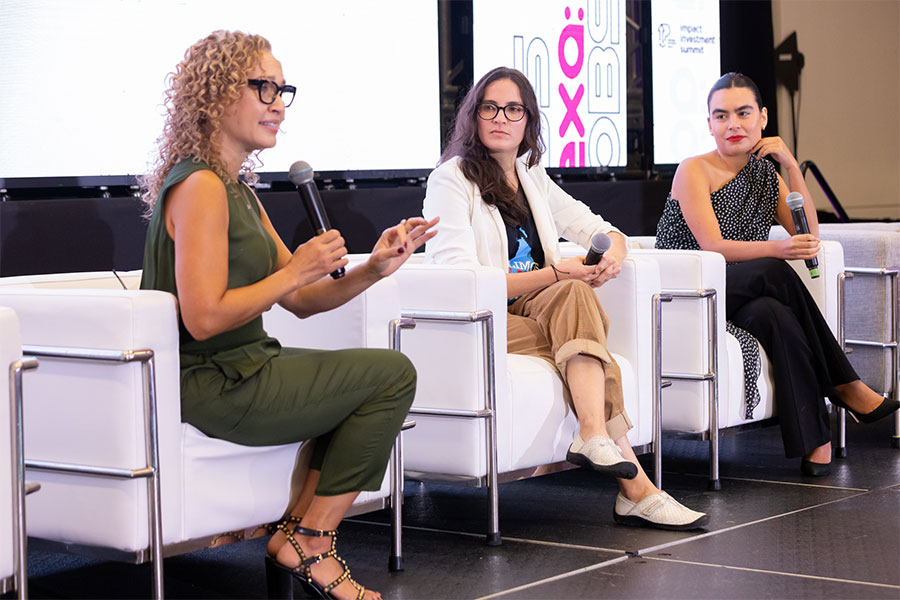
Despite the risks, Santiago believes this generation holds tremendous transformational potential. She describes it as the largest, most diverse, and most informed generation in history.
“Even at twelve or fourteen years old, they are highly engaged with issues like climate change, social justice, and inclusion—yet they feel political systems do not represent them.”
She warns that gaps could have serious consequences. “In a very short time, they will make up much of the workforce and the electorate. If we fail to listen now, it will be much harder later.”
The risk she stresses is not only political but social. “A generation that feels excluded may disengage—or even confront the system. When young people feel unheard, they seek alternatives, and those alternatives can be dangerous.”
Immigration, identity, and memory
Santiago’s analysis also considers the role of Latino communities across the United States and critiques the tendency of some immigrant groups to distance themselves from their roots in pursuit of social mobility. “When we do that, we erase our history, and that comes at a cost—especially for young people,” she argues.
That disconnection is intensified under restrictive immigration policies, which create trauma for entire families, particularly children. “Children who see their parents handcuffed and deported grow up with deep wounds—wounds that can have long‑term consequences, and that society will ultimately pay for.”
She also highlights the economic dimension. “Immigration has sustained much of this country’s growth. Ignoring that is a serious strategic mistake.”
Not missing the opportunity
Despite the challenges, Santiago remains hopeful—but only if decisive action is taken. “We have to do two things,” she concludes. “Listen to young people and give them the tools to build the world they want.”
The alternative, she warns, is far too costly. “If we don’t listen, we risk losing an entire generation—and the world is not prepared to absorb that loss.”
Her message is clear: mental health, inclusion, and investment in youth are not secondary issues—they are fundamental pillars of the future. Ignoring them would not only be a mistake, but a grave historical failure.
Nancy Santiago is a strategic leader with more than two decades of experience in education, economic development, federal policy, and philanthropy. She has worked across two presidential administrations and collaborated with three U.S. presidents, playing a key role in the design and implementation of major public policy and federal initiatives.
She is currently CEO of Tribus Global, a hybrid executive advisory firm and nonprofit organization focused on driving lasting social impact. Most recently, she served in the Biden Administration as Deputy Director for Engagement and Senior Advisor to the U.S. Surgeon General, contributing to the landmark advisory on protecting youth mental health.
During the Obama Administration, she held senior leadership roles at the U.S. Department of Labor and the Department of Education. Her career also includes leadership in community finance, tech entrepreneurship, and the co‑founding of the Inicio Fund, an investment fund supporting Latino‑led businesses.
Based between Puerto Rico and New Jersey, she balances her professional work with salsa dancing, hiking, and community life.