


Philadelphia’s Latino community has helped build this city block by block, business by business, and generation by generation. From Fairhill to Hunting Park, from Juniata to Feltonville, from Norris Square to Upper Kensington, Latino families have created neighborhoods filled with culture, work, faith, entrepreneurship, and community pride.
But today, many of those same families are facing a difficult question: can they afford to stay in the neighborhoods they helped build?
Philadelphia’s housing crisis is not only about rising rent. For Latino families, it is also about wages that do not keep up, aging homes that need repairs, barriers to homeownership, investor pressure, and the fear that long-standing cultural neighborhoods may become unaffordable for the people who gave them life.
According to the Housing Initiative at Penn, more than half of renters in Philadelphia are cost-burdened, meaning they spend more than 30% of their income on housing. Nearly one in three renters spends more than half of their income just to keep a roof over their head. For families already living paycheck to paycheck, that leaves little room for food, transportation, child care, medical expenses, school needs, savings, or emergencies.
For Latino households, the pressure is especially serious. Pew research has found that Latinos remain the fastest-growing demographic group in Philadelphia, while also continuing to face high levels of poverty. Many Latino adults are in the labor force, but work alone is not protecting families from the housing market.
That is the hard truth behind the crisis: many Latino families are working, contributing, and doing everything they are supposed to do, but housing costs are rising faster than their paychecks.
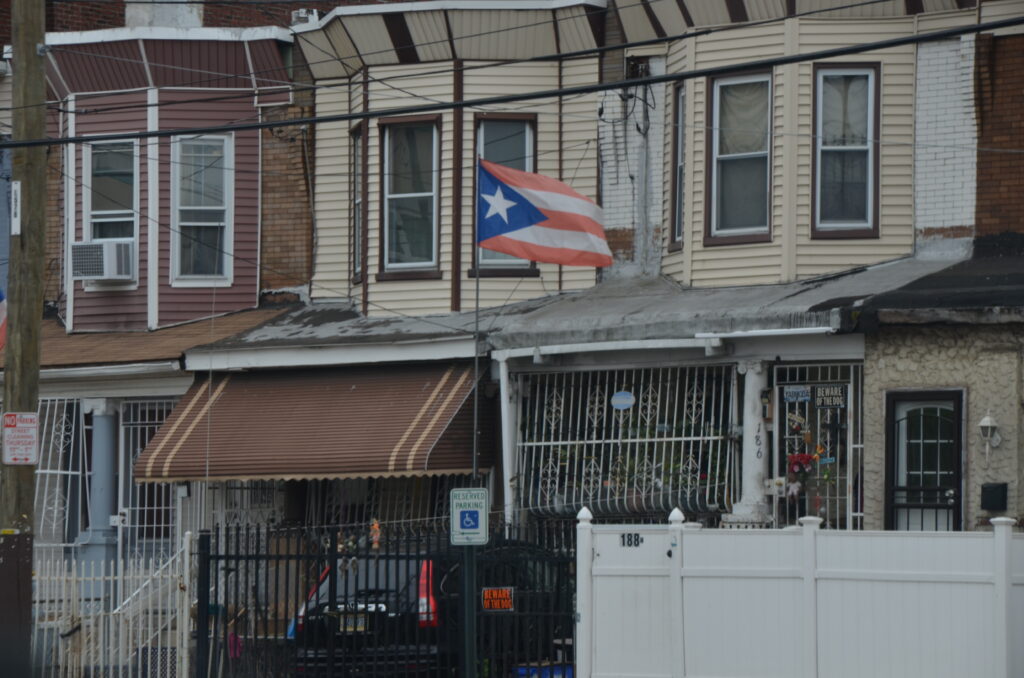
Eastern North Philadelphia shows the crisis clearly. The area includes neighborhoods such as Hunting Park, Juniata Park, Feltonville, Upper Kensington, Fairhill, and surrounding communities. These neighborhoods are not just geographic areas. They are cultural anchors for many Latino and Puerto Rican families in Philadelphia.
They hold churches, bodegas, schools, parks, community gardens, small businesses, murals, family networks, and Spanish-speaking services. They hold memory. They hold identity. They hold the daily life of a community that has shaped Philadelphia for decades.
But these neighborhoods are changing. Research connected to Eastern North Philadelphia has found that asking rents have increased sharply in many parts of the area since 2019. Home prices have also increased, even while many families in the community continue to live on modest incomes.
That creates a dangerous contradiction: the neighborhood remains economically vulnerable, but the land is becoming more valuable.

That is how displacement begins.
Sometimes displacement looks like an eviction notice. Other times, it is quieter. It looks like a rent increase that a family cannot afford. It looks like a homeowner delaying repairs because the cost is too high. It looks like a young adult who grew up in the neighborhood but cannot afford to buy a home there. It looks like a family moving farther away from schools, public transportation, relatives, and trusted community resources.
Displacement does not always happen all at once. Sometimes it happens one lease, one tax bill, one repair, one rent increase, and one family at a time.
Norris Square is one example of what is at stake. The neighborhood has long been tied to Latino culture and Puerto Rican identity in Philadelphia. But rising housing costs, new development, and changing demographics have created concern that the cultural fabric of the neighborhood is being threatened.
Growth is not the enemy. Philadelphia needs safe, new, and repaired homes, and a serious investment. But development without protection can become displacement. Investment without affordability can become exclusion. Revitalization without residents can become erasure.
That is why the Latino housing crisis must be understood as more than a housing issue. It is a community preservation issue.
Homeownership is also becoming harder. Philadelphia has historically been known as a city where working-class families could buy a rowhome and build stability. That path is becoming more difficult. Higher home prices, mortgage costs, insurance costs, property taxes, credit barriers, and limited savings have made it harder for many Latino families to purchase homes.
When families cannot buy, they lose more than property. They lose one of the main paths to generational wealth.
This creates a painful trap. Renting is becoming more expensive, but buying is becoming harder. Families are caught between two doors: one keeps getting more costly, and the other is harder to open.
Investor activity adds another layer. In many lower-cost neighborhoods across Philadelphia, corporate and investor buyers have purchased homes that could have gone to local families. When housing becomes an investment strategy rather than a human need, residents feel the impact.
A house that could have helped a family build stability can become another rental property. A block that once had long-term neighbors can become less stable. A community that once felt rooted can begin to feel uncertain.
The City of Philadelphia has begun responding through Mayor Cherelle Parker’s H.O.M.E. Initiative, a major plan to build, preserve, and restore 30,000 homes across the city. The scale of the plan shows that city leaders recognize the seriousness of the housing crisis.

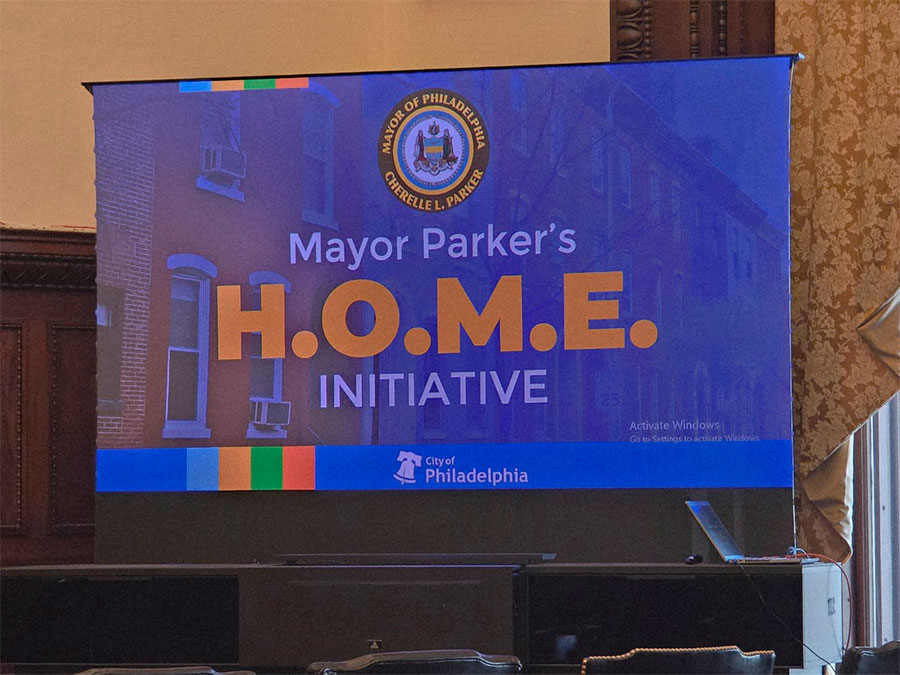
But the real test will be implementation.
Will Latino neighborhoods receive targeted protection? Will affordable housing actually be affordable to families earning modest incomes? Will Spanish-speaking residents have full access to applications, legal support, housing counseling, repair programs, and homebuyer resources? Will the city preserve existing homes before families are forced out? Will cultural displacement be treated as seriously as physical displacement?
These questions matter because housing policy cannot rely solely on units. It must count people.
Philadelphia’s Latino communities do not need pity. They need power, protection, and partnership. They need housing programs that reach families before they are in crisis. They need repair assistance that helps homeowners stay in their homes. They need stronger tenant protections, first-time homebuyer support, affordable rental units, community land trusts, and policies that keep land connected to the people who made these neighborhoods valuable in the first place.
Most of all, they need to be heard.
The Latino housing crisis in Philadelphia is not just about buildings. It is about belonging. It is about whether families who built community will be allowed to remain part of it. It is about whether Philadelphia will protect the people who have carried this city through work, culture, faith, entrepreneurship, and civic life.
A city cannot celebrate Latino culture while allowing Latino families to be priced out of the neighborhoods where that culture lives. A city cannot praise diversity while ignoring displacement. A city cannot build its future by pushing out the people who helped build its foundation.
Philadelphia’s Latino community has a strong voice. Now that voice must be used to demand housing that is affordable, safe, stable, and rooted in dignity.
Because home is not just where people live. Home is where community survives.