


As drought deepens water rationing across Puerto Rico, local organizers call for relief.
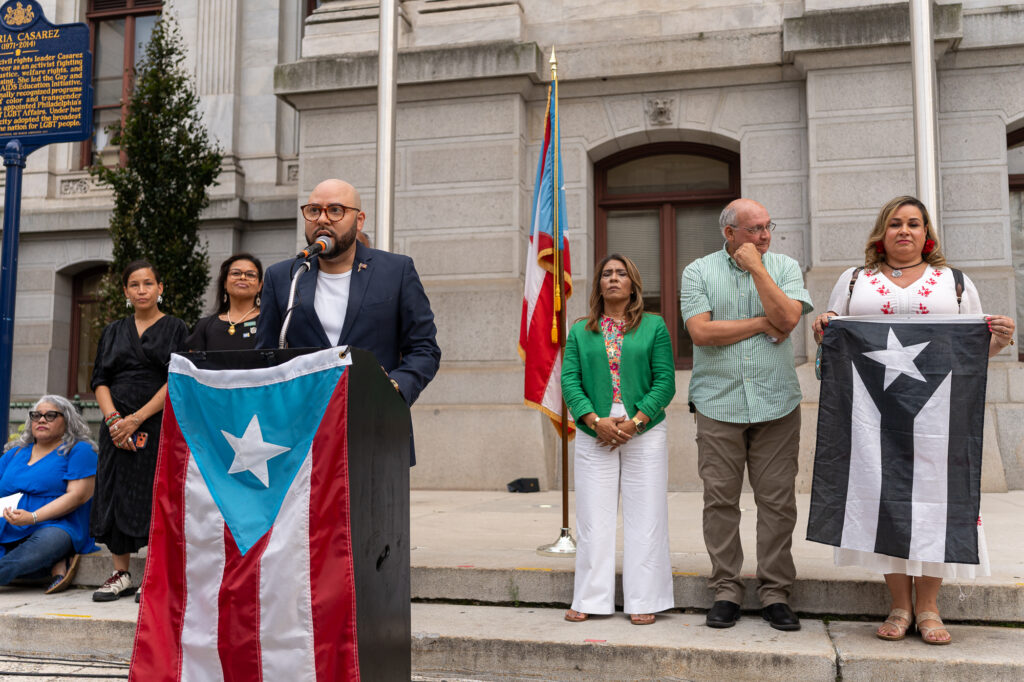
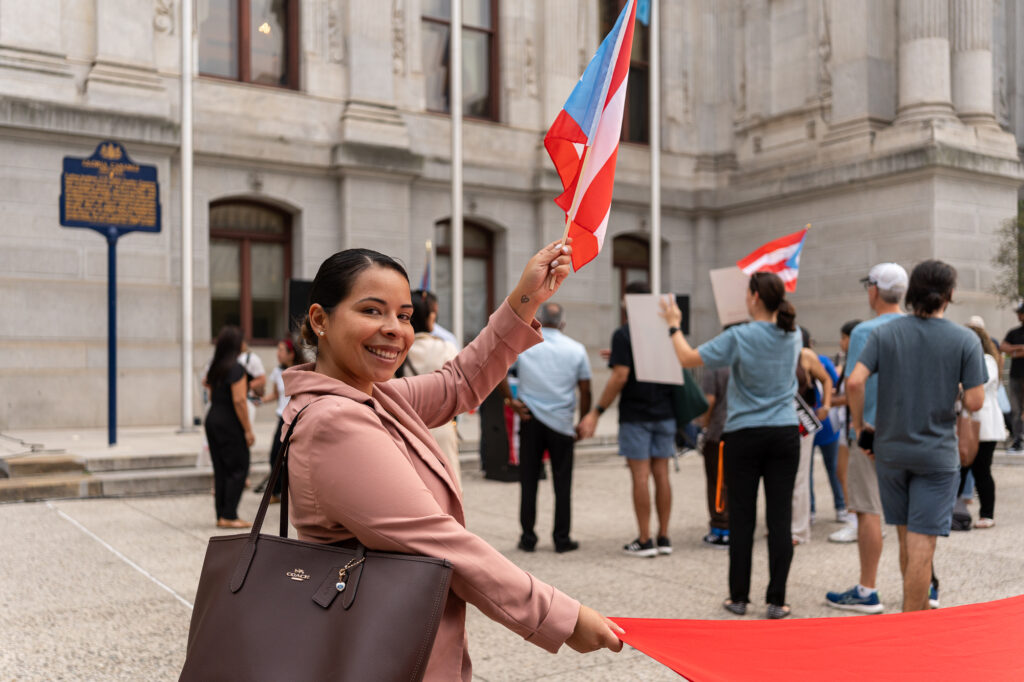
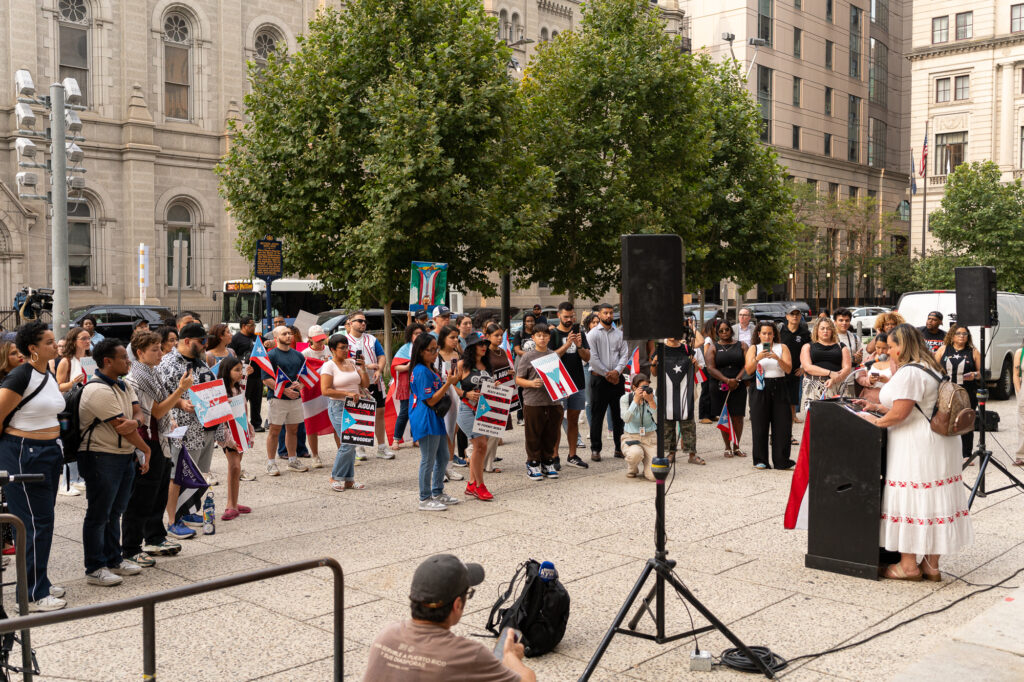
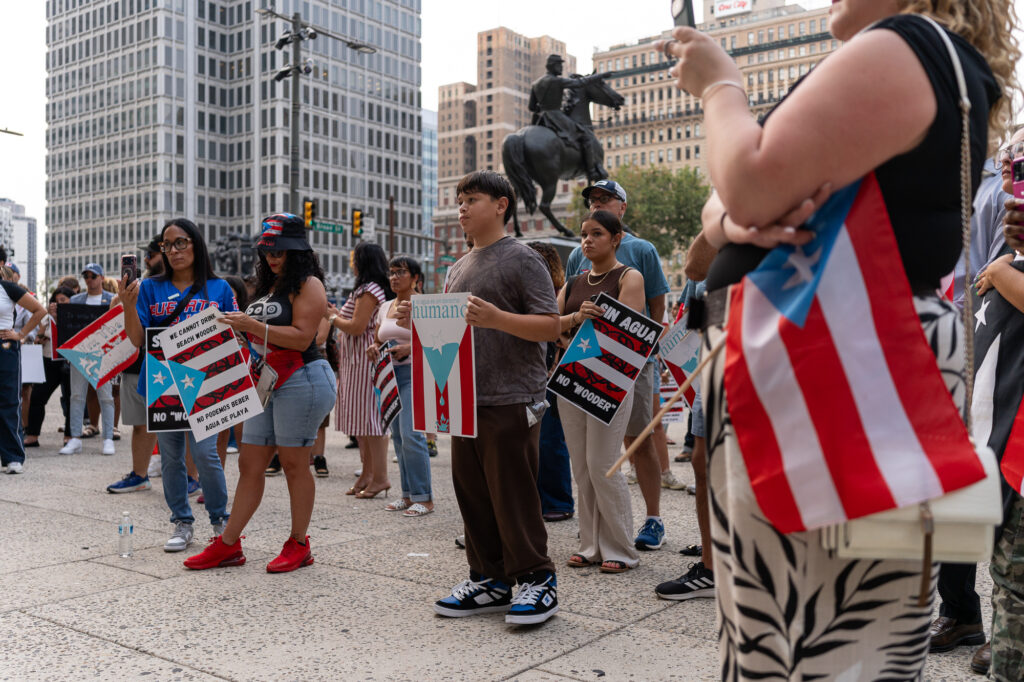
Philadelphia, PA – Puerto Ricans and allies gathered at the northeast corner of City Hall on August 13 to demand federal action as a severe drought and long-running failures in Puerto Rico’s water system leave communities facing repeated outages and 48-hour rationing.
The gathering was led by the Puerto Rican Professionals Network and supported by a coalition that included Asociación Puertorriqueños en Marcha, Ceiba, Concilio, Congreso de Latinos Unidos, Esperanza, LULAC Pennsylvania, Philly Boricuas, Taller Puertorriqueño and several elected officials.

Organizers highlighted the lack of basic needs of the Puerto Rican population: people need water to drink, cook, bathe, wash clothes, clean dishes, flush toilets, and go through daily life routines. For older residents and people with disabilities, losing running water can also mean carrying heavy containers in dangerous heat.
“We are asking for the basic support and infrastructure that every citizen is entitled to,” Councilmember Quetcy Lozada told the crowd. “Pablo José Hernández Puerto Rico’s resident commissioner in Washington, D.C publicly urged Governor González Colón to formally ask the administration for an immediate emergency Federal response earlier this month. The governor deflected immediate accountability, as she has done in the past.”
Puerto Rico’s water emergency has intensified rapidly this summer. More than 180,000 people in parts of San Juan, Carolina, Canóvanas, Loíza, Juncos, Gurabo and Trujillo Alto have been placed on rotating schedules that can leave them without running water for 48 hours at a time. The seven municipalities depend heavily on the Carraízo reservoir and the Sergio Cuevas filtration plant.
The drought is real and severe. Federal drought officials reported widespread rainfall deficits across Puerto Rico after conditions dried sharply through May, June and July. San Juan experienced its driest July on record, and federal forecasts have warned of continued below-normal rainfall and above-normal temperatures. A strengthening El Niño is also expected to reduce some of the tropical activity that normally brings rainfall to the island.
But speakers in Philadelphia repeatedly reminded those in attendance that weather alone does not explain why families are struggling.
“What we are seeing today is a humanitarian crisis, made worse by a natural disaster, the drought,” said Maridarlyn González, Pennsylvania State Director of LULAC. “But the true culprit isn’t the weather. It is inadequate infrastructure, decades of deferred maintenance, and failed government oversight.”
That concern predates the current drought.
The American Society of Civil Engineers gave Puerto Rico’s drinking water infrastructure a D in its 2019 infrastructure report card. At the time, the organization found that about 59 percent of treated water became ‘non-revenue water’, a category that includes physical leaks, inaccurate meters and unauthorized consumption.
Puerto Rico’s government has taken some emergency steps and says major infrastructure investments are underway. Gov. Jenniffer González-Colón activated the Puerto Rico National Guard in June to assist with water distribution. Earlier this year, her administration announced the completion of a major dredging project at Carraízo intended to recover storage capacity. The Puerto Rico Aqueduct and Sewer Authority has also been advancing rehabilitation work at the Sergio Cuevas filtration plant as part of a broader capital improvement program.
Still, the rationing this summer has sharpened questions about how quickly those investments are reaching families.
“When we talk about Puerto Rico’s water crisis, we cannot only talk about infrastructure, reservoirs and our governments,” said Monica Parrilla, from NACOPRW Philadelphia. “We have to talk about nuestra gente.”
The Philadelphia coalition is calling for a federal emergency declaration, immediate federal technical and infrastructure assistance, faster implementation of already-funded projects, greater transparency around federal water infrastructure funding and protections for vulnerable residents affected by rationing.
Lozada directed part of her message to Pennsylvania’s U.S. senators, John Fetterman and Dave McCormick, urging them to use their influence over federal policy, disaster funding and emergency oversight affecting Puerto Rico.
“This cannot be reduced to politics,” Lozada said. “Human dignity is not partisan, and the responsibility to protect American citizens should not depend on whether those citizens live in Philadelphia, Pennsylvania or San Juan, Puerto Rico. We are United States citizens. We are not asking for special treatment. We are asking for our government to fulfill the responsibility to its people.”
Rafael Alvarez Febo, co-founder of the Puerto Rican Professionals Network and host of the evening, was more pointed in his frustration.
“It is ridiculous that we live in the United States, the richest country in the world that ships billions of dollars to fight wars, but not to refurbish,” de said. “Our tax dollars are used to build ballrooms and not pipes. This is where we’re at. We’re in a government that doesn’t respect us. That thinks we’re stupid.”
Pressure for federal involvement is also growing in Washington. On August 14, one day after the Philadelphia gathering, Puerto Rico Resident Commissioner Pablo José Hernández announced that he and 25 members of Congress had urged González-Colón to formally request a major federal disaster declaration from President Donald Trump.
Under the Stafford Act, that request must come from the governor. If approved, a declaration could open additional FEMA assistance, emergency response funding and federal support for affected infrastructure.
For organizers in Philadelphia, that federal process is part of why the diaspora matters.
“Pennsylvania is lucky to have a large concentration of Puerto Ricans,” said Will González, executive director of Ceiba. “With that comes a responsibility, and we are here bearing that responsibility to speak up for our pueblo.”
Puerto Ricans living on the island are U.S. citizens but cannot vote for president in the general election and do not have voting representation in the U.S. Senate. Puerto Rico’s resident commissioner can introduce legislation and participate in congressional committees but cannot vote on final passage on the House floor.
Vanessa Maria Graber, co-founder of Philly Boricuas, argued that the political imbalance places additional responsibility on Puerto Ricans living stateside.
“Puerto Ricans in Puerto Rico cannot vote for president. They lack voting representation in the U.S. Senate and the House of Representatives,” Vanessa said. “That is why we must be their voice.”
She also connected the rally to Philadelphia’s long history of Puerto Rican organizing, pointing to the Sin Colonias march in 1976 and local fundraising and relief efforts after hurricanes María and Fiona and the earthquakes in southern Puerto Rico.
“Don’t forget our history,” Vanessa said. “And don’t forget who we are and what we’re capable of achieving.”
Julia Rivera, co-founder of the Puerto Rican Professionals Network, said that responsibility should also include supporting organizations already doing work on the island.
“As a diaspora, we have an important responsibility to listen to the people and organizations already doing the work on the ground, to follow the leadership of communities and local people, and to put resources behind the work that is already happening,” Julia said.
She highlighted Plenitud PR’s Agua Segura program, which works on water security and sustainability through rainwater harvesting, filtration, education and community resilience.
“Our advocacy as a diaspora with real voting power and representation is invaluable,” Julia said, “but I’m here to remind everyone that our financial support and social capital are just as impactful.”
Readers who want to support Plenitud PR and its water security and community resilience work can donate directly at plenitudpr.org/donate
As the gathering closed, organizers urged attendees to contact members of Congress, continue sharing information about the crisis, ask organizations and employers to join the effort, support credible groups doing direct water-access work in Puerto Rico and stay engaged after the rally ended.
For Vanessa, the message was rooted in a phrase Puerto Ricans have relied on through disasters and government failures:
“El pueblo salva al pueblo.”