


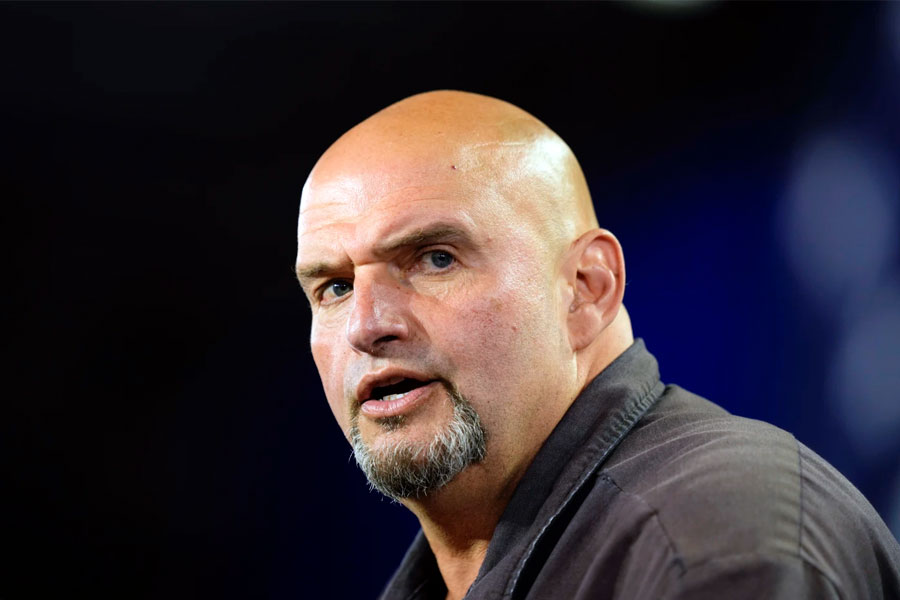
Sen. John Fetterman is calling on the Federal Reserve Board to modernize decades-old payment regulations, arguing that millions of Americans should not have to wait days to access money that can now be transferred almost instantly.
In a letter sent last week to Federal Reserve Board Chairman Kevin Warsh, the Pennsylvania Democrat urged the central bank to begin the rulemaking process required under the 1987 Expedited Funds Availability Act. The law directs the Federal Reserve to reduce the amount of time financial institutions can hold deposited funds before making them available to customers.
Fetterman argued that while banking technology has advanced dramatically over the past several decades, federal regulations governing funds availability have remained largely unchanged. Under the Federal Reserve’s Regulation CC, banks generally have up to two business days to make funds from local checks available, a standard the senator says no longer reflects today’s payment capabilities.
«Slow payments create major costs for workers, retirees and small business owners,» Fetterman wrote, noting that delayed access to wages can lead to overdraft charges, late fees, missed bill payments and lost interest earnings. He said faster access to paychecks and deposits would provide immediate financial relief for families living paycheck to paycheck, seniors on fixed incomes and small businesses managing cash flow.
The senator also highlighted statistics illustrating Americans’ financial vulnerability. According to the letter, most Americans would need to rely on debt to cover a $500 emergency, while 78% say they would face financial hardship if their next paycheck were delayed by just one week.
Fetterman argued that the United States has fallen behind other developed economies in adopting faster payment systems. He pointed to payment networks in the United Kingdom and the European Union, where instant payment technologies have seen much broader adoption than in the United States. Although electronic deposits and real-time payment technology are now widely available, he noted that only a small percentage of U.S. businesses currently use instant payment systems for payroll.
The senator emphasized that Congress has already provided the Federal Reserve with the authority—and obligation—to shorten funds availability periods «to as short a time as possible.» He also referenced the 2003 Check 21 Act, which expanded the use of electronic check processing and significantly improved payment efficiency.
In his letter, Fetterman reminded Warsh that during his confirmation hearing he pledged that the Federal Reserve would remain focused on carrying out its statutory responsibilities. The senator urged the board to respond to an earlier petition seeking faster check clearing and to begin updating federal regulations so workers, retirees and small business owners can access their earnings more quickly in an era of modern payment technology.