


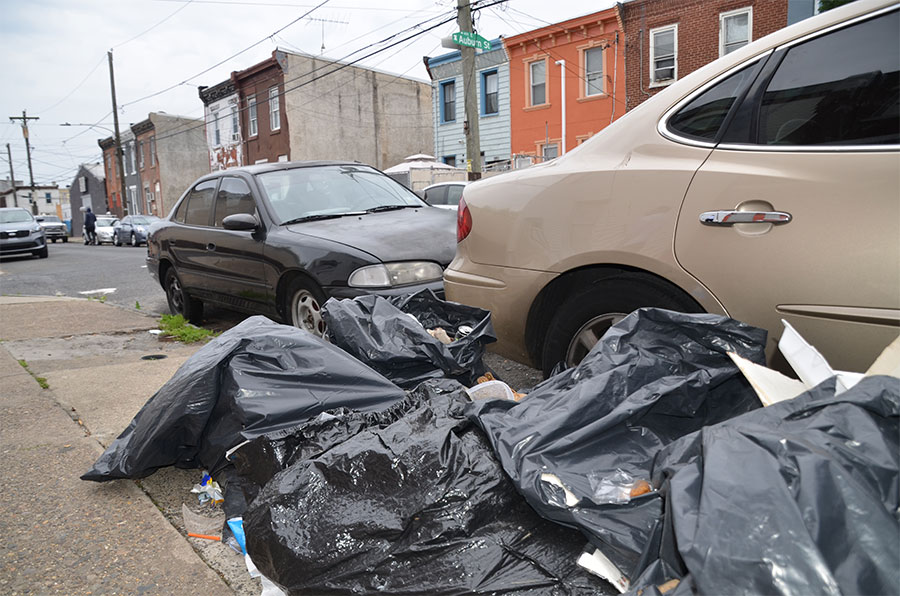
Although Philadelphia has steadily reduced its overall poverty levels over the past decade, the Latino community continues to face the highest rates among all racial and ethnic groups—a reflection of structural inequalities that have yet to be overcome.
A study published Tuesday by PEW reports that in 2013, 27% of residents—about 396,000 people—lived below the federal poverty line. By 2023, that figure dropped to 22% (339,000 people). However, among Latinos, the rate barely decreased from 41% to 33%, and in absolute terms, nearly 500 more people joined the ranks of those living in precarious conditions.
A growing and transforming community
The Latino population is the fastest-growing in the city, with over 240,000 residents representing 15% of the total. Since the 1990s, their presence has tripled. Although Puerto Ricans remain the majority (55%), the community has diversified: 34% have roots in other Latin American countries, and 19% are foreign-born immigrants.
Unlike other cities, in Philadelphia, Latinos—both Puerto Rican-born and immigrants—show similar poverty rates, suggesting that local factors have a greater impact than geographic origin.
Children and female-headed households: The most vulnerable
41% of Latinos living in poverty are children, compared to the citywide average of 30%. Households led by single women face especially critical conditions: 64% live in poverty, compared to just 9% of those led by single men.
“In Philadelphia, we barely survive—we don’t thrive. Minimum wage and aid programs remain the same, while expenses rise every year,” said Tabatha Reyes, a single mother and participant in economic development programs by the organization Xiente. “If a community doesn’t thrive, the individual won’t be able to thrive emotionally, financially, or mentally,” she added.
Low wages vs. high cost of living
The state minimum wage remains at $7.25 per hour, equivalent to about $15,000 annually—far below the income needed to meet basic needs. According to the United For ALICE tool, a family of four with two children in childcare needs at least $96,276 per year to cover housing, food, and transportation. In contrast, the median income for Latino households is just $14,490.
Although 75% of working-age Latino adults actively participate in the labor market—on par with the city average—low wages largely explain the high poverty rates.
Philadelphia compared to other cities
Among the ten major cities analyzed, Philadelphia is the only one where Latinos have the highest poverty rate compared to whites, Blacks, and Asians. In 2023, the rate was 33%—nearly double the national average (17%) and far above cities like Washington, where it’s just 12%.
Historic disinvestment and proposed solutions
The concentration of Latinos in neighborhoods with high poverty levels stems from decades of disinvestment, community leaders warn. “Historic disinvestment in key neighborhoods has left many Latinos facing extreme economic stress,” said William García, director of the Mayor’s Office of Latino Engagement.
Proposed solutions include raising the state minimum wage, streamlining government processes—such as the 30,000 Homes Initiative—and creating direct service spaces like the mini City Hall in Fairhill.
An ongoing challenge for public policy
Although the median income of Latino households grew 40% over the past decade—more than the 26% citywide average—59% still earn below the city’s median income of around $60,000. While the number of Latino families earning over $150,000 annually has increased eightfold, the majority remain in the low-income bracket.
Experts point out that the high proportion of Latinos in manual labor jobs, language barriers, and lack of investment in their neighborhoods have perpetuated a difficult-to-break cycle of inequality.
“If a community doesn’t thrive, the individual won’t be able to thrive emotionally, financially, or mentally,” Reyes reflected.
Additionally, according to the Census Bureau, there is significant underreporting of the Latino population in national surveys, suggesting the problem may be even greater than current data shows.