


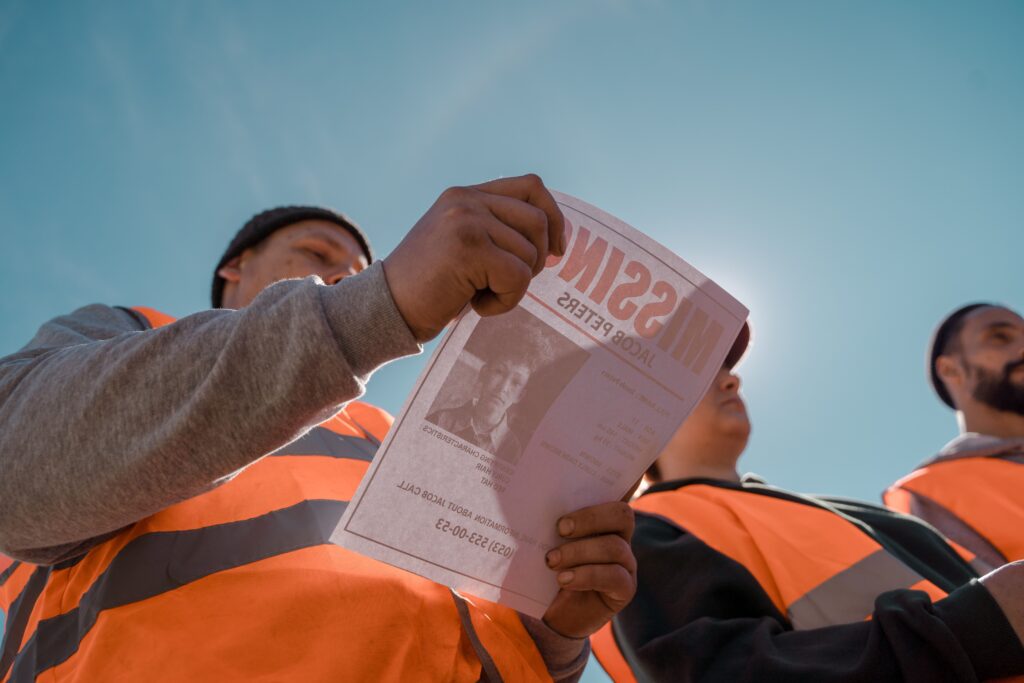
Sue Quackenbush has spent more than two years looking for her daughter, Danielle López 37, who was last seen in April 2024 in the Pine Barrens of New Jersey, where her car became disabled. She has not been heard from since. “I have no idea how to do this, and I’m just figuring it out as I go along,” Quackenbush said at a recent gathering for families of the missing. “There is no information, just uncertainty and loss.”
Her uncertainty is shared by tens of thousands of American families. In 2025, 498,038 missing-person reports were entered into the FBI’s National Crime Information Center (NCIC), the database that connects police departments across state lines. The overwhelming majority of cases are resolved, most within hours or days. But on December 31, 2025, 88,093 cases nationwide remained active, and nearly one in four involved a child under 18. Current missing persons can be found on the Philadelphia Police website.
There is a myth about waiting 24 hours to report a missing person, but in fact, there is no waiting period. The belief that police cannot take a report until someone has been gone for 24 hours is a belief often perpetuated in the media. In Philadelphia, a missing-person report can be filed immediately by calling 911, and the police department considers the first 48 to 72 hours the most critical window of any investigation. These arethe hours when memories are fresh, surveillance cameras still hold footage, and the search radius is still small.


When looking for a missing person, Investigators will ask for a recent photograph; height, weight, and clothing the person was wearing. For safety, it is important to have a recent photo and personal description of family members, especially children, on hand. The police will ask about any medical conditions and medications; the last known location; and any phones or social media accounts. Families should not touch or move the missing person’s belongings, and should ask whether the case has been entered into the National Crime Information Center (NCIC), a centralized, nationwide electronic database managed by the FBI. NCIC registration is required by federal law for anyone under 21.
Captain John Craig, Commanding Officer of Northwest Detectives, said missing-person cases are handled in individual districts, first by district detectives, and if a case grows cold, it may be referred to the Special Victims Unit. Many reports, he said, involve young people who return home within days — but a smaller number remain open, and continue to haunt families and investigators alike.
The national numbers bear him out. When police recorded the circumstances of 2025’s NCIC entries, nearly 95 percent were classified as runaways — overwhelmingly teenagers who left on their own. Abduction by a stranger, the scenario every parent fears most, accounted for 247 entries out of nearly half a million. That does not make a missing teenager safe: young people on the street are vulnerable to trafficking, exploitation, and violence, which is why police urge families to report immediately rather than wait. Adults complicate the picture differently — an adult in this country has the legal right to walk away from their own life, and when police locate a voluntarily missing adult, they can confirm the person is safe but cannot force them home.
For Philadelphia’s immigrant families, a second fear keeps some from picking up the phone at all. It should not. Under sanctuary policies in place since a 2016 executive order, which was reinforced this spring by City Council’s “ICE Out” legislation, city employees, including police officers, are prohibited from asking about the immigration status of the people they encounter. A mother reporting a missing daughter will not be asked for papers. Philadelphia police do not enforce immigration law, do not honor ICE administrative detainers, and may not collaborate with federal immigration agents without a judicial warrant.
When a case is urgent enough, the public becomes part of the search. Pennsylvania’s AMBER Alert system, operated by the State Police, is reserved for abducted children believed to be in imminent danger; those alerts interrupt broadcasts and are pushed to millions of cell phones. For a missing person whose age, health, disability, or even the weather places them at special risk, the state issues a Missing Endangered Person Advisory, Pennsylvania’s Silver Alert, and Harrisburg lawmakers are weighing a “Purple Alert” for people with cognitive conditions. Beneath the public systems runs the BOLO (“be on the lookout”) bulletins that circulate among patrol officers.

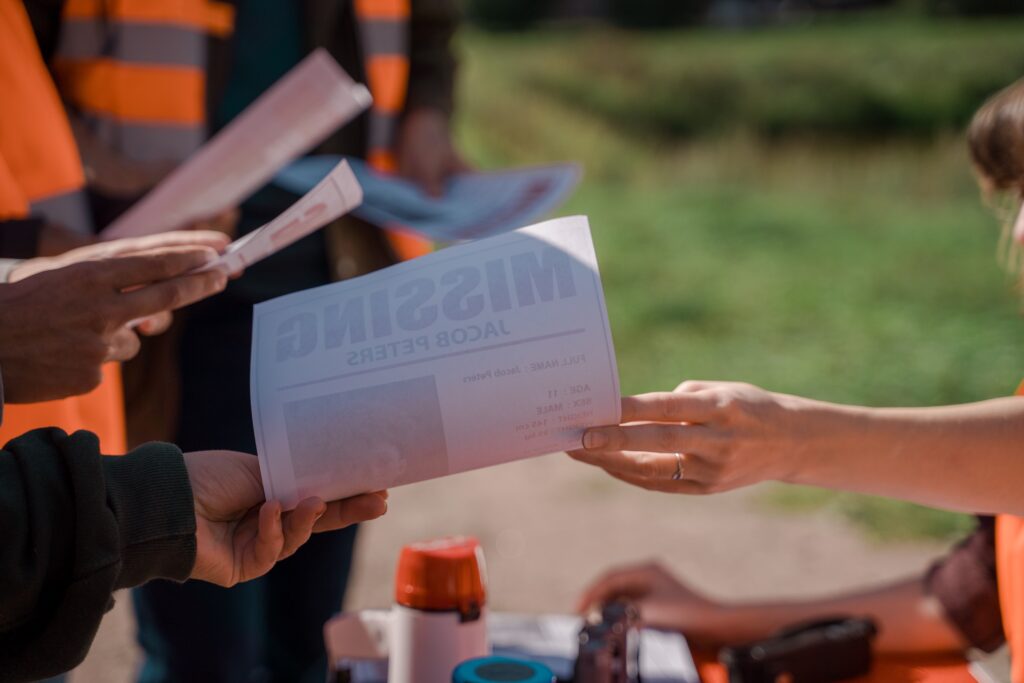
Then there are those who did not run and were not taken; they are simply lost. Philadelphia police treat missing children under 10, and missing people with disabilities, as endangered from the first minute, triggering a rapid-deployment protocol the department calls a “Tender Age Search.” For older Philadelphians, the risk is chronic: the Alzheimer’s Association estimates that six in ten people living with dementia will wander at least once, and for them the dangers can include exposure, traffic, heat, and cold.
However long the search runs, the file stays open. Deputy Commissioner Pedro Rosario said that when missing people are not found right away, the Philadelphia Police Department does not formally close missing-person cases or place a time limit on them; some remain active for years, even decades. The city knows this better than most: a child who disappeared around February 1957 at four years old, but was never reported missing, whose remains were found in the Fox Chase area. During the same time, an unidentified child once known only as the “Boy in the Box,” whose homicide case haunted Philadelphia for 65 years, was publicly identified in 2022 as Joseph Augustus Zarelli. The missing child was the same person, and the Police never gave up looking for the identity of the child.
NamUs, the National Missing and Unidentified Persons System (833-872-5176), is a free federal database where families can create a case profile, submit DNA, and access forensic services. The National Center for Missing & Exploited Children answers 1-800-843-5678 and 1-800-THE-LOST, around the clock, in English and Spanish. Greater Philadelphia Search and Rescue fields trained volunteer teams across the region, and the department’s own missing-persons portal posts active cases and tip instructions.
For Quackenbush, the statistics are other people’s comfort. Her daughter’s case is one of the ones that stayed open, and she is still figuring it out as she goes. “It’s just hard,” she said.