


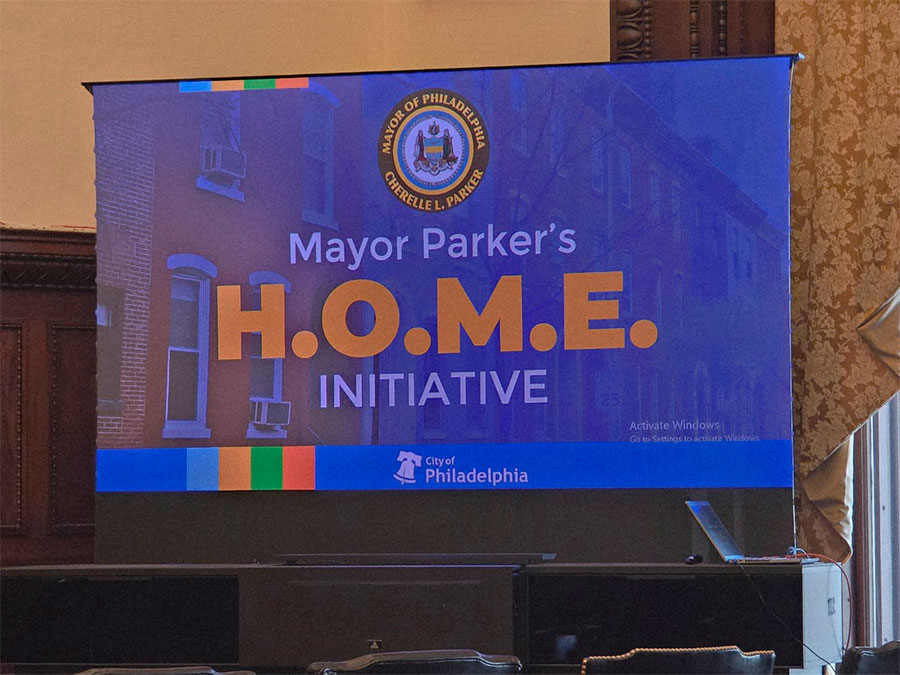
Philadelphia Mayor Cherelle L. Parker announced on January 20 at City Hall a historic investment aimed at transforming access to housing and strengthening the local economy. The announcement introduced the H.O.M.E. Plan (Housing Opportunities Made Easy), an unprecedented initiative that includes a $2 billion investment, the largest in the city’s history.
During the official announcement, the mayor joined by intergovernmental officials and community leaders presented a public-private partnership focused on the construction, renovation, and preservation of 30,000 affordable housing units across Philadelphia. As part of the effort, the city’s construction unions will contribute $50 million to support the redevelopment of the deteriorated Brith Sholom House complex.
The H.O.M.E. Plan is the result of a collaboration between the Parker administration, the Philadelphia Building and Construction Trades Council, and the Philadelphia Housing Authority (PHA). This model will expand investment in affordable housing while also creating hundreds of unionized jobs, generating economic stability for families throughout the region. In addition, the initiative will provide stable returns for union pension funds, with city-backed protection of invested capital.
Mayor Parker emphasized that this achievement is the result of years of collaboration and strategic planning. “This did not happen simply because of a comment or a conversation,” she said. “As mayor, I am only one person. That’s why I speak so often about cooperation and intergovernmental collaboration, local, state, and federal government working together with the private sector and the philanthropic community.
The announcement was met with enthusiasm, but also caution, from community leaders. Will González, Executive Director of Ceiba, described the initiative as a crucial opportunity for the city’s families. “That Mayor Parker is pushing forward a long-term investment in housing is a blessing for Philadelphia and for our communities,” he stated.
González stressed that expanding eligibility for housing programs must continue to prioritize lower-income families. “Eligibility was expanded, but that does not mean the most vulnerable lose priority. Democracy worked, and the interests of those who need help the most were protected,” he explained.
He added that working families face greater challenges in accessing resources. “Anyone working two or three jobs has less time to make calls and schedule appointments. That’s why it’s important for the system to remain fair.”
Finally, González emphasized the importance of information and community organization.
“This is not something that can be explained in 30 seconds. That’s why it’s essential to turn to nonprofit organizations that speak our language and can guide families.”
With the H.O.M.E. Plan, the Parker administration sets a new standard for Philadelphia, demonstrating how cross-sector collaboration can lead to more affordable housing, well-paying jobs, and a more stable future for the city’s families.
For more information, visit www.phila.gov.