


From a milk crate nailed to a pole at 18th and Tasker to pro courts across Europe, Kamiah Smalls has never stopped carrying Philadelphia with her
The first basket Kamiah Smalls ever shot at was a milk crate her family nailed to a pole on the corner of 18th and Tasker.
That corner, in South Philadelphia, is where her mother, Connie, first watched something take hold. Kamiah kept begging to go to the local schoolyard, so Connie would drive by to see what the fuss was about. At first, she found her daughter off to the side, watching the boys play. Then one day, she was out there in the middle of it.
«And the rest is history,» Connie said.
There was just one problem: in South Philly, there was nowhere for a girl to play. No female leagues. No girls’ camps. If Kamiah wanted a game, she played with the boys. So Connie started driving her all over the city looking for opportunities until someone pointed them toward La Liga del Barrio.
It was, as Connie puts it, one of the best decisions they ever made.
«It became a second home to me, honestly,» Kamiah said.
She was young enough that some of the details blur now, but a few things stuck: a set of twins she played alongside whose dad coached the team, and the way Ray Alvarez welcomed them from day one.
«Ray welcomed us with open arms. He put together something beautiful for young women.»
For the first time, Kamiah wasn’t the only girl on the court. She was surrounded by girls who loved the game as much as she did. It mattered so much that, according to Connie, after that season Kamiah came home and announced she didn’t want to go back to playing with the boys anymore.
Ask Kamiah what La Liga gave her beyond basketball, and the list comes quickly.
«Confidence, relationships, connections, family.»
It was her first time in an environment like that, and it taught her something she would rely on throughout her life: how to continue growing, how to keep expanding her horizons, and how to thrive in rooms where she didn’t know anyone.
That lesson would be tested more than she could have imagined.
By high school, basketball had become more than just a passion. Playing AAU basketball during the summers, Kamiah realized the sport could help pay for college. She eventually earned her way to James Madison University, where basketball helped cover her education.
«That’s where my love really sprouted,» she said.
Philadelphia, meanwhile, had already shaped her character.
«Philly made me a dog,» Kamiah said. «Philly brought the dog that I am today.»
Growing up where she did was not always easy, and she credits her mother for creating opportunities that helped her grow through adversity. But the neighborhood taught her lessons no gym ever could.
«If I fail 10 times, I have to stand up 11 times,» she said. «Nobody’s ever going to hand me anything.»
On those playground courts with the boys, she learned she would have to go out and earn everything herself.
She wears that pride proudly. She’ll tell anyone she’s from 18th and Tasker and say it like a badge of honor: an underdog from a mid-major program carrying her city with her.
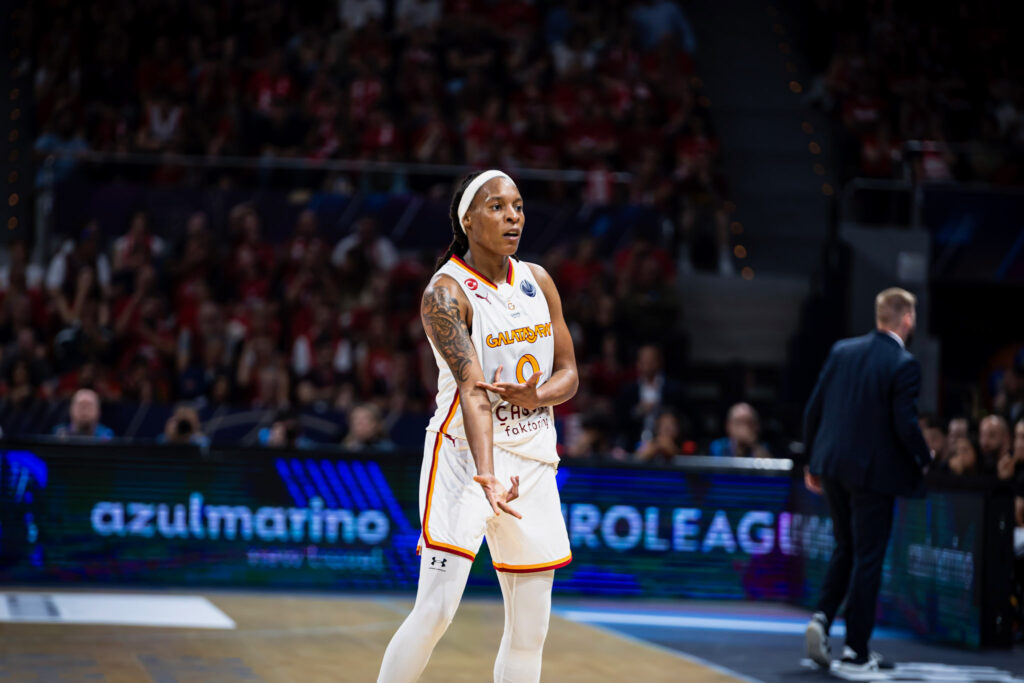
Today, that underdog is preparing for her seventh professional season overseas.
Kamiah has played in Italy, France, Poland, and Turkey, with France remaining her favorite because of its diversity and sense of inclusion.
If you had asked her after her first year abroad, she admits she would have told you she never wanted to go back. The adjustment was difficult. The lifestyle was different. But she learned how to embrace discomfort and see it as an opportunity for growth.
«The only way I can grow is if I’m open to change,» she said. «Remain where your feet are. Accept every experience, whether it’s good, bad, or indifferent.»

Some of the toughest challenges were ones most people back home never think about. Simple things like going to a grocery store or restaurant and not understanding the language. And then there were the cultural adjustments.
During her first professional season in Empoli, Italy, she often found herself as one of the only Black women in many settings.
«You’ve got to be open-minded,» she said. «Maybe they’ve really never seen an African American in their life.»
Rather than becoming bitter, she chose understanding.
Through every step of the journey, her faith has remained central.
«I feel like God has His arms wrapped around me so tight,» she said. «It can be taken away from me in a second. All glory to God for where I stand.»
This year brought her closest opportunity yet to reach the WNBA when she earned a tryout with Portland. Although it did not result in a contract, she does not view the experience as a disappointment.
«Don’t ever apologize for what God has written,» she said. «What’s for me will always be for me, and nobody will be able to take that.»
The tryout confirmed that professional organizations recognize her talent and value. For Kamiah, the response is simple: continue working.
She expects to return overseas later this summer. A team has not yet been finalized, and it may even be a new country, but she is staying ready for whatever comes next.
For Connie, watching her daughter’s journey has been a blessing.
«It has been truly amazing to watch Kamiah grow into this great player and see her playing around the world,» she said. «This makes my heart full, knowing she has earned and deserves all of the blessings coming her way.»
When Kamiah thinks about the little girl who once shot at a milk crate on 18th and Tasker, her voice softens.
«She would be so proud. She never saw this coming.»
And to the next girl standing on a corner in Philadelphia, watching the boys play and wondering whether there’s room for her too, Kamiah has a message:
«Can’t nobody tell you what you can be. You’ve got to show up every day, put your best foot forward, and God is going to do the rest.»
She calls herself living proof.
A small girl from South Philadelphia who grew into something much bigger than she ever imagined.
Her college coach once called her a «unique superstar.» Not because she scored the most points, but because she made everyone around her better.
«I can only be as good as my teammates are,» she said.
«I’m the mid-major star that made it. And if I can do it, you can do it.»
She’s come a long way from that milk crate at the corner of 18th and Tasker.
But she still carries it all with her: her neighborhood, her city, and the second home she found at La Liga del Barrio.