During Hispanic Heritage Month, we honor Latinos who share their success with the community.
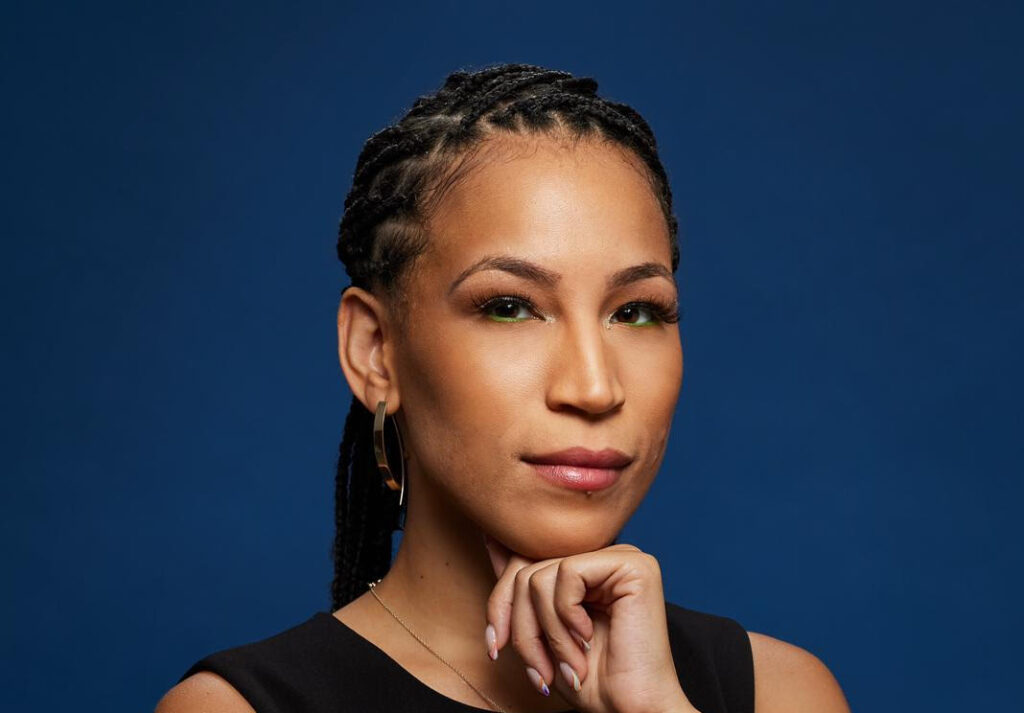
In a Charla de Impacto conversation with Impacto Media’s Editor-in-Chief Perla Lara, Maridarlyn Gonzalez, a young professional of Dominican descent raised in Puerto Rican culture, reflected on the powerful influence both islands have had on her life.
In Maridarlyn, Caribbean roots converge with a single purpose: serving the Latino community through knowledge, empathy, and civic engagement. The daughter of Dominican parents and raised by a Puerto Rican family, she embodies both the richness and complexity of Latino identity, as well as the drive of those who turn their personal stories into engines of social change.
Although she built her career in Philadelphia, her childhood was filled with the sounds of merengue and the rhythms of Puerto Rico’s Naranjito mountains.
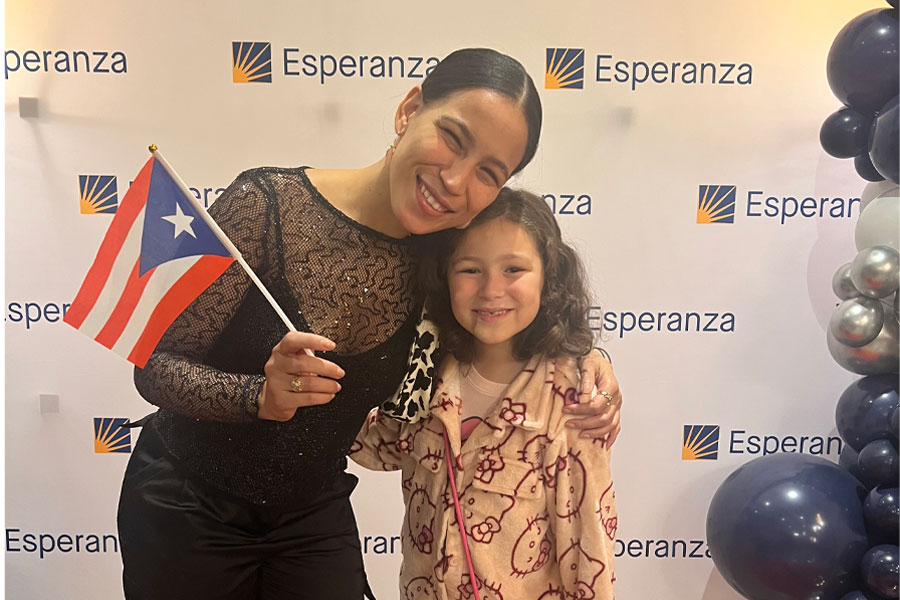
“I grew up between two cultures, and that’s a blessing,” she says. “When I play dominoes, I use Puerto Rican words like chiva and capicúa. I’m proud to celebrate both cultures.”

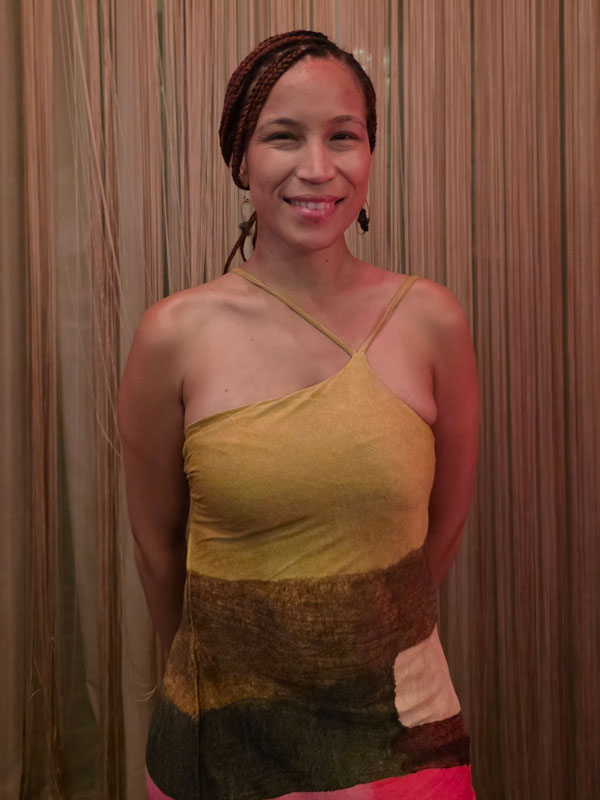
Maridarlyn graduated from Kensington High School, in North Philadelphia, where she learned a lesson that would shape her journey: “That with little, you can do a lot.” For her, every achievement is a collective one.
“It’s not just about my personal growth, but about representing those who come after me. My community taught me that there’s always something you can contribute.”
Today, she is part of the research team at The Pew Charitable Trusts, a global, nonpartisan philanthropic organization that strengthens cities through studies, grants, and support for public spaces. In her role, she analyzes data and trends that help guide government decision-making and provide valuable insights for community leaders and nonprofit organizations.
But her commitment to public service began long before. After graduating from Pennsylvania State University (Penn State), she worked at Women Against Abuse, where she helped survivors of domestic violence find safe housing. She later joined an energy company focused on helping low-income families improve their homes and eventually transitioned to the public sector, where she worked in urban planning.
“Working in planning was a wonderful experience because it allowed me to understand my city on a deeper level; to see its maps, its data, and how different layers of government connect,” she explains. “That prepared me for what I do now at Pew: analyzing data rigorously, but always keeping my feet –and my eyes– in the community.”

Latino poverty: a persistent challenge
At Pew, Maridarlyn has contributed to key research efforts aimed at understanding the economic realities of Latino families in Philadelphia. In 2017, the organization released the report Philadelphia’s Poor, which revealed that Latinos have the highest poverty rate among major demographic groups in the city, and that Philadelphia ranks among the poorest large cities in the United States.
“Between 2013 and 2023, that rate dropped by about eight percentage points, but the total number of people living in poverty didn’t change much,” she notes. “That suggests the Latino population is growing. There’s been some progress; for instance, more households now earn over $150,000 a year, but still, 59% of Latino households make less than the city’s median income of around $60,000.”
The report also highlights that households led by Latina women are more likely to live below the poverty line.
“Forty-one percent of Latinos living in poverty are children, and 64% of households in that situation are headed by single mothers. That reality underscores the urgent need to build community support networks and advocate for more effective public policies,” she explains.
Despite decades of work by Latino organizations, poverty remains a structural challenge with multiple causes.
“The median income for Latino households in poverty is about $14,490 a year, but the basic cost of living in Philadelphia exceeds $96,000. That gap is enormous. Plus, Pennsylvania still follows the federal minimum wage, which limits economic mobility. It’s not that there’s no work; it’s that available jobs don’t pay enough.”
For the young researcher, data must be a starting point for dialogue and action. “Our role at Pew is to present information objectively so that organizations, leaders, and the community can make informed decisions. Numbers aren’t the end of the conversation; they’re the beginning.”
Being Latina as a great blessing
For Maridarlyn, being Latina has always been a source of strength.
“I love our culture and our roots. It’s helped me value other cultures and connect with people from around the world,” she says. “For me, being Latina hasn’t been a struggle — it’s made my life richer and more meaningful. It’s helped me adapt, learn, and serve.”
She acknowledges that within the Latino community itself, diversity can sometimes present challenges, but insists that this plurality is one of its greatest strengths.

“We’re different, but we share common values: hard work, family, faith, solidarity… If I could choose, I’d choose to be Latina a thousand times over.”
Through her work at Pew and her deep commitment to service, Maridarlyn Gonzalez represents a new generation of Latino professionals who, without forgetting their roots, are determined to open doors for those who follow.
“My story isn’t just mine. It’s the story of many people who dreamed of a better future, and are now working to build it.”