


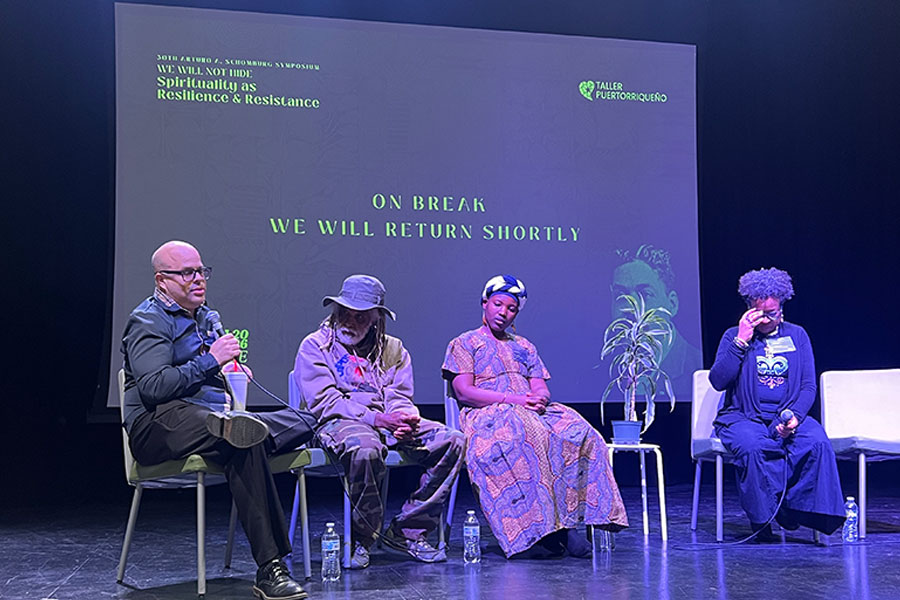
Walking through the doors of Taller Puertorriqueño on February 28, 2026, the day of the symposium, you feel it before you hear it — a low hum of anticipation rising from guests as they trickle into the lobby. The air smells faintly of café negro. We are standing in el corazón del barrio — the heart of the neighborhood — and on this day, the heart is beating with the celebration of African heritage within our Caribbean culture. Taller is located at 2600 North 5th Street in the mostly Puerto Rican neighborhood of North Philadelphia.
This year marks the 30th Annual Arturo Alfonso Schomburg Symposium, one of the most enduring intellectual and cultural traditions in Philadelphia’s Puerto Rican and Afro-Latino communities. The symposium brings together scholars, artists, elders, students, and community members in a conversation that has been ongoing for three decades.

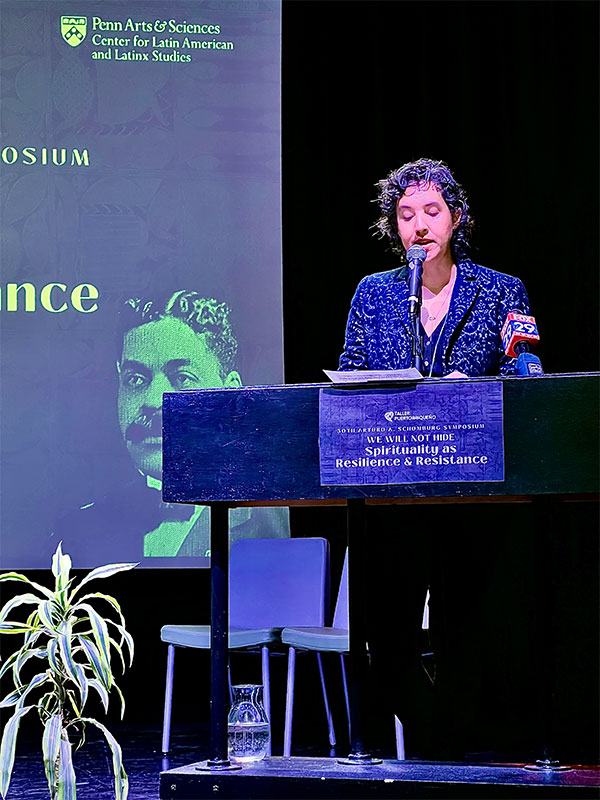
The symposium is named after Arturo Alfonso Schomburg (1874–1938), an Afro-Puerto Rican historian and bibliophile whose life of cultural exploration was set in motion by a single, wounding sentence. As a young student in San Juan, he asked about the history of people who looked like him. A hurtful and uninformed teacher declared that Black people had no history, no heroes, no accomplishments worth recording. Schomburg spent the rest of his life collecting the evidence of his heritage: books, manuscripts, slave narratives, portraits, pamphlets, and letters. By the early 1920s, the archive had grown to more than 10,000 items. In 1926, the New York Public Library purchased the collection, and it became the nucleus of today’s Schomburg Center for Research in Black Culture in Harlem. «History must restore what slavery took away,» he wrote.
Behind every speaker, panel, and program — behind every year’s chosen theme — stands a planning committee that has been crafting this work since the very beginning. Among them is Dr. Evelyne Laurent Perrault, a Venezuelan woman of Haitian parentage whose dedication to this project spans the symposium’s thirty-year history. It was Laurent Perrault who helped organize the symposium as a space to nurture conversations rooted in our African heritage. Perrault is the kind of person whose name rarely appears in the headlines, but without whom the headline doesn’t happen. Among those who have shaped Taller’s identity across generations is Carmen Febo San Miguel, a foundational figure in both the institution and the broader Philadelphia arts community — the kind of pillar whose presence in a room changes the weight of what is said there. «Many times, we, particularly in Latin America, speak about being rooted in all three races,» she explained, «but due to racism, we don’t give enough importance to our African roots.»
We Will Not Hide! The title of this year’s symposium is a declaration. The symposium’s day of sacred knowledge unfolded like the layers of a single, deep root.
The first speaker on the panel, Dr. Cinézio Feliciano Peçanha, known as Mestre Cobra Mansa, introduced the audience to a cosmological concept of the Bantu people. In Bantu and Kongo cosmology, the Kalunga line is the sacred threshold that separates the world of the living from the world of the ancestors — a boundary understood as a shimmering, watery horizon, as vast as the ocean itself. The ancestors cross to the other side of the Kalunga, where they continue to exist, to watch, to guide. The living and the dead are separated by water. This teaching, the speaker explained, traveled with the enslaved Bantu to the Caribbean, where it took root in Vodou, in the Ifa/Santeria. To understand the spiritual traditions of the African diaspora, the audience learned that one must first understand the roots of the African and Sub-Saharan worldview and beliefs.
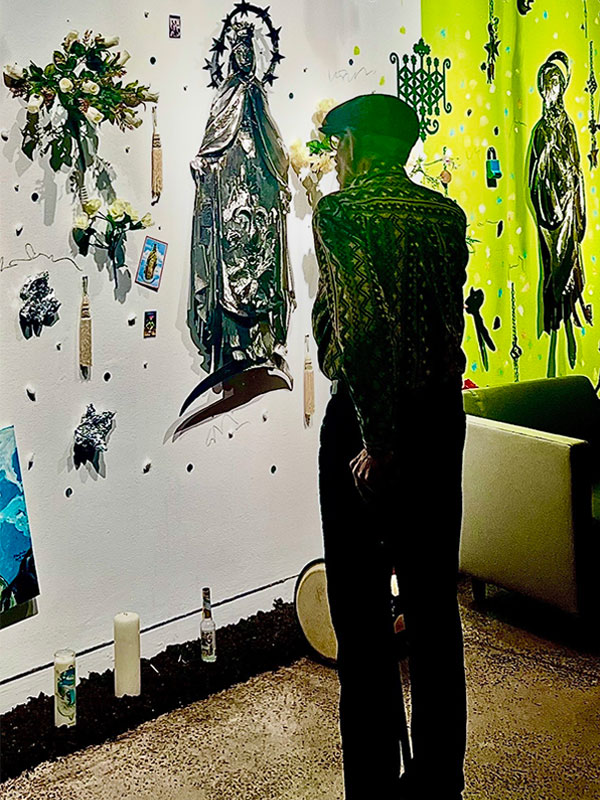
The second speaker was Yaa Alexandra St. Tellien, a Haitian priestess and scholar, whose presentation on the powerful feminine energies of Vodou held the room completely captivated. She moved through descriptions of three luminous figures: Erzulie Freda (Ezili Freda), the lwa of love, beauty, and material longing; Erzulie Dantor (Ezili Dantor), the fierce, scar-faced warrior-mother, and La Sirène (Lasirenn), the luminous mermaid of the sea. St. Tellien described these three not as distant mythology but as living forces that Haitian women have called on for centuries when the human world offered no protection. The room leaned in.
Renée González, was the third speaker, and he opened with something disarmingly simple: a memory of childhood fascination with a different way of seeing the world. That interest eventually led him to Cuba, where the Yoruba-rooted tradition of the Ifa religion had survived by fusing its sacred figures with the faces of Catholic saints. In Cuba, González found the living current of what he had been searching for, and he was eventually initiated as a Babalawo — a high priest of the Ifa religion. Together, the three morning speakers wove a single tapestry: the Bantu carried the Kalunga to the New World; the Yoruba and Batu brought the Orishas; the Fon and Ewe carried Vodou. All of these people, stripped of their names and their freedom, held their philosophies like embers beneath ash.

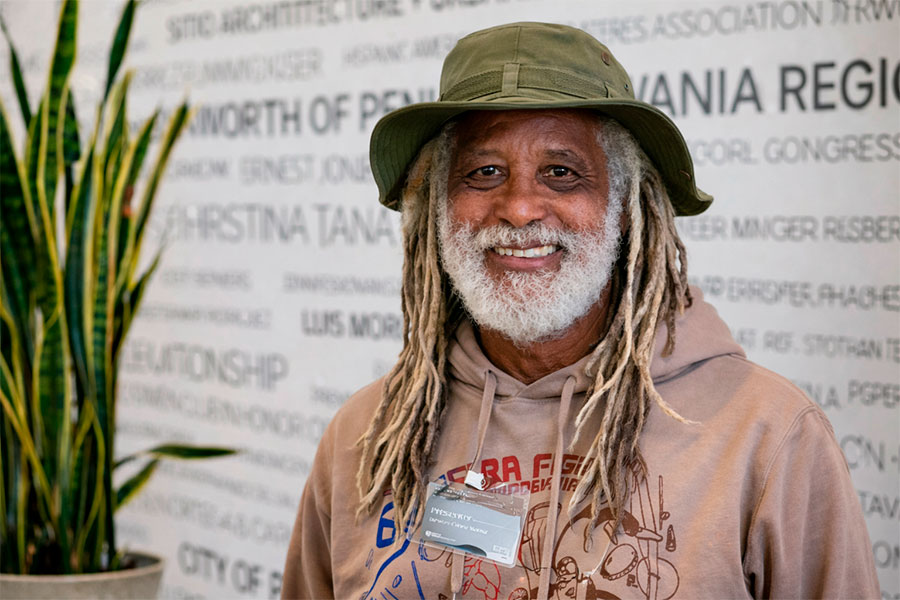
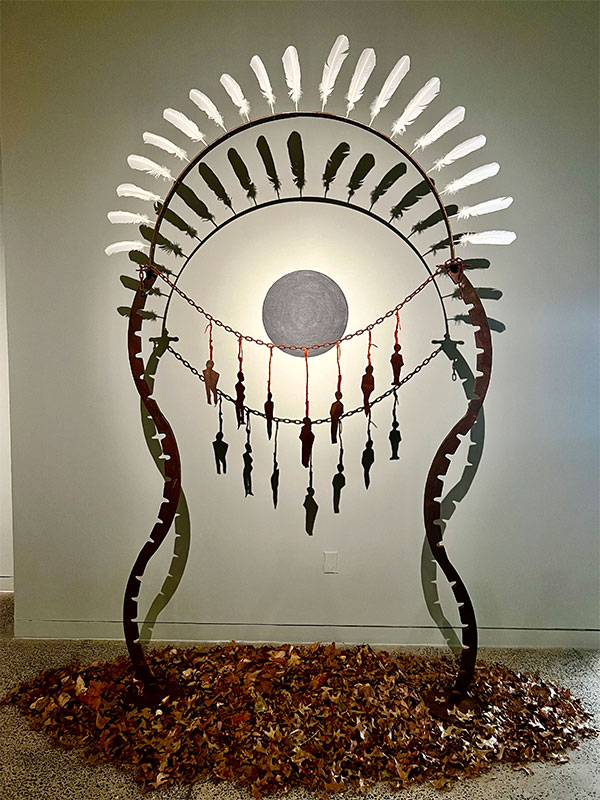
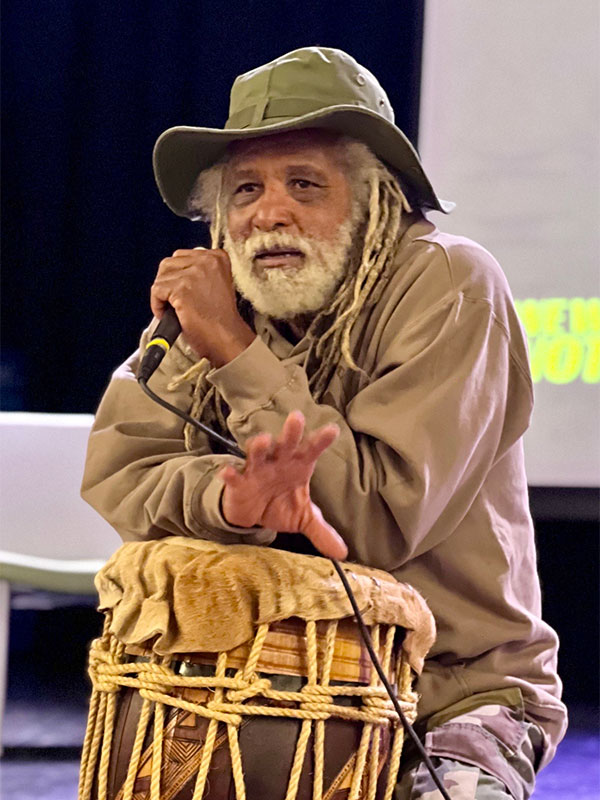
The second panel of the afternoon opened with a reflection on why gatherings like this one matter. Panelist Jorge Luis Rodríguez, the modernist Puerto Rican sculptor, created the first Percent for Art sculpture, which was installed in 1985. The sculpture titled Growth stands 14 feet tall and is installed in Harlem Art Park on East 120th Street. Today, he brought his landmark 1985 exhibition «Orisha Santos: An Artistic Interpretation of the Seven African Powers» back to Philadelphia. His sculpted figures were created in close collaboration with local practitioners of Orisha spirituality. Beside him sat Nilda Pedraza, former executive director of the Cayman Museum in SoHo, New York, and career museum director whose institutions have provided space for Puerto Rican and Hispanic artists within the city’s mainstream gallery geography in the 1980s. Ms. Pedraza recounted the excitement she felt in the 1980s when Puerto Ricans were appearing in the mainstream. The participants of the event sat a little straighter when she recounted the obstacles and victories. And then there was André Cisneros, a popular percussionist, who connected his musical talent with his faith. He brought something that scholarship could not — the living texture of what it feels like to be a Caribbean person in a body that carries all of our histories at once. Cisneros spoke of his family as a living archive of the Caribbean’s roots: African, Taíno, Spanish, all of it present in the faces around his family’s table.
Rev. Dr. Roberto Lugo Morciglio, author of Fundamentos del Reino, reminded the room why the symposium carries Schomburg’s name. Lugo Morciglio stated, «Without discussing the work of Schomburg, the symposium is missing its compass». We are not one monolithic community; we are people with braided roots,» he said — a statement that drew verbal agreements and nods from across the room. «Schomburg is very important in this context.» Lugo Morciglio traced the arc of Schomburg’s awakening and offered something more personal. «My grandmother was a Black woman,» he said quietly. Cisneros nodded in recognition.
Arturo Schomburg would have recognized this room. The seriousness, the brotherhood, the fact that someone is taking notes. He spent his life in rooms like this — rooms where people had decided that the stories taken from them were worth the trouble of getting back. Thirty years in, Evelyne Laurent Perrault and her fellow committee members are still at it. The fire has not gone out, and soon, we will be back to planning the 2027 Schomburg Symposium.
For more information about Taller Puertorriqueño and upcoming events, visit tallerpr.org. To learn more about Arturo Alfonso Schomburg, visit the Schomburg Center for Research in Black Culture or the NMAAHC’s profile of his life and work.