


Easton, PA – Bad Bunny did not need a campaign sign to start a political conversation.
A song about Puerto Rico, displacement, family, migration or memory could reach people who might never attend a town hall, follow a legislative debate or sit through a political meeting.
That was part of what made the Bad Bunny era significant for Latino visibility.
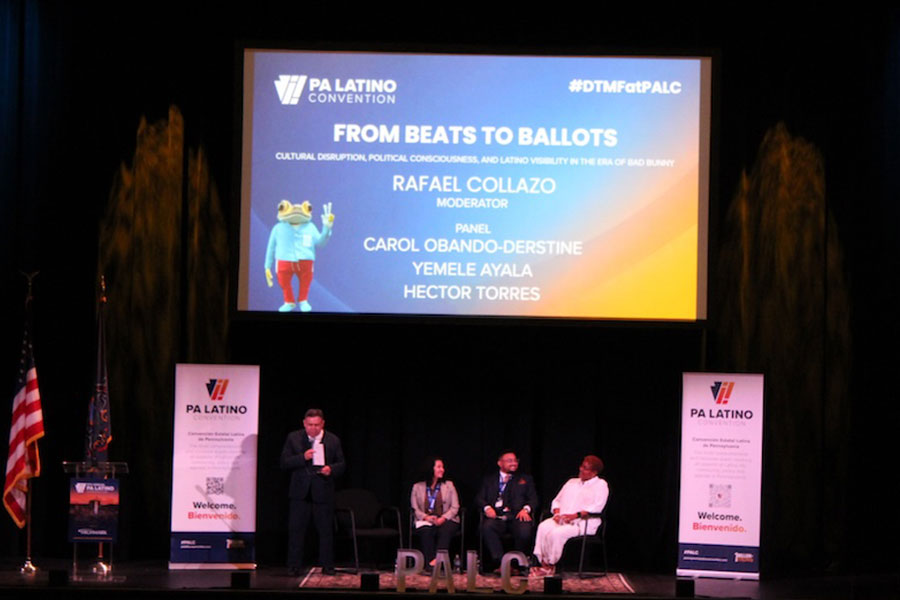
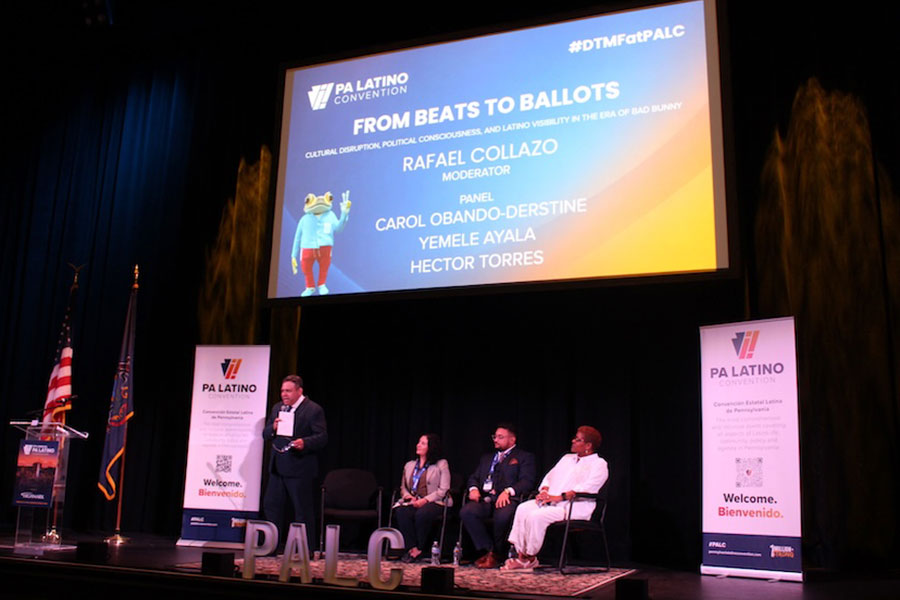
The connection between pop culture and political consciousness became the focus of “From Beats to Ballots”: Cultural Disruption, Political Consciousness, and Latino Visibility in the Era of Bad Bunny, a fireside chat at the 2026 Pennsylvania Latino Convention.
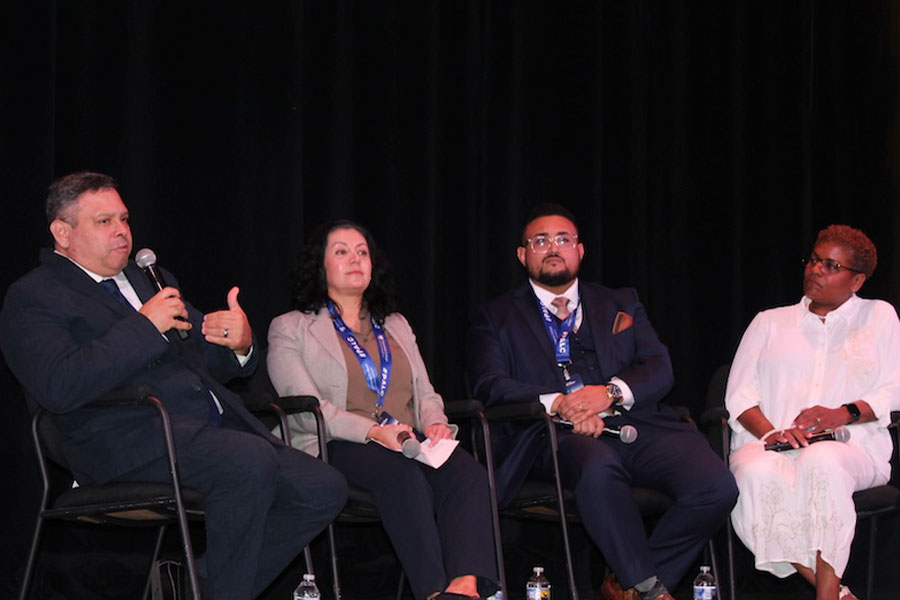
Moderated by Rafael Collazo, executive director of UnidosUS Action Fund, Inc., the conversation included Carol Obando-Derstine, a former U.S. congressional candidate, Yemele Ayala of CHP Schools and Héctor Torres. Rather than discussing Bad Bunny simply as an artist, the panel used his cultural influence to explore what could happen when Latino identity became increasingly visible in American mainstream culture.

The scale of that visibility was difficult to ignore.
Bad Bunny’s Super Bowl LX halftime performance averaged 128.2 million viewers, according to Nielsen. For millions of viewers, Puerto Rican culture and Spanish-language music were not on the margins of American entertainment. They were at the center of one of the country’s largest television events.
But being visible was not the same as having political power.
That tension became one of the panel’s strongest themes.
Obando-Derstine pointed to the widespread embrace of Latino music and culture while arguing that cultural acceptance had not automatically produced equivalent political influence.
The distinction mattered.
A community could sell out concerts, dominate streaming platforms and shape fashion, language and entertainment while still asking whether its voices were equally present in elected office, boardrooms, law, education and other institutions where decisions were made.
Bad Bunny had also increasingly connected his cultural platform to public issues. At the 2026 Grammy Awards, he criticized U.S. immigration enforcement during an acceptance speech. He had previously said concerns that immigration agents could target concertgoers influenced his decision not to include mainland U.S. dates on his tour.
For the PALC panel, however, the significance went beyond any single political statement.
Ayala described music as a vehicle capable of reaching younger people in a language, style and energy they already understood. Her comments connected Bad Bunny’s work with Puerto Rican history, identity and the ability of culture to introduce conversations that might otherwise have felt distant from everyday life.
That may have been one of pop culture’s greatest political strengths.
It did not always announce itself as politics.
A young person could begin with a song and eventually encounter questions about why families left their homelands, why neighborhoods changed, why housing became unaffordable, why immigration became part of everyday fear or why representation mattered.
The music became an entry point.
The panel repeatedly returned to another idea: authenticity.
Collazo described Bad Bunny’s ability to remain visibly Puerto Rican, speak Spanish and present his identity without appearing to ask permission from a broader American audience as central to his appeal.
Obando-Derstine connected that concept to her own experience as a candidate. She recalled pressure to soften or minimize parts of her story, including her immigrant background and concerns affecting immigrant communities. Her response was to continue presenting herself through those experiences rather than separating them from her public identity.
That discussion reached beyond electoral politics.
For Latino young people, seeing someone succeed without abandoning language, accent, family history or cultural identity could change what leadership looked like.
Visibility could make something previously considered unusual feel possible.
The conversation also emphasized that this moment had not begun with Bad Bunny.
Collazo reminded younger attendees that previous generations of artists, parents, organizers and community leaders had created space for the cultural confidence visible today. Ayala similarly spoke about parents and grandparents whose sacrifices had created opportunities their children and grandchildren could build upon.
That intergenerational connection mattered because Latino political consciousness did not develop only inside a voting booth.
It could develop at a dinner table, through music, through stories about migration, through memories of Puerto Rico, Colombia, the Dominican Republic or another homeland, and through conversations about the neighborhood someone grew up in and why it no longer looked the same.
Pop culture could give those experiences a larger microphone.
But the fireside chat also raised the limitation of visibility: a cultural moment could make people feel seen without necessarily changing the institutions surrounding them.
That required something beyond streams, concerts and viral moments.
It required sustained civic participation, community organizing, leadership development and institutions capable of carrying cultural energy beyond the stage.
For decades, political institutions had asked how to reach Latino communities.
The discussion suggested another question was just as important: Were those institutions listening to the political conversations Latino communities were already having through culture?
Bad Bunny did not create Latino political consciousness.
But his era had made it much harder to ignore.