


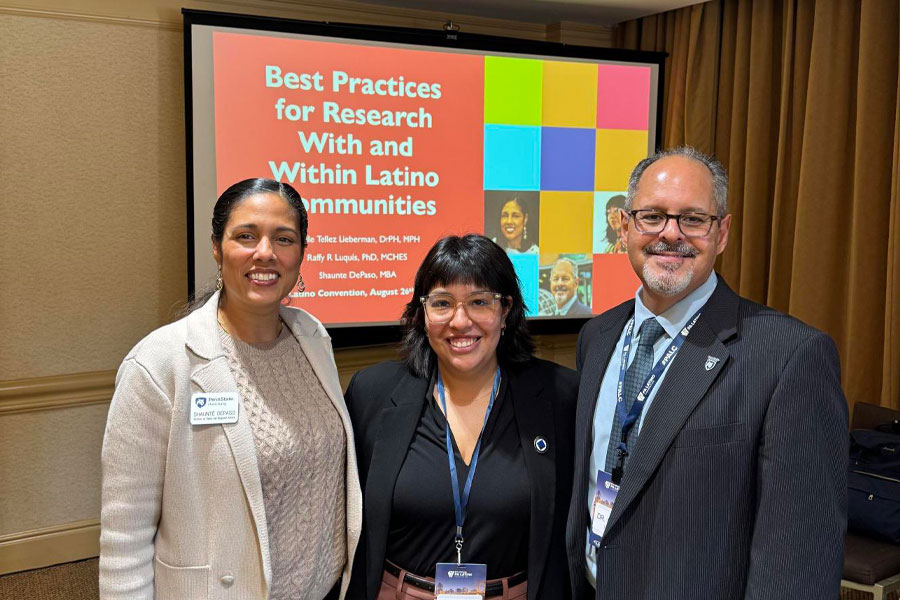
I attended the PA Latino Convention in downtown Pittsburgh from August 25–27, where Latino leadership and expertise were celebrated across a wide range of fields. The event featured numerous workshops, roundtables, and panels. While I participated in several sessions related to health, the highlight for me was co-presenting a workshop focused on research and data in Latino communities.
This workshop was a collaboration between Esperanza’s Institute for Latino Health Equity and Penn State’s Pennsylvania Center for Latino Research. Our goal was to share best practices for conducting research with Latino communities—not just in them—and to offer guidance on working with neighborhoods like Hunting Park and organizations like Esperanza. We also explored strategies for collecting and using data that can more effectively serve Latinos across the Commonwealth. Ultimately, we wanted to help Latino leaders reimagine research as a tool that honors and uplifts our communities.
In my portion of the presentation, I shared the story of Esperanza’s work in Hunting Park and the mission of our Institute. I spoke candidly about our community’s experiences with research—the good, the bad, and the ugly. One example I highlighted was “hit-and-run” research, where investigators enter a community to collect data, then leave without building relationships or sharing results. This approach discourages participation, erodes trust in science, and yields minimal, short-term impact on outcomes like health.
Reflecting on these challenges, I also shared some of Esperanza’s guiding principles:
- Research should be non-predatory and deliver direct, short-term benefits to our community.
- Research should be co-developed and co-led by community members—not solely by external scientists.
To close the workshop, we invited attendees to share their own experiences with research—what worked, what didn’t, and what they believe needs more attention. Many of their stories echoed the themes we presented. The most frequently mentioned areas needing further research were mental health, immigration, and employment/economic development.
Several participants stayed after the session to continue the conversation about health, research, and data. These exchanges gave me hope for the future. Latinos belong in the fields of research and science, but we must keep raising our voices and creating space for our communities so we are not left behind.