


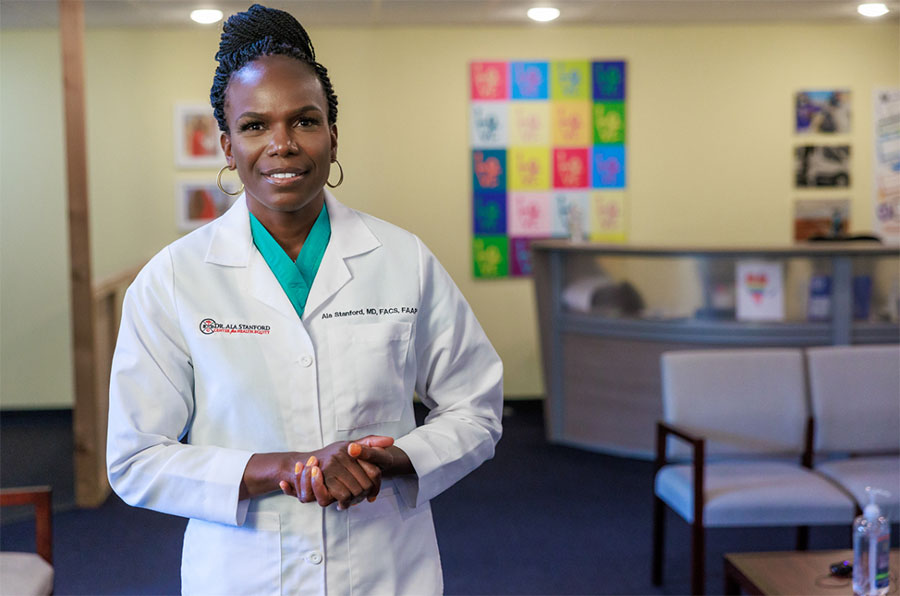
Ala means wings in Spanish. Dr. Ala Stanford has wings that soar above inequity, and she uses her superpower to serve the people of her community and beyond. Now, she is asking Philadelphia to let her take those wings to Washington. Dr. Stanford is running for the 3rd Congressional District seat in the U.S. House of Representatives, as longtime Congressman Dwight Evans steps down. The primary election is May 19, 2026.
In a virtual interview, she greeted me with a cordial attitude and showed no sign of frustration despite the initial technical issues. The conversation flowed naturally from the very beginning, creating a close and comfortable atmosphere.

A good friend of Philadelphia
That, as it turns out, is precisely the relationship Dr. Stanford has built with Philadelphia.Before she mapped out her legislative priorities, Dr. Stanford offered something more telling: a reason. «I have operated on children who came in with gunshot wounds — and then I have seen those same children come back,» she said, a weight behind the words that no policy brief could replicate. «That is not acceptable. That cannot keep being acceptable.»
As a pediatric surgeon, Dr. Stanford has seen the cost of political neglect up close — in operating rooms, in waiting areas, in the faces of mothers with nowhere else to turn. Her platform is, in many ways, an extension of what she has already been doing. She intends to vote against the policies of the Trump Administration — cuts to healthcare programs, gutted funding for food assistance, education, and affordable housing, including rollbacks to Medicare and Medicaid — and to fight for a better quality of life for her constituents.
In immigration matters, the most important thing is to respect human rights and life
«ICE agents are terrorizing communities,» she said. «Extended detention of people who are undocumented or insufficiently documented is inhumane.» Since the beginning of 2025 and through April 12, 2026, ICE has reported 53 deaths in custody — a consequence, advocates argue, of inadequate healthcare and supervision. «As a Congresswoman, I will vote to block the establishment of ICE detention centers in Pennsylvania,» said Dr. Stanford. «If that cannot be blocked, I will insist on proper record-keeping — every person in those centers must be known, their history documented, their medical and daily care accounted for.»
Healthcare should never depend on the ability to pay
At the heart of Dr. Stanford’s campaign is a conviction that has guided her medical career: quality of life and healthcare should never depend on the ability to pay. «At our health center, we let you in and take care of you,» she said. That is what health equity looks like in practice — not as a policy slogan, but as an open door. I thought of a young woman — undocumented, recently injured in a serious automobile accident. She needed medical attention urgently, but door after door closed in front of her. After the initial hospital visit, she had nowhere to turn. It took several weeks before she could see a doctor at a community clinic, the only place willing to treat her.
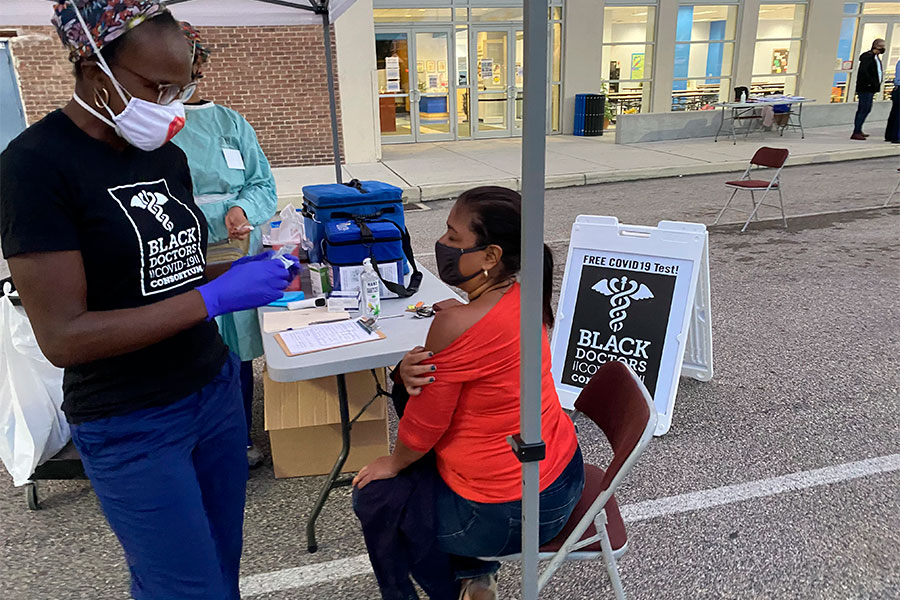
The need is stark. Dr. Stanford recalled walking Kensington Avenue during the pandemic, vaccines in hand, going to the people rather than waiting for them to come to her. «I remember vaccinating people right there on Kensington Avenue. We went to them,» she said. Her social workers are regularly encountering patients living at the margins of the healthcare system: one had gone three weeks without insulin. Another had undergone a full knee replacement but could not access follow-up physical therapy — not because the care did not exist, but because Medicaid cut her coverage, and the termination had happened so quickly the patient did not even know they had been dropped. «Medicaid is provided to the lowest-income people, people with disabilities, and older people who may have to choose between food, rent, and medicine,» Dr. Stanford said. «We must have health equity for all. That is a large part of the mission.
An outstanding track record
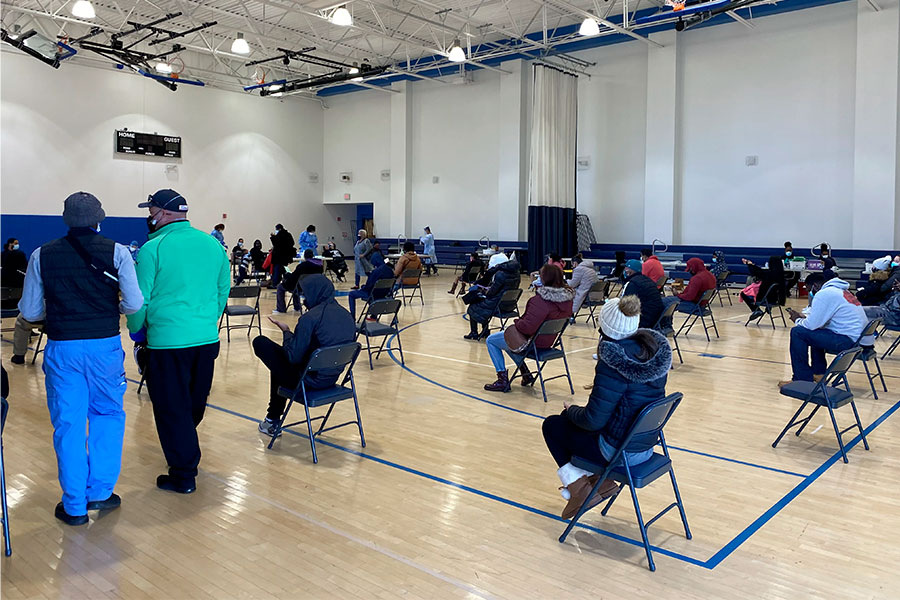
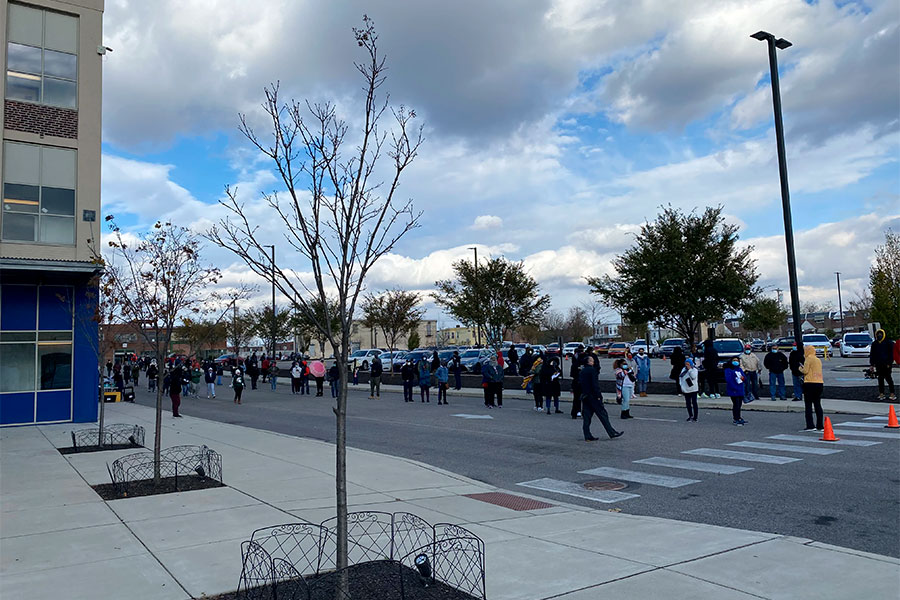
Dr. Stanford has an impressive record of going where the need runs deep. During the 2020 pandemic, she led the Black Doctors’ Consortium COVID-19 initiative, mobilizing a team to deliver vaccines directly to neighborhoods. The BDCC vaccinated more than 60,000 people — reaching Black Philadelphians, Latino communities, the LGBTQ+ community, and the unhoused and addicted populations around Kensington and Allegheny.
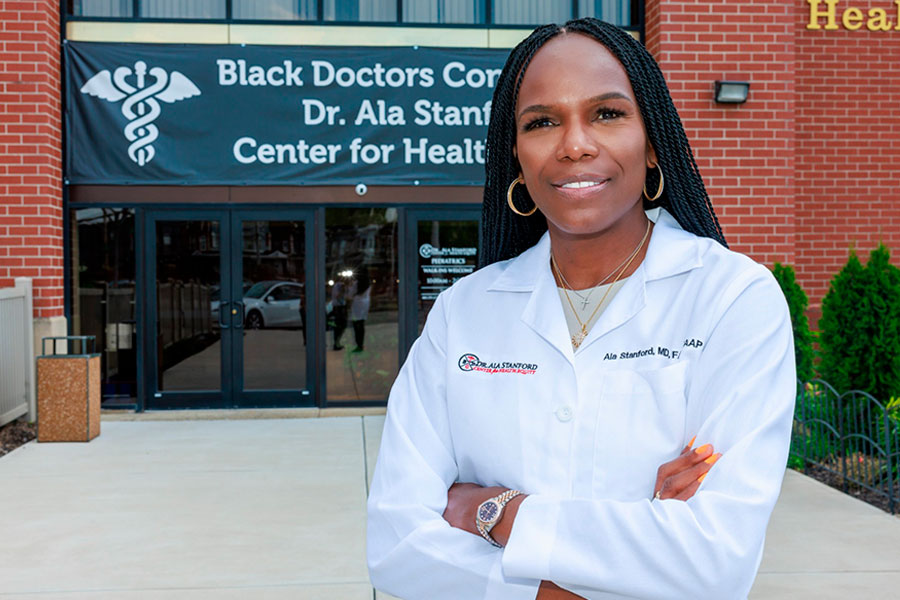
That ethic lives on at the Dr. Ala Stanford Health Equity Medical Center at 2001 W. Lehigh Ave., founded through the Black Doctors Consortium. The center provides healthcare to patients of all ages and is preparing to add new imaging equipment in June. The new equipment will bring the diagnostic services that patients currently must travel outside the neighborhood to receive in-house. Former President Biden recognized that record when he appointed Dr. Stanford as regional director for the U.S. Department of Health and Human Services’ Mid-Atlantic region, where she advocated for families from Philadelphia to West Virginia.
A legislative agenda rooted in community
When asked about her top priorities for Congress, Dr. Stanford spoke with clarity and purpose. She will work to restore full funding for Medicare and Medicaid, the lifeline for millions of low-income, elderly, and disabled Pennsylvanians. She will fight to preserve Social Security — the foundational promise made to generations of working Americans — and to direct meaningful resources to Philadelphia’s public schools. Keeping communities safe, not only from gun violence but from the everyday insecurities of poverty and displacement, is central to her vision. She also intends to tackle food deserts in neighborhoods where fresh, affordable food is simply unavailable; a public health crisis hiding in plain sight. She will oppose what she calls the funding of an illegal war in Iran, arguing that placing American servicemembers in harm’s way without an imminent threat is unacceptable. And she is committed to creating economic opportunity and reducing the cost of daily living for working families across the district. All of it — the surgeries, the vaccine drives, the federal appointment, the health center, the open door — traces back to a single conviction.» I have always believed that where you are born should not determine how long you live,» says Ala. That is what I am taking this to Congress.» The wings, it seems, have always known where they were going.
Editor’s Note
In recent weeks, Dr. Ala Stanford’s congressional campaign in Pennsylvania has been marked by several controversies that have drawn public attention. Among them is her last‑minute withdrawal from a high-profile televised debate, citing disagreements over the format, which prompted criticism about her willingness to engage directly with opponents. In addition, a widely circulated interview raised questions about her policy preparedness when she paused before answering how immigration laws would be enforced if ICE were abolished—an issue central to her platform. These moments have been accompanied by broader scrutiny, including questions about financial transparency tied to her nonprofit work during the COVID-19 pandemic, as well as political criticism related to campaign funding sources and her positions on international issues. Within this complex and often polarized landscape, it is notable that Dr. Stanford was the only candidate who proactively approached our newsroom to engage directly with our audience. Through this conversation, she aims to clearly outline her priorities, emphasizing policies focused on supporting and uplifting the most vulnerable communities.