


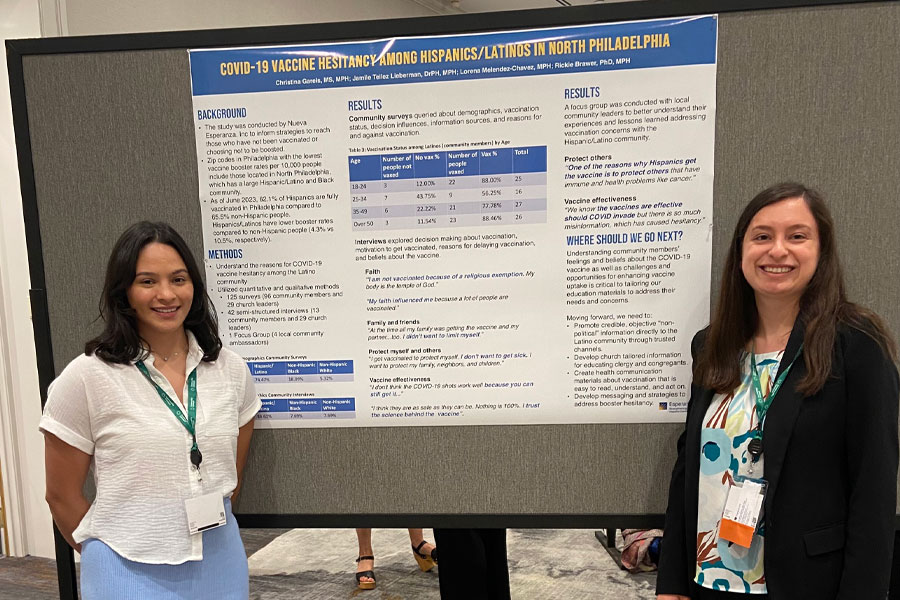
In 2023, Esperanza established the Esperanza Institute for Latino Health Equity (EILHE), a new initiative dedicated to studying and addressing the health challenges affecting residents in North Philadelphia, including Hispanic/Latinos.
The Institute came to be as a result of years of reflection and planning by Reverend Luis Cortés and other leaders at Esperanza, who witnessed the difficulties many residents in and around Hunting Park face when trying to stay healthy, including accessing quality health services.
According to Dr. Jamile Tellez Lieberman, the Institute’s Director, this initiative comes from the recognition that many families in the community face barriers to good health, whether due to lack of insurance, a shortage of medical providers in the neighborhood, or neighborhood conditions that disproportionately affect residents’ ability to make healthy choices and live healthy lives.
Unlike a medical clinic, the Institute will not provide direct medical care. Instead, it will adopt a public health approach, focused on understanding the causes of health challenges in Hunting Park and working with the community to find solutions.

Research and education for the community
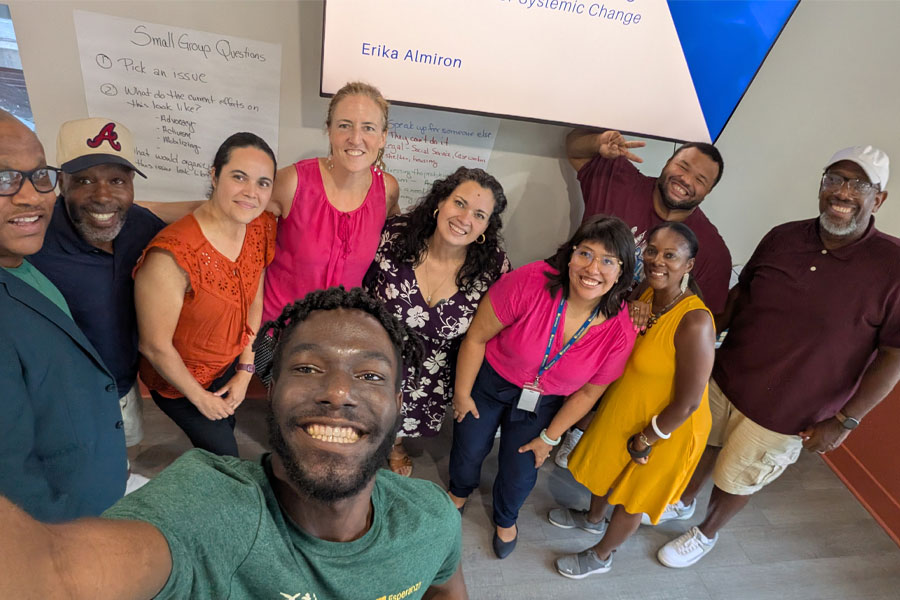
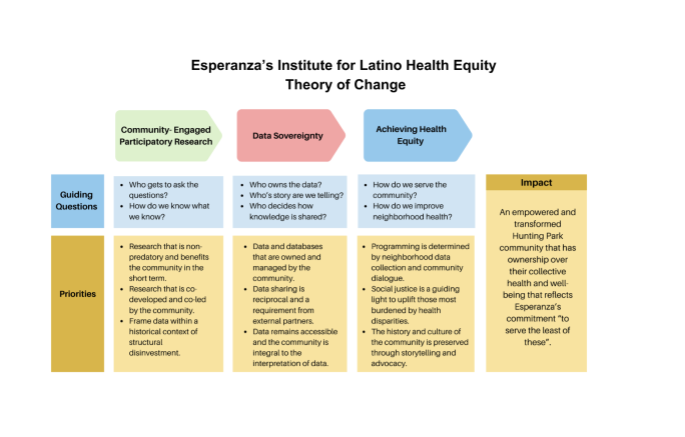
The Institute has two main areas of work. The first focuses on community-based participatory research, where they work with residents to collect data and study the factors that influence the community’s health.
“We want to understand what is happening with our community’s health, what the risks are, and what opportunities exist to improve the well-being of our neighbors,” explained Dr. Tellez Lieberman.
The second area focuses on public health education and action. Through programs, events, and partnerships with experts and health organizations, the Institute seeks to provide information and tools that help families make informed decisions about their health.
In recent years, for example, the team has organized pop-up vaccination clinics and educational events in collaboration with partners across the city, including the Philadelphia Department of Public Health. Although funding for work related to vaccines has decreased since the end of the pandemic, the Institute continues to conduct health education programs in the neighborhood.
The Institute’s initiatives are primarily aimed at residents of Hunting Park, Feltonville, and parts of Juniata, communities where Esperanza has worked for decades.

An Institute built alongside the community
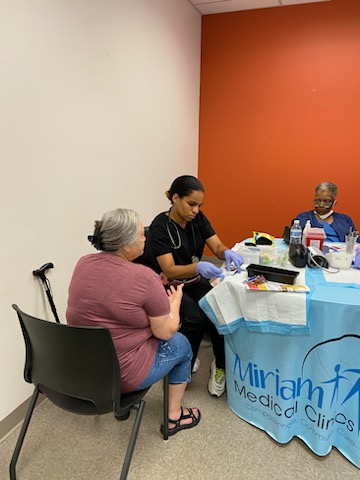
One of the aspects that distinguishes this Institute is that its work is developed directly with the community, not in isolation.
Dr. Tellez Lieberman explained, “This Institute belongs to the community. We want to work alongside residents to understand their health, learn about their experiences, and find solutions that reflect their culture, history, and needs.”
The Institute is interested in what public health experts call the social determinants of health, which are the non-medical factors that influence people’s health and well-being. These include poverty, access to healthy food, housing quality, transportation access, and more!
For example, the lack of parks, trees, or green spaces in neighborhoods like Hunting Park can contribute to higher rates of chronic diseases related to lifestyle, such as hypertension and diabetes, because spaces for physical activity may be limited.

How the community can get involved
The Institute invites residents to actively participate by sharing their experiences and concerns related to their health.
Currently, Dr. Tellez Lieberman and her team is preparing to launch a study about the impact of extreme heat in North Philadelphia neighborhoods. For this project, they hope to hear from residents about how high temperatures affect their health and daily lives.
“To truly understand what is happening, we need to listen to the people who live here,” Dr. Tellez Lieberman told me. “This is your community, and your experiences are essential for finding solutions.”
Looking forward to the future
In the long term, the goal of the Esperanza Institute for Latino Health Equity is to achieve health equity in Hunting Park, where everyone has the same opportunities to live a healthy and high-quality life.
“In an ideal future, the Institute would no longer be needed,” said Dr. Tellez Lieberman. “That would mean we have overcome many of the health inequalities that were negatively impacting health, so that everyone has access to the resources, care, and support that they need to live well.”
Meanwhile, the Institute will continue strengthening its relationship with the community and collecting data to help tell the story of health in neighborhoods like Hunting Park.
Upcoming community health fair
As part of its activities, the Institute is helping to organize a community health fair at Esperanza, in collaboration with Esperanza College and other partners.
The event, expected to take place in April, will bring together resources, service providers, educational activities, and opportunities for residents to obtain useful information about health and wellness. Organizers recommend that community members stay tuned for upcoming announcements, flyers, and updates about this year’s health fair.
“Your health is very important. And it is something we can care for together as a community, by making decisions based on scientific evidence, and mutual support,” Jamile Tellez Lieberman concluded.