


- By Juan Manuel Ramírez G
Mexico City,—In the last 12 months, at least 10 Mexican municipal mayors have been killed across several states, escalating an urgent crisis and forcing federal and state agencies into heightened, immediate action.
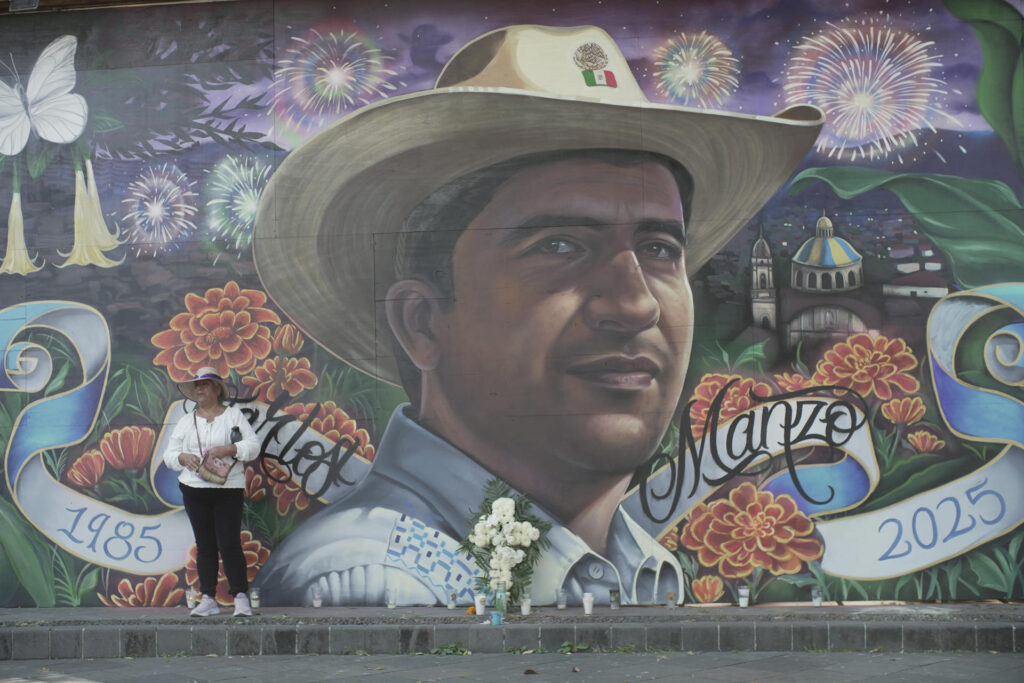
The brazen assassination of Uruapan Mayor Carlos Manzo in Michoacán during a public Day of the Dead event has sent shockwaves nationwide, amplifying the urgent alarm over the intensifying violence that now threatens the core of local governance in Mexico.
Manzo, an independent mayor who had federal and municipal protection since 2024, was fatally shot in front of residents during the festivities.
His killing triggered protests in Michoacán and sparked condemnation nationwide.
The case is particularly alarming given Uruapan’s strategic importance and the presence of multiple organized crime groups, including the Jalisco New Generation Cartel (CJNG), Los Viagras, Pueblos Unidos, Los Caballeros Templarios, and Los Blancos de Troya, in a city of around 360,000 residents.
Municipalities: The weakest link
Mexico’s political system is divided into three levels: federal, state, and municipal. Analysts warn that the local tier remains the most vulnerable to criminal influence and violence.
“(The municipal level) is the weakest link in the government structure in this country,” said Javier Oliva, professor and researcher at the National Autonomous University of Mexico (UNAM), in an interview with EFE. “In a system that is federalist in law but centralist in practice, municipalities are left with the smallest share of resources, which explains not only security problems but also deficiencies in public services and health.”
Official records show the recent wave of attacks began on Oct. 6, 2024, with the killing of Alejandro Arcos Catalán, mayor of Chilpancingo in Guerrero. Other assassinations since then have occurred in Oaxaca, San Luis Potosí, Guerrero, and Michoacán.
Organized crime influence at the local level
According to the NGO Data Cívica, in its report Votar entre balas, nearly 80% of political-criminal violence victims in Mexico are municipal-level officials or candidates.
The study underscores the role of local governments as primary targets in territorial disputes among organized crime networks.
“Municipal police forces have the fewest structural capabilities to confront insecurity and organized crime,” Oliva explained. “Mayors are responsible for public safety, but they rarely have the financial, logistical, or institutional support needed to withstand criminal pressure.”
Data Cívica reports that Michoacán alone has recorded 25 attacks against political figures so far in 2025, 88% of them involving officials at the municipal level.
A message of defiance
For security analysts, the killing of Manzo signals a direct challenge to state authority.
“The message is one of impunity and defiance,” Oliva said. “It also reflects a lack of responsibility, particularly from state governments.”
He noted that states such as Oaxaca, Guerrero, Tamaulipas, Sonora, Sinaloa, and Guanajuato have also experienced severe criminal violence in recent years.
Oliva also criticized the new Plan Michoacán presented by Mexican President Claudia Sheinbaum this week.
“Among the four points outlined to confront violence in the state, not a single one addresses the dismantling of criminal activities,” he said.