


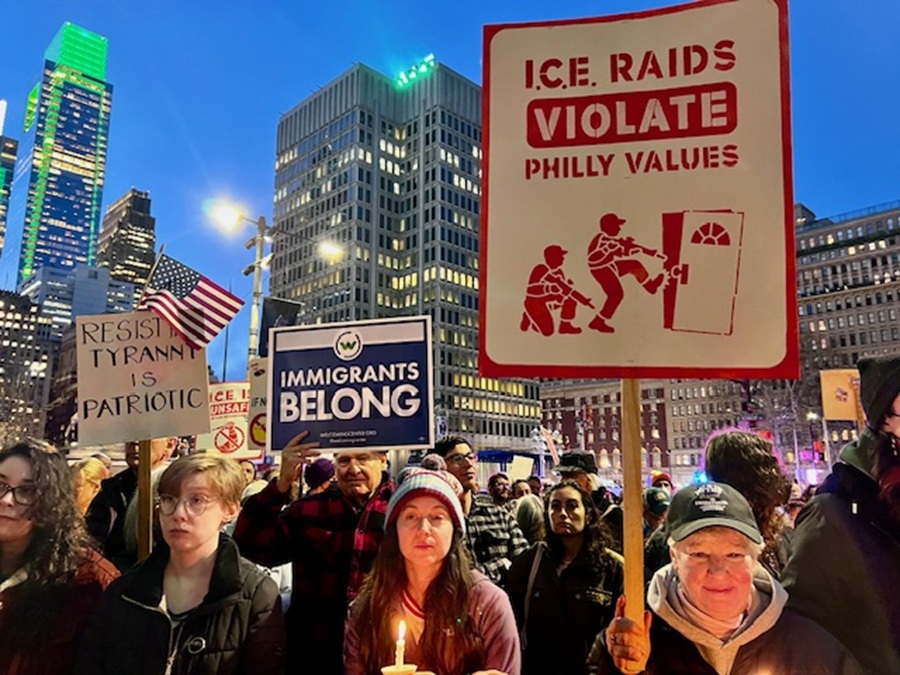
Philadelphia — On the evening of January 8, 2026, as darkness fell, the entire north side of City Hall in Philadelphia filled with people. The crowd stretched across the plaza and into the surrounding streets. Candlelight flickered against the stone facade as participants held signs reading, “Protect People,” and “No ICE.” Some signs bore only a single word, “Travesty” or “Murder,” underscoring the rawness of the moment.
The gathering was sparked by the January 7, 2026, shooting of Renee Nicole Good, a 37-year-old mother living in Minneapolis, by an ICE agent. The shooting was caught on video and spread throughout the internet. The entire country saw an ICE agent shoot a woman in the face and then walk away as if nothing had happened. The Department of Homeland Security’s response did not match what people saw in the video, and the discrepancy caused anger across the country.
The shooting ignited national protests and intensified scrutiny of ICE’s use of excessive force and cruelty. While federal authorities have defended the agent’s actions, eyewitness accounts and publicly circulating video evidence tell a different story and have raised serious questions and demands for state and local involvement and for an independent, transparent investigation.
Debbie Adelizzi of Philadelphia expressed her shock and concern, saying, “I am here in solidarity with the family of Renee Good and the people of Minnesota,” as she held a white vigil candle. “We can’t have this in our country, and we have to speak up when things are wrong. It is my First Amendment right and my duty. We have to stay united and support each other. I am 71 years old, and I never thought that I would have to be out protesting like this.”

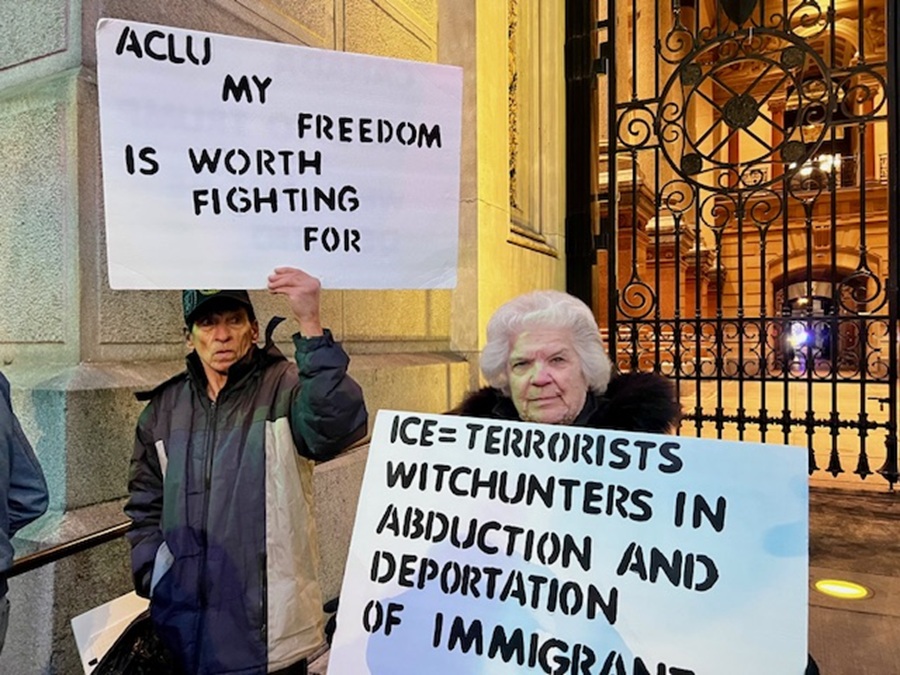
Her words reflected the mood, just one day after Renee Nicole Good was fatally shot by an Immigration and Customs Enforcement (ICE) agent in Minnesota.
Speakers for the event stood in front of a row of large banners held by Pennsylvania state representatives, Philadelphia City Council members, and other state and local officials. They repeatedly emphasized that Good was not simply a name in a headline. She was a human being, a daughter, a partner, and a mother whose death has become a symbol of what organizers describe as unchecked federal power.
A representative from Asian Americans United addressed the crowd, drawing attention to how ICE tactics ripple far beyond individual arrests. The speaker highlighted the role of Philadelphia emergency responders, warning that ICE agents increasingly rely on fear, cruelty, and violence to intimidate entire communities. “These tactics are meant to frighten the general population,” the speaker said, arguing that immigrants are being scapegoated amid a dramatic expansion of detention and deportation efforts.
The vigil and protest were organized by a wide coalition of immigrant rights and community groups, including No ICE Philly, Juntos, Asian Americans United, the Pennsylvania Immigration Coalition, CAIR Philadelphia, Amistad Law Project, Abolitionist Law Center, New Sanctuary Movement, and the Domestic Workers Alliance, among others.
State Representative Joe Hohenstein was among the elected officials in attendance, standing alongside local and state leaders in visible solidarity with immigrant communities. His presence, along with other Philadelphia City Council members and state officials, underscored growing concern among Pennsylvania officials about federal immigration infringement on civil rights and public safety.
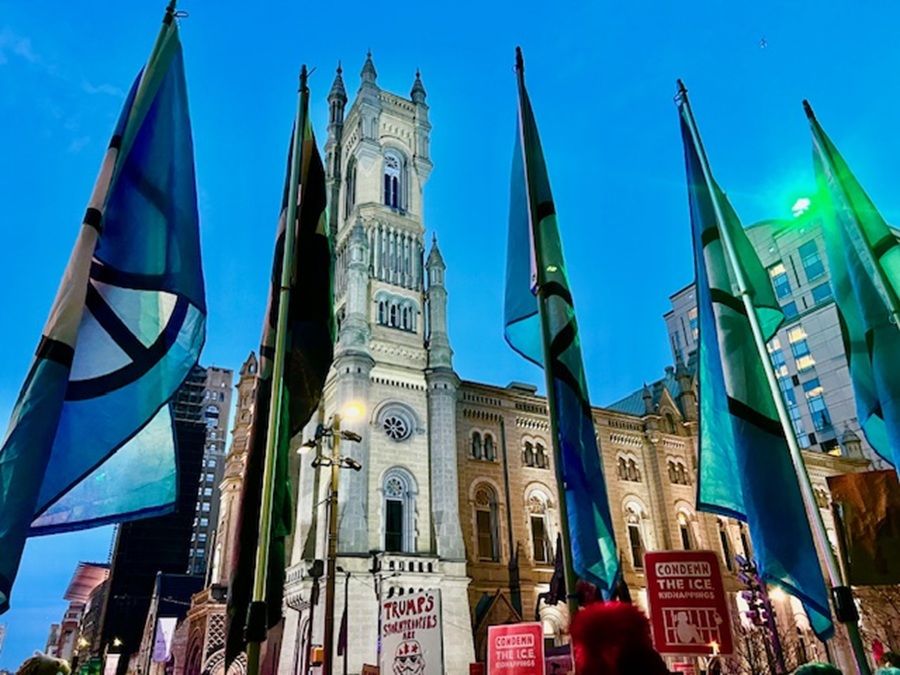
Advocates pointed to alarming national trends to contextualize Good’s death. In 2025, the Trump administration increased the number of detainees in ICE facilities by nearly 50 percent. The Department of Homeland Security now incarcerates close to 60,000 people, pushing detention centers well beyond their capacity. “These conditions are not accidental,” organizers said. “They are the result of policy decisions.”
The event continued until the candles burned low and the crowd slowly dispersed, but one message remained unmistakable in Philadelphia’s mind: Renee Nicole Good’s life mattered — and communities across the country are demanding answers, accountability, and change.