


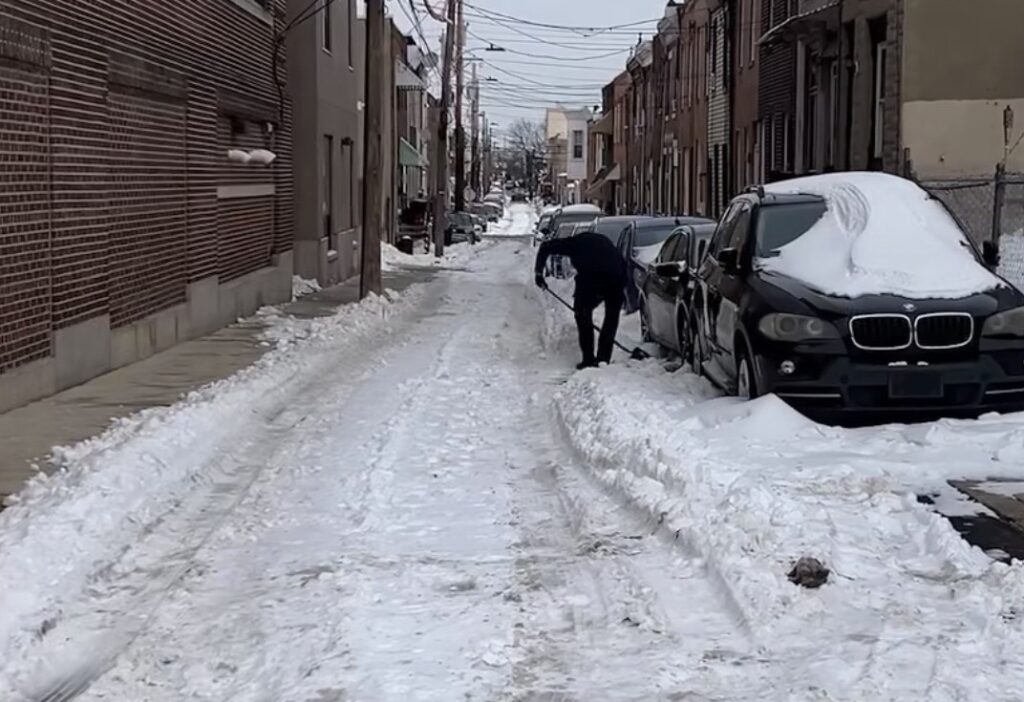
A week ago, a major winter storm blanketed Philadelphia and the surrounding region with nearly two feet of snow — a heavy accumulation that quickly hardened into blocks of ice as temperatures plunged. What began as a picturesque winter scene soon became a citywide challenge.
Before the storm, Mayor Cherelle Parker promised, “Our heroes will take care of the City’s most vulnerable people.” On Monday, the Mayor publicly thanked first responders, including 311 and 911 operators, for their efforts. But several days later, many residents are still struggling to dig out cars on overcrowded streets, navigate icy sidewalks, and clear access to their homes.
The storm arrived with force and stayed. Snow fell steadily for hours, and as temperatures dropped to near zero, the snow compacted and froze, making shoveling backbreaking labor. The City of Philadelphia had pre-treated roads, deployed salt trucks, and coordinated emergency responses, but the prolonged cold has complicated cleanup efforts long after the snowfall stopped.
Residents’ reviews of the city’s response have been mixed. While major roadways were cleared efficiently, emergency services remained operational, and communication remained consistent, some residents — such as Mario Pineda of Northeast Philadelphia — felt more could have been done. “They don’t come out to the small streets,” Pineda said. Still, many others praised the overall snow removal efforts.
With several days of temperatures hovering near zero and wind chills dipping into the single digits, serious health and safety concerns have emerged. Clearing heavy, frozen snow under these conditions is not only difficult — it can be dangerous. Medical professionals warn that cold-weather exertion can trigger heart attacks, strokes, and respiratory emergencies, especially for seniors and individuals with high blood pressure or heart conditions. Yet despite the risks, many residents feel they have little choice. Limited parking, overcrowded streets, and vehicles buried beneath layers of ice have forced people to spend hours digging out. In some neighborhoods, cars remain trapped behind ice walls created by plows pushing snow to the sides of narrow streets.
Amid these challenges, the storm has also revealed the resilience and solidarity of Philadelphia’s neighborhoods. In many areas, neighbors stepped in to help one another. On some blocks, able-bodied residents repeatedly cleared sidewalks throughout the snowfall and deep freeze. Their efforts made it safer for elderly residents, parents with children, and people with mobility issues to leave their homes. “We are so lucky to have great neighbors,” said Bernie Mailer of South Philadelphia.
This kind of mutual aid has long defined Philadelphia, especially during crises. From block captains organizing cleanup efforts to residents sharing shovels and salt, the storm reminded many that community support often fills the gaps left by extreme weather.
Still, the lingering ice highlights the need for ongoing flexibility and support in the days following major storms. Advocates are urging city officials and employers to consider extended grace periods for snow removal, increased outreach to vulnerable residents, and continued coordination with neighborhood groups to prevent injuries.
As Philadelphia slowly thaws, the city’s response will be remembered not only for how quickly roads were cleared, but for how neighbors showed up for one another when the cold refused to let go.
With another winter storm possibly heading toward the region this weekend, residents are already bracing for what may come next. The thought of digging out cars, clearing sidewalks, and checking on vulnerable neighbors all over again is exhausting. But if another storm arrives, Philadelphians know the routine well: prepare, help one another, and endure together.