


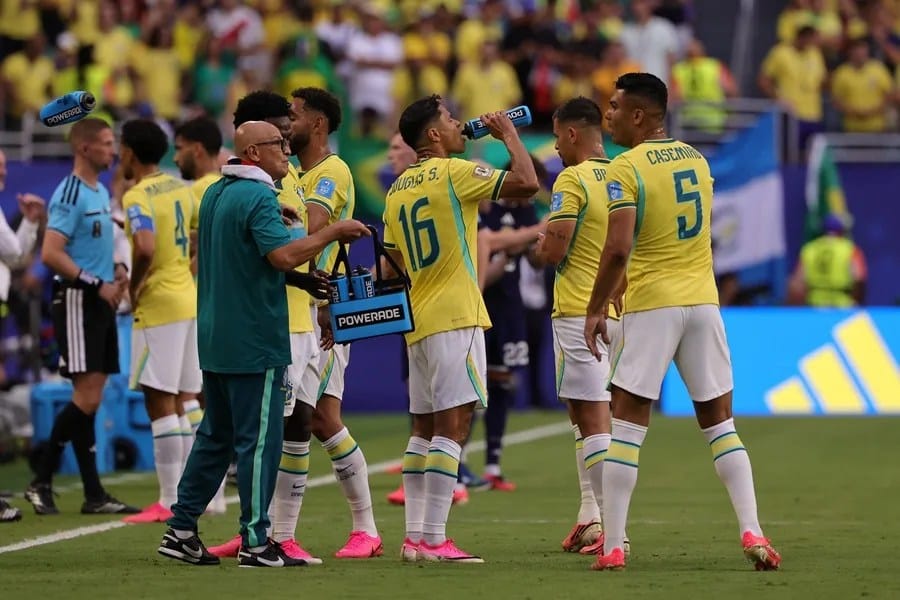
During this World Cup, referees have been stopping every match for three-minute hydration breaks midway through each half, regardless of the weather. FIFA says the breaks are intended to protect players from the heat while giving them time to hydrate and recover.
As a mother whose son has asthma and recently joined a soccer team, I see those breaks as more than a change to the game. I see them as a warning for every parent raising a young athlete in a hotter world.
Human-caused climate change is making extreme heat more frequent, intense, and dangerous. In Nevada, families do not experience that warming as an abstract projection. We feel it when temperatures climb past 100 degrees, when outdoor practices become harder to schedule safely, and when simply allowing our children to play the sports they love requires another layer of preparation and worry.
Like every parent, I want my son to run hard, make friends, and fall in love with the game. Instead, before every practice, I check the weather and the air quality. I pack extra water and wonder whether it is truly safe for him to be outside.
This is becoming the new reality for thousands of families across Nevada.
Children can be especially vulnerable during extreme heat. They rely on the adults around them to recognize dangerous conditions, provide enough opportunities to rest and hydrate, and know when it is no longer safe to continue. Without the right precautions, heat exhaustion and heat stroke during practices or games can become life-threatening.
Elite athletes are surrounded by team physicians, athletic trainers, and some of the best cooling and recovery resources available. If even the world’s most conditioned players need mandatory breaks, parents should be asking whether our children have the protections they need, too.
Does their team have a heat-safety plan? Are practices adjusted or canceled when conditions become dangerous? Is there shade near the field? Are water breaks mandatory? Does someone know how to recognize and respond to heat illness?
The danger does not end with the temperature.
Hot, sunny conditions can accelerate the formation of ground-level ozone, a major component of smog that can inflame the airways and worsen asthma. Children, people with asthma, and
those exercising outdoors are especially vulnerable because physical activity causes them to breathe more deeply and take in more polluted air.
For a child like my son, the combination of extreme heat, physical exertion, and unhealthy air can turn a simple soccer practice into a much riskier situation.
Then families return home and encounter another consequence of extreme heat: the cost of keeping their children safe.
Parents may need to run the air conditioner longer so children can cool down and recover after practices. Families may purchase additional water, cooling supplies, sunscreen, or protective equipment. Some may pay more for indoor leagues or facilities when outdoor conditions become unsafe.
As temperatures rise, energy bills often rise with them, adding financial pressure to families already working hard to keep their children healthy and active.
No parent should have to choose between protecting a child’s health and paying an affordable utility bill. That is why decisions about utility rates, energy-efficiency programs, and protections against utility shutoffs during dangerous heat must put affordability and public health first.
Families also deserve a meaningful voice in the decisions made by public utility commissions. These state agencies oversee electric utilities and make choices that affect what families pay, whether they can access energy-saving programs, and how well communities are protected during periods of extreme heat.
This is about making sure extreme heat doesn’t take away one of childhood’s greatest joys. Sports teaches teamwork, confidence, discipline, resilience, and community. Every child deserves the opportunity to learn those lessons and experience the joy of the game.
But our communities must adapt to the conditions children are facing now. That means investing in shade at parks and athletic fields, expanding access to cooling centers families can actually reach, adopting stronger heat-safety standards for youth sports, reducing the pollution that threatens children’s lungs, and helping families lower their energy costs.
This is also about the long-term future of youth sports. When outdoor recreation becomes increasingly dangerous, unpredictable, or expensive, participation may become another opportunity available primarily to families who can afford indoor facilities, private programs, and additional protections. Children should not lose access to the sports they love because their neighborhood lacks shade, their league lacks resources, or their family cannot afford the costs created by extreme heat.
Climate change is already reshaping the childhood they’re living right now.
The 2026 World Cup is showing us that even elite athletes need protection from extreme heat. Our children deserve nothing less.
Protecting childhood means making sure every child can safely step onto the field and come home to a cool, healthy home their family can afford.
*Mary Wagner Nevada Field Organizer, Moms Clean Air Force and EcoMadres